
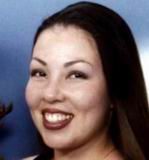
Tierra Gobble
Murderer Miranda Barbour
Murderer · USA · 2013
Miranda Barbour, 19, defendant. · Elytte Barbour, 22, defendant and husband of…
100 victims
Miranda Barbour
Murderer · USA · 2013
Miranda Barbour, 19, defendant. · Elytte Barbour, 22, defendant and husband of…
100 victims
 Megan Huntsman
Murderer · USA · 1996
Megan Huntsman was 40 at sentencing. She was a mother of three children who wer…
6 victims
Megan Huntsman
Murderer · USA · 1996
Megan Huntsman was 40 at sentencing. She was a mother of three children who wer…
6 victims
 Michele Kalina
Murderer · USA · 1996
Michele Kalina pleaded guilty to murder for one of five infants she initially w…
5 victims
Michele Kalina
Murderer · USA · 1996
Michele Kalina pleaded guilty to murder for one of five infants she initially w…
5 victims
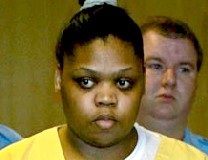 Tiffany Hall
Murderer · USA · 2006
Tiffany Hall was 24 when she was charged in September 2006. She later entered a…
5 victims
Tiffany Hall
Murderer · USA · 2006
Tiffany Hall was 24 when she was charged in September 2006. She later entered a…
5 victims
 Banita Jacks
Murderer · USA · 2007
Banita Jacks was a Washington, DC resident convicted of murdering her four daug…
4 victims
Banita Jacks
Murderer · USA · 2007
Banita Jacks was a Washington, DC resident convicted of murdering her four daug…
4 victims
 Holly Grigsby
Murderer · USA · 2011
Holly Grigsby was sentenced to life in prison without parole on July 15, 2014.…
4 victims
Holly Grigsby
Murderer · USA · 2011
Holly Grigsby was sentenced to life in prison without parole on July 15, 2014.…
4 victims
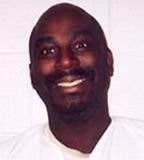 Gregory Thompson
Murderer · USA · 1985
Gregory Thompson was diagnosed with undifferentiated schizophrenia, delusions a…
1 victim
Gregory Thompson
Murderer · USA · 1985
Gregory Thompson was diagnosed with undifferentiated schizophrenia, delusions a…
1 victim
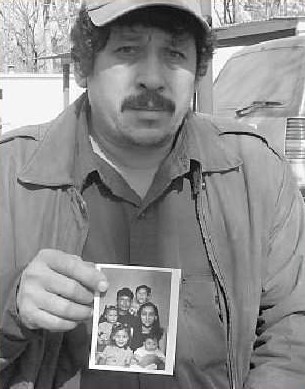 Lucio Franco
Mass murderer · USA · 2001
Lucio Franco was 24 years old. His wife was 21-year-old Maria Franco. Lucio Fra…
5 victims
Lucio Franco
Mass murderer · USA · 2001
Lucio Franco was 24 years old. His wife was 21-year-old Maria Franco. Lucio Fra…
5 victims
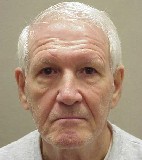 Robert Reldan
Murderer · USA · 1974
Name: Robert Reldan Robert Reldan was sentenced to life in prison on two counts…
8 victims
Robert Reldan
Murderer · USA · 1974
Name: Robert Reldan Robert Reldan was sentenced to life in prison on two counts…
8 victims
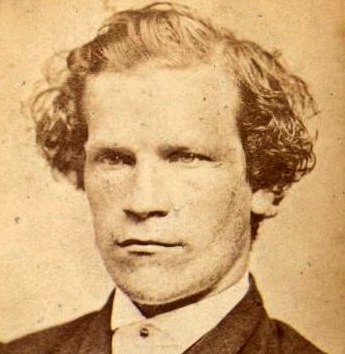 Franz Müller
Murderer · United Kingdom (on a train) · 1864
Franz Müller was a German tailor. He murdered Thomas Briggs, a City banker. On…
1 victim
Franz Müller
Murderer · United Kingdom (on a train) · 1864
Franz Müller was a German tailor. He murdered Thomas Briggs, a City banker. On…
1 victim
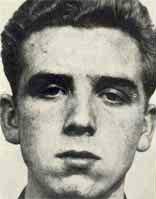 Alfred Burns
Murderer · United Kingdom · 1951
Beatrice Alice Rimmer was bludgeoned to death in her home in the Wavertree area…
1 victim
Alfred Burns
Murderer · United Kingdom · 1951
Beatrice Alice Rimmer was bludgeoned to death in her home in the Wavertree area…
1 victim
- Gender
- female
- Country
- USA
- Location
- Dothan, Houston County, Alabama, USA
- Date of birth
- April 18, 1983
- Age at first offence
- 21
- Characteristics
- parricide, child abuse
- Victim profile
- H er four-month-old son, Phoenix Cody Parrish
- Method of murder
- Beating
- Date(s) of murder
- December 15, 2004
- Years active
- 2004
- Date of arrest
- Same day
- Status
-
Sentenced to death
Sentenced to death on December 1, 2005
Parties and identities
- Defendant: Tierra Capri Gobble (also spelled Tierra Capri Goble in some parts of the record).
- Victim: Phoenix Cody Parrish (four-month-old).
- Prosecutor(s): Doug Valeska.
- Defense lawyer(s): Tom Brantley.
- Guardian/custodian figure referenced: Edgar Parrish.
- Codefendant referenced in the appeal as not called as a witness: Samuel David Hunter.
- Witness: Tori Jordan.
- Police officer: Officer Tracy McCord of the Houston County Sheriff's Department.
- Emergency room physician: Dr. Jonas R. Salne, emergency room physician who treated Phoenix at Southeast Alabama Medical Center.
- Other named person in the record: Walter Jordan.
- Additional named witness in the venue motion: Natalie Davis, professor of political science at Birmingham Southern College; owner of Davis and Associates.
- Other media custodian-of-records witnesses: Lauren Davis (custodian of records for WTVY television station), Wayne May (custodian of records for Channel 4 television station), Ken Curtis (custodian of records for WDHN television station), Latanya Smedley (custodian of records for the Dothan Eagle newspaper), John Daniels (custodian of records for WOOF radio station).
- Juror referenced by identifier: F.B.
- Other juror-related identifier: E.C.; M.B.; K.D.
- Medical expert referenced in continuance discussions: Dr. George McCormick; Dr. David Ghostly; Dr. Song W. Wong (state medical examiner who conducted the autopsy).
- Other named attorneys referenced in rulings: listed in quotations (not as parties), including a “prosecutor” and “court” in trial dialogue.
- Named relatives referenced in testimony: Dallas Gobble Sr. and Carmen Gobble (Gobble’s father and his wife).
- Named relative: “the great-uncle” took in Parrish’s infant as described in the case summary narrative.
- Mentions of “DCF”: Florida Department of Children and Families (DCF).
Timeline
- October 2004 — Gobble and her boyfriend Samuel David Hunter moved in with Phoenix, Parrish, and Walter Jordan.
- August 8, 2004 — Gobble gave birth to Phoenix in Plant City, Florida.
- December 15, 2004 — Gobble could not get Phoenix to go to sleep; she later found him unresponsive.
- December 15, 2004 (approximately 11:00 am) — Gobble walked into Phoenix’s bedroom and found him lying in his crib, unresponsive and not breathing.
- December 15, 2004 (around 1:00 a.m.) — Gobble went to feed Phoenix; she put him back in his crib after he finished his bottle.
- December 15, 2004 (around 9:00 a.m.) — Gobble checked on Phoenix and found him playing.
- December 15, 2004 (approximately 11:00 a.m.) — Gobble awoke and discovered Phoenix was unresponsive/not breathing.
- December 15, 2004 (after discovery) — Tierra called friend Tori Jordan; Jordan went to find Gobble’s father Edgar Parrish; Parrish called 911; paramedics arrived; Phoenix was rushed to a hospital.
- December 2, 2004 — Proceedings were initiated to terminate Gobble’s parental rights.
- December 1, 2005 — Sentencing resulted in a death sentence (as reflected in the case status).
- May 17, 2005 — AP Alert dated 5/17/2005.
- September 12, 2005 — Trial date set for this date (continuance motion referenced).
- August 18, 2005 — Gobble moved to continue the trial (set for September 12, 2005).
- August 19, 2005 — Pretrial hearing held on the continuance motion.
- September 9, 2005 — Gobble moved for a continuance after Dr. George McCormick withdrew.
- September 24, 2005 — Birmingham News AP references dated 9/24/2005.
- September 27, 2005 — Tampa Tribune AP references dated 9/27/2005.
- September 15 — Officer McCord interviewed Gobble twice (as testified at the suppression hearing).
- September 16 — Officer McCord interviewed Gobble once (as testified at the suppression hearing).
- August 21, 2005 — AP Alert dated 8/21/2005.
- October 27, 2005 — AP Alert dated 10/27/2005.
- April 30, 2010 — Alabama appellate opinion referenced as 2010 Ala; LEXIS 34 (April 30, 2010).
- February 05, 2010 — “Court of Criminal Appeals of Alabama Gobble v. State” dated February 05, 2010.
Background
Gobble had three children removed from her care after a Florida child welfare agency found abuse and neglect. The narrative described that the child custody arrangement prevented a specific guardian figure from leaving the state and required no contact between the infant and the parents; the great-uncle violated those instructions by moving to Alabama and allowing Gobble to move in with him.
Phoenix was taken from Gobble’s custody within 24 hours after his birth due to DCF involvement with Gobble’s first child, Jewell. Gobble was described as being under a court order to have no contact with her children at the time of Phoenix’s death.
The offence
Gobble was convicted of murdering her four-month-old son, Phoenix Cody Parrish, and the offense was defined as capital because Phoenix was under the age of 14 (cited as § 13A-5-40(a)(15), Ala.Code 1975).
Gobble was described as having admitted hitting Phoenix’s head on the side of his crib because Phoenix would not stop crying. Phoenix died from trauma consistent with child abuse, including injuries described in the record:
- A skull fracture.
- Broken ribs.
- Two broken wrists.
- A fracture to his right upper arm.
- Many bruises on his face, scalp, and chest (described as “everywhere”).
- A tear in the inside his mouth consistent with a bottle having been shoved into his mouth.
- Fractures to several of his ribs as shown by the autopsy report.
- Evidence of bleeding observed between the scalp and skin and between the skull and brain.
A death sentence was imposed after the jury recommended death.
Letter and statements about responsibility
The record included a letter written by Gobble stating: “It’s my fault that my son died but I didn’t mean for it [to] happen.”
During police questioning, Gobble told Officer McCord that she was Phoenix’s primary caretaker even though Parrish was his guardian. She explained bruises and fractures by admitting she occasionally got frustrated with Phoenix when he would not go to sleep and that she could have broken his ribs from holding him too tightly. She further explained an instance where she leaned down in the crib to get Phoenix’s blanket quickly and that Phoenix’s head might have struck the side of the crib at that time.
Investigation
Phoenix was rushed to the emergency room at Southeast Alabama Medical Center in Dothan on December 15, 2004. Dr. Jonas R. Salne testified to the injuries and described the forces required for the skull fracture.
Officer Tracy McCord testified that Gobble was taken into custody several hours after Phoenix was taken to the hospital and was questioned by police.
The autopsy showed death resulted from blunt-force trauma to Phoenix’s head, and Phoenix was pronounced dead shortly after arrival. Attempts to resuscitate were unsuccessful.
Emergency room testimony (verbatim)
Dr. Jonas R. Salne testified:
- “[Phoenix] had bruises, contusions, on his face, scalp, and chest. They were everywhere.”
- Dr. Salne also testified that it takes “quite a bit of trauma and quite a bit of force” to fracture a skull.
- Dr. Salne testified Phoenix would have been in tremendous pain from the numerous injuries.
- Dr. Salne further testified: “You may not even start to see rib fractures on a child until they may be several days old.”
Arrest and custody
After Phoenix was taken to the hospital, Gobble was taken into custody several hours later. Officer McCord interviewed Gobble twice on September 15 and once on September 16 after he had attended Phoenix’s autopsy.
At the suppression hearing, McCord testified that Gobble was read her Miranda rights from the form and signed a waiver-of-rights form. McCord testified it was his opinion Gobble was not under the influence of any drug when she made the statements, that he did not threaten her to secure a statement, and that he did not offer her any reward.
Trial
Gobble was tried for capital murder defined as capital by § 13A-5-40(a)(15), Ala.Code 1975, because the victim was less than 14 years of age.
Verdict and recommendation
The jury convicted Gobble of capital murder. During the sentencing phase, the jury recommended that Gobble be sentenced to death by a vote of 10 to 2. The circuit court followed the jury’s recommendation and sentenced Gobble to death.
Witness testimony
Tori Jordan testified that she had known Gobble for about two or two and one half years and that she had periodically babysat for Jewell over a period of about five months. Jordan testified that Gobble told her “if she couldn't have [her children], no one could.”
Gobble testified in her own defense and portrayed Hunter as abusive and domineering. Gobble testified she was the primary caretaker for the children, she was under a court order not to be around her children, and that several days before Phoenix’s death she noticed Phoenix had bruises but did not do anything because she was scared. Gobble testified she was the only person to have contact with Phoenix for the 10 hours immediately preceding his death. She did not telephone 911 when she realized Phoenix was not breathing because she did not want to get into trouble.
State medical examiner autopsy report admission
The autopsy report was admitted by agreement. Officer McCord testified he was present during the autopsy conducted by State Medical Examiner Dr. Song W. Wong, and Dr. Wong compiled a report of findings. The report indicated Phoenix died of head injuries and was consistent with Dr. Salne’s testimony.
Sentencing
Gobble’s jury recommendation was 10 to 2 for death, and the circuit court sentenced her to death.
The jury recommended death and the trial court found the “especially heinous, atrocious, and cruel” aggravating circumstance existed. The circuit court stated that the State proved beyond a reasonable doubt the existence of:
- “The capital offense was especially heinous, atrocious, and cruel compared to other capital offenses. See Code of Alabama, Section 13A5-40.” and
- “The jury's verdict establishes the existence of this aggravating circumstance in an unanimous vote and the evidence supports the verdict.”
The record also reflected that a presentence report was prepared and a separate sentencing hearing held.
Jury finding (verbatim)
“We, the jury, find that the aggravating circumstance of ‘heinous, atrocious, or cruel’ exists beyond a reasonable doubt.”
Appeals
The case was appealed automatically in a death-penalty matter. The Court of Criminal Appeals of Alabama reviewed the proceedings for plain error.
Issues raised on appeal
Gobble appealed on multiple grounds, including:
- Erroneous application of the heinous, atrocious, or cruel aggravating circumstance.
- Denial of a motion for a change of venue due to publicity.
- Denial of a motion for a continuance to secure a second pathologist.
- Denial of a motion to suppress statements.
- Admission of transcripts of videotaped statements.
- Discovery issues regarding disclosure of the transcript of the third statement.
- Prosecutorial use of voir dire.
- Batson/J.E.B. claims regarding peremptory strikes.
- Refusal to dismiss juror F.B. after unauthorized contact with Officer McCord.
- Admission of character evidence relating to Gobble and her relationship and other evidence discussed under relevancy.
- Restrictions on calling Edgar Parrish and Samuel David Hunter.
- Admission of hearsay, including DCF records relating to Jewell and other contested exhibits.
- Admission of autopsy report without the coroner/testifying physician.
- Use of a baby doll as a demonstrative aid.
- Exclusion of evidence of third-party guilt.
- Admission of autopsy photographs.
- Cross-examination and impeachment of Dallas Gobble Sr. and Carmen Gobble.
- Appearance in handcuffs/orange jumpsuit during the third videotaped statement.
- Exclusion of expert testimony at guilt phase (Dr. David Ghostly).
- Invited error issues relating to parental-rights termination document.
- Prosecutorial misconduct claims in guilt and penalty phases.
- Sufficiency of evidence / intent / denial of a judgment of acquittal.
- Jury instructions and refusal to instruct on aggravated child abuse.
- Constitutional challenges to the capital-murder statute and to death sentencing procedures (Ring/Caldwell).
- Lethal injection method challenges.
- Penalty phase mitigating evidence arguments regarding Bible references.
- Residual doubt as mitigating circumstance.
- Sentencing order compliance with required findings for aggravating circumstances.
Ruling on heinous, atrocious, or cruel findings (verbatim quotations included in record)
In the appellate discussion, the court included a characterization of the offence (sentence-order language) stating:
“[T]he offense was committed upon a small child (four months old) by striking his head against a hard surface causing trauma [and] internal injuries. The victim had fractures of the fourth, fifth, and sixth ribs and bleeding was observed between the scalp and skin as well as between the skull and brain. This act by a mother shocks the conscience of this Court. This was a callous and calculated act and, in this Court’s opinion, was especially cruel, heinous and atrocious as compared to other capital offenses. This was a brutal beating that caused tremendous pain and suffering upon this small child, who was helpless and unable to defend himself. The mother-Defendant, Tierra Gobble was not supposed to be around the child because the State of Florida had given custody of the child to Mr. Parrish, a roommate of the defendant, due to her abuse and neglect. Apparently, the pattern of abuse and neglect continued until she ended the life of this small child. Her last fateful act on the small child only showed her total disregard of any feelings for her own child and demonstrates very clearly why the jury’s unanimous verdict of especially heinous, atrocious and cruel as compared to other capital offenses was correct and supported by the evidence.”
Appellate disposition on sentencing
The appellate court held that the circuit court did not make specific findings of fact concerning each aggravating circumstance set out in § 13A-5-49 and did not make specific findings consistent with Ex parte Kyzer concerning § 13A-5-49(8). The appellate court relied on a standard requiring specific written findings and remanded for resentencing.
The appellate court directed:
- Remand to the Houston County Circuit Court for specific findings of fact concerning each aggravating circumstance set out in § 13A-5-49.
- Specific findings consistent with Ex parte Kyzer for the aggravating circumstance set out in § 13A-5-49(8).
- Reweighing aggravating and mitigating circumstances and resentencing.
Outcome
- The appellate court affirmed as to conviction.
- The appellate court remanded with directions as to sentencing.
Aftermath
- The death sentence remained imposed pending resentencing after remand, as reflected by the outcome directing resentencing following the remand for additional findings.

Spotted an error, or have more information about this case?