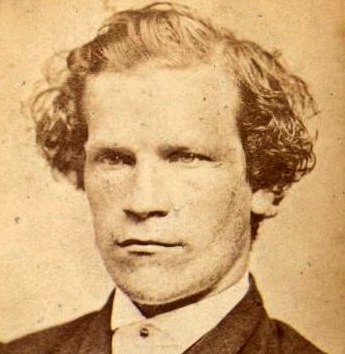
Franz Müller
Murderer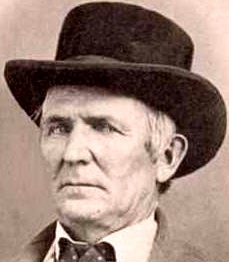 John Doyle Lee
Murderer · USA · 1857
Name: John Doyle Lee Lifespan: September 12, 1812 - March 23, 1877 Legal outcom…
120 victims
John Doyle Lee
Murderer · USA · 1857
Name: John Doyle Lee Lifespan: September 12, 1812 - March 23, 1877 Legal outcom…
120 victims
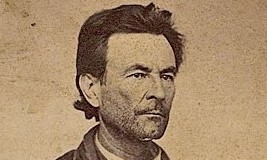 Champ Ferguson
Murderer · USA · 1861
Champ Ferguson was born November 29, 1821 in Clinton County, Kentucky, near the…
100 victims
Champ Ferguson
Murderer · USA · 1861
Champ Ferguson was born November 29, 1821 in Clinton County, Kentucky, near the…
100 victims
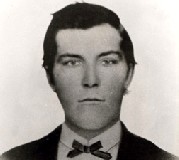 John Wesley Hardin
Murderer · USA · 1867
John Wesley (Wes) Hardin (1853-1895) was an American outlaw, gunfighter, and co…
42 victims
John Wesley Hardin
Murderer · USA · 1867
John Wesley (Wes) Hardin (1853-1895) was an American outlaw, gunfighter, and co…
42 victims
 Matti Haapoja
Murderer · Finland / Russia · 1867
Matti Haapoja was a Finnish murderer. He was born on September 16, 1845 in Isok…
25 victims
Matti Haapoja
Murderer · Finland / Russia · 1867
Matti Haapoja was a Finnish murderer. He was born on September 16, 1845 in Isok…
25 victims
 Juan Moreira
Murderer · Argentina · 1856
Juan Moreira (? - April, 1874) was a well-known figure in the history of Argent…
16 victims
Juan Moreira
Murderer · Argentina · 1856
Juan Moreira (? - April, 1874) was a well-known figure in the history of Argent…
16 victims
 Jerome Brudos
Serial killer · USA · 1968
Jerome Brudos (31 January 1939 – 28 March 2006) was a serial killer and a necro…
4 victims
Jerome Brudos
Serial killer · USA · 1968
Jerome Brudos (31 January 1939 – 28 March 2006) was a serial killer and a necro…
4 victims
 James Lee Clark
Murderer · USA · 1993
James Lee Clark (also referred to as James Lee Clark Jr.) was convicted in Dent…
2 victims
James Lee Clark
Murderer · USA · 1993
James Lee Clark (also referred to as James Lee Clark Jr.) was convicted in Dent…
2 victims
 Pressley Bernard Alston
Murderer · USA · 1995
Pressley Bernard Alston was convicted of first-degree murder, armed robbery, an…
1 victim
Pressley Bernard Alston
Murderer · USA · 1995
Pressley Bernard Alston was convicted of first-degree murder, armed robbery, an…
1 victim
 Amanda Kelly
Murderer · Australia · 2012
Amanda Kelly was sentenced to life in prison with a 14-year minimum on December…
1 victim
Amanda Kelly
Murderer · Australia · 2012
Amanda Kelly was sentenced to life in prison with a 14-year minimum on December…
1 victim
 Raymond Edmunds
Murderer · Australia · 1966
Raymond Edmunds Raymond Edmunds was serving a life sentence for the 1966 murder…
2 victims
Raymond Edmunds
Murderer · Australia · 1966
Raymond Edmunds Raymond Edmunds was serving a life sentence for the 1966 murder…
2 victims
 Cesar Rodriguez
Murderer · USA · 2006
Nixzmary Brown was a seven-year-old abused child and murder victim from the Bed…
1 victim
Cesar Rodriguez
Murderer · USA · 2006
Nixzmary Brown was a seven-year-old abused child and murder victim from the Bed…
1 victim
- Gender
- male
- Country
- United Kingdom (on a train)
- Location
- North London, England, United Kingdom (on a train)
- Date of birth
- 1841
- Age at first offence
- 23
- Characteristics
- robbery
- Victim profile
- Thomas Briggs, 69 (city banker)
- Method of murder
- Beating and his body was thrown from the carriage
- Date(s) of murder
- July 9, 1864
- Years active
- 1864
- Date of arrest
- August 24, 1864
- Status
-
Executed
Executed by hanging in front of Newgate Prison on November 14, 1864
Background
Franz Müller was a German tailor. He murdered Thomas Briggs, a City banker.
The offence
On July 9, 1864, Thomas Briggs, a City banker, travelled on the 9.50 p.m. North London Railway train between Fenchurch Street and Hackney Wick. Briggs was beaten and robbed of his gold watch and gold spectacles, and his body was thrown from the carriage.
A driver of a train travelling in the opposite direction spotted Briggs' body lying between the tracks, between Bow and Hackney Wick stations. Briggs was taken to a nearby pub, but died of his wounds shortly after.
Another account described that Briggs, described as the chief clerk at the firm of Robarts, Curtis, and Company, bankers of Lombard Street, London, boarded a first-class compartment on the 9.45 p.m. train from Fenchurch Street Station bound for Hackney. On arrival at Hackney, nothing remained of Briggs' presence other than his walking-stick, a leather bag and a black beaver hat, together with a large quantity of blood. His almost lifeless body was found later that same evening by the driver and the stoker of a train returning to London on the railway line between Bow and Hackney stations. His clothes were covered in blood, and he had suffered multiple lacerations to the head, including a deep wound just above the ear on the left side of the head where his skull had been fractured. Briggs was removed to a nearby tavern, but he died of his wounds on the following night.
Chief Inspector William Tanner concluded that since both the gold watch and chain and gold spectacles formerly in the possession of Thomas Briggs were missing, robbery was the motive. It was also established that while the walking-stick and leather bag belonged to Thomas Briggs, the black beaver hat was not his (Briggs habitually wore a top hat) and therefore was most likely belonged to his assailant.
Investigation
The first clues were found in the compartment that Briggs had travelled in. A pool of blood was discovered by two bankers who boarded the train at Hackney Wick, and they alerted the guard.
An black beaver hat was presumed to belong to the assailant.
On July 11, John Death, a jeweller with a shop in Cheapside, provided a description of a German man who exchanged a gold chain. Death confirmed that he was in possession of a gold chain which was identified as being that of Thomas Briggs. Death explained that he had accepted the chain from a customer in exchange for another gold watch chain and a plain gold finger-ring and gave a description of his customer: "Age thirty; height, 5 ft. 6 or 7 in.; complexion sallow; thin features; a foreigner - supposed German; speaks good English; dress, black frock coat and vest, dark trousers, and black hat."
Investigations revealed the maker of the beaver hat, but proved otherwise of little assistance in identifying its owner, and the police made the rounds of the London jewelers in the hope that the killer might have sought to dispose of the stolen items.
Arrest
On July 18, a cabdriver called Matthews came forward with suspicions about a box with Death's name on it and provided crucial information to the police. Matthews told the police of a young German named Franz Müller who had been engaged to his eldest daughter. Matthews also informed them that Müller had visited his house some two days after the murder and produced a box containing a gold chain, which he claimed to have recently purchased. Müller had then given the box to Matthews's little daughter, and Matthews had later looked within the box where he had seen the name and address of Mr. Death.
Matthews was able to identify the black beaver hat as the one which he had himself bought for Müller some months ago, and he provided the police with a photograph of Müller. When the police showed the photograph to John Death, Death readily identified Müller as the man who had given him Thomas Briggs's gold watch chain.
Having linked Franz Müller to both the property stolen from the murdered man and with the beaver hat found in the compartment, on July 19 the Chief Magistrate at Bow Street granted a warrant for his arrest.
By the time the arrest warrant was issued, Müller had boarded a passenger ship to New York, described as the sailing ship 'Victoria'. He may have committed the robbery in order to pay for his ticket. Müller had earlier sailed for New York in the sailing ship 'Victoria' on July 15.
On July 20, two Scotland Yard detectives, including Inspector William Tanner and Sergeant George Clarke, boarded the 'City of Manchester' at Liverpool. The steamship arrived at New York on August 5, and the detectives were thus able to arrest Müller on his arrival at New York. A search of Müller’s luggage revealed Briggs' gold watch and a top hat formerly belonging to Thomas Briggs. The hat had been cut down by Müller’s several inches to disguise its appearance.
Trial
The trial of Franz Müller for the murder of Thomas Briggs opened at the Old Bailey on October 27, 1864. Mr Baron Martin presided. The Solicitor General, Robert Collier, appeared for the prosecution, and Serjeant John Humffreys Parry appeared for the defence.
Müller pleaded not guilty. The prosecution case was largely based on the chain of evidence outlined above. The defence produced a number of witnesses to support Müller’s innocence, including:
- A witness who claimed he had seen Briggs in the compartment on the fateful day with two other men, neither of whom was Müller.
- An alibi witness described as a prostitute who claimed that Müller had been with her at the time of the murder.
When challenged with the fact that he had been found in possession of Thomas Briggs's watch, Müller explained that he had purchased the watch from a 'man at the docks'.
The jury deliberated for fifteen minutes before pronouncing him guilty of murder. Müller was convicted on October 29, 1864.
During the trial, Müller declared that he was in a brothel at the time of the murder, and the time he was there was disputed by the prosecution. The solicitor-general expostulated: "Is this whole case going to rest on the reliability of a brothel clock?"
Sentencing
Müller was hanged on November 14, 1864 in front of Newgate Prison.
Outcome
Müller was executed by hanging.
The account described his confession shortly before the execution, reporting his last words: "I did it" and also including: "Ich habe es gethan." ("I did it"). Another account described that he confessed at the last minute by saying, "I have done it, and no one else". Another reported last words were: "Yes, I did it".
The public hanging took place amid scenes of drunkenness and disorderly conduct by spectators, and it was described as one of the last public executions in England, although the last one was not until 1868.
Appeals
No appeal outcome was stated.
Other details
Public and international context
Extradition proceedings were promptly begun on August 26, 1864. Extradition was eventually granted, and on September 3, the trio returned to Britain. On their arrival at Euston on September 17, they were greeted by a large and angry crowd which had to be restrained by local transport police.
Diplomatic relations between the United States and the United Kingdom of Great Britain and Ireland were described as severely strained due to British involvement in the American Civil War, leading to an attempt to have extradition overthrown, but it was eventually upheld by an American judge.
Safety and railway changes
The murder motivated safety changes: several railway companies cut safety peepholes in the partitions after the hanging, and the peepholes were nicknamed "Muller’s Lights." Complaints were described from courting couples that the peepholes ruined their only chance of privacy, and the peepholes were filled in.
Later, the Regulation of Railways Act 1868, Section 22 made it compulsory to install a means of communication between the passenger and the train-crew, described as leading to the communication cord.
The murder was also described as a strong motivation for making a means of communication with the train crew compulsory to help prevent further passenger harm.
Fashion and language
Müller’s redesign of the hat he took from Briggs became a popular style into the 20th Century called "the Muller Cut-Down" hat, and it was said to have been especially popularized by Winston Churchill.
The phrase "to muller" entered into East End slang as a synonym for murder, and the origin of the modern term "mullered" was described as being used in the sense of slaughtered, as in being blind drunk or comprehensively beaten.
Witnesses and quotations
A witness named Elizabeth Repsch, whose husband was described as a friend of Müller, testified: "I have never seen a hat lined that way before. When he came visiting us, I often held his hat for him."
Controversy
Most of the prosecution's evidence against Müller was described as circumstantial. It was also stated that some people believed Matthews only came forward to receive the reward and could have been involved in the crime himself, while Müller maintained his innocence throughout his trial.
Additional claims involving Thomas Briggs
A spiritualist named Gerald Massey experimented with planchette writing and claimed to have received a message from the deceased Thomas Briggs: "Muller not guilty; robbery, not murder".
Massey concluded that Briggs died as a result of injuries suffered in falling from the train in an attempt to escape from Müller rather than being struck by Müller himself, and concluded that a conviction of manslaughter would have been more appropriate. Massey wrote a long letter to eight daily papers outlining his arguments, and only the Daily News felt obliged to publish it.
Burial and teeth
Some years later in 1884, Müller’s body was being lifted from its grave to make room for another corpse to be buried alongside it. At some point one of Müller’s teeth became dislodged from his skull and was picked up and kept as a souvenir. It was later presented to the Museum of London and remained there.
Dates and chronology across accounts
One account placed the trial at the Old Bailey with guilty verdict on October 29, 1864 and execution on November 14, 1864, while other narrative material described Müller walking to the scaffold on Monday, November 14th, 1864.

Spotted an error, or have more information about this case?