
Rita Gluzman
Murderer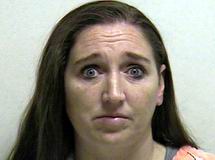 Megan Huntsman
Murderer · USA · 1996
Megan Huntsman was 40 at sentencing. She was a mother of three children who wer…
6 victims
Megan Huntsman
Murderer · USA · 1996
Megan Huntsman was 40 at sentencing. She was a mother of three children who wer…
6 victims
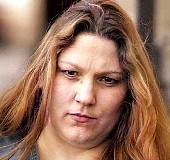 Angela Johnson
Murderer · USA · 1993
Angela Jane Johnson was convicted in federal court of aiding and abetting the m…
5 victims
Angela Johnson
Murderer · USA · 1993
Angela Jane Johnson was convicted in federal court of aiding and abetting the m…
5 victims
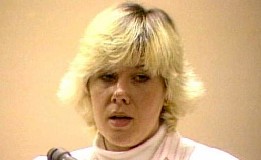 Catherine May Wood
Murderer · USA · 1987
Catherine May Wood was an American caregiver who worked at the Alpine Manor Nur…
5 victims
Catherine May Wood
Murderer · USA · 1987
Catherine May Wood was an American caregiver who worked at the Alpine Manor Nur…
5 victims
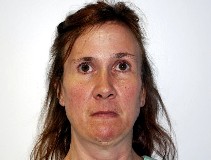 Michele Kalina
Murderer · USA · 1996
Michele Kalina pleaded guilty to murder for one of five infants she initially w…
5 victims
Michele Kalina
Murderer · USA · 1996
Michele Kalina pleaded guilty to murder for one of five infants she initially w…
5 victims
 Tiffany Hall
Murderer · USA · 2006
Tiffany Hall was 24 when she was charged in September 2006. She later entered a…
5 victims
Tiffany Hall
Murderer · USA · 2006
Tiffany Hall was 24 when she was charged in September 2006. She later entered a…
5 victims
 Amy Bishop
Murderer · USA · 1986
Amy Bishop — biology professor and perpetrator · James Anderson — Bishop’s husb…
4 victims
Amy Bishop
Murderer · USA · 1986
Amy Bishop — biology professor and perpetrator · James Anderson — Bishop’s husb…
4 victims
 Junko Ogata
Serial killer · Japan · 1996
Junko Ogata (緒方 純子 Ogata Junko, born February 25, 1962) was a Japanese woman wh…
7 victims
Junko Ogata
Serial killer · Japan · 1996
Junko Ogata (緒方 純子 Ogata Junko, born February 25, 1962) was a Japanese woman wh…
7 victims
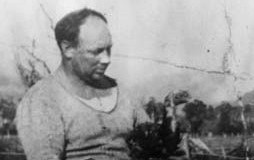 Eric Stanley Graham
Mass murderer · New Zealand · 1941
Eric Stanley Graham (also known as Stan) was a New Zealand mass murderer who ki…
7 victims
Eric Stanley Graham
Mass murderer · New Zealand · 1941
Eric Stanley Graham (also known as Stan) was a New Zealand mass murderer who ki…
7 victims
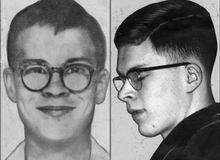 David Michael Krueger
Homicide · Canada · 1956
Peter Woodcock (birth name) was a Canadian serial killer and child rapist. · Da…
4 victims
David Michael Krueger
Homicide · Canada · 1956
Peter Woodcock (birth name) was a Canadian serial killer and child rapist. · Da…
4 victims
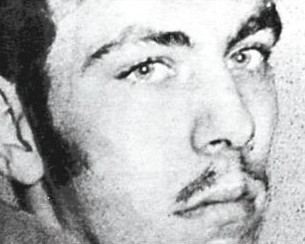 Buddy Earl Justus
Serial killer · USA · 1978
Buddy Earl Justus was sentenced to die in the electric chair in Virginia for th…
3 victims
Buddy Earl Justus
Serial killer · USA · 1978
Buddy Earl Justus was sentenced to die in the electric chair in Virginia for th…
3 victims
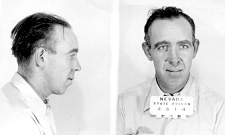 Floyd McKinney
Murderer · USA · 1943
Floyd L. McKinney was a native of Gateway, Oregon. He was 34 at the time of his…
2 victims
Floyd McKinney
Murderer · USA · 1943
Floyd L. McKinney was a native of Gateway, Oregon. He was 34 at the time of his…
2 victims
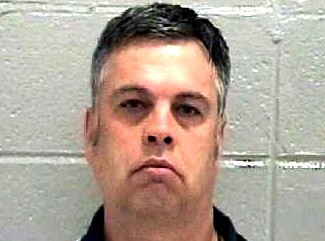 Jamie Ray Ward
Murderer · USA · 1989
Jamie Ray Ward, 41, was sentenced to death in July 1991 in Walker County for ki…
1 victim
Jamie Ray Ward
Murderer · USA · 1989
Jamie Ray Ward, 41, was sentenced to death in July 1991 in Walker County for ki…
1 victim
- Gender
- female
- Country
- USA
- Location
- Pearl River, New York, USA
- Date of birth
- 1948
- Age at first offence
- 48
- Characteristics
- parricide, dismemberment
- Victim profile
- Yakov Gluzman, 48 (her husband)
- Method of murder
- Beating with an axe
- Date(s) of murder
- April 6, 1996
- Years active
- 1996
- Date of arrest
- 6 days after
- Status
-
Life imprisonment
Sentenced to life in prison without parole on April 30, 1997
Case overview
Rita Gluzman was convicted of murdering her husband, Yakov Gluzman, and dismembering his body. She had previously denied the killing.
People involved
- Rita Gluzman — defendant; spouse of the victim Yakov Gluzman
- Yakov Gluzman — victim; microbiologist and cancer researcher
- Vladimir Zelenin — Rita Gluzman’s cousin and co-conspirator; testified for the prosecution after confessing
- Ilan — son of Rita and Yakov Gluzman; present in court at sentencing
- Chaim Gluzman — Yakov Gluzman’s father; remained in Israel
- Sophia Gluzman — Yakov Gluzman’s mother; remained in Israel
- Cathy Seibel — prosecutor who read a letter to the judge
- Deirdre M. Daly — co-prosecutor
- Barrington D. Parker Jr. — U.S. District Court judge at sentencing
- Lawrence Hochheiser — lawyer for Rita Gluzman
- Marianna Rabinovitch — Rita Gluzman’s sister
- Pola Shapiro — Rita Gluzman’s mother
- Robert L. Ellis — lawyer for Ilan
- George Gabriel — special agent for the FBI
- Michael Rosen — attorney associated with challenges and bail efforts
- Richard Freeman — police officer who discovered the trash bags
- Brian Plunkett — lawyer for Vladimir Zelenin
- Judge Claire Weinberg — Nassau County judge who rejected bail
- Art Bings — head of security at Cold Spring Harbor Laboratory’s facility
- Richard Burgess — visiting researcher who identified Rita Gluzman during her hiding
- Judd Burstein — for Defendant-Appellant
- Cathy Seibel — for Appellee (also described as Assistant United States Attorney in the appeal text)
- CALABRESI, CABRANES, and STRAUB — Circuit Judges on the appeal panel
- TRIAL witness: Vladimir Zelenin — described as the chief witness at trial
- “Dr. James D. Watson” and “Francis Crick” — described in background about Cold Spring Harbor research teams
- George Bush and U Thant — referenced in background about earlier advocacy
- Jack Kemp, Wyche Fowler Jr., Richard Nixon, Alexander Kosygin, Bill Bradley, Raisa Korenblit — referenced in background about emigration and advocacy
Timeline
- April 6, 1996 — Rita Gluzman and Vladimir Zelenin ambushed Yakov Gluzman at his Pearl River apartment, murdered him with axes, and proceeded to dismember his body.
- April 7, 1996 — A police officer saw Vladimir Zelenin attempting to dump plastic bags filled with Yakov Gluzman’s remains into the Passaic River.
- April 12, 1996 — Authorities arrested Rita Gluzman in Cold Spring Harbor, Long Island.
- January 30 — A jury found Rita Gluzman guilty.
- April 30, 1997 — Rita Gluzman was sentenced to life in prison without parole.
- Aug. 12, 1998 — The appeal was argued.
- Aug. 25, 1998 — The appeal was decided; the judgment of the district court was affirmed.
- 1999 — The U.S. Supreme Court refused to hear Rita Gluzman’s appeal.
Background
Rita Gluzman had worked to escape the Soviet Union and live in the United States. She and her husband, Yakov Gluzman, later lived in Upper Saddle River, New Jersey, where she had her own company and a big house. Yakov Gluzman was described as a successful cancer researcher and later as director of microbiology at Lederle Laboratories in Pearl River, N.Y.
Yakov Gluzman had filed for divorce, leaving Rita Gluzman fuming. Divorce negotiations lasted more than a year and a half and came to an end on April 7, 1996.
Rita Gluzman denied killing her husband and stated: “I did not do it, and I still say that in front of the world,”.
The offence
Yakov Gluzman was murdered with axes after Rita Gluzman and Vladimir Zelenin awaited him in his Pearl River apartment and ambushed him when he came home late that night. The attack involved “two axes” as described, and the murder was followed by dismemberment intended to hide their crime.
Zelenin described dismemberment and disposal. His account included that Rita Gluzman was “so adamant that there be no piece of the man large enough to be identified,” that they cut off his fingertips to prevent fingerprint identification and “even removed his nose and lips so no one who might find the body would ever recognize it.” As part of the same account, the body was hacked to bits and then stored in bags.
Police described the discovery as involving Yakov Gluzman’s body being chopped into more than 65 pieces, and they described the bags as containing severed pieces.
Tools and blood-soaked items were found in bags at the riverfront area, including a hacksaw, axes, knives, and a scalpel. The discovery included the statement that the body parts and bloody clothing were stuffed into nine black plastic garbage bags, while tools were stuffed into another bag.
Investigation and discovery
On Easter morning, April 7, 1996, police officer Richard Freeman discovered two cars with trunks open at the edge of the Passaic River behind offices of ECI Technology company. He saw a man he later identified as Vladimir Zelenin carrying trash bags from a trunk and disposing of them into the river.
Freeman noticed blood-like splotches on Zelenin’s pants and shoes and a surgical glove with what appeared to be blood. Freeman observed a sickly sweet stench recognized as drying blood. When the bag was inspected, it included bloody tools; another bag included clothes drenched in blood.
Authorities arrested and identified Vladimir Zelenin. Zelenin was discovered attempting to dump body parts into the Passaic River. Zelenin was described as being held on $1 million bond and as having pleaded not guilty to conspiracy to commit murder.
Police believed Zelenin had at least one accomplice. The car he was driving before his arrest belonged to ECI Technology, described as run by Rita Gluzman and co-owned by her husband.
Arrest
Authorities sought Rita Gluzman after she was missing for several days following the discovery of Yakov Gluzman’s dismembered body. She was located and arrested on April 12 in a bungalow at Cold Spring Harbor Laboratory on Long Island.
The arrest occurred after Rita Gluzman tried to flee and left behind her passport and travel brochures. Security personnel and local police were involved after Rita Gluzman was spotted; Art Bings, head of security, identified her as more than a routine burglary matter. Richard Burgess picked her out immediately as an interloper. Security guards approached her and local police took her into custody.
After her arrest, Zelenin’s case was described as having been transferred to Rockland County and as having involved federal and state proceedings moving forward.
Trial
At trial, Vladimir Zelenin was described as the chief witness. He testified after confessing and gave a detailed account of the ambush, the murder, the dismemberment, and the plan to dump the remains in the Passaic River.
The authorities had brought federal charges rather than state charges of murder, described as due to a lack of physical evidence at the murder scene that could corroborate Zelenin’s account. Federal charges under the domestic violence statute did not require corroboration.
A jury found Rita Gluzman guilty on Jan. 30 under the Violence Against Women Act domestic violence statute.
Sentencing
On April 30, 1997, Rita Gluzman was sentenced by U.S. District Court Judge Barrington D. Parker Jr. to life in prison without parole.
During sentencing, Ilan Gluzman was in the courtroom. A letter from Yakov Gluzman’s parents was read by prosecutor Cathy Seibel. The letter said:
“For 25 years she gradually demolished him emotionally and in the 26th year she dismembered him physically,”
“By her evil act Rita has ruined the life of her son, whom she left fatherless, and marked him with the stigma of a mother convicted for murder. ”
“After we raised Yakov to be a good man and a world-renowned scientist who devoted his life to research and to the benefit of humanity, she suddenly took him away from us,”
Rita Gluzman spoke briefly, stating:
“Your honor, I did not do not do that and still say that in front of the world,”
Judge Parker addressed her and stated:
“None of us can ever know what transpired between you and your husband,”
“The only thing we know is that nothing that occurred can possibly justify what you did to him. You are a woman of considerable courage, capacity and accomplishment. For whatever reason, you allowed yourself to disintegrate around the relationship and the pain that grew out of it.”
Judge Parker recommended that Rita Gluzman be sent to the medium-security women’s prison in Danbury, Conn., rather than a maximum-security prison farther away.
After the sentence, Marianna Rabinovitch, Rita Gluzman’s mother Pola Shapiro, and her son Ilan walked out with their arms locked. Marianna Rabinovitch said:
“The family is behind her,”
“We will be always. She did and built many things in her life that should not be forgotten.”
Rita Gluzman’s lawyer Lawrence Hochheiser said he would challenge the constitutionality of the domestic violence law.
Appeals
Rita Gluzman appealed her conviction in the U.S. Court of Appeals for the Second Circuit. The appeal was identified as: United States of America, Appellee, v. Rita Gluzman, Defendant-Appellant; Docket No. 97-1281. The appeal panel included Circuit Judges CALABRESI, CABRANES, and STRAUB.
The appellate opinion stated that Rita Gluzman was convicted under the Violence Against Women Act (“VAWA”), 18 U.S.C. § 2261(a) (1994), for the murder of her husband.
The appellate opinion recounted:
- On April 6, 1996, Rita Gluzman and Vladimir Zelenin drove from New Jersey to the New York apartment of her estranged husband, Yakov Gluzman.
- They entered the empty apartment and awaited Yakov Gluzman’s arrival.
- When he came home late that night, they murdered Yakov Gluzman with axes and dismembered his body with the intent of hiding the crime.
- Zelenin was discovered by a police officer the next day attempting to dump plastic bags filled with Yakov Gluzman’s remains into the Passaic River.
- After his arrest, Zelenin confessed and testified against Gluzman during her trial.
The appellate opinion included a description of 18 U.S.C. § 2261(a)(1) (1994):
“A person who travels across a State line ... with the intent to injure, harass, or intimidate that person's spouse or intimate partner, and who, in the course of or as a result of such travel, intentionally commits a crime of violence and thereby causes bodily injury to such spouse or intimate partner, shall be punished....”
The appellate opinion stated that it affirmed the judgment of the district court.
On Aug. 25, 1998, the Second Circuit affirmed the conviction. It also stated that the judgment of the district court is affirmed.
The materials further stated that in 1999 the U.S.
Outcome
Rita Gluzman’s conviction under the Violence Against Women Act was affirmed on appeal, and she was sentenced to life in prison without parole on April 30, 1997.
Aftermath
Rita Gluzman was dispatched to prison after sentencing. The sentencing included the recommendation of medium-security women’s prison in Danbury, Conn.
Ilan Gluzman was described as taking over his mother’s electroplating business in East Rutherford, working with his aunt, Mrs. Rabinovitch. Robert L. Ellis said:
“His life is devastated,”
Other details
Discovery details and physical evidence described
- Yakov Gluzman’s remains were identified as those of Yakov Gluzman, 48, of Pearl River, N.Y.
- An autopsy was described as showing he died of sharp blows to the head and torso.
- The body was chopped into at least 65 pieces, with mention that at least 65 pieces and 10 plastic trash bags were used.
- Officers found hacksaw, axes, knives, and a scalpel in the bag with bloody tools.
- Rita Gluzman was described as having four stolen license plates and travel brochures.
Vladimir Zelenin details
- Vladimir Zelenin was described as 40 and of Fair Lawn, N.J., working for ECI Technologies.
- He was described as pleading not guilty to conspiracy to commit murder.
- Zelenin declined to comment through his lawyer, Brian Plunkett.
- The FBI and other authorities were described as involved in the transition from state to federal prosecution, including an instruction delivered by George Gabriel to make a U-turn.
Rita Gluzman location prior to arrest
- Rita Gluzman was found in a guest cabin at the Cold Spring Harbor Laboratory area associated with her husband’s past employment (described as where her husband had once worked from 1977 to 1990).
- She was discovered after leaving behind her passport and travel brochures including some for Switzerland.
Divorce and competing explanations described
- Yakov Gluzman accused Rita Gluzman of being a profligate spender and described repeatedly borrowing money from him to keep ECI afloat.
- Rita Gluzman accused Yakov Gluzman of having an affair with a woman in Israel.
- Police believed Yakov Gluzman was killed April 6 at his home. Police described him as bludgeoned with an ax and knifed before his body was chopped into more than 65 pieces with a hacksaw and scalpel.
Additional background about Rita Gluzman’s earlier activism
Rita Gluzman was described as having been a 23-year-old mother in 1971, seeking release of her husband Yakov Gluzman from the Soviet Union. She was described as having succeeded in getting time with then-U.S. Ambassador to the United Nations George Bush and U.N. Secretary-General U Thant. Her husband’s visa to the United States was described as sponsored by former Rep. Jack Kemp, and her advocacy was associated with meetings and efforts involving the United Jewish Appeal and the American Conference for Soviet Jews.
A quote was attributed to Irving Silverman of Roslyn, N.Y., saying:
“When I saw the articles in the press [about her arrest], I thought the name rang a bell, but it was totally out of context,”
Silverman also said:
“I remember when she came to the committee and she said she would like to participate in this rally,”
and cautioned her, while also saying:
“I cautioned her at the time that she's taking a considerable risk in making herself public.”
Silverman stated:
“She said, `No, no, I want to do it because I want to get my husband out,'”
and:
“She wanted to make a public campaign.”
Silverman described her as:
“a very, very assured person who knew her way around. She was a very determined person. What she wanted, she got.”
Rita Gluzman was quoted as saying upon her husband’s arrival in Israel:
“It was exactly like a dream,”
“A man and a woman separated and finally somehow finding each other again.”
Reported argument about constitutionality
Lawrence Hochheiser argued that crossing state lines to commit a crime had nothing to do with commerce, and that the domestic violence law was premised on federal authority over interstate commerce.

Spotted an error, or have more information about this case?