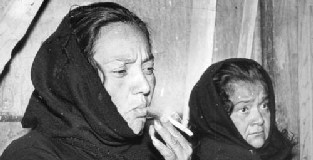
Delfina & Maria de Jesus Gonzalez
Serial killers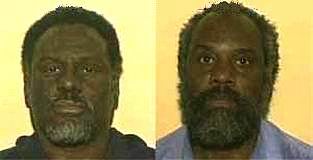 Anthony & Nathaniel Cook
Serial killers · USA · 1973
Anthony Cook and Nathaniel Cook were brothers and long-haul truck drivers who c…
9 victims
Anthony & Nathaniel Cook
Serial killers · USA · 1973
Anthony Cook and Nathaniel Cook were brothers and long-haul truck drivers who c…
9 victims
 Sharon Kinne
Murderer · Mexico · 1960
Sharon Kinne was known in Mexico as La Pistolera. She was an American murderer.…
3 victims
Sharon Kinne
Murderer · Mexico · 1960
Sharon Kinne was known in Mexico as La Pistolera. She was an American murderer.…
3 victims
 Felicitas Sanchez Aguillon
Serial killer · Mexico · 1930
Felícitas Sánchez Aguillón or Sánchez Neyra (1890 - June 16, 1941) was a Mexica…
50 victims
Felicitas Sanchez Aguillon
Serial killer · Mexico · 1930
Felícitas Sánchez Aguillón or Sánchez Neyra (1890 - June 16, 1941) was a Mexica…
50 victims
 Sara María Aldrete
Serial killer · Mexico · 1987
Sara María Aldrete (born September 6, 1964 in Matamoros, Tamaulipas, Mexico) wa…
15 victims
Sara María Aldrete
Serial killer · Mexico · 1987
Sara María Aldrete (born September 6, 1964 in Matamoros, Tamaulipas, Mexico) wa…
15 victims
 Changyin & Changping Shen
Serial killers · China · 1999
Changyin Shen and Changping Shen were convicted and sentenced to death for kill…
12 victims
Changyin & Changping Shen
Serial killers · China · 1999
Changyin Shen and Changping Shen were convicted and sentenced to death for kill…
12 victims
 Lacey Hirst-Pavek
Murderer · USA · 2009
Lacey Hirst-Pavek was convicted in 2010 of murder-for-hire in the killing of Mi…
1 victim
Lacey Hirst-Pavek
Murderer · USA · 2009
Lacey Hirst-Pavek was convicted in 2010 of murder-for-hire in the killing of Mi…
1 victim
 Bernadette Protti
Homicide · USA · 1984
Bernadette Protti was an American juvenile who murdered her classmate Kirsten C…
1 victim
Bernadette Protti
Homicide · USA · 1984
Bernadette Protti was an American juvenile who murdered her classmate Kirsten C…
1 victim
 Guenther Podola
Murderer · United Kingdom · 1959
Guenther Podola. Guenther Podola was executed by hanging at Wandsworth Prison o…
1 victim
Guenther Podola
Murderer · United Kingdom · 1959
Guenther Podola. Guenther Podola was executed by hanging at Wandsworth Prison o…
1 victim
 Terry Darnell Edwards
Murderer · USA · 2002
Name: Terry Darnell Edwards TDCJ Number: 999463 Date of birth: 08/10/1973 Gende…
2 victims
Terry Darnell Edwards
Murderer · USA · 2002
Name: Terry Darnell Edwards TDCJ Number: 999463 Date of birth: 08/10/1973 Gende…
2 victims
 John Bruce Vining
Murderer · USA · 1987
John Bruce Vining John Vining was convicted and sentenced to death for the murd…
1 victim
John Bruce Vining
Murderer · USA · 1987
John Bruce Vining John Vining was convicted and sentenced to death for the murd…
1 victim
 Nathaniel Code
Serial killer · USA · 1984
Nathaniel Code (Nathaniel R. Code Jr.) was born on March 12, 1956, in Shrevepor…
8 victims
Nathaniel Code
Serial killer · USA · 1984
Nathaniel Code (Nathaniel R. Code Jr.) was born on March 12, 1956, in Shrevepor…
8 victims
- Gender
- female
- Country
- Mexico
- Location
- San Francisco del Rincón, Guanajuato, Mexico
- Date of birth
- Delfina: 1912 / Maria de Jesus: ???
- Age at first offence
- 51
- Characteristics
- drug addict, domestic violence, kidnapping, murder for hire, torture, abuse
- Victim profile
- W omen, men and fetuses ( prostitut e s, their babies, and male customers )
- Method of murder
- ????
- Date(s) of murder
- 1950s - 1963
- Years active
- 1963
- Date of arrest
- January 14, 1964
- Status
-
Died in custody
Delfina died in prison due to an accident on October 17, 1968; Maria de Jesus finished her sentence and dropped out of sight after her release.
Status and outcomes
Delfina died in prison due to an accident on October 17, 1968. Maria de Jesus finished her sentence and dropped out of sight after her release. Delfina was sentenced in 1964 to 40 years in prison. Maria de Jesus was sentenced in 1964 to 40 years in prison.
People
- Delfina Gonzalez Valenzuela (sister; co-runner of Rancho El Ángel; defendant; oldest of the “Poquianchis”)
- Maria de Jesus Gonzalez Valenzuela (sister; co-runner of Rancho El Ángel; defendant; youngest of the “Poquianchis”)
- Carmen (sister; helped in crimes; died in jail due to cancer)
- Maria Luisa Gonzalez Valenzuela (sister; helped in crimes; “Eva the Leggy One”; turned herself in; died in prison)
- Josefina Gutiérrez (procuress; implicated the two sisters during questioning after being picked up by police on suspicion of kidnapping young girls)
- Catalina Ortega (woman who went to Judicial Police office in Leon, Guanajuato and told police a tale about the Gonzalez sisters)
- Isidro Torres (father of Delfina and Maria de Jesus Gonzalez Valenzuela; member of the Rural police; abusive and authoritarian; shot and killed a man during an argument; locked his daughters up in the town jail when they wore makeup or “risque” clothing not to his liking)
- Bernardina Valenzuela (mother of Delfina and Maria de Jesus Gonzalez Valenzuela)
- Ramon Torres “El Tepo” (Delfina’s son; served as muscle)
- Hermengildo Zuniga (Delfina’s lover; “The Black Eagle”; tracked down the cops who killed Ramon Torres “El Tepo” and killed them on the spot)
- El Poquianchi (gay man nicknamed “El Poquianchi,” from whom the sisters bought a bar in Lagos, Jalisco)
- Johns with a lot of cash (male customers who were murdered and robbed)
- Victims recruited by the sisters (girls recruited through help-wanted ads; held against their will; also included men, women, and fetuses found on the property)
Background
Delfina and María de Jesús González were two sisters from the Mexican state of Guanajuato, located 200 miles north of Mexico City. From the 1950s until the mid-1960s, the sisters ran Rancho El Ángel, called the “bordello from hell” in San Francisco del Rincón.
Their father, Isidro Torres, was abusive and authoritarian. He formed a part of the Rural police during the Porfirio Diaz days, riding through town and making sure everything was ok. Isidro Torres abused his power and shot and killed a man during an argument. When his young daughters wore makeup or “risque” clothing not to his liking, he locked them up in the town jail to teach them a lesson.
After shooting the man and gaining many enemies, Isidro Torres, his wife Bernardina Valenzuela, and their daughters relocated to the small village of San Francisco del Rincon, Guanajuato, called San Pancho by locals.
As the Gonzalez Valenzuela sisters grew older, they opened businesses due to constant fear of poverty. Together with money they had, they opened a saloon in San Pancho that gave them enough to eat. Later they ventured into prostitution. They opened clandestine brothels in San Francisco del Rincon, Purisima del Rincon, and Leon in Guanajuato state. They also had other bordellos in El Salto and San Juan de los Lagos, Jalisco, and another in San Juan del Rio, Queretaro state, near Mexico City.
Carmen, Delfina, and Maria de Jesus “Chuy” operated whorehouses in Guanajuato and Jalisco. Maria Luisa “Eva the Leggy One” ran her bar/brothel near the Mexican border. The sisters bought a bar in Lagos, Jalisco from a gay man nicknamed “El Poquianchi.” The nickname was passed on to the sisters, and they were called “Las Poquianchis,” a nickname they hated.
The offence
The scheme recruited prostitutes through help-wanted ads that would state the girls would become maids for the two sisters. Many of the girls were force fed heroin or cocaine.
The sisters killed prostitutes when they became too ill, damaged by repeated sexual activity, lost their looks, or stopped pleasing the customers. They also killed customers who arrived with large amounts of cash.
Girls were held against their will and were controlled by the sisters. They were kept from going outside. At the “Guadalajara de Noche” and “Barca de Oro” Bars, young girls were put to work. The prettiest virgins were saved for later and awaited patrons with fat wallets, who paid top peso for an untouched girl. The others were raped, intimidated, and showered with ice water as initiation. The girls were forced to buy their clothes and makeup strictly from the Gonzalez sisters.
When one of the girls got pregnant, she would be beaten and forced to abort, with fetuses dumped in the back yards of the brothels or buried at the sisters’ main ranch resembling a concentration camp, Loma del Angel. If a girl became too sick due to malnourishment, an STD, or an impromptu abortion, she would be locked in a room, starved to death, or other girls were forced to beat her to death with sticks and heavy logs.
“The Black Eagle” and the sister’s chauffeur handled bodies by burning them to ashes or burying them in mass graves. Johns with a lot of cash were also murdered and their cash stolen.
Ramon Torres “El Tepo” served as muscle keeping the girls in line.
A police search later found bodies of 11 men, 80 women, and several fetuses, a total of over 91, and authorities found decomposed bodies and the bones of at least 91 women, men, and fetuses.
In January 1964, one of the Gonzalez sisters’ “whores” managed to escape Loma del Angel through a small opening in the wall and fled. The escaped woman fled after being able to escape through a small opening in the wall.
Investigation and policing
In the first weeks of January 1964, Catalina Ortega went to the Judicial Police office in Leon, Guanajuato and told a macabre tale. Visibly shaken, scared, and showing signs of abuse and malnourishment, Ortega told police officers that in nearby San Pancho, the Gonzalez sisters held a sort of concentration camp/brothel.
Thus began the most scandalous and sordid tale of prostitution and murder, the most shocking in annals of Mexican crime history.
Police picked up Josefina Gutiérrez, a procuress, on suspicion of kidnapping young girls in the Guanajuato area. During questioning, she implicated the two sisters. Police officers searched the sisters’ property and found bodies of 11 men, 80 women and several fetuses.
Police and reporters found emaciated and dirty women at the ranch, locked in a room. Some of the girls pointed to spots in the ground and told them where they would find “the bodies.” Angry and shouting obscenities at their new accusers, the Gonzalez Valenzuela sisters could do nothing but watch as their chauffeur, also arrested, was forced to dig.
Under heavy military guard, the sisters were taken to a jail in San Francisco del Rincon, but a judge sent them to squalid Irapuato City Jail because the whole town wanted to lynch the women.
Maria Luisa Gonzalez Valenzuela went to a Mexico City police station and turned herself in, fearing being lynched. She had thought she was immune because a judge had granted her immunity from the charges her sisters faced. Upon arriving in Irapuato, she too was arrested.
Arrest and raids
In January 1964, police and reporters found women at the ranch locked in a room and found decomposed bodies and bones of at least 91 women, men and fetuses.
On January 14, 1964, police raided Loma del Angel ranch. The sisters were still dressed in black, mourning El Tepo’s death and wearing shawls, and they were herded throughout the ranch while angry villagers gathered outside demanding to lynch the sisters.
Trial
Dozens of ex prostitutes accused the sisters of rape, murder, and extortion. The women accused “The Poquianchis” as the women were dubbed by the media of dabbling in Satanism, forcing the women to practice sexual acts on animals, and killing and torturing dozens of young girls and johns.
They accused Delfina, Maria Luisa, and Maria de Jesus of corrupting and bribing local and state authorities who were also regulars to the sisters’ bars and brothels.
The chaotic trial included insults and yelling back and forth from the Gonzalez sisters and their accusers. In 1964, the Gonzalez sisters were each sentenced to 40 years in prison.
One of the sisters reportedly explained the deaths: “The food didn't agree with them.”
Delfina Gonzalez Valenzuela, the oldest “Poquianchi,” went mad, fearing she would be murdered in jail.
Sentencing
In 1964, Delfina and Maria de Jesus Gonzalez were each sentenced to 40 years in prison. The text also indicates that a judge sentenced the 3 sisters to 40 years in prison.
Appeals
No appeal information was included.
Outcome
While she screamed and ranted, workers doing reparations above her cell in Irapuato jail looked down to catch a glimpse of the notorious woman and accidentally dropped a bucket of cement on her head, killing her.
Maria Luisa Gonzalez Valenzuela died alone in her cell at Irapuato jail on November 19, 1984. Her body was discovered a day later, already being eaten by rats.
Maria de Jesus Gonzalez Valenzuela was the only one to be freed. It was unknown why and when she was freed. The narrative says that she met a 64-year-old man in prison, and once both were outside, they married and lived their life in obscurity, finally dying of old age in the mid 1990s.
Carmen died in jail due to cancer. Maria Luisa went mad because she feared she would be killed by angry protesters.
Other details
Delfina’s son Ramon Torres “El Tepo” got into an argument with Lagos de Moreno, Jalisco cops and was shot to death inside one of the Gonzalez’ sisters’ brothel in 1963. The police closed down the place, and Delfina, Tepo’s mother, was said to have ordered Hermenegildo Zuniga to track down the cops who killed her son and kill them on the spot.
In January 1964, Zuniga and his cronies searched for Ortega to kill her but they could not find her throughout the countryside.
In 2002, workers clearing land for a new housing development in Purisima del Rincon, Guanajuato, down the road from the Loma del Angel ranch, found the remains of about 20 skeletons in a pit. Authorities said the victims were probably buried there in the 1950s or 1960s and were victims of Las Poquianchis. If this was true, it raised the number of murders past 110 people.
The sisters were the subject of the 1977 book Las Muertas by Mexican author Jorge Ibargüengoitia.
Gonzales, Delfina (?- ); Maria de Jesus (?- ) Sex: 2F Race: H Type: S Motive: CE Date(s): 1950s-63 Venue: Guanajuato, Mexico Victims: 100+ MO: Sisters and white-slavers; killed prostitutes, their babies, and male customers (who were also robbed) Disposition: 40 years each, 1964.


Spotted an error, or have more information about this case?