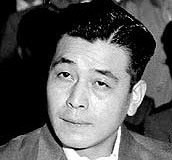
Masaru Okunishi
Mass murderer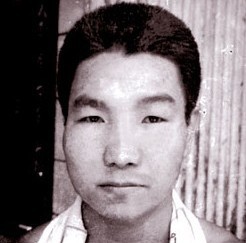 Iwao Hakamada
Mass murderer · Japan · 1966
Iwao Hakamada (袴田巖) was a Japanese professional boxer. Hakamada was born on Mar…
4 victims
Iwao Hakamada
Mass murderer · Japan · 1966
Iwao Hakamada (袴田巖) was a Japanese professional boxer. Hakamada was born on Mar…
4 victims
 Seiji Katagiri
Mass murderer · Japan · 1982
Seiji Katagiri (片桐 清二 Katagiri Seiji) served as Captain of Japan Airlines Fligh…
24 victims
Seiji Katagiri
Mass murderer · Japan · 1982
Seiji Katagiri (片桐 清二 Katagiri Seiji) served as Captain of Japan Airlines Fligh…
24 victims
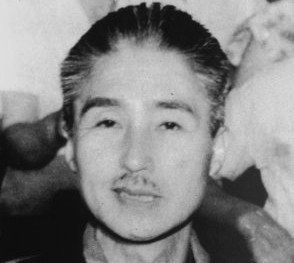 Sadamichi Hirasawa
Mass murderer · Japan · 1948
Sadamichi Hirasawa was a Japanese painter. He was also known as a tempera paint…
12 victims
Sadamichi Hirasawa
Mass murderer · Japan · 1948
Sadamichi Hirasawa was a Japanese painter. He was also known as a tempera paint…
12 victims
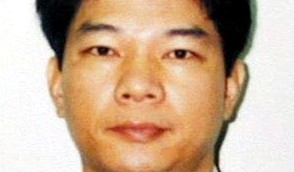 Mamoru Takuma
Mass murderer · Japan · 2001
Mamoru Takuma (宅間 守; November 23, 1963 – September 14, 2004) was a Japanese jan…
8 victims
Mamoru Takuma
Mass murderer · Japan · 2001
Mamoru Takuma (宅間 守; November 23, 1963 – September 14, 2004) was a Japanese jan…
8 victims
 Tomohiro Kato
Mass murderer · Japan · 2008
Tomohiro Katō was held in custody and was in prison awaiting trial. Tomohiro Ka…
7 victims
Tomohiro Kato
Mass murderer · Japan · 2008
Tomohiro Katō was held in custody and was in prison awaiting trial. Tomohiro Ka…
7 victims
 Guy Martel
Spree killer · France
Guy Martel killed seven people and wounded five others in a shooting spree thro…
7 victims
Guy Martel
Spree killer · France
Guy Martel killed seven people and wounded five others in a shooting spree thro…
7 victims
 Daniel Lee Zirkle
Murderer · USA · 1999
Daniel Lee Zirkle had an ongoing relationship with Barbara Schifflett, who was…
2 victims
Daniel Lee Zirkle
Murderer · USA · 1999
Daniel Lee Zirkle had an ongoing relationship with Barbara Schifflett, who was…
2 victims
 Ronald Lee Fitzgerald
Murderer · USA · 1993
January 29, 1993 — Ronald Lee Fitzgerald was convicted of capital murder in sla…
2 victims
Ronald Lee Fitzgerald
Murderer · USA · 1993
January 29, 1993 — Ronald Lee Fitzgerald was convicted of capital murder in sla…
2 victims
 Greagree Davis
Murderer · USA · 1984
Greagree C. Davis told the roommate of his sexual interest in her. He had prior…
1 victim
Greagree Davis
Murderer · USA · 1984
Greagree C. Davis told the roommate of his sexual interest in her. He had prior…
1 victim
 Reza Khan
Murderer · Afghanistan · 2001
Reza Khan died on October 8, 2007. He was charged on August 5, 2004 in Kabul, A…
5 victims
Reza Khan
Murderer · Afghanistan · 2001
Reza Khan died on October 8, 2007. He was charged on August 5, 2004 in Kabul, A…
5 victims
- Gender
- male
- Country
- Japan
- Location
- Kuzuo, Nabari city, Mie, Japan
- Date of birth
- 1926
- Age at first offence
- 35
- Characteristics
- poisoner, convicted rapist
- Victim profile
- Five women, including his wife
- Method of murder
- Poisoning by mixing pesticide in their wine
- Date(s) of murder
- March 28, 1961
- Years active
- 1961
- Date of arrest
- April 3, 1961
- Status
-
Sentenced to death
Acquitted in 1964; sentenced to death in 1969; Supreme Court dismissed appeal and confirmed death sentence in 1972; retrial petition failed repeatedly until an affirmative decision in 2005; execution stayed, then reversed in 2006; appeal to the Supreme Court was pending as of 7 September 2007
Background
Masaru Okunishi was a farmer from Kuzuo, a remote mountain village in Nabari city of Mie prefecture.
The case alleged that Okunishi poisoned to death five women in his village in 1961.
The offence
On March 28, 1961, Okunishi was alleged to have poisoned to death five women by mixing pesticide in their wine.
Okunishi was alleged to have carried the wine from the house of the local community chief to the community centre.
Investigation
Okunishi was investigated after authorities suspected the poisoning was deliberate and that one of the villagers was responsible for the incident.
Okunishi had to endure over three days of prolonged and severe interrogation.
The information presented included that after Okunishi was placed under arrest, villagers turned against him and began spreading rumors suggesting his guilt and wanting Okunishi to be punished at the earliest.
Arrest
Okunishi was alleged to have confessed on the night of April 2, 1961.
Okunishi was placed under arrest on April 3, 1961.
Trial
The case was tried at the Tsu District Court.
Okunishi was charged with the crime.
There was no material evidence or eyewitness available to connect Okunishi to the crime alleged against him.
The only piece of evidence described was a wine stopper found at the community centre, which allegedly had Okunishi’s teeth marks.
Several villagers who wished to solve the case immediately made statements before the prosecutor and testified that there was no person who could approach the wine secretly before the incident other than Okunishi.
Okunishi was acquitted in 1964.
In acquitting Okunishi, the court found that the witness statements were inconsistent and thus suspicious.
The court also opined that the evidence should be suspected as the result of “extraordinary efforts” of the prosecutors to prove Okunishi’s guilt.
The confession statement allegedly made by Okunishi was described as unnatural, unreasonable and thus unreliable to prove the motive, preparations, and the feasibility of the crime.
The teeth-marks allegedly found on the wine bottle stopper were held as not conclusive because the forensic test conducted on the stopper was not good enough to prove Okunishi’s identity.
Sentencing
The prosecution appealed to the Nagoya High Court.
In 1969, the Nagoya High Court reversed the finding of the trial court, convicted Okunishi, and sentenced him to capital punishment.
The Nagoya High Court held that circumstantial evidence was sufficient to prove Okunishi’s guilt.
In convicting Okunishi for murder, the court stated that, given the circumstances of the case, Okunishi had enough opportunity to poison the wine.
The court adopted a process of elimination of other possibilities and held that Okunishi was the only possible person who could have committed the crime.
The Nagoya High Court relied upon forensic evidence regarding the wine bottle stopper.
New forensic evidences produced by three scientists allegedly proved the marks on the stopper as matching with Okunishi’s dental structure, described as “[Black 3 Test].”
The information further stated that, although the court relied upon the tests to find Okunishi guilty, the result of the tests was later found to be false and even fabricated.
Appeals
Okunishi appealed to the Supreme Court.
The Supreme Court dismissed the appeal and confirmed the death sentence and punishment in 1972.
Starting from 1972, Okunishi petitioned for retrial four times; all were dismissed.
Aftermath
In 1973, the Japan Federation of Bar Associations (JFBA) formed the “Nabari Case Committee” to help Okunishi to find justice.
When the Nagoya High Court dismissed Okunishi’s fourth application for retrial, the JFBA helped Okunishi to file a fifth application for retrial at the same court.
Professor Habu of Japan University, using new forensic methods, proved “Black 3 Tests” to be unscientific and concluded that it was impossible to identify the mark on the wine stopper as belonging to Okunishi.
In 1993, the High Court dismissed the application on the ground that new evidence was not enough to vindicate Okunishi’s guilt.
The Supreme Court acknowledged that the value of “Black 3 Tests” had been rebutted to a great extent, but dismissed Okunishi’s appeal in 1997.
In April 2005, in Okunishi’s seventh retrial challenge, the Nagoya Appeal Court gave an affirmative decision.
Okunishi submitted new evidences to be considered in the case.
One of the new evidence items was described as clearly proving that the pesticide allegedly used by Okunishi to poison the wine was not the one that he had allegedly confessed to the investigators.
Another contention was that it was impossible for Okunishi to open the bottle as allegedly confessed by him.
The court, while deciding this appeal, raised serious concerns upon the evidence relied upon to convict Okunishi.
The court ordered a retrial and stayed the execution of the death sentence.
This stay was reversed by a different panel of the same court in 2006.
Okunishi appealed at the Supreme Court, which was pending consideration as of 7 September 2007.
Other details
The Asian Human Rights Commission (AHRC) received information regarding the case of Mr. Masaru Okunishi, aged 81 years, who was facing capital punishment and waiting for the Supreme Court’s decision for execution.
A First: Japan’s High Court Accepts Amicus From U.S. Law School Clinic Marcia Coyle — The National Law Journal May 1, 2008 described that the Supreme Court of Japan had recently accepted its first amicus brief from an American legal organization, The Center on Wrongful Convictions at Northwestern University School of Law.
The brief was filed through Okunishi’s counsel, Izumi Suzuki, who asked the center to write the amicus brief.
The center argued that the high court’s decision to deny Okunishi’s bid for a new trial was based on mistaken understandings of false confessions and asked the Supreme Court of Japan to grant a new trial.
Japanese authorities can learn much from America’s experience with false confessions, Steven A. Drizin, the Center’s legal director and a leading authority on false confessions, stated: “Japanese authorities can learn much from America’s experience with false confessions.”
Drizin also stated: “In the past five years, the number of American states that have required electronic recordings of some or all interrogations has more than quadrupled (from two to nine) and preventing false confessions has been one of the main impetuses for this reform.”
Drizin stated: “False and coerced confession evidence has played a role in many of the cases in which the Center has been involved, and, according to the Innocence Project, was instrumental in approximately 25 percent of the 216 DNA exonerations to date.”
Drizin noted that recent years had seen false confessions in the Japanese criminal justice system.
Drizin stated: “Japanese law enforcement authorities, who have a 99 percent conviction rate, rely on exceedingly long interrogations and psychological coercion to obtain confessions, he added.”
The center was part of Northwestern University School of Law’s Bluhm Legal Clinic.
The 1998 conference featured the largest ever gathering of exonerated death row inmates.
Drizin and false confession expert Richard Leo published “The Problem of False Confessions in the Post-DNA World” in the North Carolina Law Review, described as documenting and analyzing 125 proven false confessions in the United States, most of which had occurred in the previous decade.
Background information included the claim that Article 336 of the Japanese Code of Criminal Procedure prescribes the principle of a presumption of innocence, and that the conviction rate in Japan was more than 99%.
The information also stated that even if a defendant was acquitted, the prosecutor had power to appeal on the claim of an error in the finding of the facts, and that while having had affirmative decisions twice, Okunishi had been in death row for more than 40 years.
The information also included claims about interrogation and pre-trial detention practices and that suspects were usually detained for 23 days under the control of police authority and obliged to face prolonged interrogation in confined rooms, with allegations that unacceptable means, including psychological torture, were widely used during interrogation.
The information also stated that the UN Human Rights Committee and the UN Committee against Torture expressed concern regarding pretrial detention and interrogation in Japan and recommended reforms, including employing electronic monitoring systems during interrogation.
The information also claimed that courts generally tended to believe evidence produced by the prosecution, giving more weight to such evidence to convict than to approach such evidence with caution, and that courts tended to rely excessively on confessions.
The information also claimed that the prosecution was accused of non-production of exculpatory evidence and that under the legal and practical framework it was difficult for a contesting defense to unearth such evidences.
The information defined exculpatory evidence and contrasted it with inculpatory evidence.
It further stated that in Okunishi’s case, exculpatory evidence was not disclosed in the court and that this apparently denied Okunishi a fair trial.

Spotted an error, or have more information about this case?