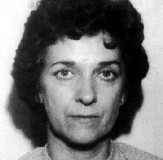
Audrey Hilley
Murderer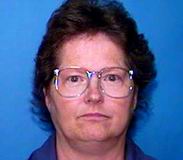 Bobbie Sue Terrell
Murderer · USA · 1984
Bobbie Sue Dudley Terrell was a Pinellas County nurse and worked as the night s…
12 victims
Bobbie Sue Terrell
Murderer · USA · 1984
Bobbie Sue Dudley Terrell was a Pinellas County nurse and worked as the night s…
12 victims
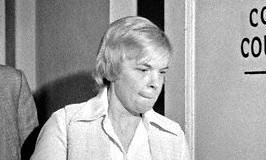 Marybeth Tinning
Murderer · USA · 1972
Marybeth Tinning (née Roe, born on September 11, 1942) was an American prisoner…
9 victims
Marybeth Tinning
Murderer · USA · 1972
Marybeth Tinning (née Roe, born on September 11, 1942) was an American prisoner…
9 victims
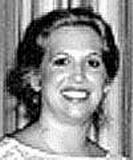 Debbie Fornuto
Murderer · USA · 1972
Deborah Fornuto was the mother of six children whose deaths were initially rule…
7 victims
Debbie Fornuto
Murderer · USA · 1972
Deborah Fornuto was the mother of six children whose deaths were initially rule…
7 victims
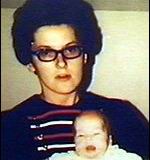 Waneta Ethel Hoyt
Murderer · USA · 1965
Waneta Ethel (Nixon) Hoyt was born in Richford, New York, and died in prison on…
5 victims
Waneta Ethel Hoyt
Murderer · USA · 1965
Waneta Ethel (Nixon) Hoyt was born in Richford, New York, and died in prison on…
5 victims
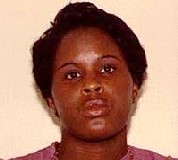 Debra Sue Tuggle
Murderer · USA · 1974
Debra Sue Tuggle was an African American woman born in Arkansas. She had a hist…
4 victims
Debra Sue Tuggle
Murderer · USA · 1974
Debra Sue Tuggle was an African American woman born in Arkansas. She had a hist…
4 victims
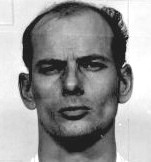 Jonathan Bruce Reed
Murderer · USA · 1978
Jonathan Bruce Reed was sentenced to death on September 6, 1969. His death sent…
1 victim
Jonathan Bruce Reed
Murderer · USA · 1978
Jonathan Bruce Reed was sentenced to death on September 6, 1969. His death sent…
1 victim
 Matthew Hoffman
Murderer · USA · 2010
Matthew Hoffman was an unemployed tree trimmer and had an obsession with trees…
3 victims
Matthew Hoffman
Murderer · USA · 2010
Matthew Hoffman was an unemployed tree trimmer and had an obsession with trees…
3 victims
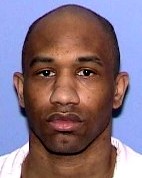 Elijah Joubert
Murderer · USA · 2003
Elijah Joubert was convicted of capital murder in October 2004 and was sentence…
2 victims
Elijah Joubert
Murderer · USA · 2003
Elijah Joubert was convicted of capital murder in October 2004 and was sentence…
2 victims
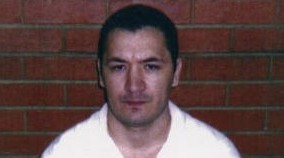 Ruben Montoya Cantu
Homicide · USA · 1984
Ruben Montoya Cantu was executed by lethal injection in Texas on August 24, 199…
1 victim
Ruben Montoya Cantu
Homicide · USA · 1984
Ruben Montoya Cantu was executed by lethal injection in Texas on August 24, 199…
1 victim
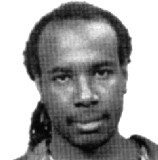 Gregory Rouster
Murderer · USA · 1986
John and Henrietta Rease, an elderly couple who lived in Gary, Indiana, cared f…
2 victims
Gregory Rouster
Murderer · USA · 1986
John and Henrietta Rease, an elderly couple who lived in Gary, Indiana, cared f…
2 victims
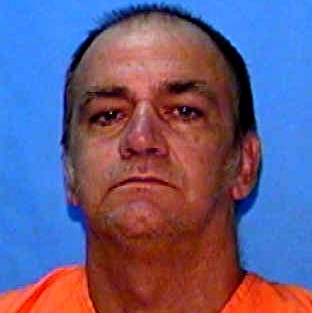 Gary Lawrence
Murderer · USA · 1994
Gary Lawrence (DOB: 06/29/57) was tried in the First Judicial Circuit, Santa Ro…
1 victim
Gary Lawrence
Murderer · USA · 1994
Gary Lawrence (DOB: 06/29/57) was tried in the First Judicial Circuit, Santa Ro…
1 victim
- Gender
- female
- Country
- USA
- Location
- Anniston, Calhoun County, Alabama , USA
- Date of birth
- June 4, 1933
- Age at first offence
- 42
- Characteristics
- poisoner, attempt to collect insurance money
- Victim profile
- Frank Hilley (her husband)
- Method of murder
- Poisoning (arsenic)
- Date(s) of murder
- May 25, 1975
- Years active
- 1975
- Date of arrest
- October 1979/ January 1983
- Status
-
Died (hypothermia) on February 26, 1987 after escaping on February 19, 1987 from Tutwiler State Women’s Prison at Wetumpka, Alabama
Case record: Audrey Hilley
Other identifiers and overview
Audrey Marie Hilley (June 4, 1933 - February 26, 1987) was an American murderer. She was convicted of her husband’s murder and attempted to kill her daughter by poisoning. Her life and spree were the subject of the 1991 telefilm Wife, Mother, Murderer. The movie starred Judith Light in the title role, with Whip Hubley and David Ogden Stiers.
People involved
- Audrey Hilley — defendant; widow of Frank Hilley; mother of Carol Hilley
- Frank Hilley — Audrey’s husband; died May 25, 1975
- Carol Hilley — Audrey’s daughter; attempted murder victim
- Huey Frazier — Audrey’s parent (named as Huey Frazier)
- Lucille Frazier — Audrey’s parent (named as Lucille Frazier)
- Lucille Frazier — also referred to as Lucille Frazier, Audrey’s mother; died January, 1977
- Carrie Hilley (also referenced as Carrie Hilley and Carrie Hilley) — mother-in-law; died November (after a prolonged illness); exhumed later
- Wilford Lane — Audrey’s attorney
- Thomas Harmon — Audrey’s defence counsel
- Joe Hubbard — assistant district attorney / prosecutor
- Judge Sam Monk — presided over the trial
- Gary Carroll — Lieutenant; conducted and taped a two-hour interview (September 26)
- Dr. Joseph Embry — Alabama Department of Forensic Sciences; concluded acute and chronic arsenic poisoning regarding Frank’s death
- Dr. Warren Sarrell — physician at Regional Medical Center in Anniston
- Dr. John Elmore — psychiatrist recommended by Dr. Warren Sarrell; treated Carol
- Dr. Brian Thompson — assigned to Carol’s case (after University hospital admission)
- Lieutenant Gary Carroll — led interview and investigation described in the narrative
- Eve Cole — Carol’s friend from church; present when injections were given; alerted others
- Freeda Adcock — Frank’s sister; found medical information and later testified
- Margaret Key — Audrey’s aunt; house burglarized on November 19
- Doris Troy — neighbor; had a key; reported fires
- Doris Ford — reported harassing phone calls
- Officer Billy Atherton — police officer who had a sexual relationship with Audrey (per the narrative)
- Bob Hardy — Detective, Keene Police Department
- Ron Oja — manager at Central Screw Corporation
- Peter — John Homan’s brother (mentioned as Peter living in New Hampshire)
- Jack McKenzie — boss/manager at Solar Testing Service
- Jack McKenzie (named in connection with employment) — workplace authority referenced in narrative
- Calhoun County coroner — Ralph Phillips was named as Calhoun County coroner
- Ralph Phillips — Calhoun County coroner; received a letter from Mike Hilley
- Mike Hilley — Audrey’s son; made calls; testified at trial; wrote letter to coroner
- Teri — Mike Hilley’s wife; referenced as ill with stomach trouble and having a miscarriage
- Sonya Gibson — an 11-year-old playmate who died in 1975 (arsenic later found at “normal” levels)
- Walter Clinton — Audrey’s employer; where she was said to have been found in bed with
- Harold Dillard — owner of a local construction company where Audrey worked nights
- Calvin Robertson — old school friend; sent money; later visited
- Clarence and Carrie Hilley — Frank Hilley’s family; names referenced in narrative
- Freeda and Jewel — Frank Hilley’s sisters referenced in narrative
- John Homan — met Audrey while she was using the name Robbi Hannon; later husband in the fugitive phase
- Robbi Hannon — alias used by Audrey while meeting John Homan
- Emily Stephens — name used when registered at a local motel (after bond)
- Teri Martin — alias used during fugitive period (also “Teri”)
- Terry Lynn Clifton — name considered as a possible identity in New Hampshire
- Carol Manning — woman described as fitting Teri Martin’s description and wanted for bank robbery
- Sellers — name used when found at a house on February 26
- Sue Craft — person whose porch Audrey was found on during escape period
- Bob Field — Calhoun County District Attorney
- Joe Hubbard — assistant district attorney who prosecuted Audrey; quoted about furlough policy
- Mark Gribben / Marlee MacLeod / Michael Newton — referenced in the narrative sections and/or bibliography, but not as participants in the case events
- Dr. Jones — family’s physician
- Dr. Brian Thompson — assigned to Carol’s case
- University of Alabama Hospital in Birmingham physicians — concentrated investigation on possibility of heavy metal poisoning
Timeline
- May 1951 — Audrey married Frank Hilley
- May 25, 1975 — Frank Hilley died (infectious hepatitis listed as cause of death)
- August 1978 — a $25,000 accidental death rider took effect on Carol’s policy
- April 1979 — Carol Hilley became ill (narrative describes prom and subsequent symptoms)
- August 1979 — Carol was admitted to Regional Medical Center in Anniston for the fourth time since April
- September 20, 1979 — Audrey was arrested again on check charges while Carol’s family sought medical attention and suspicions intensified
- October 3, 1979 — Forensic tests on Carol’s hair were conducted by the Alabama Department of Forensic Sciences revealing arsenic levels; that same day Frank Hilley’s body was exhumed for testing
- October 9, 1979 — Audrey was arrested for attempted murder of her daughter
- November 9, 1979 — Audrey was released on bond and registered at a local motel under the name Emily Stephens
- Between November 9 and November 18, 1979 — Audrey disappeared; a note indicating she “might have been kidnapped” was left behind; she was listed as a fugitive
- November 19, 1979 — break-in at the home of Audrey’s aunt; a note appeared reading:
- “Do not call police. We will burn you out if you do. We found what we wanted and will not bother you again.”
- January 11, 1980 — Audrey was indicted in absentia for Frank’s murder
- May 1981 — Audrey married John Homan, taking his last name
- Late summer 1982 — Audrey left New Hampshire telling her husband she needed to attend to family business and to see some doctors about an illness
- November 12 or 13 — after changing her hair color and losing weight, Audrey returned to New Hampshire and met John Homan posing as Teri Martin
- February 19, 1987 — Audrey was granted a three-day furlough and left Tutwiler State Women’s Prison for the last time
- February 26, 1987 — Audrey was found suffering from hypothermia and died (hypothermia)
Background
Audrey Marie Hilley was born on June 4, 1933 to Huey and Lucille Frazier. She was described as having seemed to enjoy a normal childhood.
Audrey married Frank Hilley in May 1951. The narrative describes Frank’s illness beginning in May 1975 with nausea and tenderness in his abdomen, treated as a viral stomach ache and later diagnosed as infectious hepatitis. He died early in the morning of May 25, 1975. An autopsy was performed with Audrey’s permission and revealed hepatitis, swelling of the kidneys and lungs, bilateral pneumonia, and inflammation of the stomach. Because the symptoms closely resembled those of hepatitis, no tests for poison were conducted; the cause of death was listed as infectious hepatitis.
After Frank’s death, Audrey redeemed a moderate life insurance policy that Frank had maintained for $31,140.
Slightly over three years later, Audrey took out a $25,000 life insurance policy on her daughter, Carol. A $25,000 accidental death rider took effect in August 1978.
The narrative also described that, by that time, doctors and later investigators discovered arsenic in Carol’s hair and in other deceased family members.
The offence (murder and attempted murder by poisoning)
Audrey was convicted for:
- her husband Frank Hilley’s murder
- attempted murder of her daughter Carol Hilley (by arsenic poisoning)
Arsenic poisoning was linked to Carol’s symptoms and to tests showing Aldridge-Mees’ lines in toenails and fingernails, and very high arsenic levels in Carol’s hair. Forensic tests on Carol’s hair conducted October 3, 1979 by the Alabama Department of Forensic Sciences revealed arsenic levels ranging from “over 100 times the normal level close to the scalp” to “zero times the normal level at the end of the hair shaft.” The findings indicated increasingly larger doses of arsenic over a period of four to eight months.
Arsenic levels were also found in tests on Frank Hilley’s exhumed body. On October 3, 1979, the analysis revealed abnormally high levels of arsenic, “ranging from 10 times the normal level in hair samples to 100 times the normal level in toenail samples.” Dr. Joseph Embry concluded that Frank’s cause of death was acute arsenic poisoning and that Frank had suffered from chronic arsenic poisoning, meaning arsenic was given for months prior to his death.
The narrative also described arsenic findings in other deceased family members, including Audrey’s mother and mother-in-law, with the account that the traces were significant but not fatal.
Investigation and evidence
Audrey was arrested on bad check charges while the attempted murder investigation was developing, and additional arsenic evidence was found in connection with Audrey’s belongings.
- On October 9, 1979, Audrey was arrested for attempted murder of her daughter. The Anniston, Alabama police found another vial in her purse, and subsequent testing revealed the presence of arsenic.
- A jar of Cowley’s New Improved Rat & Mouse Poison, containing between 1.4 and 1.5 percent arsenic, was found two weeks later by Frank Hilley’s sister.
- The narrative stated that evidence mounted as arsenic poisonings were linked across family members, including through exhumations and forensic findings.
A tape-recorded interview occurred on September 26 (year consistent with 1979 in the narrative’s sequence). Lieutenant Gary Carroll conducted and taped a two-hour interview and was able to obtain admissions from Audrey, including that she had given Carol injections both at home and in the hospital, and that she had also given her mother injections. She claimed the injections were actually medicine.
During the investigation, Frank Hilley’s body was exhumed on October 3, 1979. Carol’s family then found that Frank’s and Lucille Frazier’s tissues contained elevated arsenic levels.
Freeda Adcock searched the house where Marie and Carol had lived with Carrie Hilley and found a pill bottle half full of liquid; tests proved the liquid was arsenic. Arsenic was also found in a pill bottle Audrey had in her purse when she was arrested.
Arrest and fugitive period
Audrey remained incarcerated on her bad check charges when she was arrested on October 9, 1979 for attempted murder of her daughter.
After being released on bond, Audrey registered at a local motel under the name Emily Stephens on November 9, 1979, and she disappeared between the 9th and the 18th of November. A note indicating that she “might have been kidnapped” was left behind, a missing persons report was filed, and Audrey was listed as a fugitive.
On November 19, 1979, a break-in occurred at Audrey’s aunt’s home, and items including a car, women’s clothing, and an overnight bag were missing. Investigators found a note in the house reading:
- “Do not call police.
The narrative described that Audrey remained a fugitive for a little more than three years despite a “massive manhunt” by police and the FBI.
During the fugitive period, Audrey used multiple aliases, including:
- Robbi Hannon (while traveling to Florida and living with John Homan)
- Teri Martin (in travel involving Texas and Florida and while posing as a deceased wife’s sister)
- Teri (imaginary twin described in the narrative)
- Sellers (name used when found on February 26, 1987)
An obituary for Robbi Homan appeared in a New Hampshire newspaper but was suspected due to an inability to verify details it contained. A New Hampshire state police detective surmised that the woman living as Teri Martin was actually Robbi Homan and staged her death. The narrative states that shortly after police brought “Teri Martin” in for questioning, Audrey confessed to being Audrey Marie Hilley and was returned to Alabama to face trial.
Audrey was apprehended at Book Press on January 12, 1983. When asked her name, she said she was Audrey Marie Hilley and claimed she was wanted in Alabama on bad check charges; the narrative states that once her name was broadcast, authorities learned she faced additional charges in Alabama.
Trial
Audrey was brought back to Anniston on January 19, 1983. By then, another charge had been added: the murder of Frank Hilley. Her bond was set at $320,000, and no one stepped forward to pay it.
The trial presided over by Judge Sam Monk included:
- Prosecutor: assistant district attorney Joe Hubbard
- Defence counsel: Wilford Lane and Thomas Harmon
The narrative includes verbatim statements attributed to Thomas Harmon regarding anticipated evidence, including:
- “We expect,” Harmon said, “the evidence to show that Carol Hilley has used drugs extensively,”
- and that “Carol Hilley is, in fact, either a homosexual or has engaged in homosexuality.”
- It further stated that “In addition, we expect the evidence to show that Carol Hilley has, on at least three occasions, attempted suicide.”
Carol Hilley testified, with the narrative stating she admitted some drug use and suicide attempts but gave a detailed account that she had received injections from her mother during illness. Freeda Adcock testified that arsenic had been found among Audrey’s possessions, including items found after searching.
Evidence disputes raised by the defence included objections that items had been seized illegally; Judge Monk overruled those objections, and the items were allowed into evidence.
The narrative states Audrey admitted giving Carol two injections in a taped interview and claimed the injections were anti-nausea medicine and that she obtained one from a woman she met at the hospital. The narrative also states that in the taped interview Audrey said she “might be mentally ill” and “might need some help.”
The narrative states that it took the jury three hours to reach a verdict. Audrey Hilley was convicted of:
- murder of Frank Hilley
- attempted murder of Carol Hilley
Sentencing and incarceration
The following day after the verdict, Audrey received a life sentence for the murder and twenty years for the attempted murder.
At sentencing, she again professed her innocence.
On June 9, 1983, Audrey entered Tutwiler State Women’s Prison in Wetumpka, Alabama. She was assigned a job as a data processor and was classified as a medium security prisoner. The narrative states she was reclassified in 1985 as a minimum security prisoner and became eligible for passes and leaves.
In late 1986, her first eight-hour pass was approved. The narrative states she returned on time and eventually qualified for a three-day furlough by February 1987.
On February 19, 1987, Audrey left Tutwiler Prison on a three-day furlough and did not return.
Escape and death
The narrative states John Homan had relocated to Anniston, and Audrey and John spent the weekend in a hotel room there. On Sunday morning, Audrey told John she wanted to visit her parents’ graves and would meet him at 10:00 a.m. at a local restaurant. She did not return, and John found a note.
Audrey’s note to John stated:
- “I hope you will be able to forgive me,”
- “I’m getting ready to leave.”
- “It will be best for everybody.”
- “We’ll be together again.”
- “Please give me an hour to get out of town.”
The note further stated:
- “Marie wrote that a man named Walter was taking her out of town and that she would fly to Canada and contact John later.”
John called the sheriff. Authorities assumed she had a plan because of her history.
On February 26, 1987, police were called to a house near Blue Mountain due to a strange, delirious woman on Sue Craft’s porch. She told responders that her name was Sellers and that her car had broken down. She was suffering from hypothermia. Sue Craft did not recognize her as Marie Hilley, despite knowing her years earlier.
The narrative states that within a few minutes Audrey lost consciousness and convulsed, and her heart stopped in the ambulance en route to the hospital. It also states her body temperature had fallen to 81 degrees. She died after heart failure and doctors pronounced her dead that afternoon.
Outcome
Audrey’s legal outcome was:
- life in prison for her husband’s murder
- 20 years for attempting to kill her daughter She escaped on February 19, 1987. She died (hypothermia) on February 26, 1987.
Aftermath and additional claims in the narrative
The narrative includes additional assertions that Audrey maintained innocence and that she was a suspect in other cases.
It describes Audrey as repeatedly complaining to police about prowlers and threatening phone calls and greeting patrolmen with fresh pots of coffee when they arrived. It also states that at least two officers later complained of severe stomach cramps and nausea after drinking the coffee.
The narrative includes the death of an 11-year-old playmate, Sonya Gibson, in 1975; it states a 1983 autopsy revealed only “normal” levels of arsenic in her remains.
It also includes commentary about the prison furlough policy and quotes from Joe Hubbard and Bob Field regarding the escape:
- “I think this is not just insane, it’s gross negligence,” said Joe Hubbard, the assistant district attorney who prosecuted Audrey.
- “It seems to be an anticlimactic way for someone who was the great escape artist to die,” said Calhoun County District Attorney Bob Field.
- “This goes against everything she’s done in the past. The biggest escape artist in this area in 10 years, and what does she do? She ended up crawling around in the woods.”

Spotted an error, or have more information about this case?