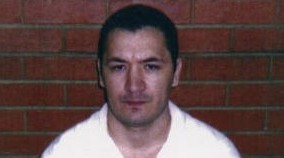
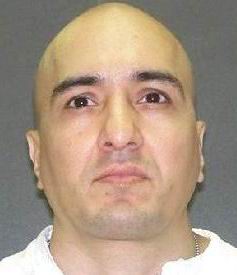
Ruben Montoya Cantu
Homicide Jack Kevorkian
Homicide · USA · 1990
Jack Kevorkian (born May 26, 1928) was a controversial American pathologist. He…
130 victims
Jack Kevorkian
Homicide · USA · 1990
Jack Kevorkian (born May 26, 1928) was a controversial American pathologist. He…
130 victims
 David Koresh
Homicide · USA · 1993
David Koresh (born Vernon Wayne Howell; August 17, 1959 – April 19, 1993) led t…
79 victims
David Koresh
Homicide · USA · 1993
David Koresh (born Vernon Wayne Howell; August 17, 1959 – April 19, 1993) led t…
79 victims
 Edward Charles Allaway
Homicide · USA · 1976
Edward Charles Allaway Edward Charles Allaway was found not guilty by reason of…
7 victims
Edward Charles Allaway
Homicide · USA · 1976
Edward Charles Allaway Edward Charles Allaway was found not guilty by reason of…
7 victims
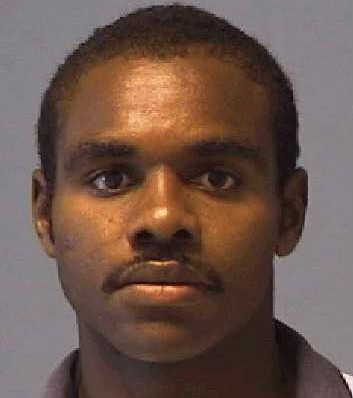 Clinton Bankston
Homicide · USA · 1987
15 August 1987 — Ann Morris (63), her sister Sally Nicholson (59), and Sally’s…
5 victims
Clinton Bankston
Homicide · USA · 1987
15 August 1987 — Ann Morris (63), her sister Sally Nicholson (59), and Sally’s…
5 victims
 Susanna Cox
Murderer · USA · 1809
Susanna Cox (1785–1809) was a young domestic servant in Berks County, Pennsylva…
1 victim
Susanna Cox
Murderer · USA · 1809
Susanna Cox (1785–1809) was a young domestic servant in Berks County, Pennsylva…
1 victim
 Roger Dean
Mass murderer · Australia · 2011
Roger Kingsley Dean was an aged-care nurse and worked at Quakers Hill Nursing H…
11 victims
Roger Dean
Mass murderer · Australia · 2011
Roger Kingsley Dean was an aged-care nurse and worked at Quakers Hill Nursing H…
11 victims
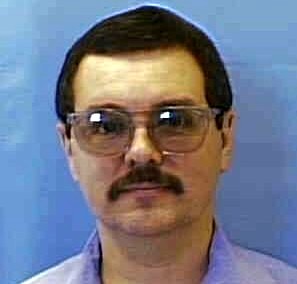 Donald Harvey
Serial killer · USA · 1970
Donald Harvey was known as an American serial killer and a self-professed “Ange…
87 victims
Donald Harvey
Serial killer · USA · 1970
Donald Harvey was known as an American serial killer and a self-professed “Ange…
87 victims
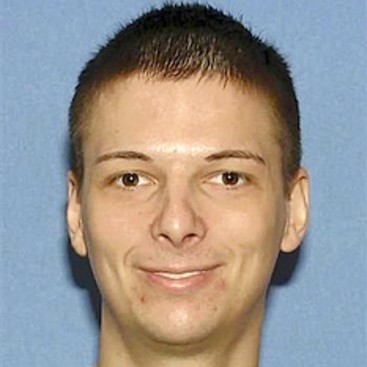 Stephen Kazmierczak
Mass murderer · USA · 2008
Stephen Kazmierczak died of a self-inflicted gunshot wound during the Northern…
5 victims
Stephen Kazmierczak
Mass murderer · USA · 2008
Stephen Kazmierczak died of a self-inflicted gunshot wound during the Northern…
5 victims
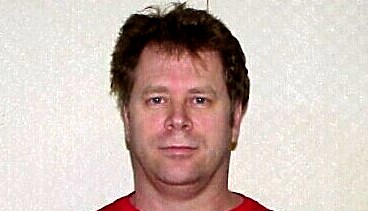 Ralph Baze
Murderer · USA · 1992
Ralph Baze was sentenced to death on February 4, 1994. · January 15, 1992 — Aut…
2 victims
Ralph Baze
Murderer · USA · 1992
Ralph Baze was sentenced to death on February 4, 1994. · January 15, 1992 — Aut…
2 victims
- Gender
- male
- Country
- USA
- Location
- Bexar County, Texas, USA
- Date of birth
- December 5, 1966
- Age at first offence
- 18
- Characteristics
- juvenile (17), robbery
- Victim profile
- Pedro Gomez, 25
- Method of murder
- Shooting (rifle)
- Date(s) of murder
- November 8, 1984
- Years active
- 1984
- Date of arrest
- —
- Status
-
Executed
Executed by lethal injection in Texas on August 24, 1993
Case record: Ruben Montoya Cantu
Status
Ruben Montoya Cantu was executed by lethal injection in Texas on August 24, 1993.
Timeline
- November 8, 1984 — Ruben Montoya Cantu and his accomplice broke into a vacant San Antonio house under construction, robbed two sleeping men at gunpoint, and shot Pedro Gomez and Juan Moreno.
- November 14, 1984 — Two detectives from the San Antonio Police Department visited Juan Moreno at the intensive care unit at Wilford Hall Medical Center and showed him photographs of possible suspects; Cantu’s photograph was not in the photo spread and Moreno did not identify any photos.
- December 16, 1984 — Detectives again visited Juan Moreno at Wilford Hall Medical and showed him a photo array including a photo of Cantu; Moreno did not identify Cantu and did not look at his photograph.
- March 1, 1985 — Cantu was involved in a bar shooting with an off-duty San Antonio police officer, Joe De La Luz.
- March 2, 1985 — An officer interviewed Juan Moreno at his home; Moreno provided the name of Ruben Cantu when viewing his picture but did not identify him as Gomez’s murderer.
- March 3, 1985 — A different officer, Detective Quintanilla, took Juan Moreno to the police station and showed him the same photo spread containing Cantu’s picture; Moreno identified Cantu’s photo as the man who had shot him and Gomez.
- July 30, 1985 — Cantu was convicted of capital murder and sentenced to death.
- February 4, 1987 — The Texas Court of Criminal Appeals affirmed Cantu’s conviction and sentence.
- 1987 — The Supreme Court denied certiorari (Cantu v. Texas, 484 U.S. 872).
- January 7, 1988 — A federal habeas motion for stay of execution was granted.
- January 8, 1988 — Cantu was slated to be executed on or before sunrise; the sentence was stayed.
- July 22, 1992 — The United States Court of Appeals for the Fifth Circuit decided Cantu’s appeal.
- August 24, 1993 — Cantu died by lethal injection.
Background
Ruben Montoya Cantu was born on December 5, 1966, and was executed on August 24, 1993, at age 26.
Cantu grew up in San Antonio. He became involved in car theft and was associated with a youth gang known for violent behavior, referred to as the Grey Eagles. Cantu had no prior convictions before his capital murder conviction.
The offence
November 8, 1984 home invasion and robbery-murder
After approximately 10:30 p.m., Pedro Gomez and Juan Moreno were awakened by two intruders at the house of Eusebio Moreno in San Antonio. The house was under construction, and Juan Moreno and Pedro Gomez were sleeping there because Eusebio Moreno had been experiencing theft incidents from the building site.
Juan Moreno was poked with a rifle and later identified the man as Ruben Cantu; an accomplice was involved. Cantu and the accomplice took wristwatches from Juan Moreno and Pedro Gomez and took Gomez’s wallet. Cantu told Gomez to pull back the mattress on one of the beds; under the mattress was a pistol owned by Eusebio Moreno wrapped in a rag.
Juan Moreno testified that, as Gomez was handing the bundle to Cantu, Cantu shot Gomez once in the head. Gomez fell to the ground and Cantu shot him eight more times. Cantu then trained his rifle on Juan Moreno, shooting him eight or nine times. Gomez died from multiple gunshot wounds to the body and head, and Juan Moreno survived.
In the autopsy testimony, Dr. Suzana Dana, a forensic pathologist and deputy chief medical examiner of Bexar County, testified that Pedro Gomez had nine gunshot wounds to the body, including a defensive wound to the left forearm consistent with the victim attempting to shield his face or body with his hands. Dr. Dana testified that Gomez was killed by shots from a rifle and that there was no powder tattooing as would typically have been present had shots been fired by a weapon with a shorter muzzle, such as a handgun. She further testified that the forensic findings suggested the victim was probably shot from one and one-half to two feet away. Dr. Dana also analyzed gunpowder traces on the palms of Gomez’s hands and concluded that the findings were consistent with “a gun being fired at the hands, or with the hands open simply because the levels are higher on the palms than on the backs.” In response to defense questions, Dr. Dana opined that it was unlikely that Gomez had fired a weapon at Cantu because that would have left gunpowder residue on the backs of Gomez’s hands, and clutching the gun would have shielded the palms from gunpowder.
Investigation
Visits and photo identifications involving Juan Moreno
Two detectives from the San Antonio Police Department visited Juan Moreno at the intensive care unit at Wilford Hall Medical Center on November 14, 1984 and showed him photographs of possible suspects. Cantu’s photograph was not in the photo spread, and Moreno did not identify any of the photos.
On December 16, 1984, detectives again visited Juan Moreno at Wilford Hall and showed him a photo array including a photo of Cantu. Moreno did not identify Cantu and did not look at his photograph. At trial, the detectives testified that Moreno avoided looking at Cantu’s picture, describing it as the detectives’ opinion that Moreno knew more than he was saying. Detective Garza testified that Moreno recognized some other men in the photo lineup but advised that the men were from the neighborhood and were not involved in the shooting of him or Pedro Gomez. Moreno also offered, for the first time, a general description of his assailants: two Hispanic males, one about 13 or 14 years old and the other about 19 and wearing blue jeans. In response to questions at trial, one detective testified that when asked if he was afraid to identify the assailant, Moreno replied, “Yeah.”
A later part of the proceedings described that when Moreno was shown a photo array including Cantu’s photograph on December 16, 1984, Cantu’s was the only picture Moreno avoided. Detective Herring testified at trial:
Q. So [Moreno] did not treat any of the other photographs the way he treated Mr. Cantu 's picture?
A. No, sir, he did not.
Q. Now, based on your experience, Detective Herring, have you had experienced before when people declined to pick out a photograph when you have reason to believe that they know who the person is?
A. Many times.
Q. And is what you saw on December 16, regarding Mr. Moreno's behavior, consistent with that pattern that you experienced before?
A. Yes, sir, it is.
March 1, 1985 bar shooting and its effect on the Gomez murder investigation
Four months after the November 8, 1984 robbery-murder, San Antonio police renewed efforts to obtain a positive identification in the Gomez murder investigation following Cantu’s involvement in a bar shooting with an off-duty San Antonio police officer, Joe De La Luz. At the time of the De La Luz shooting, Cantu was already a suspect in the murder of Pedro Gomez.
On March 2, 1985, an officer assigned to interview Juan Moreno at his home showed him five photographs different from those viewed on December 16, except that the photo of Cantu appeared in both arrays. Once again, Moreno did not identify anyone in the photographs. The officer discussed with Moreno that he had to identify the assailants if he knew their identity. During the interview, Moreno provided the name of Ruben Cantu when viewing his picture but did not identify him as Gomez’s murderer. Detective Ballesa testified at trial:
Q. Had you mentioned Ruben Cantu 's name to [Moreno]?
A. No, sir.
Q. But he told you that Ruben Cantu had shot him?
A. Yes, sir.
Q. What did he say when he got to Ruben Cantu 's photograph?
A. Well, he didn't say anything. He mentioned the name after--after the array had been shown to him, you know, and after there was some discussion on the matter is when he came up with the name.
Q. And what was this discussion?
A. Well, the discussion centered around I was trying to make the man comfortable; he was scared and visibly shaken; he didn't want to identify the photograph, and it became rather obvious that the problem. So, you know, he was trying to--to get me to say that we'd be able to protect him, things of this nature, if he identified the picture. He said, "Look, if I give you the name, why isn't that good enough?" I said, "Well, that isn't." I said, "You have to identify the photograph," and he wouldn't do it, but, you know, he definitely gave me the name.
March 3, 1985 station photo spread and in-court identification
On March 3, 1985, Detective Quintanilla went to the home of Eusebio Moreno for the purpose of taking Juan Moreno to the police station and showing him the photo spread once more. At the station, Detective Quintanilla showed Juan Moreno the same photo spread containing Cantu’s picture. This time, Moreno identified Cantu’s photo as representing the man who had shot him and Gomez.
Detective Quintanilla testified that when he asked Moreno why Moreno failed to identify Cantu previously, Moreno replied that “he had recognized the photo the day before; he just was afraid, scared.”
At trial, Juan Moreno identified Cantu in court and testified that he recognized him in the photographs shown on December 16, 1984 and March 2, 1985 but did not identify his photo on those occasions because, “I didn't want to get into any problems.”
Arrest
The narrative included that Cantu was not arrested until four months after the November 8, 1984 shootings, during the gunfight at the crowded bar involving off-duty veteran police detective Joe De La Luz. Officer Joe De La Luz recovered from three gunshot wounds.
Trial
Charges and conviction
A Bexar County, Texas grand jury convicted Cantu for the November 8, 1984 murder of Pedro Gomez during the commission of a robbery, in violation of § 19.03(a)(2) of the Texas Penal Code (Vernon Supp.1984).
At trial, the prosecution’s case included Juan Moreno’s identification testimony and the forensic testimony of Dr. Suzana Dana. Cantu did not testify at the guilt-innocence phase.
Dr. Dana’s testimony included findings related to the number of gunshot wounds, the “defensive” wound to Gomez’s left forearm, conclusions about the shots being from a rifle rather than a handgun based on the absence of powder tattooing, estimated distance, and conclusions about gunpowder traces on Gomez’s hands.
Defence
During the guilt-innocence phase, the defense presented an alibi witness, and it sought to discredit Moreno’s identification through recall and cross-examination of the police officers who conducted the photographic lineups.
The defense sought a limited testimony plan during the punishment phase but declined to put Cantu on the stand under conditions that would have allowed cross-examination.
A trial court ruling described the condition for testimony if Cantu took the stand during the punishment phase. The court stated:
THE COURT: The ruling is that you may offer any and all evidence that you care to offer through this witness. If you want to limit it to exactly what he said on your direct, that's fine; but when you pass him for cross-examination, he will be subject to cross-examination to the same [sic] as all other witnesses, only exceptions are any and all rules of evidence that apply to any and all witnesses, regarding the admissibility of evidence.
Punishment phase evidence
At the punishment phase, the prosecution presented five witnesses who testified to Cantu’s bad reputation in the community. Joe De La Luz also testified about being shot in the Scabaroo Lounge on the night of March 1, 1985.
Cantu presented six San Antonio police officers to attempt to discredit De La Luz’s testimony, and the defense recalled De La Luz for further questioning.
The state sought a death sentence based on the testimony of De La Luz about the bar shooting, in addition to the jury’s consideration of special issues.
Capital sentencing and death sentence
Cantu was convicted of capital murder and sentenced to death on July 30, 1985.
Sentencing
Cantu received a death sentence. The proceedings reflected special issues under Texas law, including consideration of youth as mitigating evidence and the possibility of submission of a lesser included offense if raised by evidence. The Texas Court of Criminal Appeals later affirmed the conviction and sentence.
Appeals
Texas Court of Criminal Appeals
Cantu appealed to the Texas Court of Criminal Appeals, which affirmed his conviction and sentence on February 4, 1987. The Texas Court of Criminal Appeals later denied a motion for rehearing. The Supreme Court denied certiorari (Cantu v. Texas, 484 U.S. 872, 108 S.Ct. 203, 98 L.Ed.2d 154) in 1987.
Federal habeas corpus and Fifth Circuit
Cantu was slated to be executed on or before sunrise on January 8, 1988. He filed a post-conviction habeas application in Texas, which the Texas Court of Criminal Appeals denied. He then filed a federal habeas application and motion for stay of execution, which was granted on January 7, 1988.
After an evidentiary hearing, a federal magistrate recommended habeas relief be denied. The district court accepted the magistrate’s report and denied the writ. Cantu appealed.
In his brief to the United States Court of Appeals for the Fifth Circuit, Cantu raised seven challenges:
- The Texas capital sentencing statutes precluded the jury from giving full effect to Cantu’s mitigating evidence of youth, violating the Eighth and Fourteenth Amendments.
- The trial court’s refusal to instruct the jury on the lesser included offense of voluntary manslaughter deprived him of constitutional rights.
- The in-court identification deprived him of due process due to impermissibly suggestive identification procedures.
- Trial counsel was ineffective for failing to request an expert witness on eyewitness identification.
- Cantu was denied effective assistance of counsel during the punishment phase.
- Cantu was denied effective assistance of counsel on appeal.
- His right to present evidence in mitigation was chilled by a Texas state rule that precluded a defendant who testifies at the penalty phase from challenging the sufficiency of evidence for guilt or the admissibility of identification evidence.
The Fifth Circuit affirmed denial of habeas relief.
Outcome
The Fifth Circuit affirmed the district court’s denial of habeas relief.
Other details
Written note and final request
Cantu wrote a note to the people of San Antonio stating:
“My name is Ruben M. Cantu and I am only 18 years old. I got to the 9th grade and I have been framed in a capital murder case.”
During execution proceedings, Cantu’s final request was for a piece of bubble gum, which was denied.
On the morning of August 24, 1993, he was asked if he had any last words and replied, “No sir.” Sodium thiopental entered his body at 12:15 a.m.; he took a deep breath followed by two shallow gasps and ceased breathing. Dr. Charles Rains pronounced him dead at 12:22 a.m.
Cantu was the fifth teenage offender executed by Texas and the 66th person executed in Texas since the state resumed capital punishment in 1982.
Additional statements attributed in the proceedings
Quotes included in the proceedings were attributed to:
- Sgt. Bill Ewell, who was said to have headed the investigation against Cantu, and who stated:
- “shot an officer who worked with me. It was difficult to get (the witness) to make the identification. We weren't able to get him for the police shooting, but we were able to get him for the murder.”
- Miriam Ward, forewoman of the jury that convicted Cantu, who stated:
- “We did the best we could with the information we had, but with a little extra work, a little extra effort, maybe we'd have gotten the right information. The bottom line is, an innocent person was put to death for it. We all have our finger in that.”
- Sam Millsap Jr., the former district attorney who made the decision to charge Cantu with capital murder, who stated:
- “It's so questionable. There are so many places where it could break down. We have a system that permits people to be convicted based on evidence that could be wrong because it's mistaken or because it's corrupt.”
Party relationships and identification comments
The accomplice involved in the robbery-murder was identified as David Garza, a juvenile.
Juan Moreno’s identification at trial included his testimony that the courtroom identification was based on his recollection of the shooting. The state courts described his identification as sufficiently based on his opportunity to view Cantu on the night of the shooting, and they found the identification not unduly tainted. A footnote described that a 75-watt bulb lighted the room well and that the lamp had been turned off when Gomez and Moreno went to sleep but was on later that night when Cantu awakened Moreno.
Requested lesser included offense and legal discussion
At trial, the defense requested instruction on voluntary manslaughter but the trial court sustained the state’s objection. The appellate discussion included the Texas voluntary manslaughter statute definitions for sudden passion and adequate cause, and the court concluded that no rational jury could find Cantu shot Gomez under the influence of sudden passion arising from an adequate cause, given the circumstances described, including that Cantu initiated the criminal episode, entered with an accomplice, awakened Gomez and Juan Moreno at gunpoint, robbed them, and repeatedly shot them with a rifle at point-blank range, killing one man and seriously wounding the other.
Execution-related medical staff
Dr. Charles Rains pronounced Cantu dead at 12:22 a.m. after the administration and cessation described during execution.
Spotted an error, or have more information about this case?