
Gordon Wardell
Murderer John Cooper
Murderer · United Kingdom · 1985
John Cooper was a serial killer from Milford Haven, Pembrokeshire. Cooper was c…
4 victims
John Cooper
Murderer · United Kingdom · 1985
John Cooper was a serial killer from Milford Haven, Pembrokeshire. Cooper was c…
4 victims
 Andrew Walker
Murderer · United Kingdom · 1985
Royal Scots corporal Andrew Walker killed three Army colleagues in a payroll ro…
3 victims
Andrew Walker
Murderer · United Kingdom · 1985
Royal Scots corporal Andrew Walker killed three Army colleagues in a payroll ro…
3 victims
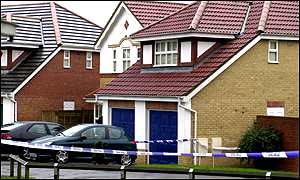 Anthony Smith
Murderer · United Kingdom · 2001
Anthony Smith was a former sergeant in the Coldstream Guards. He had left the C…
3 victims
Anthony Smith
Murderer · United Kingdom · 2001
Anthony Smith was a former sergeant in the Coldstream Guards. He had left the C…
3 victims
 David John Copeland
Murderer · United Kingdom · 1999
David John Copeland was born in Isleworth, in the London Borough of Hounslow, a…
3 victims
David John Copeland
Murderer · United Kingdom · 1999
David John Copeland was born in Isleworth, in the London Borough of Hounslow, a…
3 victims
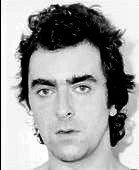 John Cannan
Murderer · United Kingdom · 1986
John Cannan Susannah “Suzy” Lamplugh was a British estate agent reported missin…
3 victims
John Cannan
Murderer · United Kingdom · 1986
John Cannan Susannah “Suzy” Lamplugh was a British estate agent reported missin…
3 victims
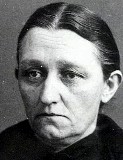 Sarah Makin
Murderer · Australia · 1892
Sarah Makin was also known as Sarah Jane Makin. John Makin (14 February 1845 –…
12 victims
Sarah Makin
Murderer · Australia · 1892
Sarah Makin was also known as Sarah Jane Makin. John Makin (14 February 1845 –…
12 victims
 Carl Weiss
Murderer · USA · 1935
Carl Weiss died at the scene after being shot in the Capitol building in Baton…
1 victim
Carl Weiss
Murderer · USA · 1935
Carl Weiss died at the scene after being shot in the Capitol building in Baton…
1 victim
 John Douglas White
Murderer · USA · 1994
John Douglas White was a former pastor of a small Mount Pleasant church and lat…
2 victims
John Douglas White
Murderer · USA · 1994
John Douglas White was a former pastor of a small Mount Pleasant church and lat…
2 victims
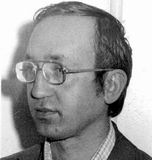 Vasiliy Kulik
Serial killer · Russia · 1984
Vasiliy Kulik was a Russian serial killer. He was responsible for the murders o…
13 victims
Vasiliy Kulik
Serial killer · Russia · 1984
Vasiliy Kulik was a Russian serial killer. He was responsible for the murders o…
13 victims
 Shawn Humphries
Murderer · USA · 1994
Shawn Humphries was convicted of murder and sentenced to death for the shooting…
1 victim
Shawn Humphries
Murderer · USA · 1994
Shawn Humphries was convicted of murder and sentenced to death for the shooting…
1 victim
 Nollie Lee Martin
Murderer · USA · 1977
Nollie Lee Martin was executed by electrocution in Florida on May 12, 1992. Mar…
1 victim
Nollie Lee Martin
Murderer · USA · 1977
Nollie Lee Martin was executed by electrocution in Florida on May 12, 1992. Mar…
1 victim
- Gender
- male
- Country
- United Kingdom
- Location
- Nuneaton, Warwickshire , England, United Kingdom
- Date of birth
- May 8, 1953
- Age at first offence
- 41
- Characteristics
- parricide, domestic violence
- Victim profile
- His wife Carol, 39
- Method of murder
- Asphyxia (probably a combination of pressure on the neck and smothering)
- Date(s) of murder
- September 12, 1994
- Years active
- 1994
- Date of arrest
- —
- Status
-
Life imprisonment
Sentenced to life imprisonment (minimum 18 years) on December 21, 1995
Background
Gordon Wardell was the husband of Carol Wardell. Carol Wardell was the manager of a branch of a building society. Wardell received a life sentence after being convicted of murdering his wife.
The offence
Carol Wardell was killed at their home and her body was later found adjacent to a lay-by in open country. Cash was stolen from the building society branch where Carol Wardell worked.
The High Court later set out findings that Wardell had committed the murder and then ran a staged plan to deceive police so that Carol would appear to have been taken by a gang of robbers to the building society where she worked and subsequently killed.
Investigation
A post-mortem revealed that Carol Wardell had received numerous minor injuries to her head and body. The cause of death was asphyxia, probably a combination of pressure on the neck and smothering.
A post-mortem and the later court proceedings addressed the question of whether Wardell’s account of events was truthful. The trial judge reported that Wardell went to elaborate lengths, including breaking into and robbing the building society managed by his wife, tying himself up and inflicting injuries on himself, to make it appear as if his wife had been taken by a gang of robbers to the building society where she worked and subsequently killed.
Cash missing from the building society was not recovered.
Arrest
Wardell denied his guilt during the proceedings.
Trial
Wardell was convicted of murder. The trial court record included a description of Wardell’s account and the prosecution’s position that the account was a sham. The prosecution argument was that Wardell was not attacked by any gang, that he was not rendered unconscious and tied up by any gang, and that he tied and put the gag on himself. The prosecution argument also included that bruises were self-inflicted and that Wardell carried out the staged raid to fake the robbery and the scene that confronted police officers.
The jury unanimously rejected Wardell’s story that the couple were victims of a gang of armed robbers.
Sentencing
On December 21, 1995, Wardell was sentenced to life imprisonment. The minimum term was set to be served to satisfy the requirements of retribution and deterrence at 18 years.
In sentencing, the judge said that Wardell was “an extremely dangerous, evil and devious man. You killed your wife in a brutal manner then cynically attempted to escape detection by going to elaborate lengths to make it appear that your crime was the work of a gang of robbers.” The judge added: “This murder was an outrage to your wife, her family, and to everybody who knew her.”
Before passing sentence, the court was told of a previous conviction: when Wardell, as a 17-year-old student, was jailed for four years for wounding with intent after indecently assaulting and stabbing the wife of his science master.
The sentencing remarks were accompanied by reactions in the public gallery, and Mrs Wardell’s mother, Joan Heslop, burst into tears after the sentence.
Appeals
Wardell made an application under Schedule 22 of the Criminal Justice Act 2003. This application was heard in the High Court of Justice, Queen’s Bench Division at the Royal Courts of Justice, Strand, London.
High Court hearing (Application under Criminal Justice Act 2003)
The application was heard by MR. JUSTICE TEARE on 23/08/2007.
The High Court set out that on 21 December 1995 Wardell had been convicted of murder and sentenced to life imprisonment. It also stated that on 1 July 1996 the Home Secretary set the period to be served to satisfy the requirements of retribution and deterrence at 18 years (the minimum term). The court described Wardell as an existing prisoner within the meaning of Schedule 22 of the CJA 2003 and stated that it needed to specify the part of his sentence that Wardell must serve before early release provisions would apply, and that the specified part could not be longer than the minimum term notified to him by the Secretary of State.
The High Court considered seriousness and stated it had regard to:
- the general principles in Schedule 21,
- the recommendations made by the trial judge (18 years) and the Lord Chief Justice (18 years),
- the representations made by the applicant and by relatives of the victim.
The High Court stated it also took account of any period spent in custody by Wardell only because he was committed to custody by an order of the court made in connection with proceedings relating to the offence of murder of which he was convicted, and that it was satisfied that it should have regard to 14 months spent in custody.
The High Court stated that Wardell was born on 8 May 1953 and was 42 at the time of sentence. It stated that the offence was committed between 10 and 13 September 1994 when he was 41.
The High Court described the victim of the murder as Wardell’s wife, Carol, and stated that on 12 September 1994 she was found lying on grass verge adjacent to a lay-by in open country. It repeated that the cause of death was asphyxia, probably a combination of pressure on the neck and smothering, and it stated that Wardell denied his guilt. It further stated that the trial judge in his report to the Home Secretary said Wardell went to elaborate lengths, including breaking into and robbing the building society managed by his wife, tying himself up and inflicting injuries on himself, to make it appear that his wife had been taken by a gang of robbers to the building society where she worked and subsequently killed.
The High Court stated that £14,126.67 in cash was missing from the building society which was never recovered.
The High Court inferred from the missing cash that it was a murder committed for gain, stated that there may have been additional motivations but that gain appeared to have been one of them, and said it followed that the starting point was 30 years.
The High Court stated that the offence was aggravated by a considerable degree of planning and said it could not identify a mitigating factor.
The High Court addressed prison conduct: it said Wardell’s conduct in prison could have little if any effect on the seriousness of the offence, and that his progress, though commendable, was not exceptional such as might possibly affect the minimum term. It added that it would be a matter for the Parole Board after the minimum term had been served.
The High Court said that applying the general principles in Schedule 21 of the CJA 2003 the minimum period would have been 32 years, while the recommendations of the trial judge and Lord Chief Justice were for 18 years. It stated that those recommendations were made long before the passing of the 2003 Act and that, in any event, the court could not specify as the part of the sentence to be served before early release provisions apply a part longer than the minimum period notified to the applicant by the Home Secretary, which was 18 years. It therefore specified that the part of the sentence to be served before the early release provisions apply was 18 years less 14 months.
Timeline
- 10 September 1994 — The offence was committed between 10 and 13 September 1994.
- 12 September 1994 — Carol Wardell was found lying on grass verge adjacent to a lay-by in open country.
- 21 September — Carol Wardell’s body was found in a lay-by two miles from Nuneaton by a motorist.
- December 21, 1995 — Wardell was sentenced to life imprisonment (minimum 18 years).
- 1 July 1996 — The Home Secretary set the minimum term at 18 years.
- 23/08/2007 — MR. JUSTICE TEARE heard the application under Schedule 22 of the Criminal Justice Act 2003.
Outcome
Wardell received a life sentence for murdering his wife. The High Court specified the part of his sentence that must be served before early release provisions would apply as 18 years less 14 months.
Other details
Wardell was described as a 6ft 3ins tall fitness fanatic.
In connection with motive, Detective Superintendent Tony Bayliss led the murder investigation. Bayliss said that a motive had never been fully established, and that one theory was that Wardell was at risk of losing his job as an executive for a car parts company; he said it inevitably led to financial problems and that he believed the murder was domestically oriented.
Carol Wardell was described as devoted to her husband and they married in 1982. She was said to have concentrated on her career at the Woolwich after finding out she could not have children. The court was told that Wardell had not had sex with his wife for six months before her death and that the relationship worsened because he had suffered a period of redundancy.
The High Court proceedings recorded that the court had regard to representations made by the applicant and by relatives of the victim. The High Court also stated that Wardell was an existing prisoner for the purposes of Schedule 22 of the CJA 2003.
The case references included:
- Case No: 2004/1098/MTR
- In the High Court of Justice Queen's Bench Division
- Royal Courts of Justice Strand, London, WC2A 2LL
- Before: MR. JUSTICE TEARE
- Between: REGINA (Claimant) and GORDON DAVID WARDELL (Defendant)
Quotes from sentencing:
“You are an extremely dangerous, evil and devious man. You killed your wife in a brutal manner then cynically attempted to escape detection by going to elaborate lengths to make it appear that your crime was the work of a gang of robbers.”
“This murder was an outrage to your wife, her family, and to everybody who knew her.”
Quotes from counsel’s submissions at trial included:
“an elaborate scheme to quite literally get away with murder”.

Spotted an error, or have more information about this case?