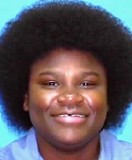
Andrea Hicks Jackson
Murderer Bobbie Sue Terrell
Murderer · USA · 1984
Bobbie Sue Dudley Terrell was a Pinellas County nurse and worked as the night s…
12 victims
Bobbie Sue Terrell
Murderer · USA · 1984
Bobbie Sue Dudley Terrell was a Pinellas County nurse and worked as the night s…
12 victims
 Angela Johnson
Murderer · USA · 1993
Angela Jane Johnson was convicted in federal court of aiding and abetting the m…
5 victims
Angela Johnson
Murderer · USA · 1993
Angela Jane Johnson was convicted in federal court of aiding and abetting the m…
5 victims
 Catherine May Wood
Murderer · USA · 1987
Catherine May Wood was an American caregiver who worked at the Alpine Manor Nur…
5 victims
Catherine May Wood
Murderer · USA · 1987
Catherine May Wood was an American caregiver who worked at the Alpine Manor Nur…
5 victims
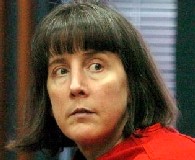 Amy Bishop
Murderer · USA · 1986
Amy Bishop — biology professor and perpetrator · James Anderson — Bishop’s husb…
4 victims
Amy Bishop
Murderer · USA · 1986
Amy Bishop — biology professor and perpetrator · James Anderson — Bishop’s husb…
4 victims
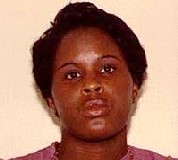 Debra Sue Tuggle
Murderer · USA · 1974
Debra Sue Tuggle was an African American woman born in Arkansas. She had a hist…
4 victims
Debra Sue Tuggle
Murderer · USA · 1974
Debra Sue Tuggle was an African American woman born in Arkansas. She had a hist…
4 victims
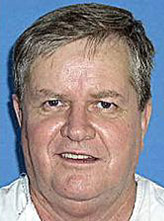 Melvin Wayne White
Murderer · USA · 1997
Melvin Wayne White (male, White) Melvin Wayne White was sentenced to death for…
1 victim
Melvin Wayne White
Murderer · USA · 1997
Melvin Wayne White (male, White) Melvin Wayne White was sentenced to death for…
1 victim
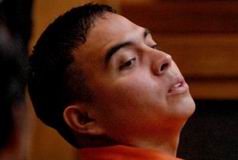 Ricardo Hernandez
Homicide · USA · 1998
Ricardo Hernandez, also known as “Ricky” and “El Boy,” was wanted by Brownsvill…
1 victim
Ricardo Hernandez
Homicide · USA · 1998
Ricardo Hernandez, also known as “Ricky” and “El Boy,” was wanted by Brownsvill…
1 victim
 Robert Streetman
Murderer · USA · 1982
Robert Streetman was executed by lethal injection in Texas on January 7, 1988.…
1 victim
Robert Streetman
Murderer · USA · 1982
Robert Streetman was executed by lethal injection in Texas on January 7, 1988.…
1 victim
 Mark Brandon Read
Murderer? · Australia · 1979
Mark Brandon “Chopper” Read (born 17 November 1954) was an Australian ex-convic…
19 victims
Mark Brandon Read
Murderer? · Australia · 1979
Mark Brandon “Chopper” Read (born 17 November 1954) was an Australian ex-convic…
19 victims
 Christina Lyons
Murderer · USA · 2010
Christina Suzanne Lyons was a Kyle day care owner. She ran an at-home daycare c…
1 victim
Christina Lyons
Murderer · USA · 2010
Christina Suzanne Lyons was a Kyle day care owner. She ran an at-home daycare c…
1 victim
- Gender
- female
- Country
- USA
- Location
- Jacksonville, Florida, USA
- Date of birth
- February 26, 1958
- Age at first offence
- 25
- Characteristics
- to avoid arrest
- Victim profile
- Gary Bevel, 29 (Jacksonville police officer)
- Method of murder
- Shooting
- Date(s) of murder
- May 16, 1983
- Years active
- 1983
- Date of arrest
- Same day
- Status
-
Resentenced to life in prison on June 16, 2000 after Supreme Court of Florida overturned four death sentences (1992, 1994, 1996, 1998), with the murder conviction remaining unaffected
Case identification
Andrea Hicks Jackson (also known as Felice) was convicted of murdering a black male police officer, Gary Bevel, in Jacksonville.
Background
Jackson was born on Feb 26, 1958. She was described as Black. At the time of the murder, Gary Bevel was 28 and Jackson was 24. After subsequent proceedings, Jackson was described as 41 and later as 42.
The offence
The shooting occurred in May 1983 at Boulevard and 26th streets as Bevel, 29, attempted to arrest Jackson on a charge of filing a false police report about vandalism to her car. Bevel struggled to get Jackson into a police car. After dropping her keys to catch Bevel off guard, Jackson fired six shots. The shots struck Bevel four times in the head and two times in the shoulder.
Investigation
After the shooting, Bevel had been recruited by Sheriff Nat Glover, and Bevel was described as a young officer.
Trial
Jackson was convicted of first-degree murder and a jury recommended the death penalty.
During Jackson’s trial, testimony by former Sheriff Dale Carson was ruled inappropriate, and the death sentence was later reversed based on that ruling. Jackson repeatedly indicated during the June 16, 2000 sentencing hearing that she was not prepared to make statements to the court.
Defense attorney Stephen Weinbaum sought to withdraw from the case because he said he had not had time to prepare for it due to other commitments. Moran declined Weinbaum’s motion to withdraw and proceeded with the hearing. Though Moran stated early in the hearing that he intended to sentence Jackson on July 13, he announced the sentence at the end of the proceeding.
Jackson’s longtime attorney, Stephen Weinbaum, argued that Jackson did not plan to kill Bevel and said it was “simply not a premeditated murder.”
“She was pretty shaken up,” said defense attorney Stephen Weinbaum. “She was somewhat in shock.”
“Justice requires punishment,” Moran said during the sentencing.
“She didn't want to go back to jail,” Assistant State Attorney Bernie de la Rionda said during the sentencing hearing.
“Three juries have recommended that the death penalty be imposed, and the last time was by a 12-0 vote,” Assistant State Attorney Bernie de la Rionda said.
“Further example of justice delayed,” Assistant State Attorney Bernie de la Rionda said.
“Three juries have recommended that the death penalty be imposed, and the last time was by a 12-0 vote,” de la Rionda said.
“Jackson doesn't deserve to be executed because she didn't plan to kill Bevel,” Stephen Weinbaum said.
“This was simply not a premeditated murder,” Weinbaum said.
Sentencing
Initial death sentence and subsequent death sentences
Moran sentenced Jackson to death in 1984 after she was convicted of murdering Officer Gary Bevel, who was shot six times when he tried to arrest her.
She was scheduled to die on May 9, 1989, but the Florida Supreme Court granted an indefinite stay of execution on May 4, 1989.
The death sentence was reversed in July 1989. Jackson was resentenced on Feb 21, 1992.
The death sentence was reversed again in 1994.
A third jury decided Jackson should get the death penalty in 1995, and Moran agreed in 1996, but the state Supreme Court overturned the sentence again, citing that Moran did not provide a detailed analysis of his reasoning.
In 1998, Moran sentenced Jackson to death for the fourth time, but the state Supreme Court overturned the sentence in January 2000, ruling that Jackson’s rights were violated because she was not allowed to attend a hearing in Duval County two years earlier.
June 16, 2000 commutation to life imprisonment
Chief Circuit Judge Donald R. Moran changed Jackson’s sentence and ordered that she spend the rest of her life in prison. The decision was reached through a surprise sentencing at the end of the June 16, 2000 proceeding.
The record described Moran as having maintained for more than 15 years that Jackson should die for killing Officer Gary Bevel before sentencing her to life.
The sentencing hearing included the following comments and statements:
- Moran asked Jackson several times if she wanted to make statements to the court, and Jackson repeatedly said she was not prepared.
- Moran was described as uncomfortable with the Florida Supreme Court sending the case back to him and as wanting finality.
Assistant State Attorney Bernie de la Rionda said it would be up to Jackson’s lawyers to decide if they wanted to ensure that the law on parole eligibility applied. State Attorney Harry Shorstein commented on Moran’s frustration and referenced how the case continued to be sent back by the state Supreme Court.
“She didn't want to go back to jail,” Assistant State Attorney Bernie de la Rionda said yesterday during the sentencing hearing.
“It's gotten to the point where it's very difficult for us to know when they'll affirm a death penalty and when they won't,” State Attorney Harry Shorstein said.
“I think there's been a definite inconsistency over the years and the rulings that are applicable to the sentence of death, not the conviction but the sentence of death,” Shorstein said.
“With all respect for Judge Moran, he's been dealing with this case for 17 years, and I think that he felt that there had to be an end to it,” Shorstein said.
“I understand that he could conclude that it was appropriate to bring it to an end,” Shorstein said.
“It's gotten to the point where it's very difficult for us to know when they'll affirm a death penalty and when they won't,” Shorstein said.
“We respectfully disagree with the court's ruling but we're bound by it. The judge made a decision,” Assistant State Attorney Bernie de la Rionda said.
“Indeed, one of a criminal defendant's most basic constitutional rights is the right to be present in the courtroom at every critical stage in the proceedings,” the court’s majority wrote in a 5-2 decision.
Chief Circuit Judge Donald Moran was quoted in relation to the Supreme Court’s instructions:
“I'm going to do whatever they tell me,” Moran said. “It's not my place to disagree with them.”
A decision also quoted the dissenting justices as follows:
- Chief Justice Major B. Harding and Charles Wells were described as dissenting.
- Chief Justice Major B. Harding wrote that the “judge did what we told him to do. And now, we reverse him.”
“judge did what we told him to do. And now, we reverse him,” Chief Justice Major B. Harding wrote.
Appeals
Florida Supreme Court reversals of death sentences
The Florida Supreme Court reversed Jackson’s death sentence in July 1989, which led to resentencing on Feb 21, 1992.
A further reversal occurred in 1994, based on the trial judge’s instructions describing the murder as “cold, calculated and premeditated.”
In 1996, the Florida Supreme Court overturned another death sentence because Moran did not provide a detailed analysis of his reasoning.
In January 2000, the Supreme Court overturned the 1998 death sentence because Jackson’s rights were violated when she was not allowed to attend a hearing in Duval County two years earlier.
The Supreme Court stated in a 5-2 decision that a basic constitutional right included being present “at every critical stage in the proceedings.”
Statements by the prosecution and defense about the appeals process
Assistant State Attorney Bernie de la Rionda called the Jackson case “a further example of justice delayed,” and also commented on frustrations with the death-penalty appeals process.
State Attorney Harry Shorstein commented on how difficult it was to know when the state Supreme Court would affirm a death penalty and when it would not, and he referenced inconsistency over time in rulings applicable to the sentence of death.
Outcome
On June 16, 2000, Moran sentenced Jackson to life imprisonment after the Supreme Court of Florida overturned her fourth death sentence.
The murder conviction was described as unaffected by the Supreme Court’s January 2000 action.
Jackson was described as eligible for parole in nine years, despite Moran’s pronouncement that her sentence was “without parole.” The eligibility discussion referenced laws on the books in 1984 that said killers sentenced to life are eligible for parole in 25 years.
Aftermath and reactions
Jackson left Chief Circuit Judge Donald Moran’s courtroom after the sentencing change, and she was described as smiling and then later breaking down in tears and hugging her attorney. She was described as coming within five days of being executed in 1989.
Sheriff Nat Glover said he was disappointed Jackson would not pay with her life for killing Officer Gary Bevel.
David L. Stevens, described as president of the Fraternal Order of Police in Jacksonville, expressed that justice was not served in the murder case and criticized the sentencing change.
John Pialorsi, business agent for the Fraternal Order of Police in Jacksonville, said Jackson had received “every, every, every piece of due course of law” and said “You never bury the memory of Gary Bevel, because you can't [with the case still pending].”
“She was somewhat in shock,” defense attorney Stephen Weinbaum said.
“You never bury the memory of Gary Bevel, because you can't [with the case still pending],” John Pialorsi said.
Other details
- Jackson was described as one of only four women on Florida’s Death Row.
- Jackson was described as repeatedly having her case remanded back to Duval County tribunals by the Florida Supreme Court.
- The January 28, 2000 Florida Supreme Court decision came less than three weeks after state lawmakers passed a plan intended to limit appeals in death penalty cases.
- Assistant State Attorney Bernie de la Rionda said prosecutors could not appeal Moran’s June 16, 2000 decision.
- The appeal reversal history included that Moran sentenced Jackson after receiving written arguments but not holding a hearing that allowed her to attend.

Spotted an error, or have more information about this case?