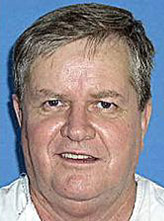
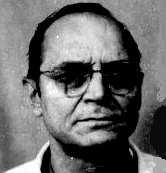
Melvin Wayne White
Murderer Russell Ellwood
Murderer · USA · 1991
Russell Ellwood was a former taxi driver. Authorities suspected him of killing…
20 victims
Russell Ellwood
Murderer · USA · 1991
Russell Ellwood was a former taxi driver. Authorities suspected him of killing…
20 victims
 Robert Martines Perez
Murderer · USA · 1994
Name: Robert Martines Perez · Other name used in proceedings: Robert Martinez P…
15 victims
Robert Martines Perez
Murderer · USA · 1994
Name: Robert Martines Perez · Other name used in proceedings: Robert Martinez P…
15 victims
 Billy Frank Vickers
Murderer · USA · 1993
Billy Frank Vickers Vickers was executed by lethal injection in Texas on Januar…
14 victims
Billy Frank Vickers
Murderer · USA · 1993
Billy Frank Vickers Vickers was executed by lethal injection in Texas on Januar…
14 victims
 Jason Wayne Rose
Murderer · USA · 1988
Jason Wayne Rose was a state prisoner who appealed the denial of his 28 U.S.C.…
1 victim
Jason Wayne Rose
Murderer · USA · 1988
Jason Wayne Rose was a state prisoner who appealed the denial of his 28 U.S.C.…
1 victim
 Frederick Smallwood
Murderer · USA · 1995
Frederick B. Smallwood (also known as Frederick B. Smallwood, Sr.) was convicte…
1 victim
Frederick Smallwood
Murderer · USA · 1995
Frederick B. Smallwood (also known as Frederick B. Smallwood, Sr.) was convicte…
1 victim
 Mauriceo Brown
Murderer · USA · 1996
Name: Mauriceo Brown Mauriceo Brown was convicted in Texas state court of capit…
1 victim
Mauriceo Brown
Murderer · USA · 1996
Name: Mauriceo Brown Mauriceo Brown was convicted in Texas state court of capit…
1 victim
 Terry Pitchford
Murderer · USA · 2004
Terry Pitchford v. State of Mississippi (No. 2006-DP-00441-SCT) · Terry Pitchfo…
1 victim
Terry Pitchford
Murderer · USA · 2004
Terry Pitchford v. State of Mississippi (No. 2006-DP-00441-SCT) · Terry Pitchfo…
1 victim
 Caryl Chessman
R obber and rapist · USA · 1947
Caryl Whittier Chessman (May 27, 1921 in St. Joseph, Michigan – May 2, 1960 at…
0 victims
Caryl Chessman
R obber and rapist · USA · 1947
Caryl Whittier Chessman (May 27, 1921 in St. Joseph, Michigan – May 2, 1960 at…
0 victims
- Gender
- male
- Country
- USA
- Location
- Pecos County, Texas, USA
- Date of birth
- January 25, 1950
- Age at first offence
- 47
- Characteristics
- kidnapping, rape, sexual abuse, convicted rapist, child abuse
- Victim profile
- Jennifer Lee Gravell, 9 (neighbor)
- Method of murder
- Striking her seven times on the head with a tire tool
- Date(s) of murder
- August 5, 1997
- Years active
- 1997
- Date of arrest
- Next day
- Status
-
Executed
Executed by lethal injection in Texas on November 3, 2005
Parties
- Melvin Wayne White (male, White)
Background
Melvin Wayne White was sentenced to death for the 1997 capital murder of 9-year-old Jennifer Lee Gravell in Pecos County. He was scheduled to be executed after 6 p.m. on Thursday, November 3, 2005.
White was 55 at the time of execution. His hair color was brown; his height was 5 ft 09 in; his weight was 205; and his eye color was brown. His prior occupation was listed as Mechanic/Laborer. He had no prior felony convictions.
The jury also learned that before the capital murder, White had assaulted his underaged daughter, forced her to perform oral sex, and raped her. The jury also heard that he offered his daughter $50 per week if she would provide him with sexual favors on demand.
The jury further learned that White had fondled the genitals of a four-year-old female cousin and grabbed the breast of an unrelated teenage girl visiting his home. The jury also learned that White had beaten his ex-wife on at least two occasions and taken a swing at a male friend of his teenaged son.
The offence
Abduction and sexual assault of Jennifer Lee Gravell
On August 5, 1997, Melvin White abducted 9-year-old neighbor Jennifer Lee Gravell from a neighborhood barbeque. He bound her hands with electrical tape, drove her to a deserted area north of Ozona, took her behind a water tank, and sexually assaulted her.
He then killed Jennifer by striking her six to seven times on the head with a tire tool. The blows crushed Jennifer’s skull. Witnesses observed White driving a truck with a young girl in the passenger seat shortly before midnight the evening of the barbecue, and returning home after 1 a.m. the following day.
Confession and guidance to the body
White was arrested, and he confessed to the crime. White told police where they could find Jennifer’s body.
Evidence linking White to the crime
- Shoe prints found at the crime scene matched the shoes White had been wearing at the barbecue, and the shoes were found in White’s home.
- Blood on the shoes matched Jennifer’s DNA.
- Blood on the right rear quarter panel of White’s pickup truck matched Jennifer’s DNA.
- Tire tracks at the crime scene were similar to those of White’s pickup truck.
- Police recovered Jennifer’s underpants and sandals in a trash container inside White’s house, along with a ball of electrical tape with numerous blonde hairs that a trace evidence expert said could have belonged to Jennifer.
Investigation
White’s confession allowed investigators to locate the body. The investigation also relied on physical evidence including shoe prints, DNA found on shoes and on the pickup truck, tire tracks, and items including underpants, sandals, and electrical tape with blonde hairs found at White’s home.
Arrest
White was arrested after the events surrounding Jennifer’s abduction, sexual assault, and death.
Trial
Charges and trial outcomes
- August 15, 1997 — White was indicted for capital murder.
- June 10, 1999 — White was convicted of capital murder.
- June 14, 1999 — White was sentenced to death.
Direct appeal
- January 31, 2001 — The Texas Court of Criminal Appeals affirmed White’s conviction and sentence.
Evidence described at trial
In the punishment phase, the prosecution presented evidence that White had forced his daughter to perform oral sex and penetrated her with his finger when she was twelve. White’s daughter testified that two years later he offered her $50 per week if she would provide him with sexual favors upon demand.
Additional evidence at the punishment phase included testimony that when White was between ten and twelve years old, he molested a four-year-old relative. A witness testified that White allowed teenagers to have parties at his house where alcohol was served, and during a party he touched a teenage girl’s breast. Another witness testified that White watched her engage in sex with his son and later described the events in detail.
The jury was also told that White had beaten his ex-wife on at least two occasions.
Expert opinion presented at trial
Dr. Windell Dickerson, the chief psychologist employed by the Texas prison system, opined for the prosecution that, if one believed that White had raped his daughter, then White posed a very serious risk for further violent conduct. Dr. Dickerson concluded that White was at substantial risk or considerable risk of committing criminal acts of violence that would constitute a continuing threat to society. Dr. Dickerson testified that sex offenders tend to commit multiple kinds of sex offenses, that women serve among prison staff, and that escapes had occurred in the prison system, including one from death row. He also testified that alcoholic beverages are available inside prison even though consumption violates prison rules.
Additional narrative regarding the punishment hearing
One account described the jury received the prosecution’s evidence regarding White’s sexual assaults of his daughter and allegations involving other victims, alongside testimony presented about alcohol availability at his home and assaults on other individuals.
Sentencing
After a separate punishment hearing, the jury sentenced White to death on June 14, 1999.
Appeals
Habeas corpus proceedings in state court
- September 4, 2000 — White filed an application for a writ of habeas corpus in the state trial court.
- August 23, 2001 — The state trial court recommended that habeas relief be denied.
- October 31, 2001 — The Texas Court of Criminal Appeals denied habeas corpus relief.
Federal habeas corpus proceedings and certificate of appealability
- October 28, 2002 — White filed a petition for a writ of habeas corpus in a U.S. district court.
- April 22, 2004 — The federal district court denied habeas corpus relief.
- July 19, 2004 — White filed a motion for a certificate of appealability (COA) in a U.S. district court.
- August 2, 2004 — The federal district court denied White’s request for a COA.
COA requests in the Fifth Circuit and related motions
- September 20, 2004 — White filed a motion for a COA in the 5th U.S. Circuit Court of Appeals.
- March 24, 2005 — The 5th Circuit Court denied White’s request for a COA.
- April 4, 2005 — White filed a petition for rehearing by the full 5th Circuit Court.
- April 15, 2005 — The 5th Circuit Court denied White’s petition for rehearing.
A separate federal appellate discussion denied a certificate of appealability. It stated that a state court’s rejection of a challenge to the sufficiency of evidence supporting the jury’s affirmative answer to a special punishment issue was not unreasonable, and that ineffective assistance of state habeas counsel could not provide cause for a procedural default. The panel denied White’s application for COA on both issues raised.
Supreme Court petition and later federal litigation
- July 7, 2005 — White filed a petition for writ of certiorari in the U.S. Supreme Court.
- October 11, 2005 — The U.S. Supreme Court denied White’s petition.
- October 21, 2005 — White filed a 1983 claim in U.S. federal court.
- October 25, 2005 — The federal district court dismissed White’s complaint with prejudice.
A separate appellate discussion affirmed the district court’s dismissal of White’s § 1983 action seeking equitable relief. The appeal was affirmed on grounds that White was dilatory in filing for equitable relief, and the Court of Appeals determined dismissal was warranted.
Timeline
- August 5, 1997 — Melvin White abducted 9-year-old Jennifer Lee Gravell from a neighborhood barbeque, sexually assaulted her, and killed her by striking her head with a tire tool.
- district court.
- district court.
- Circuit Court of Appeals.
- Supreme Court.
- October 11, 2005 — The U.S. Supreme denied White’s petition.
- federal court.
- November 3, 2005 — White was scheduled for execution by lethal injection.
Outcome
Execution and final statement
Melvin Wayne White was executed by lethal injection on November 3, 2005 in Texas. He was pronounced dead at 6:21 p.m. Lethal injection was started, and White said, "I can taste it."
White made a final statement apologizing to Beth Gravell, the victim’s mother:
"Tell Beth and them I am sorry, truly sorry for the pain that I caused your family," White told his victim's mother in his last statement.
"I truly mean that, too. She was a friend of mine, and I betrayed her trust."
He then expressed love to his friends and family, recited the 23rd Psalm and the Lord’s Prayer from the Bible, and said:
"All right warden, let's give them what they want."
Reported last meal request
One account described White requested four Spanish omelets with gravy and hash brown potatoes on the side, six pieces of buttered toast, a gallon of milk, sliced peppers, onion rings, french fries, a cheeseburger, a pork chop and gravy, fried chicken, six slices of bread, a pitcher of ice, two Cokes, peach cobbler and vanilla ice cream.
Aftermath
In May 2003, Charlie Gravell, Jennifer’s father, shot himself to death. Jennifer’s grandmother, Dottie Elrod, blamed the suicide on Jennifer’s murder. Dottie Elrod said:
"He just couldn't handle it,"
White’s final statement included an apology to Beth Gravell, who did not attend the execution. Another named person referenced post-execution reporting as an assistant prosecutor in Crockett County at the time of trial.
Other details
- White had no prior felony convictions.
- An account described evidence that authorities were given the location of the body by the subject.
- A witness described seeing White in his truck with what he believed was a blond person; the victim had blond hair.
- White told a reporter, "I don't remember much about it because I was drinking," and said he had been a drinker since he was 13 or 14.
- White said:
"I messed up, that's all there is to it,"
and also: "I don't want to die, but that the state would be doing him a favor by executing him."
"I look at it as relief, just to get out of here,"
"If they put me to death, it's going to be the easy way out. The hard way would be to have me live here with that."

Spotted an error, or have more information about this case?