
Patricia Jennings
Murderer Bobbie Sue Terrell
Murderer · USA · 1984
Bobbie Sue Dudley Terrell was a Pinellas County nurse and worked as the night s…
12 victims
Bobbie Sue Terrell
Murderer · USA · 1984
Bobbie Sue Dudley Terrell was a Pinellas County nurse and worked as the night s…
12 victims
 Megan Huntsman
Murderer · USA · 1996
Megan Huntsman was 40 at sentencing. She was a mother of three children who wer…
6 victims
Megan Huntsman
Murderer · USA · 1996
Megan Huntsman was 40 at sentencing. She was a mother of three children who wer…
6 victims
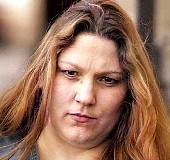 Angela Johnson
Murderer · USA · 1993
Angela Jane Johnson was convicted in federal court of aiding and abetting the m…
5 victims
Angela Johnson
Murderer · USA · 1993
Angela Jane Johnson was convicted in federal court of aiding and abetting the m…
5 victims
 Catherine May Wood
Murderer · USA · 1987
Catherine May Wood was an American caregiver who worked at the Alpine Manor Nur…
5 victims
Catherine May Wood
Murderer · USA · 1987
Catherine May Wood was an American caregiver who worked at the Alpine Manor Nur…
5 victims
 Michele Kalina
Murderer · USA · 1996
Michele Kalina pleaded guilty to murder for one of five infants she initially w…
5 victims
Michele Kalina
Murderer · USA · 1996
Michele Kalina pleaded guilty to murder for one of five infants she initially w…
5 victims
 Amy Bishop
Murderer · USA · 1986
Amy Bishop — biology professor and perpetrator · James Anderson — Bishop’s husb…
4 victims
Amy Bishop
Murderer · USA · 1986
Amy Bishop — biology professor and perpetrator · James Anderson — Bishop’s husb…
4 victims
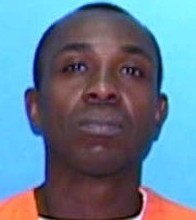 Richard Barry Randolph
Murderer · USA · 1988
Richard Barry Randolph was sentenced to death on April 5, 1989. He was identifi…
1 victim
Richard Barry Randolph
Murderer · USA · 1988
Richard Barry Randolph was sentenced to death on April 5, 1989. He was identifi…
1 victim
 Jacqueline Gibons
Murderer · USA · 1982
Jacqueline Gibons (only child; adoptive daughter of Benjamin and Sybil Gibons;…
2 victims
Jacqueline Gibons
Murderer · USA · 1982
Jacqueline Gibons (only child; adoptive daughter of Benjamin and Sybil Gibons;…
2 victims
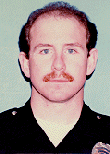 Alan Winterborne
Mass murderer · USA · 1993
Alan Winterborne (33) wanted a job and became involved in a long dispute with u…
4 victims
Alan Winterborne
Mass murderer · USA · 1993
Alan Winterborne (33) wanted a job and became involved in a long dispute with u…
4 victims
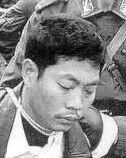 Huang Hu
Frustrated murderer · China · 2002
Huang Hu was born in 1973 in Wuchuan, Guangdong, China. He died on January 3, 2…
0 victims
Huang Hu
Frustrated murderer · China · 2002
Huang Hu was born in 1973 in Wuchuan, Guangdong, China. He died on January 3, 2…
0 victims
- Gender
- female
- Country
- USA
- Location
- Wilson County, North Carolina, USA
- Date of birth
- August 24, 1942
- Age at first offence
- 47
- Characteristics
- parricide, torture
- Victim profile
- William Henry Jennings, 80 (her husband)
- Method of murder
- Beating
- Date(s) of murder
- September 19, 1989
- Years active
- 1989
- Date of arrest
- —
- Status
-
Life imprisonment
Sentenced to death on November 5, 1990; resentenced to life in prison in June 2013
Background
Patricia Jennings beat her 80-year-old husband, William Henry Jennings, to death in Wilson County, North Carolina.
Jennings had previously been married to the victim’s financial consultant acquaintance, George Henry, for the purpose of transferring assets. Jennings was a nurse working at Westwood Manor Nursing Home in Wilson when she first met Jennings in June 1983. Jennings, a retired businessman living in Wilson, was an active member of Alcoholics Anonymous and was called to the nursing home for a consultation about an alcoholic patient.
Four years later, in February 1987, defendant and Jennings were married. She was forty-four years old; he was seventy-seven.
Shortly after their marriage in September 1987, defendant and Jennings visited George Henry, a financial consultant at Merrill Lynch and an acquaintance of Jennings for more than twenty years. The purpose, Henry testified, was to transfer half of Jennings’ assets, which then totaled about $150,000, to defendant. An account was opened for defendant, and half of Jennings’ assets were transferred to the new account.
The State presented several witnesses who testified that Jennings told them of ongoing abuse by defendant and that he was afraid defendant would kill him or have him committed to an institution. Among these was Superior Court Judge Knox Jenkins.
In May 1989, Jenkins was practicing law in Smithfield. Jennings came to Jenkins’ office to have a will drawn. According to Jenkins’ testimony, Jennings said defendant had physically beaten him, dragged him across the room, and stomped him with her cowboy boots. Jennings told Jenkins defendant had threatened to stomp him to death with her cowboy boots. Jennings also told Jenkins defendant had tried to have him committed. Jenkins testified that Jennings was a frail man physically but was not confused and appeared well oriented. Jenkins had no reservations or doubts about Jennings’ competency. Jennings never returned to Jenkins’ office to sign the legal documents.
The jury returned a verdict finding defendant guilty upon the theories of (1) premeditation and deliberation and (2) torture.
The offence
The State presented evidence that Jennings was beaten and tortured to death in a hotel room in Wilson, North Carolina on 19 September 1989.
Defendant’s evidence suggested that Jennings suffered from dementia and died from accidental or self-inflicted wounds.
On 19 September 1989, defendant and Jennings were staying at the Hampton Inn in Wilson. About 9:30 p.m., defendant called the desk and said she had a “code blue.” The hotel manager called 911, and emergency medical personnel arrived at 9:35 p.m. They found defendant performing CPR on Jennings, who was lying nude on the floor.
Paramedic Larry Parnell testified that he asked defendant how long Jennings had been “down.” Defendant, Parnell testified, said Jennings had been down five to ten minutes. When Parnell began doing CPR on Jennings, Jennings’ skin appeared cool and his body seemed generally stiff.
Paramedic Lee Fowler testified that when he arrived at the hotel room, defendant was wearing a black nightgown and brown cowboy boots. Jennings was taken to Wilson Memorial Hospital where he was pronounced dead. Emergency room physician Dr. Andrew Duerr testified that in his opinion Jennings had been dead for at least several hours.
Dr. Andrew Price, a Wilson physician and local medical examiner, testified that he examined Jennings’ body at the hospital around 10:30 the night of Jennings’ death. In his opinion, based in part on the fact that Jennings’ body temperature was 86.3 degrees, Jennings had been dead for six to eight hours.
Dr. Page Hudson, forensic pathologist and former Chief Medical Examiner for the State of North Carolina, testified that he performed an autopsy on Jennings on 20 September 1989. Dr. Hudson found multiple bruises and scrapes on various parts of Jennings’ head, scalp, face, neck, legs, arms and hands. All the injuries appeared fresh.
There was a large bruise in the mesentery of the abdominal cavity, the tissue which holds in and supports the intestines and contains blood vessels to the intestines. Dr. Hudson opined that a blunt force impact to the abdominal wall caused the tears in the mesentery, and that blood loss from these tears caused the victim’s death. The injury to the abdomen was not consistent with a fall in the bathtub, Dr. Hudson testified, unless the victim fell from a height of at least twenty feet. The injury was, however, consistent with a kick or stomp to the abdomen.
Additionally, Dr. Hudson found tiny cracks or splits in the thin membrane that lines the anus around the sphincter. The surface of the membrane had been stretched to the point that it cracked. Dr. Hudson testified, further, that the pattern of injuries was not consistent with an injury caused by a rectal thermometer.
Dr. Hudson also found injuries to the head of the penis in the form of sharply defined imprints. In his opinion, a pair of forceps found in the hotel room could have caused these wounds. Dr. Hudson examined the forceps and found a small piece of skin consistent with the type found on the underside of the eyelid or the head of the penis. Dr. Hudson also found a laceration on the shaft of the penis, scrapes at the base of the penis, and a scratch on the scrotum.
In his opinion, most of Jennings’ injuries were inflicted around the same time, and Jennings had been dead five to ten hours before his body arrived at the emergency room. Based on Jennings’ injuries, Dr. Hudson opined that Jennings had been sexually assaulted and tortured.
Finally, Dr. Hudson testified that, after consultation with a neuropathologist, he found no evidence of any organic brain disorder, including Alzheimer’s disease. Dr. Hudson also testified that deprivation of caring interaction can have a great effect on the personality of elderly people and can lead to mental alterations, confusion, and what appears to be dementia.
Dr. Price, the local medical examiner, testified for the State on rebuttal that certain drugs can cause symptoms similar to those displayed by some persons with dementia. Tests showed high levels of one of these drugs, butalbital, in Jennings’ body.
Detective Teresa Jo Adams of the Wilson Police Department investigated Jennings’ death. She testified that she found a large blood stain on the carpet of the hotel room, blood on the sheets, and a blood-stained adult’s diaper underneath a pillow. There was also a bloodstain on the underside of a pillowcase.
Investigation
Detective Teresa Jo Adams investigated Jennings’ death.
District Court Judge Allen Harrell, who had known Jennings for about thirty years, testified for the State on rebuttal that defendant called him the day after Jennings’ death and asked how closely doctors could approximate the time of a person’s death based on autopsy results.
Arrest
No separate arrest details were included in the material.
Trial
Defendant was tried capitally on an indictment charging her with the first-degree murder of her eighty-year-old husband, William Henry Jennings.
Jennings, a retired businessman living in Wilson, and an active member of Alcoholics Anonymous, was called to the nursing home for a consultation about an alcoholic patient when defendant first met him.
Jennings never returned to Jenkins’ office to sign legal documents after going there for a will drawn.
Jury selection issue concerned whether the trial court properly excused a prospective juror for cause due to views about the death penalty. The excused prospective juror was identified as Lamm. The following exchange occurred during questioning:
[PROSECUTOR]: Could you return a sentence recommendation of death? [JUROR LAMM]: I’d rather not. [PROSECUTOR]: Are you saying then that you would automatically vote against imposing capital punishment without regard to the evidence as it develops? [JUROR LAMM]: Yes, sir. [PROSECUTOR]: I take it then you would not vote in favor of the death penalty under any facts or circumstances no matter how aggravating the case was and no matter what the facts were. [JUROR LAMM]: I wouldn’t like to vote death. [PROSECUTOR]: Are you saying then that you would not vote for death, no matter how aggravating the case was or how or what the facts were, you could not return a sentence recommendation of death? [JUROR LAMM]: No. [PROSECUTOR]: If that’s your conviction, I’m not trying to change that, I’m just asking you? [JUROR LAMM]: Well, I wouldn’t like to, no. [PROSECUTOR]: You would not, are you saying that you would not be able to? [JUROR LAMM]: No. [PROSECUTOR]: Challenged for cause. THE COURT: . . . Do you feel that some persons convicted of first degree murder deserve the death penalty? [JUROR LAMM]: Yes, if they did it. THE COURT: Do you feel that there are some persons who are guilty of first degree murder who do not deserve the death penalty? [JUROR LAMM]: (Pause) Well, yes. THE COURT: . . . [The] Legislature has set out very strict procedures that the jury must follow. . . . Would you be willing to go through those procedures? [JUROR LAMM]: Yes, sir. THE COURT: And if you went through those procedures and if you were satisfied that death was the appropriate sentencing in the case, could you vote death, walk back into this Courtroom and announce your verdict? [JUROR LAMM]: Yes, if I had to. THE COURT: Do you feel that you would find yourself in a situation whereby you would be trying to find ways that you could not vote for the death penalty? [JUROR LAMM]: I do feel like that. THE COURT: That you would be trying to find ways to vote for life imprisonment over death? [JUROR LAMM]: Yes. THE COURT: Alright, let me sum it up. Do you feel that if you served on this jury and if the trial got to the sentencing phase that you could listen to the evidence and could make your recommendation to me and it would be more than a recommendation, it would really be a sentence. I would simply put it into effect based on what the jury recommended to the Court. . . . Do you feel that you could recommend a sentence to the Court based on the evidence you heard and based on the law and that you would not be predisposed one way or the other in your deliberation? Or do you feel that you would be biased in some respect? [JUROR LAMM]: Probably would. THE COURT: Probably would what? [JUROR LAMM]: Be biased in some way.
The trial court did not err in excusing prospective juror Lamm for cause.
During the guilt phase, defendant argued that the trial court erred in allowing Dr. Hudson to testify that Jennings was “tortured.” The trial court allowed the testimony.
A transcript fragment described the redirect examination exchange:
[PROSECUTOR]: Dr. Hudson, are you familiar with the term torturous type injury? [DEFENSE COUNSEL]: Objection. [PROSECUTOR]: Dr. Hudson, considering all of the injuries that you observed on the body of William Henry Jennings, do you have an opinion as to whether or not Mr. Jennings had been the victim of torturous activity? [DEFENSE COUNSEL]: Objection. THE COURT: Overruled. [DR. HUDSON]: I do. [PROSECUTOR]: What is your opinion? [DR. HUDSON]: In my opinion, he had been tortured.
Defendant also argued that the trial court erred in allowing Dr. Hudson to testify there was a “sexual assault” upon the victim. The trial court overruled objections. Another quoted exchange included:
[PROSECUTOR]: What does this pattern indicate to you, sir? [DR. HUDSON]: In my opinion, this pattern of injuries fits with assault, attack.
The material also described that defendant’s motion to dismiss was denied.
Defendant testified in her own behalf. Defendant said she loved her husband and did not kick, stomp, assault or hurt him in any way. Defendant testified that Jennings would get very depressed at times and would beat his testicles and pick his rectum. During these severe depressions he would “go into what I call, canine behavior . . . . He would crawl around on the floor and make noises like a dog and would want to eat--he would put his food down on the floor and want to eat that way.”
Defendant testified that on the day before his death, Jennings found out that a friend had died; this caused him to retreat into his “canine behavior.”
Defendant testified that Jennings beat his testicles with a shoe and, later that day, fell in the bathtub. Defendant testified that the next day, 19 September, Jennings again fell hard in the bathtub. Defendant testified she found him in the bathroom beating himself with a “huge piece of cheese that we’d been carrying around for a couple of weeks, and it was hard . . . . He had [the cheese] in [a] plastic bag, swinging and hitting himself with it.” She also testified she saw Jennings picking his rectum. Later that evening she awoke and found him on the floor.
Defendant testified she did not recall telling paramedic Parnell that Jennings had been down five to ten minutes; did not recall asking Judge Harrell how closely doctors can estimate the time of death from autopsy results; and denied that she was wearing cowboy boots when paramedics came to the hotel room the night of Jennings’ death.
The trial court denied defendant’s motions to dismiss at the close of the State’s evidence and of all the evidence.
The jury found defendant guilty of first-degree murder based on both torture and premeditation and deliberation.
At the capital sentencing hearing, Dr. Hudson again testified about the injuries.
George Henry testified again about Jennings’ holdings, the transfers during the course of the marriage to defendant, and the value of the limited partnerships at the time of the trial.
Defendant’s daughter and son testified about their mother’s qualities and achievements.
Sentencing
The jury found three aggravating circumstances:
- The murder was committed while the defendant was engaged in the commission of or while attempting the penetration of the anus with an object.
- The murder was committed for pecuniary gain.
- The murder was especially heinous, atrocious, or cruel.
The jury found four mitigating circumstances:
- Defendant had no record of criminal convictions.
- Defendant had been a peaceful person in the community in which she lived and had no prior record for violent crimes.
- Defendant’s childhood history, background and record showed no indication of a habitually violent nature.
Upon finding that the mitigating circumstances were insufficient to outweigh the aggravating circumstances, and that the aggravating circumstances were sufficiently substantial to call for the death penalty, the jury recommended a sentence of death.
The trial court imposed a sentence of death.
The material included extensive discussion of sentencing phase issues and preservation issues. Those issues were discussed in connection with jury instructions and the sufficiency and constitutionality of aggravating circumstances.
The supreme court also provided a “proportionality review” discussion, concluding that the record supported the jury’s finding of the three aggravating circumstances and that nothing suggested the sentence was imposed under the influence of passion, prejudice, or any other arbitrary factor. The court then held that the death sentence was not excessive or disproportionate.
The supreme court result was “NO ERROR.”
Appeals
The Supreme Court of North Carolina appeal of right described:
- Filed: June 4, 1993.
- State of North Carolina v. Patricia Wells Jennings.
- Appeal of right pursuant to N.C.G.S. § 7A-27(a) from a judgment imposing a sentence of death entered by Butterfield, J., at the 8 October 1990 Criminal Session of Superior Court, Wilson County, upon a jury verdict finding defendant guilty of first-degree murder.
- Execution stayed 26 November 1990 pending defendant’s appeal.
The Supreme Court of North Carolina affirmed the conviction and sentence of death, with “NO ERROR.”
A concurring and dissenting opinion argued that cumulative errors required vacating the death sentence and remanding for a new capital sentencing proceeding.
Outcome
The Supreme Court of North Carolina concluded that the guilt and sentencing phases were free from prejudicial error and affirmed the death sentence.
Later procedural developments led to a resentencing:
- Superior Court Judge Wayland Sermons vacated the harsher punishment on the basis of ineffective counsel.
- The court resentenced Jennings to life in prison in June 2013.
- Attorneys dropped a separate claim about concealment of favorable lab results and use of false and unreliable evidence to win the conviction and death sentence.
- Prosecutors agreed not to appeal Sermons’ ruling or seek a new sentence against Jennings.
- Jennings dropped a motion seeking relief under the Racial Justice Act.
Aftermath
After resentencing, Jennings was serving life in prison. The material described that, after 23 years, she skirted the death penalty that had loomed for a third of her life. It stated that she could technically become eligible for parole because the crime was decades old and subject to laws that no longer apply, though attorneys considered it unlikely.
The material also described that Jennings had spent the last 23 years in isolation, mostly watching television and reading with a handful of other condemned women, and that her family visits would be more open after removal from Death Row.


Spotted an error, or have more information about this case?