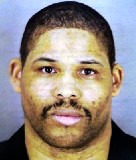
Bartholomew Granger
Murderer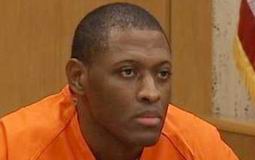 Leon Davis Jr.
Murderer · USA · 2007
Leon Davis Jr. was sentenced to death on April 29, 2011, for the execution-styl…
5 victims
Leon Davis Jr.
Murderer · USA · 2007
Leon Davis Jr. was sentenced to death on April 29, 2011, for the execution-styl…
5 victims
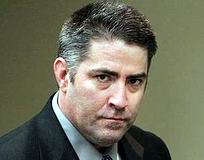 Raymond Lee Oyler
Murderer · USA · 2006
Raymond Lee Oyler was convicted for starting the 2006 Esperanza fire in Riversi…
5 victims
Raymond Lee Oyler
Murderer · USA · 2006
Raymond Lee Oyler was convicted for starting the 2006 Esperanza fire in Riversi…
5 victims
 Anthony Garcia
Murderer · USA · 2008
Anthony Garcia was a former doctor who was found guilty on all counts including…
4 victims
Anthony Garcia
Murderer · USA · 2008
Anthony Garcia was a former doctor who was found guilty on all counts including…
4 victims
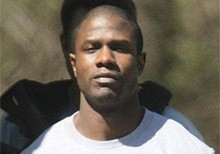 Brian Gene Nichols
Murderer · USA · 2005
Brian Gene Nichols was born December 10, 1971. He was known for his escape and…
4 victims
Brian Gene Nichols
Murderer · USA · 2005
Brian Gene Nichols was born December 10, 1971. He was known for his escape and…
4 victims
 Bruce Mendenhall
Murderer · USA · 2007
Bruce Mendenhall grew up in Crawford County, Illinois. He was married and has t…
4 victims
Bruce Mendenhall
Murderer · USA · 2007
Bruce Mendenhall grew up in Crawford County, Illinois. He was married and has t…
4 victims
 Demarcus Ralls
Murderer · USA · 2002
Demarcus Ralls Demarcus Ralls was 21 during his trial and testified in the pena…
4 victims
Demarcus Ralls
Murderer · USA · 2002
Demarcus Ralls Demarcus Ralls was 21 during his trial and testified in the pena…
4 victims
 Ashleigh & Holly Robinson
Murderers · United Kingdom · 2010
Antoni Robinson was a 61-year-old retired antiques dealer and French polisher.…
1 victim
Ashleigh & Holly Robinson
Murderers · United Kingdom · 2010
Antoni Robinson was a 61-year-old retired antiques dealer and French polisher.…
1 victim
 Robert Newland
Murderer · USA · 1986
Robert Newland (male) was convicted and sentenced to death in Georgia for the k…
1 victim
Robert Newland
Murderer · USA · 1986
Robert Newland (male) was convicted and sentenced to death in Georgia for the k…
1 victim
 Neah Verma
Murderer · India · 2011
Name: Neah Verma Age: 23 Occupation: beautician / salesgirl for beauty products…
3 victims
Neah Verma
Murderer · India · 2011
Name: Neah Verma Age: 23 Occupation: beautician / salesgirl for beauty products…
3 victims
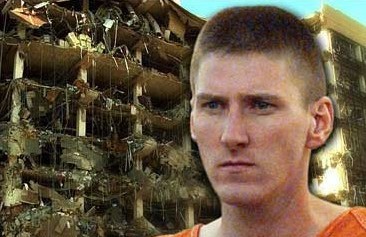 Timothy McVeigh
Mass murderer · USA · 1995
Timothy James McVeigh (April 23, 1968 – June 11, 2001) was a United States Army…
168 victims
Timothy McVeigh
Mass murderer · USA · 1995
Timothy James McVeigh (April 23, 1968 – June 11, 2001) was a United States Army…
168 victims
 Roger Lamont Wheeler
Murderer · USA · 1997
Roger Lamont Wheeler was the offender. · Nigel Malone was a male victim. · Nair…
2 victims
Roger Lamont Wheeler
Murderer · USA · 1997
Roger Lamont Wheeler was the offender. · Nigel Malone was a male victim. · Nair…
2 victims
 Jeffrey Johnson
Murderer · USA · 2012
Jeffrey Johnson was a 58-year-old clothing designer who had been laid off. Poli…
1 victim
Jeffrey Johnson
Murderer · USA · 2012
Jeffrey Johnson was a 58-year-old clothing designer who had been laid off. Poli…
1 victim
- Gender
- male
- Country
- USA
- Location
- Beaumont, Jefferson County, Texas, USA
- Date of birth
- September 26, 1970
- Age at first offence
- 42
- Characteristics
- rape, rape?, armed robbery
- Victim profile
- Minnie Ray Sebolt, 79
- Method of murder
- Shooting
- Date(s) of murder
- March 14, 2012
- Years active
- 2012
- Date of arrest
- Same day
- Status
-
Sentenced to death
Sentenced to death on May 8, 2013
Case information
- Name: Bartholomew Granger
- Gender: Male
- Race: Black
- Age: 42 (age at time of intake/received)
- Age at the time of offence: 41
- Education level (highest grade completed): not stated
- Date received: 05/08/2013
- Date of offence: 03/14/2012
- County: Jefferson
- TDCJ number: 999579
- Housing/agency: Texas Department of Criminal Justice
Timeline
- 03/14/2012 — Bartholomew Granger opened fire outside the Jefferson County Courthouse in Beaumont, killing Minnie Ray Sebolt and wounding at least three others, briefly taking hostages at a nearby construction business, and later being taken into custody.
- 04/22/2013 — Trial began in Galveston for Bartholomew Granger, facing the death penalty or life in prison without parole if convicted of capital murder for the killing of Minnie Ray Sebolt.
- 04/26/2013 — Defense attorneys began making their case in the capital murder trial.
- 04/29/2013 — Bartholomew Granger testified he opened fire outside a Texas courthouse and shot his daughter for what he said were lies about him in a sexual assault case, while denying that he killed bystander Minnie Ray Sebolt; he faced life in prison without parole or the death penalty if convicted of capital murder.
- 05/06/2013 — Bartholomew Granger erupted in profanity-filled outbursts during the capital murder trial’s punishment phase, resulting in him being restrained and temporarily removed from court; the jury sentence was set for Tuesday.
- 05/07/2013 — After disrupting his capital murder trial several times with profanity-filled outbursts, Bartholomew Granger was sentenced to death by a jury.
- 05/08/2013 — Case intake date shown as 05/08/2013.
Background
Bartholomew Granger was a 41-year-old Houston man who was on trial at the Criminal District Court for aggravated sexual assault when the courthouse shooting occurred.
Granger was identified as a gunman who was at court with family members when he opened fire outside a southeast Texas courthouse.
The heightened attention following the attacks led to a judge declaring a mistrial in Granger’s sexual misconduct case one month after the shootings.
The offence
Offence and victims
Bartholomew Granger opened fire outside the Jefferson County Courthouse in Beaumont and killed Minnie Ray Sebolt, 79, who was pronounced dead at the scene in front of the courthouse main entrance.
Granger’s attack wounded at least three others. His daughter and her mother were among the wounded, and his daughter was 20 years old at the time described.
Debris and injury details included:
- Minnie Ray Sebolt was shot twice and died in the revolving door at the courthouse entrance.
- Sebolt’s injuries were described as being struck through the femoral arteries of her legs, shot twice as she tried to get through the revolving door of the courthouse.
- Granger’s daughter was shot three times, spent three months in a coma, and later testified at trial.
- His daughter spent three months in a coma after being shot three times.
- The daughter’s injuries included being shot to her leg and being knocked to the ground, with her later feeling another shot while lying on the pavement and looking up at the sky.
What Granger did during the attack
Police said Granger went out to his pickup truck shortly after 11am, drew a weapon, and began shooting.
Officials said Granger retreated to his truck and, still firing, ran over his 20-year-old daughter, who had also been shot. He then drove about three blocks, abandoned his truck in the middle of the street, and entered a nearby construction business.
Granger later spoke by phone to police with hostages inside and told them he was wounded. He eventually surrendered and was taken to an area hospital.
Investigation
Police response and scene details
A detective outside the courthouse fired back and was joined by law enforcement officers from nearby buildings.
A pickup truck riddled with at least a dozen bullet holes remained in the middle of the street after the shooting.
Authorities declined to identify the type of weapon the gunman used in the initial incident reporting.
Arrest and custody
Granger was taken into custody by Beaumont police SWAT officers at noon.
There were later references to police moving in to take him into custody after he was wounded and overpowered by captives during the hostage situation.
Trial
Venue and movement of the trial
Trial was moved from Beaumont to Galveston, about 75 miles away, so jurors would not have to walk past the crime scene each day.
Plea and charges at trial
At the start of the capital murder trial, Granger entered an “innocent plea” through his lawyers and then responded to State District Judge Bob Wortham when asked for his plea, saying: “Not guilty, your honor.”
The capital murder trial also included a statement that Granger was “also charged with retaliating against a witness.”
Prosecutor’s opening and account of events
Lead prosecutor Ed Shettle, a Jefferson County assistant district attorney, told jurors that the crime was calculated and well thought out and had taken a long time to proceed.
Shettle described evidence expected to show that Granger never left the crime scene and was arrested within a short period of time where he was always in sight of law enforcement or people expected to testify.
Shettle said Granger got to the courthouse before it opened that morning and laid in wait for hours for people he thought betrayed him and testified against him.
Shettle said that at about 11:30 a.m., Granger jumped from his pickup truck, ran to the middle of the street, and began shooting with what he described as an assault rifle.
Shettle said Granger’s daughter was shot three times and that Granger then turned the gun toward her mother as she was running.
Shettle said: “He struck poor little Miss Sebolt through the femoral arteries of her legs, shot twice as she tried to get through the revolving door of the courthouse.”
Shettle also said Granger then got back into his truck, ran over his wounded daughter, drove off, and exchanged fire with police.
Shettle described Granger fleeing into a construction business and grabbing hostages. Shettle said: “One brave man there, he kicked the hell out of him and disarmed the guy.”
Shettle warned jurors that evidence may seem tedious at times but it was important and said it was to ensure that Granger would sit on death row.
Shettle said: “This is not a case of mistaken identity,” and “The evidence is going to show, I think, the defendant never left the crime scene. He was arrested within only a short, very short period of time where he was always in sight of law enforcement or people you will hear from during the course of the trial.” He also said: “This is not a whodunit.”
Witness testimony and courtroom events
State District Judge John Stevens testified about chaos in the courthouse and recognized a wounded woman as the mother of the woman who had testified the previous day in his courtroom in a trial where Granger was accused of sexual misconduct nine years earlier.
Stevens testified that he asked the woman: “Who shot you?” and that she told him. Stevens did not name Granger from the witness stand.
A legal assistant to a Beaumont attorney representing Granger at the sexual misconduct trial testified that Granger called her the previous day, crying, and used an epithet to describe Stevens and said the judge was allowing witnesses to lie on the stand about him.
Chelle Warwick testified that she managed to calm Granger and that Granger told her: “I would take care of it tomorrow.”
Defendant’s testimony and disputes during trial
Granger admitted opening fire on his daughter and running her over with his truck, but insisted he did not kill Sebolt.
Granger denied killing Sebolt, saying: “I didn’t kill her,” and: “I didn’t have any more bullets. How could I have killed her?”
During testimony, Granger claimed that details of the shooting spree remained hazy and said: “It was like I was on cruise control,” and: “It was like I wasn’t even there. That’s what I’ve been telling everyone.”
He responded when told bullets from his gun were found behind Sebolt’s body at the courthouse by saying: “I don’t know that.”
Under cross-examination, Granger told the prosecutor: “Why is it people automatically assume I’m lying?” Shettle responded: “Because you’re a murdering son of a bitch.” Granger responded: “That’s your opinion,” and asked: “Why do you got such hostility toward me? What did I do to you?” The prosecutor replied: “That little old lady bled to death,” adding: “That’s why there’s such animosity.”
Granger said he remembered running up to his daughter and that she said: “Oh, my God,” before: “I pulled the trigger and the gun went off.” He said his daughter started running, he pulled the gun again, “She fell down and I fell down,” and she said: “Daddy, stop! I’ll tell the truth.” He said he pulled the trigger again, adding: “I tried to pull it again. There was no more bullets. I thought I was missing her all those times when I was shooting.”
He said he thought: “Man, I really messed up. So I ran toward my truck.” He said he saw police cars, his daughter in the street moving, and that he pushed down the gas and angled the truck toward her and hit her.
Granger acknowledged signing a statement taking responsibility for the shootings but said detectives “just misquoted me. They didn’t put it the way I wanted it.”
Granger discussed the sexual assault allegations, saying: “I blame her mother,” and that the daughter suffered mental problems as the result of a smoke bomb set off in their home shortly after she was born. He said she moved out in her late teens. He said: “I blame her mother,” and that his daughter was “not right in the head. Everybody’s been manipulating her.”
Granger said he bought what prosecutors called an assault rifle from a drug dealing MS-13 gang member in Houston because he could not purchase a weapon legally due to being an accused sex offender.
Granger also testified about his rap career. He said: “It was like I was on cruise control” and also discussed his stage name as Mr. Hyde and the evil half of the Jekyll-Hyde literary duo, adding he didn’t know the history of the name.
Granger said he couldn’t remember how he got to Beaumont from Houston and that he didn’t remember taking hostages at a construction company a few blocks from the courthouse, and he disputed testimony of his former hostages.
He testified that all his gunfire from a 10-round magazine was directed at his daughter and said he couldn’t say he ran her over with her truck on purpose although a video played in court confirmed it.
When told by evidence, Granger said: “I did it,” and: “You can’t deny it. You can see it on the film.”
Granger accused the prosecutor of taking conversations out of context, and the prosecutor referred to recorded conversations where Granger threatened judges involved in his case.
Granger testified he was taking two different medications for depression and a mood stabilizer, and he responded to a question about the effectiveness of the mood stabilizer by saying: “No it doesn’t.”
Courtroom behaviour during punishment phase
During the punishment phase, Granger made profanity-filled outbursts and argued with prosecutors and the judge.
Granger was warned by Judge Bob Wortham to stop using profanity and got into an argument, saying his trial is “not no ... court. This is a lynching,” before launching into more expletives directed at his daughter.
During testimony he called his case a “mockery of justice” and a “lynching.”
When confronted with the bystander killing, Granger interrupted prosecutors in closing arguments in the punishment phase by laughing and saying he wasn’t a child molester.
Judge Wortham warned Granger about not talking. When Granger held up a yellow legal pad with the word “DEATH” drawn on it, Wortham had Granger removed from court for the rest of closing arguments.
When his daughter’s mother began reading her statement after the jury announced its sentence, Holst asked Judge Bob Wortham if Granger could be shocked. Granger said: “Tase me. Inject me with poison,” and: “I would love to do it myself,” Holst responded: “I would love to do it myself,” and Holst also responded: “I would love to do it myself,” as recorded in the event sequence.
After being removed, Granger returned minutes later with what officials later said was a spit mask covering his mouth. At one point a bailiff put hands over Granger’s mouth to quiet him, and he became increasingly agitated. The account said at least seven bailiffs and deputies were needed to subdue him as Holst finished her statement.
After Holst finished, Judge Wortham told Granger: “I think you removed any doubt from the jury’s mind about the correctness of their verdict.”
Hostage testimony and police statements
One hostage, Melvin Bond, testified about the hostage situation and said Granger told them what he did and that “he was proud that he had done this.”
A Sergeant Mike Custer testified that Granger told him: “They treat me like a killer, I’m going to act like a killer,” and that Custer also said Granger had planned to kill himself.
Sentencing
Jury deliberation and death sentence
Bartholomew Granger was sentenced to death by a jury.
After the jury announced its sentence following less than two hours of deliberations, Granger shouted, “I didn’t kill your mother!” and said he did not want to hear the statement.
A statement read by Sebolt’s daughter included calling Granger “an evil, evil non-human” and describing her mother as a caring person who always had a smile on her face.
Outside the courthouse, Deborah Ray Holst said: “couldn't be happier” with the decision.
Lead prosecutor Ed Shettle said the decision was based on actions during the courthouse shooting, lack of remorse, and potential to hurt others, and Shettle said: “Bartholomew Granger got the death penalty because he deserved the death penalty,” as quoted.
Attorney James Makin said he had hoped the jury would have decided against a death sentence and added: “I'm a realist.” Makin also said: “I don't believe in the death penalty” and acknowledged: “If I had a gun in that parking lot that day (of the courthouse shooting), I probably would have done something with it.”
Judge Bob Wortham told Granger: “I think you removed any doubt from the jury's mind about the correctness of their verdict.”
Appeals
No appeal information appeared in the provided material.
Outcome
The jury sentenced Bartholomew Granger to death for killing Minnie Ray Sebolt, a bystander shot while Granger tried to shoot his daughter outside a courthouse.
Aftermath
After the sentencing, Deborah Ray Holst described being satisfied with the decision and said she could not be happier.
Ed Shettle said the death penalty resulted from Granger’s actions during the courthouse shooting, his lack of remorse, and potential to hurt others.
James Makin described being a realist about the outcome and made statements about his personal view of the death penalty.

Spotted an error, or have more information about this case?