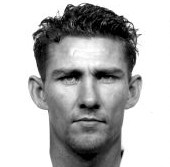
Billy Joe Woods
Murderer Ervil LeBaron
Murderer · USA · 1972
Ervil Morrell LeBaron (1925 to August 16, 1981) was the leader of a polygamous…
35 victims
Ervil LeBaron
Murderer · USA · 1972
Ervil Morrell LeBaron (1925 to August 16, 1981) was the leader of a polygamous…
35 victims
 Brian Kevin Rosenfeld
Murderer · USA · 1985
Brian Kevin Rosenfeld Brian Kevin Rosenfeld was sentenced to three concurrent l…
23 victims
Brian Kevin Rosenfeld
Murderer · USA · 1985
Brian Kevin Rosenfeld Brian Kevin Rosenfeld was sentenced to three concurrent l…
23 victims
 Marvin Gray
Murderer · USA · 1975
Marvin Gray was convicted killer who claimed responsibility for 23 slayings and…
23 victims
Marvin Gray
Murderer · USA · 1975
Marvin Gray was convicted killer who claimed responsibility for 23 slayings and…
23 victims
 Yahweh ben Yahweh
Murderer · USA · 1980
Yahweh ben Yahweh was born and legally named Hulon Mitchell Jr. (October 27, 19…
23 victims
Yahweh ben Yahweh
Murderer · USA · 1980
Yahweh ben Yahweh was born and legally named Hulon Mitchell Jr. (October 27, 19…
23 victims
 Jeffery Daugherty
Serial killer · USA · 1976
Jeffrey Joseph Daugherty was executed by electrocution in Florida on November 7…
5 victims
Jeffery Daugherty
Serial killer · USA · 1976
Jeffrey Joseph Daugherty was executed by electrocution in Florida on November 7…
5 victims
 Preston Carter
Murderer · USA · 1993
Preston Carter was sentenced to death in 1995 for the felony murders of Thomas…
2 victims
Preston Carter
Murderer · USA · 1993
Preston Carter was sentenced to death in 1995 for the felony murders of Thomas…
2 victims
 Brooke Marie Rottiers
Murderer · USA · 2006
Brooke Marie Rottiers was 30 years old and lived in Corona in August 2006. She…
2 victims
Brooke Marie Rottiers
Murderer · USA · 2006
Brooke Marie Rottiers was 30 years old and lived in Corona in August 2006. She…
2 victims
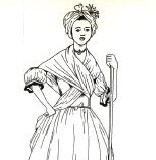 Susanna Cox
Murderer · USA · 1809
Susanna Cox (1785–1809) was a young domestic servant in Berks County, Pennsylva…
1 victim
Susanna Cox
Murderer · USA · 1809
Susanna Cox (1785–1809) was a young domestic servant in Berks County, Pennsylva…
1 victim
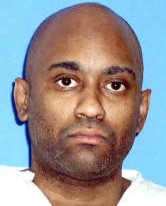 Kevin Kincy
Murderer · USA · 1993
March 26, 1993 — Jerome Harville was found fatally shot in the head and stabbed…
1 victim
Kevin Kincy
Murderer · USA · 1993
March 26, 1993 — Jerome Harville was found fatally shot in the head and stabbed…
1 victim
- Gender
- male
- Country
- USA
- Location
- Harris County, Texas, USA
- Date of birth
- December 20, 1946
- Age at first offence
- 29
- Characteristics
- robbery, rape
- Victim profile
- Mabel Ehatt (female, 62)
- Method of murder
- Beating with a frying pan
- Date(s) of murder
- October 10, 1975
- Years active
- 1975
- Date of arrest
- Same day
- Status
-
Executed
Executed by lethal injection in Texas on April 14, 1997
Case overview
Billy Joe Woods, age 50 (28), was executed by lethal injection in Texas on April 14, 1997.
He broke into Mabel Ehatt’s Montrose-area apartment in Houston on October 10, 1975, and beat her repeatedly with a frying pan. He ransacked the home. Police arrived while Woods was in the process of leaving with Ehatt’s pills and a television set. Evidence showed Woods sexually assaulted Ehatt and crushed her head with a frying pan. Ehatt died from injuries including a fractured hyoid bone and fractured skull, blunt trauma to the neck and head, and manual strangulation.
A jury convicted Woods. The trial court sentenced Woods to death after the jury returned affirmative answers to the deliberateness and future dangerousness special issues.
Timeline
- October 10, 1975 — Woods broke into the Montrose-area apartment of Mabel Ehatt in Houston and beat her repeatedly with a frying pan.
- October 11, 1975 — Woods was arrested at 3:45 a.m. as he exited Ehatt’s apartment.
- October 21, 1975 — A state court indictment was filed in Harris County charging Woods with capital murder committed October 10, 1975, in Houston by intentionally killing Mable Ehatt while in the course of robbing and attempting to rob her.
- October 16, 1975 — Attorney Thibodeaux was appointed to represent Woods.
- October 23, 1975 — Attorney Heacock was also appointed to represent Woods.
- October 22, 1975 — The state moved for a psychiatric examination; the trial court ordered Woods to undergo the examination with report to be filed by November 14, 1975.
- December 15, 1975 — Woods was examined by Dr. Nottingham, a psychiatrist with the Harris County Psychiatric Hospital.
- December 16, 1975 — Woods was examined by Dr. Bloom, a psychologist, and by Dr. Garcia, a psychiatrist, each with the Harris County Psychiatric Hospital.
- January 12, 1976 — Defense counsel moved to have Woods examined for competency by psychiatrist Dr. Byrd.
- January 15, 1976 — Dr. Garcia’s report was filed in the papers of the case.
- January 22, 1976 — The trial court granted the motion and ordered the examination by Dr. Byrd to take place on January 25.
- July 1976 — Trial on the merits did not commence until July 1976.
- July 6, 1976 — Just before the commencement of voir dire, defense counsel filed a motion requesting restrictions on the court’s references to scientific tests, including psychiatric tests, fingernail scrapings, pubic hairs, or blood samples taken from the defendant.
- July 30, 1976 — The case ended after two days of deliberation, and the jury found Woods guilty.
- April 15, 1981 — The Supreme Court denied certiorari on Woods v. Texas, 453 U.S. 913 (certiorari was denied on June 29, 1981).
- June 29, 1981 — The Supreme Court denied certiorari in Woods v. Texas, 453 U.S. 913.
- February 7, 1996 — The federal appellate decision affirmed the district court’s denial of Woods’ 28 U.S.C. 2254 habeas petition (Billy Joe Woods, Petitioner-Appellant, v. Gary L. Johnson, Director, Texas Department of Criminal Justice, Institutional Division, Respondent-Appellee; Docket number 91-2928; Federal Circuits, 5th Cir.).
- April 14, 1997 — Woods was executed by lethal injection in Texas.
Background
Billy Joe Woods left school in the tenth grade. He married at age twenty-two and divorced a year later.
The psychiatric reports described that Woods was removed from his family home at the age of six, and at age eight was, with one of his brothers, placed with the Woods family, who adopted him.
Dr. Garcia’s report stated:
“Psychiatric examination revealed a rather manipulative, caucasian male in no acute physical distress. He is well oriented as to time, place, and person. There is no evidence of a thought disorder, no delusional thinking and no delusions and/or hallucinations. Sensorium is clear. He has no difficulty handling calculations and there is no evidence of sensorium impairment. It is the opinion that the subject can appreciate the criminality of his actions and conform his conduct to the requirements of the law. In addition, the subject has sufficient factual and rational understanding of the proceedings against him, enabling him to understand and to assist in the preparation of a defense. There is no psychiatric disorder for which he needs to receive psychiatric treatment.”
Dr. Nottingham’s report similarly stated:
“There does not appear to be any disease of the mind or degree of mental defect which would interfere with this individual's ability to understand and appreciate the nature and quality of his behavior and the consequences of his acts. He is cognizant of the difference between right and wrong and able to conform his behavior to the expectations of the law and of society. In addition, the subject has sufficient factual and rational understanding of the proceedings against him, enabling him to understand and to assist in the preparation of a defense. There is no psychiatric disorder for which he needs to receive psychiatric treatment.”
The psychologist Dr. Bloom’s report reflected Woods’ interview and tests, including “full IQ of 80, verbal 81, performance 81” and that he was in the “dull normal range of intelligence” and had “the ability to learn and to reason.” It stated:
“The results of the examination indicate that Mr. Woods is aware of the nature of the charges and proceedings against him, and has the intellectual capacity to understand these in a rational way. He also has the capacity to understand the difference between right and wrong; to understand the nature, quality, and possible consequences of criminal behavior; and to conform his behavior to the expectations of society and the law if he so chooses. He also has the ability to consult with his attorney in a rational manner in the preparation of his defense. For these reasons, Mr. Woods is considered competent to stand trial.”
The offence
Woods broke into the balcony of the second story apartment of Mabel Ehatt, a 62-year-old woman who had cancer and used a walker. Police evidence described that Woods forced the door open from the balcony into the apartment, robbed the occupant, and beat and strangled her to death. The unrebutted evidence also included attempts at a sexual act; the victim was found nude from the waist down, and hairs from the victim’s head were found jammed in the zipper of Woods’ fly, which was open when he was arrested. Police found feces and blood from the deceased on Woods’ trousers, shorts, shirt, and shoes.
Police testimony stated that the apartment was “in complete disarray.” The victim’s walker was turned over on the floor, and the victim’s purse had been emptied on the floor. Large quantities of blood and human defecation were observed on the floor of the living room and dining room. The victim’s still warm body was lying in the kitchen with “a good bit of blood and human defecation,” with her head in the entryway between the dining room and kitchen. She was naked from the waist down, and there was blood “from her mouth.” Her face and eyes were swollen and discolored, and “severe bruises” were visible on her head and back. An “extreme amount of blood” was present in the apartment, on her, and around her. Bits of body tissue were observed in the blood on the floor.
The victim’s sister testified that when her body was seen later one of Ehatt’s eyes “looked like half of a tennis ball.”
The medical examiner testified:
“the cause of death was a fractured hyoid bone and fractured skull, blunt trauma to neck and head and manual strangulation.”
The hyoid bone was fractured on both sides, and the examiner testified:
“indicates constriction type of trauma; that's squeezing of the neck and resistance on the part of the victim.”
Investigation and evidence found
Police officers entered the apartment and found the body and observed the scene described in disarray, including blood, human defecation, and the victim’s naked condition from the waist down.
When police found Woods, he was the defendant in the apartment found by police officers alone (except for the deceased). The officers observed:
- The zipper on his fly was open.
- Hairs from the deceased’s head were caught in it.
- His undershorts had blood and hair on them.
- Blood and defecation, still fresh, were on his shoes.
- Bruises and abrasions on his knuckles.
- Abrasions on the palm of his hand.
- Numerous scratches on his back below the shoulders.
- A long scratch on the back of his right leg.
- He had the deceased’s bracelet on his left wrist.
- He had the deceased’s hair brush and prescription medicine, and a woman’s electric razor, in his pants pocket.
Evidence later showed Woods sexually assaulted the woman and crushed her head with a frying pan. Woods ransacked the home and was in the process of leaving with the victim’s pills and a television set when police arrived.
Arrest and pretrial matters
Woods was arrested at 3:45 a.m. on October 11, 1975 as he exited Ehatt’s apartment of Houston. The circumstances of his exit followed the police arrival when he was carrying Ehatt’s television, her bracelet, and a bottle of her pain medication.
After the state ordered a psychiatric examination, the examinations did not take place until mid-December 1975. The motion and order had been filed but were not served on defense counsel, and defense counsel were unaware that the examinations had been ordered or were going to be conducted. Consequently, defense counsel were not present at the examinations and did not advise Woods respecting any of them.
Dr. Garcia examined Woods for approximately thirty to forty-five minutes and did not perform tests.
Trial
Charges and indictment
By indictment filed October 21, 1975 in state court in Harris County, Woods was charged with capital murder committed October 10, 1975 in Houston, Texas by intentionally killing Mable Ehatt while in the course of robbing and attempting to rob her.
Lawyers appointed
Attorney Thibodeaux was appointed to represent Woods on October 16, 1975. Attorney Heacock was also appointed to represent Woods on October 23, 1975.
Competency and sanity examinations
Three court-ordered examinations found Woods both sane and competent to stand trial:
- Dr. Nottingham (psychiatrist)
- Dr. Bloom (psychologist)
- Dr. Garcia (psychiatrist)
The reports of Dr. Nottingham and Dr. Bloom were not filed in the papers of the case (or put in evidence at trial), and neither of them testified at trial.
Dr. Garcia’s report was filed in the papers of the case on January 15, 1976, but was not put in evidence at trial.
Defense counsel filed a motion on January 12, 1976 seeking a competency examination by Dr. Byrd. On January 22, 1976, the trial court granted the motion and ordered that the examination by Dr. Byrd take place on January 25. Dr. Byrd examined Woods prior to trial, though the precise timing was not clear. Defense counsel asked Dr. Byrd to refrain from writing or filing a report with the court. The account stated that Dr. Byrd advised defense counsel that he found Woods competent to stand trial and sane at the time of the offense, and characterized Woods as anti-social and mean, informing defense counsel that counsel would not want him, Dr. Byrd, to testify. There was no indication that Dr. Byrd wrote a report or testified.
At the guilt/innocence stage, no issue was raised and no evidence was presented concerning Woods’ sanity or competency.
Motion regarding scientific tests
On July 6, just before the commencement of voir dire, defense counsel filed a motion requesting that the court instruct the district attorney not to allude to or introduce results of any scientific tests made by the State of Texas, specifically “psychiatric tests, fingernail scrapings, pubic hairs or blood samples taken from the defendant” because those would violate defendant’s Fifth Amendment rights and because “defendant was without counsel at the time of the scientific tests.”
The court’s notation suggested that it was granted “as to paragraph III.” The transcript of the hearing on this and other defense motions indicated that the motion was overruled, though apparently without prejudice to being presented later. There was no indication the motion was ever presented later.
Guilt/innocence findings
The jury found Woods guilty as charged. The case would come to an end on July 30, 1976 after two days of deliberation, when the jury found Woods guilty.
The record included that Woods’ defense had no defense evidence presented at the guilt/innocence stage.
Punishment phase and special issues
Just before the punishment phase commenced, defense counsel objected outside the presence of the jury to the anticipated calling of Dr. Garcia as a punishment stage witness for the state. Defense counsel objected that Dr. Garcia’s examination of Woods was performed “without the consent or permission of the defense attorneys” and that his testimony would constitute “an abridgement of the Fifth Amendment rights.” The objection was unsuccessful.
At the punishment stage, the prosecution introduced evidence that in April 1970 Woods was convicted in Louisiana state court on his plea of guilty of attempted aggravated rape committed December 21, 1969 in New Orleans and was sentenced to fifteen years in the penitentiary.
The state called Dr. Garcia. Dr. Garcia testified after identifying himself as a psychiatrist.
Dr. Garcia’s direct testimony included the following:
“Q. Did you have an occasion to examine the defendant in this case, Billy Joe Woods?
A. I have.
Q. Did you have an occasion to determine whether or not or what type of mental label, if you will, you put as a psychiatrist on the personality of the defendant?
A. Well, it's customary that we address to the questions asked by the court and they are generally questions of competency. I did not include a psychiatric label in my report to the court, since I was asked to address myself to the issues of sanity and competency.
Q. Did you determine whether or not the man was competent, insane?
A. I did.Q. Was he competent?
A. In my opinion, he was.
Q. Now, if you will, let me state a hypothetical situation to you and have you give your opinion as to the affect [sic] on this defendant, if that hypothetical situation applied to the defendant. Assume that a person in 1970 was convicted of the offense of attempted rape, felony, sentenced to the penitentiary and then in 1975 at three in the morning, climbed up a porch, up onto a porch on the second floor balcony, kicked in a lady's door forcibly, went inside and completely ransacked, turned everything in the apartment upside down, knocked things over, took the lady's bracelet, pill bottle, carried a television downstairs from her apartment, beat her about the head in such a way that her facial features were obscure to the point of almost not being able to identify the way she looked, tremendous beating, in other words, fractured skull, strangulation, two fractures in the hyoid bone, and then in some manner caused his pubic hair to come in contact with her head while his pants were down and at least he dressed in no more than his under wear, had his pubic hair touching the lady's head, and the lady was sixty-two years old, invalid, who had to get around on a walker in order to move about, and that he killed this lady by beating her and strangling her and was then caught in the room with her, if that hypothetical situation applied to this defendant, knowing his mental background as you do, can you tell us whether it's more likely than not that this defendant would commit criminal acts of violence that would constitute a continuing threat to society? (Emphasis added).”
Defense counsel objected at this point; the objection was overruled, and the direct examination continued.
Dr. Garcia’s testimony continued as follows:
“Q. (by Mr. Graham) Can you answer the question?
A. Okay. In relation to the hypothetical question you presented, you described what sounds as a very aggressive act.
Q. Very aggressive act?
A. Aggressive and violent act in association with a person that has committed similar violent acts in the past. In your final question, would you repeat the final part of the question? Would he be more likely--
Q. Yes, sir. Would he be more likely to commit continued acts of violence that would constitute a continuing threat to society?
A. My answer to that would be yes.
Q. And what is the best method of determining what will happen in the future or what someone will do in the future?
A. Well, we don't really have any methods that's very accurate. In fact, statistical studies on prediction have shown that the prediction of the members of the judicial system is almost, if not more accurate, than the people in the behavioral sciences. That is, we in the psychiatric profession and judges come pretty close to the same level of accuracy.
Q. Well, in your particular medical field, do you use the past to determine the best you can what will happen or what a person will do in the future?
A. We use much attitudinal assessments of a person's personality development; how they interact in society and how they may project of possible behavior, but there are many variables that usually are unforeseen that we cannot even attempt to predict.
Q. Is what someone did in the past the best method you have of determining--I know you are saying you can't say to an absolute certainty what someone is going to do in the future.
A. The things that have occurred in the past are associated with the person at the time of examination, together, is the best tool we have at the present time.
Q. That includes considering what a person did in the past?
A. That is correct.
Q. Is that what helped you to come to your answer a minute ago about a hypothetical situation?
A. True.”
On cross-examination, Dr. Garcia testified, including the following:
“Q. Dr., how long did you spend with Mr. Woods when you examined him?
A. I imagine between thirty to forty-five minutes, which is pretty standard time for my examination.
Q. Standard time?
Q. You examined him one time?
Q. With the purpose in mind to determine his competency?
Q. You submitted certain standard tests to him?
A. I took a psychiatric examination.
Q. Was it just all verbal?
A. Psychiatric examination includes subjective assessments of the history given by the examinee, as well as objective assessment given by the examiner. I did not administer any type of psychological tests. I'm not a psychologist.
Q. And you came to your professional opinion after a thirty to forty-five minute session, approximately?
…
Q. There was no attorney or anyone else, just he and you when the interview took place?
…
Q. By the same token, you can't point at somebody and say 'That man will never change', can you?
A. There's some people I could.
Q. Did you, for example, in this case?
A. Well, I was not asked that question. The question was would a person in the hypothetical be more likely to commit acts of violence and my answer to that was yes. But if I would be asked to give an opinion with a degree of accuracy greater than that, I cannot answer because I can't predict to that extent.” (Emphasis added.)
Defense counsel’s objection to Dr. Garcia’s testimony was described, in full, as:
“This will be pertaining to the testimony I believe of a Dr. Garcia, who would be a psychiatrist for the Harris County forensic psychiatric unit. The basis for my objection would be that the examination performed by Dr. Garcia upon the defendant was without the consent or permission of the defense attorneys involved in the case, that the fact that the doctor examined the defendant and elicited from him certain information, even though the Code of Criminal Procedure does not permit the doctor to testify to the discussions he had with the defendant, it does allow the doctor to testify as to the end result of his examination, to wit, his feeling or opinion of the defendant's competency; and also to the proposition of question number two, that is, that there is a probability that the defendant will commit further acts of violence and continue to be a further threat to society. We feel that this indirectly not only shall be used against him as an abridgement of the Fifth Amendment rights, but also will be used for the jury to decide question number two so that his life may be taken. For these reasons, we object to any testimony from Dr. Garcia or forensic psychiatrists or psychologists based on that reason, if it please the court.”
Defense counsel also stated:
“MR. HEACOCK: If it please the court, I have some objections to the question. One, it's not a hypothetical question. Second, there has been no predicate laid at this point for a doctor to answer such a question. I feel it's a vain attempt by the state to get a doctor to answer a question that due to medical probability he cannot answer and I would object to it very strenuously, if it please the court. THE COURT: Overruled. MR. HEACOCK: Note our exception.”
The trial court charged the jury with special issues under Tex. Code Crim. Proc. art. 37.071(b), including the deliberateness and future dangerousness special issues. The jury returned an affirmative answer to each special issue, and the court sentenced Woods to death.
After the jury returned its answer to the punishment special issues and was polled, the trial judge thanked them and stated:
“First I want to say that, I want to commend the attorneys, both the state and defense. Also, for what it's worth to you, I agree with your verdict. I was district attorney for about eight years, and to me, this was one of the most unconscionable, brutal, vicious slayings I've ever even known, and in view of his past record, conduct and viciousness of this case, I want you to appreciate your service.”
Sentencing
The jury returned affirmative answers to the deliberateness and future dangerousness special issues under Tex. Code Crim. Proc. art. 37.071(b), and the trial court sentenced Woods to death.
Appeals
Direct appeal
Woods’ conviction and sentence were affirmed on direct appeal. On appeal, Woods was represented by new counsel (Thornell). The direct appeal is identified as Woods v. State, 569 S.W.2d 901.
The Supreme Court denied certiorari on June 29, 1981 in Woods v. Texas, 453 U.S. 913.
State habeas proceedings
In October 1981, Woods sought habeas relief in the Texas courts, contending under Estelle v. Smith that the introduction of Dr. Garcia’s testimony violated his Fifth, Sixth, and Fourteenth Amendment rights because Woods was not given proper warnings and because his counsel was not notified of the examination or its scope, preventing consultation. The Court of Criminal Appeals denied relief (Ex parte Woods, 745 S.W.2d 21).
The Court of Criminal Appeals held that Estelle v. Smith applied retroactively to both Fifth and Sixth Amendment violations and that Woods had adequately preserved complaints regarding Dr. Garcia’s testimony. It distinguished Estelle v. Smith on the basis that Dr. Grigson’s testimony in Estelle was not limited to hypothetical testimony, whereas Dr. Garcia’s testimony involved a hypothetical question based on assumed facts. The Court of Criminal Appeals concluded that answers were not influenced by or derived from the court-ordered pretrial psychiatric examination.
Thereafter, Woods filed additional state habeas applications. In April 1988, Woods filed another state habeas application amended and supplemented. A state trial court entered findings and conclusions in October 1988 recommending denial. On July 7, 1989, the Court of Criminal Appeals denied relief based on the trial court’s findings and conclusions.
In September 1990, Woods filed another state habeas application. The state trial court entered findings and conclusions recommending denial, and the Court of Criminal Appeals again denied relief based on those findings.
Federal habeas appeal (5th Circuit)
Woods filed a federal habeas petition challenging his Texas capital murder conviction and sentence to death under 28 U.S.C. 2254.
The federal appellate case is identified as: Billy Joe Woods, Petitioner-Appellant, v. Gary L.
The federal appeal described that Woods challenged Dr. Garcia’s punishment stage future dangerousness testimony as violating Estelle v. Smith and Satterwhite v. Texas and his Fifth, Sixth, and Fourteenth Amendment rights because Dr. Garcia examined Woods for competency prior to trial but Woods’ counsel was not notified of the examination and Woods was not given Miranda-type warnings.
The district court found the testimony harmless beyond a reasonable doubt under Chapman v. California. The federal appellate court applied Brecht v. Abrahamson, which used a less onerous harmless error standard than Chapman for habeas cases.
The federal appellate court concluded that Dr. Garcia’s testimony and related prosecutor argument did not have a substantial and injurious effect or influence on determining the jury’s verdict under the Brecht standard, and affirmed the district court.
The federal appellate court rejected other contentions, including:
- A claim that defense counsel withheld mitigating evidence and deprived Woods of counsel and individualized sentencing determination.
- Claims regarding the constitutionality and vagueness of Texas punishment special issues.
- Claims of ineffective assistance of counsel relating to alleged failure to present evidence of Woods’ history as an abused child before adoption, alleged mental illness, and related matters. The court described counsel’s strategic decisions and the state habeas court’s findings, concluding no constitutionally deficient performance under Strickland v. Washington.
- An equal protection claim about the use of the Strickland test.
- A Mills v. Maryland-related claim about juror concurrence instruction, rejected and also treated as procedurally barred under Teague v. Lane.
- A claim about denial of an instruction on parole eligibility under Texas law, rejected on nonretroactivity and other grounds including procedural default.
- A claim under Booth v. Maryland and South Carolina v. Gathers about victim sister testimony and prosecution sentencing argument, rejected (also treated as procedurally barred where no objection was made and found no constitutional violation after Payne v. Tennessee).
- A claim that Woods was not eligible for execution based on a 1988 psychologist evaluation alleging borderline mental retardation and immaturity, rejected as foreclosed by Penry v. Lynaugh.
- A claim of incompetence due to sleep deprivation, rejected.
- A claim that eight photographs of the deceased’s body violated the Eighth Amendment right to a fair trial, rejected.
Outcome
Woods’ federal habeas appeal failed to demonstrate reversible error. The federal appellate court affirmed the district court’s denial of habeas relief.
Woods was executed by lethal injection in Texas on April 14, 1997.
Other details
Psychiatrist and prosecutors named in the federal proceedings
Dr. Garcia testified for the state. Dr. Nottingham and Dr. Bloom were also examined but did not testify at trial.
The head prosecutor of the case was identified as Bert Graham in the case narrative. Another defense attorney identified in the case narrative was Fred Heacock, and a later defense attorney identified was Michael Thornell.
Court-ordered examination reports and filing
Dr. Nottingham and Dr. Bloom’s reports were not filed in the papers of the case or put in evidence at trial, and neither testified. Dr.
Future dangerousness and harmless error discussion in the federal appeal
The federal appellate court described Dr. Garcia’s testimony as equivocal and weak in its predictive value, noting that when asked what “the best method” was for determining what someone would do in the future, Dr. Garcia responded:
“we don't really have any methods that's very accurate.”
The federal appellate court also addressed the content of the prosecutor’s closing sentencing argument references to Dr. Garcia.
The prosecutor’s closing sentencing argument included the following quoted passages:
“And talking about this particular defendant, the pain he probably would cause in the future, as Dr. Garcia told you, Dr. Garcia testified from the hypothetical situation, where the facts of this case were the same, after he had talked to this defendant he formed an opinion as to what this defendant would do if he had done that type of act. He said that it was more likely than not the defendant would commit violent acts in the future. That's what Dr. Garcia testified to. The psychiatrist, he's talked to the defendant. He's trained in that area. You don't have to take his word for it. It's your final decision to make, as it should be. But that's what he said, that's what he testified to.” (Emphasis added).
And later:
“... we can prove to you there's a probability he will [commit violent acts], and that's as close as you can ever get and Dr. Garcia testified to that, more likely than not the defendant would commit a violent act in the future.”
The federal appellate court described that these prosecutorial inferences did not change its assessment of Dr. Garcia’s testimony as equivocal.
Defendant’s prior conviction mentioned in trial and appeal narrative
At the punishment stage, evidence was presented that in April 1970 Woods was convicted in Louisiana state court on a guilty plea of attempted aggravated rape committed December 21, 1969 in New Orleans and was sentenced to fifteen years.
Examiner on hyoid bone
The examiner explained that the hyoid bone is:
“the U-shaped bone that sits high up in the neck. It's comparable to the wish bone in the chicken.”
Additional narrative statements included in the case narrative
The case narrative included quotations attributed to Bert Graham:
“His criminal record will show you this wasn’t the first time he had committed a violent crime,” Graham said.
It also included quotations attributed to Thornell:
“There were certainly a lot of unusual circumstances that caused it drag on as long as it did,” Graham said. “It was one of the most horrible cases I’ve been a part of,” Thornell said. “It almost made me quit working capital murder trials.” “He had a long time to think about what he had done,” Thornell said. “I can’t tell you how nice a guy he was,” Thornell said “I just think he snapped on the night he took her life.”
It included a quotation attributed to M.L. Dorsett:
“I was confident they’d eventually get around to doing it,” Dorsett said.
Defense attorney affidavit about Woods’ statements
An affidavit by attorney Heacock stated that Woods “admitted having committed the burglary, but denied killing Mable Ehatt,” and that Woods said he met a friend at a near-by bar and together they walked to Ehatt’s house and broke in, and that it was this “friend” who killed Ehatt. The affidavit further stated that when pressed for details, “Billy Joe could give us none,” and he did not remember the name or location of the bar and could give no information about his friend other than his first name.
Spotted an error, or have more information about this case?