
Marcia Kelly
Murderer Miranda Barbour
Murderer · USA · 2013
Miranda Barbour, 19, defendant. · Elytte Barbour, 22, defendant and husband of…
100 victims
Miranda Barbour
Murderer · USA · 2013
Miranda Barbour, 19, defendant. · Elytte Barbour, 22, defendant and husband of…
100 victims
 Megan Huntsman
Murderer · USA · 1996
Megan Huntsman was 40 at sentencing. She was a mother of three children who wer…
6 victims
Megan Huntsman
Murderer · USA · 1996
Megan Huntsman was 40 at sentencing. She was a mother of three children who wer…
6 victims
 Michele Kalina
Murderer · USA · 1996
Michele Kalina pleaded guilty to murder for one of five infants she initially w…
5 victims
Michele Kalina
Murderer · USA · 1996
Michele Kalina pleaded guilty to murder for one of five infants she initially w…
5 victims
 Tiffany Hall
Murderer · USA · 2006
Tiffany Hall was 24 when she was charged in September 2006. She later entered a…
5 victims
Tiffany Hall
Murderer · USA · 2006
Tiffany Hall was 24 when she was charged in September 2006. She later entered a…
5 victims
 Banita Jacks
Murderer · USA · 2007
Banita Jacks was a Washington, DC resident convicted of murdering her four daug…
4 victims
Banita Jacks
Murderer · USA · 2007
Banita Jacks was a Washington, DC resident convicted of murdering her four daug…
4 victims
 Holly Grigsby
Murderer · USA · 2011
Holly Grigsby was sentenced to life in prison without parole on July 15, 2014.…
4 victims
Holly Grigsby
Murderer · USA · 2011
Holly Grigsby was sentenced to life in prison without parole on July 15, 2014.…
4 victims
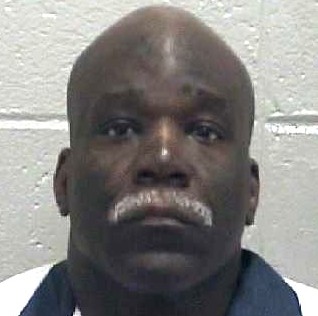 Michael Anthony Cohen
Murderer · USA · 1985
Michael Anthony Cohen, 40, was sentenced to death in Glynn County in December 1…
1 victim
Michael Anthony Cohen
Murderer · USA · 1985
Michael Anthony Cohen, 40, was sentenced to death in Glynn County in December 1…
1 victim
 Brian Burdett
—
Brian Burdett fue condenado a muerte por la muerte de su mujer, Moira Burdett.…
Brian Burdett
—
Brian Burdett fue condenado a muerte por la muerte de su mujer, Moira Burdett.…
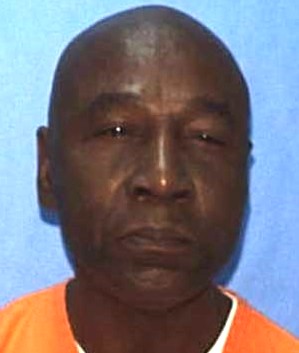 Freddie Lee Hall
Murderer · USA · 1978
Freddie Lee Hall was indicted on one count of First-Degree Murder in Sumter Cou…
2 victims
Freddie Lee Hall
Murderer · USA · 1978
Freddie Lee Hall was indicted on one count of First-Degree Murder in Sumter Cou…
2 victims
 Vladimir Kondratenko
Serial killer · Ukraine · 1991
Vladimir Kondratenko overdosed on prescription medication and died while in pol…
16 victims
Vladimir Kondratenko
Serial killer · Ukraine · 1991
Vladimir Kondratenko overdosed on prescription medication and died while in pol…
16 victims
 Westley Allan Dodd
Murderer · USA · 1989
Westley Allan Dodd was convicted of first-degree murder in the deaths of Cole N…
3 victims
Westley Allan Dodd
Murderer · USA · 1989
Westley Allan Dodd was convicted of first-degree murder in the deaths of Cole N…
3 victims
 Theresa Riggi
Murderer · United Kingdom · 2010
Theresa Riggi was a mother who killed her three young children at their home in…
3 victims
Theresa Riggi
Murderer · United Kingdom · 2010
Theresa Riggi was a mother who killed her three young children at their home in…
3 victims
- Gender
- female
- Country
- USA
- Location
- Cushing, Nacogdoches County, Texas, USA
- Date of birth
- December 21, 1970
- Age at first offence
- 35
- Characteristics
- murder for hire, parricide
- Victim profile
- James Kelly (her husband)
- Method of murder
- Shooting
- Date(s) of murder
- October 23, 2005
- Years active
- 2005
- Date of arrest
- 3 days after
- Status
-
Life imprisonment
Sentenced to life in prison without parole in August 2006
Case record: Marcia Kelly
Status and incarceration
Marcia Gayle Kelly was sentenced to life in prison without parole in August 2006. She was incarcerated at the Mountain View Unit in Gatesville, Texas. Her Texas Department of Criminal Justice (TDCJ) Offender number was #1381826.
Background
Marcia Gayle Kelly was born December 21, 1970. Her husband was James Kelly.
The offence
On October 23, 2005, truck driver James Kelly was shot to death in his Cushing, Texas home while he slept.
The case involved an allegation that Marcia Kelly offered to pay juveniles to kill James Kelly. The police learned that she offered to pay several juveniles to kill Kelly. The Nacogdoches County grand jury indicted Marcia Kelly for the felony offense of capital murder, alleging that she offered or gave another person money and a vehicle to shoot James Kelly and that her actions caused Kelly’s death.
Prosecutors presented motive evidence at trial. Marcia had a $100,000 life insurance policy on James Kelly. Prosecutors also stated that Marcia and James argued on how to punish Marcia’s unruly daughter Shaina.
Shaina Sepulvado testified at trial that she was responsible for the murder and that her mother was not involved. Shaina also claimed that James had been beating and molesting her.
Jurors did not believe Shaina’s testimony and convicted Marcia of capital murder.
Investigation
Initially, Marcia’s stepdaughter Shaina Sepulvado and her friends Dallas Christian and Colton Weir were the prime suspects. All three were later charged in James’ death.
A police statement addressed Marcia’s account. In that statement, Marcia admitted that she overheard some of the juveniles make a statement about wanting to kill her husband. She did not admit to offering the juveniles anything to kill her husband.
Arrest and interrogation
The police invited Marcia Kelly to the sheriff’s office to answer questions. While there, she signed a written statement. The statement included that she admitted hearing some of the juveniles make a statement about wanting to kill her husband, but did not admit to offering them anything to kill her husband.
Trial
Marcia Kelly’s murder trial began on July 31, 2006.
Prosecutors presented evidence that Marcia had a motive, including that she had a $100,000 life insurance policy on James Kelly.
Other testimony was presented at trial from men who claimed Marcia had also solicited them to kill her husband, along with Colton Weir.
Marcia did not testify in her own defense. Her daughter Shaina did take the stand to defend her mother.
Jurors convicted Marcia of capital murder. Because the death penalty had not been sought against her, Marcia received an automatic sentence of life without parole.
Sentencing
The court assessed punishment of life imprisonment following the trial. Since the death penalty had not been sought against her, Marcia received an automatic sentence of life without parole.
Appeals
Marcia Kelly’s conviction was affirmed by the Twelfth District Court of Appeals on January 23, 2008.
In the Court of Appeals Twelfth Court of Appeals District Tyler, Texas, the case was styled: No. 12-06-00384-CR, Marcia Gayle Kelly, Appellant, v. The State of Texas, Appelleee.
The appeal was from the 420th Judicial District Court of Nacogdoches County, Texas.
The appellate court memorandum opinion stated: “We withdraw our opinion delivered on January 23, 2008, and substitute the following opinion in its place.”
Marcia Kelly appealed her conviction for capital murder. She argued three issues:
- The trial court erred when it allowed her statement to the police to be admitted.
- The trial court should have moved the trial because of pretrial publicity.
- The trial court should have granted her motion for a new trial.
The appellate court disposed of the appeal by affirming the judgment.
Custodial interrogation and suppression motion
In her first issue, Marcia Kelly argued that the trial court erred when it overruled her motion to suppress her statement to the police, arguing she was subjected to a custodial interrogation without being advised of constitutional rights and that her statement should have been suppressed.
The appellate decision set out the applicable law and standard of review, including references to Miranda v. Arizona, 384 U.S. 436, 444, 86 S. Ct. 1602, 1612, 16 L. Ed. 2d 694 (1966). It stated that generally, the state may not use a statement obtained from custodial interrogation if warnings (or their equivalent) are not given.
It held that the trial court did not err when it denied Marcia Kelly’s motion to suppress. It concluded the initial conversation was a voluntary encounter and that she was not in custody. It noted that a police officer testified that Miranda warnings were given about twenty minutes into the police interview. It stated that before the warnings were given, there was nothing to lead a reasonable person to believe her freedom of movement was restricted, and it reasoned that Marcia had asked if she could attend to funeral arrangements and that the police told her their questions would not take long.
The appellate court overruled Marcia Kelly’s first issue.
Pretrial publicity and venue change motion
In her second issue, Marcia Kelly argued that the trial court erred in denying her motion for change of venue because of pretrial publicity. The appellate decision discussed the legal standard for change of venue and the “heavy burden” to show pervasive, prejudicial, and inflammatory publicity resulting in identifiable prejudice attributable to pretrial publicity.
It described media attention in Nacogdoches County. It stated that the case involved a murder for hire in Nacogdoches County in which Marcia Kelly was accused of hiring juveniles to murder her husband. The opinion said it received media attention, and it described that there were twenty–three articles in the local paper about the story and at least six television news stories, some repeated multiple times.
It addressed statements attributed to Sheriff Kerss as part of the pretrial publicity analysis, and concluded the coverage did not reach the level of pervasive, prejudicial, and inflammatory coverage showing a fair and impartial jury could not be obtained. It also noted that at the actual seating of the jury panel, many venire members had heard of the matter, but only four potential jurors expressed that they had formed an opinion about the case, and three were excused with one serving without objection from Marcia Kelly.
The appellate court overruled Marcia Kelly’s second issue.
Motion for new trial based on juror misconduct affidavits
In her third issue, Marcia Kelly argued that the trial court should have granted her motion for a new trial.
The appellate decision stated that Marcia Kelly filed a motion for new trial with affidavits from two witnesses. The affidavits said they observed one juror having lunch during a break in the trial, that the juror said things about the trial, and that one of his companions said something about the trial. A hearing was held. One affidavit witness could not remember hearing much of the juror’s conversation, and the other testified she heard the statements.
The juror and his lunch companions testified that the reported part of the conversation did not happen. The appellate decision discussed Renya v. State and Smith v. State regarding affidavits and the effect of conflicting evidence. It concluded the trial court made findings and was not required to grant the motion solely because the State did not file affidavits controverting the assertions. It held the evidence conflicted and the trial court’s decision to believe one group of witnesses and not the other was supported by the record.
The appellate court overruled Marcia Kelly’s third issue.
Appellate panel and delivery
The appellate decision stated: “Opinion delivered January 24, 2008.” It also stated: “Panel consisted of Worthen, C.J., Griffith, J., and Hoyle, J.”
Key disposition
In the disposition, it stated: “Having overruled Appellant’s three issues, we affirm the judgment of the trial court.”
Outcome
Marcia Kelly was convicted of capital murder and received a life without parole sentence.
Aftermath and related cases
Colton Weir was convicted of capital murder at a separate subsequent trial in Nacogdoches County, Texas in November 2006, and he was serving life without parole.
Shaina Sepulvado was convicted of capital murder at a separate subsequent trial in Nacogdoches County, Texas in April 2007, and she was serving life without parole.
Dallas Christian pled guilty to murder and was sentenced to 40 years in 2008.
Two other males, Billy Loftin and Gary Batchelor, were convicted of lesser charges of tampering with evidence, in connection with James Kelly’s death.
Marcia Kelly’s case was profiled on Snapped on March 20, 2011. During the program, Marcia and Shaina discussed elements of the case. Marcia maintained her innocence and was seeking assistance in overturning her conviction.
On 25 June 2012, the US Supreme Court ruled, in a 5-4 vote, that mandatory Life Without Parole for crimes committed as juveniles violated the 8th amendment to the US Constitution (cruel and unusual punishment). The ruling impacted Weir and Sepulvado, and they could apply for re-sentencing.


Spotted an error, or have more information about this case?