
Nancy Kissel
Murderer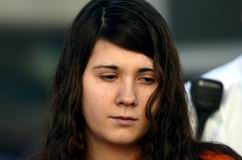 Miranda Barbour
Murderer · USA · 2013
Miranda Barbour, 19, defendant. · Elytte Barbour, 22, defendant and husband of…
100 victims
Miranda Barbour
Murderer · USA · 2013
Miranda Barbour, 19, defendant. · Elytte Barbour, 22, defendant and husband of…
100 victims
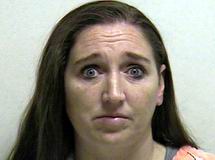 Megan Huntsman
Murderer · USA · 1996
Megan Huntsman was 40 at sentencing. She was a mother of three children who wer…
6 victims
Megan Huntsman
Murderer · USA · 1996
Megan Huntsman was 40 at sentencing. She was a mother of three children who wer…
6 victims
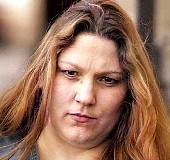 Angela Johnson
Murderer · USA · 1993
Angela Jane Johnson was convicted in federal court of aiding and abetting the m…
5 victims
Angela Johnson
Murderer · USA · 1993
Angela Jane Johnson was convicted in federal court of aiding and abetting the m…
5 victims
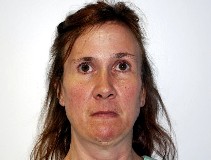 Michele Kalina
Murderer · USA · 1996
Michele Kalina pleaded guilty to murder for one of five infants she initially w…
5 victims
Michele Kalina
Murderer · USA · 1996
Michele Kalina pleaded guilty to murder for one of five infants she initially w…
5 victims
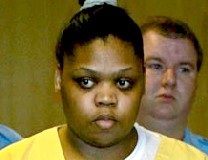 Tiffany Hall
Murderer · USA · 2006
Tiffany Hall was 24 when she was charged in September 2006. She later entered a…
5 victims
Tiffany Hall
Murderer · USA · 2006
Tiffany Hall was 24 when she was charged in September 2006. She later entered a…
5 victims
 Banita Jacks
Murderer · USA · 2007
Banita Jacks was a Washington, DC resident convicted of murdering her four daug…
4 victims
Banita Jacks
Murderer · USA · 2007
Banita Jacks was a Washington, DC resident convicted of murdering her four daug…
4 victims
 Arif and Farman Ali
Cannibals · Pakistan · 2011
Mohammad Arif Ali and Mohammad Farman Ali were brothers from the town of Darya…
0 victims
Arif and Farman Ali
Cannibals · Pakistan · 2011
Mohammad Arif Ali and Mohammad Farman Ali were brothers from the town of Darya…
0 victims
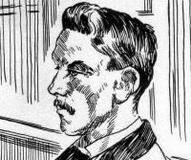 Herbert John Bennett
Murderer · United Kingdom · 1900
Herbert John Bennett was convicted of murdering his wife, Mrs Bennett. · 22 Jul…
1 victim
Herbert John Bennett
Murderer · United Kingdom · 1900
Herbert John Bennett was convicted of murdering his wife, Mrs Bennett. · 22 Jul…
1 victim
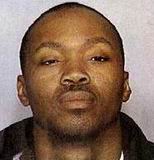 Arohn Kee
Serial killer · USA · 1991
February 19, 1999 — Miami Police arrested a 25-year-old man, Arohn Kee, at the…
3 victims
Arohn Kee
Serial killer · USA · 1991
February 19, 1999 — Miami Police arrested a 25-year-old man, Arohn Kee, at the…
3 victims
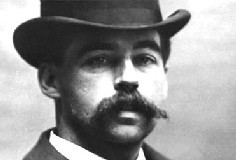 Herman Webster Mudgett
Serial killer · USA - Canada · 1886
Herman Webster Mudgett (May 16, 1861 – May 7, 1896), better known under the ali…
27 victims
Herman Webster Mudgett
Serial killer · USA - Canada · 1886
Herman Webster Mudgett (May 16, 1861 – May 7, 1896), better known under the ali…
27 victims
- Gender
- female
- Country
- Hong Kong
- Location
- Hong Kong
- Date of birth
- 1964
- Age at first offence
- 39
- Characteristics
- abduction, domestic violence, drugs, drug addict, kidnapping, murder for hire, torture
- Victim profile
- Her husband, Robert Kissel ( investment banker)
- Method of murder
- Beating with a heavy metal sculpture
- Date(s) of murder
- November 2, 2003
- Years active
- 2003
- Date of arrest
- 5 days after
- Status
-
Sentenced to life in prison on March 25, 2011; Sentenced to life in prison in September 1, 2005; conviction overturned and retrial ordered by the Court of Final Appeal on February 11, 2010
Case record: Hong Kong Special Administrative Region v. Nancy Ann Kissel (Nancy Kissel)
Status and sentence history
Nancy Kissel was found guilty of the murder of her husband and sentenced to life in prison on September 1, 2005. The Court of Final Appeal overturned the conviction and ordered a retrial on February 11, 2010. Nancy Kissel was again sentenced to life imprisonment on March 25, 2011.
Background
Nancy Kissel and Robert Kissel started dating in 1987 and married in 1989 after living together for two years. Robert and Nancy Kissel arrived in Hong Kong in 1997 with their three children and resided at the Hong Kong Parkview. The children attended Hong Kong International School. Robert was a vice president in Goldman Sachs’ Asian special situations group. Merrill Lynch hired Robert from Goldman in 2000 to head its distressed assets business in Asia outside Japan.
Nancy Kissel was born in Michigan and was raised in Minnesota. Robert attended New York University full-time pursuing his master’s degree in finance. During that time, Nancy worked three jobs in the catering industry in Manhattan to support them. Nancy worked to help Robert further his ambitions and later testified that she held a bachelor’s degree in business and a master’s in design. Robert graduated from NYU in 1991, took a job with Lazard Frères in New York where he worked for five years, then moved on to the Goldman, Sachs Group and was assigned to the Hong Kong office in 1997. In 2000, Robert was hired by Merrill Lynch in Hong Kong and made managing director of global investments, earning roughly $3 million a year in bonuses.
The offence
On November 2, 2003, Nancy Kissel’s husband, Robert Kissel, died in their apartment. The case was known as the “milkshake murder” because Nancy Kissel was alleged to have incapacitated Robert Kissel by serving him a strawberry milkshake full of sedatives before bludgeoning him to death.
A police pathologist examined Robert Kissel’s body and determined that he had been struck five times in the head with a blunt instrument. Tests revealed six prescription medications in Robert Kissel’s stomach, including the sedative Rohypnol, better known as the “date rape drug.” Five of these drugs had been prescribed to Nancy Kissel by two different doctors in the months before her husband’s death.
After the killing, Nancy Kissel allegedly rolled Robert Kissel’s body in a carpet and placed it in their storeroom in the Parkview complex. Investigators found a rolled oriental rug tied with rope and bound with clear adhesive tape. A pillow and a bag filled with bed sheets and clothing were on top of the rug. When investigators unrolled it, they found a body. The corpse had been sealed tight in plastic wrap, the head covered with a black plastic bag, and placed inside a large white plastic bag bound with red adhesive tape before being rolled into the rug.
Investigation
The report of Robert Kissel’s disappearance triggered a search. His colleague and close friend, David Noh, called police after Robert had not been heard from in four days. A friend of Robert Kissel’s, Bryna O’Shea, had called several Hong Kong hotels looking for him and told Noh, who then called the police, fearing something was wrong.
Within hours of Noh’s call, police investigators went to Robert and Nancy Kissel’s Parkview apartment to interview Nancy Kissel about Robert’s whereabouts and asked about a police report Nancy Kissel had filed that morning stating that Robert had assaulted her over the previous weekend after she refused to have sex with him. Nancy Kissel said nothing about having a storeroom in another building of the complex.
That evening, police interviewed maintenance men at the apartment complex and learned that Nancy Kissel had called the management office the day before to have a rug moved to her storeroom. The workers who moved the rug told police it was unusually heavy and that it had taken four of them to move it. Police requested a search warrant and, after finding Robert Kissel’s body behind the door, arrested Nancy Kissel.
Arrest
Nancy Kissel was arrested at 2:41 AM on Friday, November 7, 2003, and charged with the murder of her husband.
Trial
The trial began in June 2005 at Hong Kong’s High Court. Nancy Kissel pleaded not guilty. The prosecution alleged that Nancy Kissel murdered her husband, and she pleaded not guilty. She admitted under cross-examination that she had bludgeoned her husband to death but claimed it was in self-defense after an argument about divorce had escalated, leading him to sexually attack her, and then to swing at her with a baseball bat. She claimed memory loss and testified she had no knowledge of how she inflicted five head wounds with a heavy metal sculpture.
The prosecution’s theory included that the “secret recipe” drink rendered Robert Kissel defenseless and that the murder was carried out with the “tacit encouragement” of Nancy Kissel’s lover, Michael Del Priore. The trial included testimony from neighbors and experts regarding the milkshake and the injuries.
Andrew Tanzer testified he had become drowsy and then unconscious after sampling the strawberry milkshake. Nancy Kissel admitted making the milkshake for one of her children and a visiting child but denied drugging it, stating she would never harm her children or anyone else’s.
The case against Nancy Kissel was brought before Justice Michael Lunn. At the end of the trial, lasting 65 days, the jury of five men and two women decided on her guilt unanimously after eight hours of deliberation.
Summations began in late August 2005. Prosecutor Peter Chapman told the jury, “This was a cold-blooded murder.” In his summation, Chapman argued that the defendant had used the metal figurine to “inflict the injuries on Robert Kissel as he was lying down,” and that Robert Kissel was helpless or even unconscious as a result of drinking the milkshake. Chapman contended that the motive was “to remove the obstacle in her life that Robert Kissel had become,” so that she could make room for her lover Michael Del Priore. Defense counsel Alexander King argued that Nancy Kissel killed her husband in self-defense in a struggle that began when he announced that he was filing for divorce and taking the children away from her. King maintained that police investigators had overlooked bloodstains in the apartment that would have proven a struggle had taken place. King characterized the victim as “unpleasant” and “brutal” and countered the prosecution’s contention that Del Priore simply saw a “gold mine” in Nancy Kissel. King argued that the five blows to Robert Kissel’s head were Nancy’s frantic attempts to subdue him before he hurt her. Judge Michael Lunn instructed the jury to consider the possibility that Nancy Kissel had killed her husband in self-defense without premeditation and asked them to keep in mind that “Robert Kissel was well-built... and the defendant is a relatively slightly built female.”
During the trial, Nancy Kissel’s barrister Alexander King granted her ability to tell her own story as part of a diminished responsibility strategy. Judge Michael Lunn granted the prosecution’s request to introduce “rebuttal evidence” relating to Nancy Kissel’s testimony regarding her husband’s sexuality, specifically her statements regarding his interest in gay and anal sex.
Testimony included that a family computer had been used for an internet search on the phrase “anal sex in Taiwan” on April 4 and 5, 2003, while Nancy Kissel and her children were in America during the SARS outbreak. Robert Kissel had taken a business trip to Taiwan a few days after that search. A computer expert, Benedict Pasco, testified that there was no evidence of web surfing for pornography on Robert Kissel’s laptop but that evidence of visits to pornographic web sites existed on the family desktop. Under cross-examination by defense counsel Alexander King, Pasco stated that searches were conducted on the phrase “anal sex in Taiwan” and that pornographic sites had been visited on the desktop on two occasions that lasted an hour and a half each.
Government forensic expert Dr. Wong Koon-hung testified that after extensive tests, he concluded that the metal statue Nancy Kissel said she used to defend herself was not struck repeatedly by a bat because the bat showed no signs of paint smears from the painted statue and the malleable metal of the statue showed no wood grain patterns from being struck. Previous testimony by government DNA expert Dr. Pang Chi-ming stated that “human material” had been found on the bat, but that the DNA matched neither the deceased nor the accused; he stated that the DNA belonged to another female. The bat had been taken from the Kissels’ apartment by defense counsel before police arrived on November 6, 2003, and it was not handed over to authorities until the trial was under way.
Nancy Kissel’s counsel and the prosecution explored her account of the events on November 2, 2003. The prosecution’s cross-examination began with the question: “Do you accept that you killed Robert Kissel?” Prosecutor Peter Chapman asked, and Nancy Kissel answered, “Yes,” and acknowledged further injuries, saying “Yes.” In relation to memory of the events, she said her memory of the events remained “patchy.” When asked about her alleged sexual assaults by Robert Kissel, she answered, “No,” and said it was “not something you talk about to the girls.” When asked if she screamed during rough sex, she answered: “Did I scream out?” and “I may have.” When asked if anyone heard her, she answered: “I don’t know. A lot of the time I was facing down.” When asked if she had been examined in relation to the results of forceful anal sex, she answered: “No. It’s humiliating.”
When asked about whether she sent her daughter to deliver the tainted milkshake to her husband, she denied involving her daughter and stated, “the children were out of the house when the fatal argument began.” When challenged that she was making up the story about her husband, she became upset and said: “If it weren’t for those things, I would still be with him,” and “I still love him deeply.” She also described her memories and the circumstances of the confrontation and said her memory “came back in little pieces” about six months later while she was incarcerated at the Siu Lam Psychiatric Center.
During trial testimony, Nancy Kissel said Robert announced that he had filed for divorce and was taking the children. She described holding a heavy figurine from the kitchen and pointed out, “What do you mean, you’ve filed for divorce?” She testified she said: “What do you mean, you’ve filed for divorce?” and further described his response and that he “slapped her hand away twice, but she kept pointing at him.” She testified that he snatched her hand and held it, that she spat in his face, and he struck her “across the mouth.” She testified that he “pulled me into the room, threw me onto the bed and started having sex with me,” and that she tried to fight him off, kicking him, and they “ended up on the floor.” She testified: “I reached for the statue,” and she “swung back,” and “I didn’t even look. I felt that I hit something.” She said: “When she looked back, she saw her husband sitting on the floor, bleeding from the head.” She testified that he became enraged when he realized he was bleeding. She also testified: “I tried to help him up and he wouldn’t let me,” and said the he picked up the bat and swung at her, hitting her in the leg and knee. She testified: “He wouldn’t let go,” and that she felt the bat hitting metal and stinging her hands.
In another exchange, Prosecutor Peter Chapman asked: “Do you further cause the injuries on Robert Kissel with the metallic ornament?” She answered “Yes.” In response to Chapman’s questions, she also testified about her lack of memory and said she did not know how she inflicted the head wounds. The prosecution argued against her self-defense account.
Verdict
On September 1, 2005, Nancy Kissel was found guilty by the jury of the murder of her husband and sentenced to life in prison.
The jury foreman read their unanimous decision: “Guilty.” The jury deliberated for eight hours.
Appeals
Nancy Kissel appealed her conviction. In April 2008, her appeal was rejected. She then lodged an appeal with the Court of Final Appeal of Hong Kong on 12 January 2010. The case was before a five-judge panel led by then-Chief Justice Andrew Li.
In the Court of Final Appeal, the defense argued that the prosecution improperly used evidence, including hearsay, and that the original jury instructions were problematic. On February 11, 2010, the Court of Final Appeal quashed the conviction and ordered a retrial, citing prosecution use of inadmissible evidence. Nancy Kissel was permitted to seek bail but ultimately chose not to apply.
Retrial
Nancy Kissel was re-indicted on a single count of murder on March 2, 2010, with the retrial due to start on January 10, 2011. According to the defense, Robert Kissel told Nancy Kissel on the night of November 2, 2003, that he was filing for divorce and that the decision was final, and that she was unfit to care for their children. The defense also alleged she had long suffered from provocation, physical and sexual abuse long before that night. Nancy Kissel pleaded not guilty to murder but guilty to manslaughter on the basis of diminished responsibility and provocation.
On March 25, 2011, after hearing evidence from over 50 prosecution and defense witnesses over ten weeks, a jury found Nancy Kissel guilty as charged. The jury of seven women and two men found her guilty unanimously. She was sentenced to life imprisonment.
Other details
Identified individuals and relationships mentioned
The trial and investigation included testimony and references to several individuals: David Noh, Bryna O’Shea, Frank Shea of Alpha Group Investigations, Andrew Tanzer, and Michael Del Priore. Police pathologists examined Robert Kissel’s body. Government forensic and DNA experts included Dr. Wong Koon-hung and Dr. Pang Chi-ming. A doctor, Dr. Annabelle Dytham, testified that Nancy Kissel’s “pained reactions were disproportionate to the actual injury” she found. The prosecution counsel included Peter Chapman. The defense counsel included Alexander King.
Drugs and prescriptions mentioned
The medications discussed included Rohypnol, Dextropropoxythene, Lorivan, Amitryptaline, and Stilnox.
Nancy Kissel testified about stockpiling Rohypnol and Dextropropoxythene by the end of October 2003. She also described additional prescriptions for a sedative, an antidepressant, and a sleeping medication.
Storage room and discovery details mentioned in the record
Investigators entered a storage room at the exclusive Parkview high-rise apartment complex. They found a rolled oriental rug tied with rope and bound with clear adhesive tape. The head was covered with a black plastic bag, and the entire body was bound with red adhesive tape and placed inside a large white plastic bag before being rolled into the rug.
Professional background mentioned about Robert Kissel
Robert Kissel’s professional roles included vice president in Goldman Sachs’ Asian special situations group, head of Merrill Lynch distressed assets business in Asia outside Japan, and later managing director of global investments in Hong Kong.
Legal and procedural details mentioned
The mandatory penalty for murder in Hong Kong law was life imprisonment. The government board would review the sentence in five years, then every two years thereafter, and had the power to recommend a commutation to a fixed term.
Children and custody matters mentioned
The record discussed that Robert and Nancy Kissel had three children and were American expatriates in Hong Kong. After Robert Kissel’s murder, the three children were sent to the United States and were raised by Nancy Kissel’s father, Ira A. Keeshin, and his wife in Winnetka, Illinois. The record also described Andrew Kissel petitioning the court for guardianship of the children and that the court granted him temporary custody against the apparent wishes of Nancy Kissel, who had written a notarized declaration from the Siu Lam Psychiatric Center on December 18, 2003, that “in no event shall my three children be placed under the care, direction, or supervision of Andrew Kissel.”

Spotted an error, or have more information about this case?