Frankie Silver
Murderer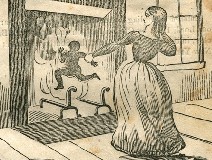 Patty Cannon
Murderer · USA · 1821
Martha “Patty” Cannon (circa 1760 – May 11, 1829) led a gang in the early 19th…
11 victims
Patty Cannon
Murderer · USA · 1821
Martha “Patty” Cannon (circa 1760 – May 11, 1829) led a gang in the early 19th…
11 victims
 Delphine LaLaurie
Murderer · USA · 1831
Delphine LaLaurie fled before she could be bought to justice and was never caug…
Delphine LaLaurie
Murderer · USA · 1831
Delphine LaLaurie fled before she could be bought to justice and was never caug…
 Diane Spencer
Murderer · USA
Diane Louise Spencer was sentenced to life in prison in Michigan on March 13, 1…
1990 victims
Diane Spencer
Murderer · USA
Diane Louise Spencer was sentenced to life in prison in Michigan on March 13, 1…
1990 victims
 Andrea Hicks Jackson
Murderer · USA · 1983
Andrea Hicks Jackson (also known as Felice) was convicted of murdering a black…
1 victim
Andrea Hicks Jackson
Murderer · USA · 1983
Andrea Hicks Jackson (also known as Felice) was convicted of murdering a black…
1 victim
 Troy Anthony Davis
Murderer · USA · 1989
Name: Troy Anthony Davis · Gender: Male · Race: Black · Eye color: Brown · Hair…
1 victim
Troy Anthony Davis
Murderer · USA · 1989
Name: Troy Anthony Davis · Gender: Male · Race: Black · Eye color: Brown · Hair…
1 victim
 Robert Lewis Collier
Murderer · USA · 1978
Robert Lewis Collier was sentenced to death in August 1978. His death sentence…
1 victim
Robert Lewis Collier
Murderer · USA · 1978
Robert Lewis Collier was sentenced to death in August 1978. His death sentence…
1 victim
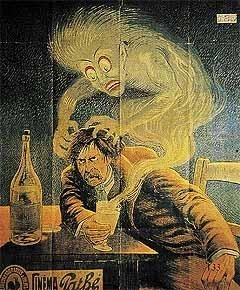 Jean Lanfray
Homicide · Switzerland · 1905
Jean Lanfray (1873/74 – February 26, 1906) was a Swiss laborer. He was convicte…
3 victims
Jean Lanfray
Homicide · Switzerland · 1905
Jean Lanfray (1873/74 – February 26, 1906) was a Swiss laborer. He was convicte…
3 victims
 James Otto Earhart
Murderer · USA · 1987
James Otto Earhart · May 4, 1987 — Earhart visited the Kirtland home in respons…
1 victim
James Otto Earhart
Murderer · USA · 1987
James Otto Earhart · May 4, 1987 — Earhart visited the Kirtland home in respons…
1 victim
- Gender
- female
- Country
- USA
- Location
- Kona, Mitchell County, North Carolina, USA
- Date of birth
- 1813
- Age at first offence
- 18
- Characteristics
- parricide, dismemberment
- Victim profile
- Charles Silver, 19 (her abusive husband)
- Method of murder
- Hacked to death with a hatchet
- Date(s) of murder
- December 22, 1831
- Years active
- 1831
- Date of arrest
- January 9, 1832
- Status
-
Executed
Executed by hanging in Morganton on July 12, 1833
Case record: Frankie Silver
Status / legal outcome
Frankie Stewart Silver was executed by hanging in Morganton on July 12, 1833.
Background
Frankie Stewart Silver was hanged in Morganton, North Carolina, for the ax murder of her husband. She was 18 at the time of the crime. She was the first woman to be hanged in North Carolina.
She was incorrectly believed to have been the first woman executed in Burke County. Frankie Stewart Silver’s full name was Frankie Stewart Silver, and her name was also spelled as Frances Stewart Silver. Her given name appeared as Frankie, and she was also known as Frankie Silver. She was described as being illiterate.
Frankie Stewart Silver was the daughter of Isaiah Stewart and Barbara Stewart.
Frankie Stewart Silver’s father intended to bring Frankie’s body home and inter her in the family burial plot, but extreme heat and humidity in North Carolina forced him to bury Frankie in an unmarked grave behind the Buckthorn Tavern a few miles west of Morganton, North Carolina. For many years, the exact location of Frankie’s grave was unknown, but it was thought to lie in a remote corner of the present day Devault farm. In 1952, a granite stone marking the probable location of the grave was placed by Beatrice Cobb, editor of the Morganton newspaper.
The offence
On December 22, 1831, Charles Silver was hacked to death with a hatchet and dismembered in the cabin he shared with his wife and their daughter Nancy, who was 13 months old at the time. Charles Silver was described as 19 years old at the time of his death.
Frankie Stewart Silver was charged with the murder. She claimed that she killed her drunken husband in self defense as he was loading his gun, intending to shoot her. She stated that her husband was “loading his gun with the avowed purpose of shooting her” and that she “caught up the ax and gave him the fatal blow.” She later said that “a few moments afterwards she would have given, she says, a thousand worlds to have called back the blow.”
A report of her confession stated:
“She made a confession of all the circumstances leading to the commission of the awful deed, from which it appears that the whole period of her matrimonial life, [a little more than 2 years] was spent in a succession of quarrels and fights, always, as she says, commenced by her worthless partner. She says he was loading his gun with the avowed purpose of shooting her, when she caught up the ax and gave him the fatal blow. A few moments afterwards she would have given, she says, a thousand worlds to have called back the blow.”
The dismembered parts of Charles Silver’s body were not discovered all at once, and so they were buried piecemeal as they were found. This accounted for the existence of three separate graves in the Silver family cemetery behind the Kona Baptist Church in Kona, Mitchell County, North Carolina. Charles Silver was described as having burial dates shown on a granite marker as “OCT 3 1812—DEC 22 1831.”
Investigation and arrest
Suspicion fell on Frankie Stewart Silver shortly after the murder.
Frankie, Barbara Stewart, and Blackston were arrested on January 9, 1832.
On January 10, they were jailed in Morganton, county seat of Burke County, which at the time encompassed what is now Mitchell County.
The mountain people of that day were described as being “largely ignorant – but they were not stupid,” and were described as being “fiercely loyal to their families.”
By January 13, Isaiah Stewart obtained a writ of habeas corpus, saying that his wife, daughter and son were being illegally detained.
Charges against Barbara Stewart and Blackston were dropped on January 17.
On March 17, 1832, charges against Blackston and Barbara Stewart were formally dismissed, but Frankie was indicted for murder.
A person named Jack Collis was described as being one of the first to get suspicious. He checked the cabin during a time when Frankie was out and found bits of bone and greasy ashes in the cabin fireplace; under the floorboards, a pool of blood was found described as “as big as a hog liver.” Charles Silver’s head and torso were described as being found outside the cabin.
Trial
Frankie Stewart Silver was tried, swiftly convicted and sentenced to death for the murder.
Under the law of that day, the accused were not allowed to take the stand in their own defense, and Frankie was not permitted to testify in her own defense.
At the time she later explained that she had killed her abusive husband in self-defense as he was loading his gun to shoot her. Public sentiment turned in her favor, but the change came after she had already been convicted and sentenced.
Hundreds of persons, including seven of the twelve jurors who convicted her, petitioned in vain for her pardon.
The trial involved a jury that initially reported being deadlocked 9-3 for acquittal and asked to rehear certain witnesses. Before the witnesses were recalled, jurors were allowed to mingle and discuss the case. After rehearing the witnesses, the jury judged Frankie guilty in a unanimous vote.
Sentencing and execution
Frankie Stewart Silver was sentenced to death.
Frankie’s execution was set for July 1832.
Frankie was executed by hanging on July 12, 1833.
As Frankie was led to the gallows, she attempted to make a final statement, but her father shouted at her:
“Die with it in you, Frankie!”
Her father had a coffin ready “to take her back to her own people,” but the coffin plan did not proceed. Frankie’s 90-pound body began to decompose rapidly in the hot July sun. Isaiah Stewart was forced to bury Frankie “about eight miles outside town alongside the Old Buckhorn Tavern Road.” Her stone erected in 1951 was described as hard to locate later.
Some reports said she was hung from the neck until dead from the limb of a huge oak tree that stood on a hill above the courthouse in Morganton, while Perry Deane Young believed there was a scaffold.
Appeals
Frankie’s lawyer gave notice of appeal.
Judge Donnel filed the appeal on May 3, 1832.
In June 1832, the North Carolina Supreme court rejected the appeal.
Clemency, petitions, and related actions
Hundreds of persons petitioned for her pardon without success.
Even seven of the jurors who convicted her signed a petition asking Governor Swain to issue a pardon.
According to accounts, sentiment for a pardon was growing among the public, including upper-crust ladies of Morganton who sent their own appeal to the governor.
Isaiah Stewart got tired of waiting. On May 18, 1833, he, his brother and one other man broke Frankie out of jail. It was thought they may have had inside help. A claim was included that “fully 90 percent of the community now wanted Frankie spared.”
Eight days later, Frankie was recaptured in Rutherford County while heading for the Tennessee border.
A letter dated July 9, 1833 described Governor Swain as appearing to try to remove himself from responsibility for Frankie's execution by telling W.C. Bevins that his letter appealing for a pardon did not arrive in time. The Bevins letter was described as clearly dated and as having been received in time.
Escape attempt / jailbreak
Before her execution, Frankie’s family broke her out of jail.
Frankie was disguising herself in a man’s coat and hat, and she was carried out of town in a load of hay.
The Sheriff and his posse caught up quickly and easily and saw through the disguise. Frankie was promptly returned to prison.
Other details
People and relationships
Frankie Stewart Silver was married to Charles Silver, who was hacked to death on December 22, 1831.
Frankie and Charles Silver had a daughter, Nancy, who was 13 months old at the time of Charles’s death.
Frankie’s mother was Barbara Stewart.
Isaiah Stewart was described as Frankie’s father.
Family and community burial information
Charles Silver was buried in three separate graves in the Silver family cemetery behind the Kona Baptist Church in Kona, Mitchell County, North Carolina.
Later historical research and cultural references
Perry Deane Young discovered letters and petitions to the governor that were described as turning the traditional story of a jealous wife seeking her revenge upside down. Young began a lifelong effort to show through documentation that Frankie Silver was unjustly hanged.
During the Watergate hearings, Sen. Sam Ervin wrote to Young to concur that Frankie should never have been hanged.
Young’s book, The Untold Story of Frankie Silver, reproduced documents that Young described as proving Frankie’s innocence.
Young’s play, Frankie, was described as giving the long-dead woman a chance to tell her side of the story.
Sharyn McCrumb’s 1999 novel The Ballad of Frankie Silver was described as using the case of Frankie Silver as a basis. In the novel, Spencer Arrowood took a fresh look at the Frankie Silver case and at a fictional modern murder with many parallels.
A 2000 film and a 2010 re-release DVD of The Ballad of Frankie Silver were described as being written, directed and produced by Theresa E. Phillips of Legacy Films Ltd. The film was described as having a different theory of what actually happened in the death of her husband Charlie.
Rap artist Lil B had a bonus track on his Angels Exodus album titled Frankie Silver, and the song sampled American R&B duo James & Bobby Purify’s song “I’m Your Puppet.” The description added that it did not reference the title person.
In a 2013 episode of the Investigation Discovery show Deadly Women, Frankie Stewart Silver appeared. The episode was titled “Brides of Blood”.
Additional quoted or named individuals
Charles Silver was described in one account as the only child of Jacob and Elizabeth Wilson Silver, and his mother died giving birth to him.
Jacob Silver was described as having remarrying and Charles having many half brothers and sisters. Alfred Silver provided a quoted description of Charles:
“He was strong and healthy, good looking and agreeable. He had lots of friends. Everybody liked him. He was a favorite at all the parties for he could make merry, by talking, laughing and playing musical instruments. I think he was the best fifer I ever heard.”
Frankie Stewart Silver was described as having come into the Burke County, North Carolina mountains at the age of 6, with Isaiah and Barbara Stewart settling on one side of a mountain ridge and Jacob Silver and family settling on the other side 20 years earlier. Alfred Silver described Frankie:
“A mighty likely little woman. She had fair skin, bright eyes and was counted very pretty. She had charms, I never saw a smarter little woman. She could card and spin her three yards of cotton a day on a big wheel.”
A quoted opinion attributed to Wayne Silver included a direct threat and direct responses:
“So help me Frankie – if you don’t shut up, I’m going to shoot the both of you!” “No!”
“I won’t let you hurt me or my baby!”
A quoted opinion attributed to Wayne Silver also stated:
“The story goes that Charlie had been sent to get the Christmas liquor. On the way home he does what any 19-year-old might do. He takes a nip. It’s good. He takes another nip. That’s even better. He arrives home to a complaining wife and a screaming baby. Suddenly, Charlie is in a foul mood. Things turn ugly. He picks up his gun and shouts. ‘So help me Frankie – if you don’t shut up, I’m going to shoot the both of you!’ He probably didn’t mean it. But by this time Frankie has picked up the ax. ‘No!’ She screams. ‘I won’t let you hurt me or my baby!’ She swings the ax and Charlie is dead. I will never believe it was premeditated murder and few in my family have ever believed it. In fact, it was more of an accident than anything else.”
William C. Robinson was mentioned in relation to Nancy’s later life, and Commodore Robinson was mentioned as their son.
Nancy Silver’s later marriage and descendants were described, including a claim that Nancy’s great-granddaughter Wanda Adams Henry said “William Robinson raped Nancy’s daughter and Nancy ran him off.” The narrative then stated that Nancy changed her name back to Parker.
Names of alleged counsel and government officials mentioned
Frankie’s lawyer was identified as Thomas Worth Wilson in one account.
Clemency petitions were directed to N.C. Gov. Montford Stokes and later Gov. David L. Swain, who was described as being elected UNC president in 1835.
Judge Donnel and Judge David L. Swain were mentioned. Sen. Sam Ervin was mentioned in relation to correspondence with Perry Deane Young.
Timeline
- December 22, 1831 — Charles Silver was hacked to death with a hatchet and dismembered in the cabin he shared with his wife Frankie and their daughter Nancy, who was 13 months old.
- January 9, 1832 — Frankie Stewart Silver, Barbara Stewart, and Blackston were arrested.
- January 10, 1832 — Frankie, Barbara Stewart, and Blackston were jailed in Morganton.
- January 13, 1832 — Isaiah Stewart obtained a writ of habeas corpus.
- January 17, 1832 — Charges against Barbara Stewart and Blackston were dropped.
- March 17, 1832 — Charges against Blackston and Barbara Stewart were formally dismissed; Frankie was indicted for murder.
- March 29, 1832 — The jury retired to determine Frankie’s fate.
- March 30, 1832 — The jury reported being deadlocked 9-3 for acquittal and asked to rehear certain witnesses; jurors were allowed to mingle and discuss the case.
- May 3, 1832 — Judge Donnel filed the appeal.
- June 1832 — The North Carolina Supreme court rejected the appeal.
- May 18, 1833 — Isaiah Stewart, his brother, and one other man broke Frankie out of jail.
- May 26, 1833 — Frankie was recaptured in Rutherford County while heading for the Tennessee border.
- July 9, 1833 — A letter dated July 9, 1833 described Governor Swain as telling W.C.
- July 12, 1833 — Frankie Stewart Silver was executed by hanging in Morganton.

Spotted an error, or have more information about this case?