
Monique Lee
Murderer Miranda Barbour
Murderer · USA · 2013
Miranda Barbour, 19, defendant. · Elytte Barbour, 22, defendant and husband of…
100 victims
Miranda Barbour
Murderer · USA · 2013
Miranda Barbour, 19, defendant. · Elytte Barbour, 22, defendant and husband of…
100 victims
 Tiffany Hall
Murderer · USA · 2006
Tiffany Hall was 24 when she was charged in September 2006. She later entered a…
5 victims
Tiffany Hall
Murderer · USA · 2006
Tiffany Hall was 24 when she was charged in September 2006. She later entered a…
5 victims
 Banita Jacks
Murderer · USA · 2007
Banita Jacks was a Washington, DC resident convicted of murdering her four daug…
4 victims
Banita Jacks
Murderer · USA · 2007
Banita Jacks was a Washington, DC resident convicted of murdering her four daug…
4 victims
 Holly Grigsby
Murderer · USA · 2011
Holly Grigsby was sentenced to life in prison without parole on July 15, 2014.…
4 victims
Holly Grigsby
Murderer · USA · 2011
Holly Grigsby was sentenced to life in prison without parole on July 15, 2014.…
4 victims
 Jessica Tata
Murderer · USA · 2011
Jessica Tata was a Houston home day care owner who fled to Nigeria after a fire…
4 victims
Jessica Tata
Murderer · USA · 2011
Jessica Tata was a Houston home day care owner who fled to Nigeria after a fire…
4 victims
 Amanda Bennett
Murderer · USA · 2011
Amanda Bennett was an Indiana woman who shot her three children and set the fam…
3 victims
Amanda Bennett
Murderer · USA · 2011
Amanda Bennett was an Indiana woman who shot her three children and set the fam…
3 victims
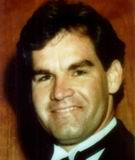 Charles Stuart
Murderer · USA · 1989
Charles Stuart was born in 1959 and died on January 4, 1990. He was described a…
1 victim
Charles Stuart
Murderer · USA · 1989
Charles Stuart was born in 1959 and died on January 4, 1990. He was described a…
1 victim
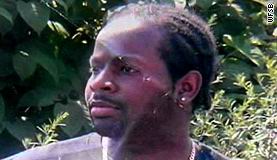 Omar Thornton
Mass murderer · USA · 2010
Omar S. Thornton was 34 years old at the time of the Hartford Distributors shoo…
8 victims
Omar Thornton
Mass murderer · USA · 2010
Omar S. Thornton was 34 years old at the time of the Hartford Distributors shoo…
8 victims
 Armin Meiwes
Murderer · Germany · 2001
Armin Meiwes was a German man who became known as the “Rotenburg Cannibal” or “…
1 victim
Armin Meiwes
Murderer · Germany · 2001
Armin Meiwes was a German man who became known as the “Rotenburg Cannibal” or “…
1 victim
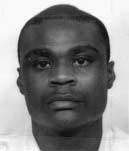 Alva Curry
Murderer · USA · 1991
Alva Curry was executed by lethal injection in Texas on January 28, 2003, and w…
2 victims
Alva Curry
Murderer · USA · 1991
Alva Curry was executed by lethal injection in Texas on January 28, 2003, and w…
2 victims
- Gender
- female
- Country
- USA
- Location
- Omaha, Douglas County, Nebraska, USA
- Date of birth
- 1983
- Age at first offence
- 27
- Characteristics
- abduction
- Victim profile
- Karen Jenkins, 48 (her landlord)
- Method of murder
- Strangulation with the cord of a vacuum cleaner
- Date(s) of murder
- October 17, 2010
- Years active
- 2010
- Date of arrest
- December 30, 2010
- Status
-
Died in custody
Sentenced to life in prison on November 13, 2012; died in prison on January 18, 2013
Parties and relationships
Monique Lee was the tenant whose eviction led to the killing of her landlord, Omaha businesswoman Karen Jenkins.
Karen Jenkins was a businesswoman and former college instructor. She held a doctorate and had once worked as a college instructor. Karen Jenkins often offered reduced rent to tenants and sometimes even hired them to work off their rent. Karen Jenkins was 48 years old when she was killed.
Karen Jenkins’s sister, Cynthia Jenkins, lived and worked in Omaha. Cynthia Jenkins described her relationship with Karen Jenkins as close, saying they were like twins and that they shared everything, argued and laughed, telephoned and teased each other every day, even when Karen Jenkins was traveling to faraway places. Cynthia Jenkins also said she helped hire tenants to clean houses when Karen had a tenant with trouble making rent.
Karen Jenkins’s brother, Kenneth Jenkins, said the family was trying to focus on the quality of Karen's life rather than the cruelty of her death. Kenneth Jenkins also said, “You can't hate,” adding: “If you hate, you can't pick the pieces up, can't move on. If you hate, you become them.”
Monique Lee’s brother was Gary Lee, and Monique Lee’s brother was also involved in the luring and strangling of Karen Jenkins.
Monique Lee’s attorney was Douglas County Public Defender Tom Riley.
Douglas County Attorney Don Kleine was involved for the prosecution.
Douglas County District Judge James Gleason imposed Monique Lee’s sentence.
Monique Lee’s sister was DeShawndra Boatman, who had custody of Monique Lee’s children.
Monique Lee’s mother appeared in court during the trial, leaving the courtroom in a huff at one point.
A Douglas County Public Defender Tom Riley also spoke as the defense counsel in court.
Detective/sheriff involvement included Ronald Ross, a Douglas County sheriff's constable.
Timeline
- Oct. 3, 2010 — Ronald Ross served Monique Lee with initial eviction papers; Ross said Monique Lee grabbed the papers out of his hand and mumbled something, upset.
- Oct. 15, 2010 — A court date was set for Monique Lee’s eviction case.
- Oct. 17, 2010 — Karen Jenkins was killed after Monique Lee received eviction papers.
- 10:30 a.m., Oct. 17, 2010 — The last phone number dialed to Karen Jenkins’s phone was Gary Lee’s number.
- 10:31 a.m., Oct. 17, 2010 — Gary Lee called or texted his sister’s number as he followed Karen Jenkins into the apartment.
- After Oct. 17, 2010 — After hiding the body, it was not found for six days.
- October 2010 (approx.) — Karen served Monique Lee with an eviction notice.
- December 30, 2010 — Police arrested Gary D. Lee and Monique Lee and charged them with first degree homicide; prosecutors also charged them with use of a weapon.
- May 2, 2012 — Monique Lee’s first-degree murder trial began in Douglas County District Court.
- May 4, 2012 — A jailhouse phone call from December 2010 was played to jurors.
- November 13, 2012 — Douglas County District Judge James Gleason sentenced Monique Lee to life in prison.
- January 18, 2013 — Monique Lee died in prison.
- January 19, 2013 — Corrections officials published information about her death.
Background
Monique Lee had longstanding mental health issues. She had suffered from schizophrenia since childhood and was bipolar.
Monique Lee pleaded not guilty by reason of insanity in the October 2010 death of Karen Jenkins.
Her brother and sister testified that Monique Lee had molested her brother when they both were children.
As a child, Monique Lee tried to poison her mother by soaking her food in WD-40.
Her brother, Gary Lee, was convicted of second-degree murder.
Monique Lee’s defense included a contention that she was insane at the time of the killing and unable to comprehend the consequences of her actions, even though the sides agreed she was mentally ill on Oct. 17, 2010.
Under Nebraska law, the defense had to prove that a defendant suffered from mental illness that made her incapable of distinguishing right from wrong. A jury rejected Monique Lee’s insanity defense.
The offence
Karen Jenkins disappeared on Oct. 17, 2010.
Prosecutors alleged that Monique Lee and Gary Lee lured Karen Jenkins to a vacant apartment by pretending that Gary Lee wanted to rent the apartment.
As Karen Jenkins prepared to show the apartment, prosecutors said Monique Lee attacked her from behind.
Karen Jenkins called out: “Monique, get off of me.”
Prosecutors said Monique Lee strangled Karen Jenkins with the cord of a vacuum cleaner while Gary Lee held her legs.
After the strangling, prosecutors said Monique Lee and Gary Lee wrapped Karen Jenkins’s body in a sheet and stuffed her in a closet.
Prosecutors alleged that Monique Lee used Super Glue to seal Karen Jenkins’s nostrils and mouth shut; prosecutors also alleged that Monique Lee put Super Glue in the woman's nostrils so much that her upper lip was glued to her nose, and that she and Gary Lee then stuffed tissue in her mouth.
Prosecutors said hours later Monique Lee and Gary Lee took the body across the street and disposed of it under the porch of a burned-out house near 40th Street and Ames Avenue.
Investigators said the body was found under an abandoned house across the street from a bar Jenkins was renovating at 40th Street and Ames Avenue.
Monique Lee’s lawyer, Tom Riley, argued that the case involved a dispute over identity and mental state; Riley contended that prosecutors would struggle to convince jurors that Monique Lee killed Karen Jenkins and that Gary Lee connected Monique Lee to what happened in that apartment. Riley said “He’s not trying to protect his sister,” and continued: “He's trying to lay it off on her — and she is not equipped to defend herself.”
Riley also argued that even if prosecutors proved the case, Monique Lee was insane at the time of Jenkins’s killing.
Investigation, arrest, and pretrial detention
Jenkins’s disappearance prompted a frantic search among her large and closeknit family, and Cynthia Jenkins could not get in contact with Karen Jenkins despite speaking with her daily.
Beadle said the last phone number dialed to Karen Jenkins’s phone was Gary Lee’s number at 10:30 a.m. on Oct. 17.
Beadle said at 10:31 a.m., Gary Lee then called or texted his sister’s number as he followed Karen Jenkins into the apartment.
Beadle said after hiding the body, Monique Lee was deceptive with detectives investigating the disappearance.
Prosecutors said Monique Lee initially told investigators she hadn’t seen Jenkins for a while, and on the Sunday in question she said she was at the Siena Francis House doing community service work all day, but later changed her story and told detectives she was at home all day.
Ronald Ross, a Douglas County sheriff’s constable, said he served Monique Lee with initial eviction papers Oct. 3. Ross said: “I didn't get the chance to get much out,” and also: “She grabbed the papers out of my hand and just mumbled something, kind of upset.”
Police arrested Gary D. Lee and Monique Lee on December 30, 2010 and charged them with first degree homicide in the killing of Karen Jenkins.
Douglas County Attorney Don Kleine said at the time of the arrests: “This is an on-going investigation... police are still conducting interviews, we don't want to jeopardize the investigation.”
Prosecutors charged both Gary and Monique Lee with first degree homicide and also with use of a weapon.
The body of Karen Jenkins was discovered about five days after her disappearance.
Trial
Monique Lee’s first-degree murder trial began in Douglas County District Court on May 2, 2012.
Both sides agreed Monique Lee was mentally ill on Oct. 17, 2010, but they disagreed on whether her mental illness made her unable to comprehend the consequences of her actions.
Prosecutor Brenda Beadle said Lee was capable of understanding right and wrong.
Prosecutors said Lee and Gary Lee set out to set up Jenkins after Lee was being evicted by pretending Gary Lee was a prospective tenant and luring Karen Jenkins to a vacant apartment in the same building as the bar that was being renovated.
Brenda Beadle described the strangling and alleged disposal.
Beadle and defense planned to call dueling doctors to debate the insanity issue.
Tom Riley argued his defense was two-pronged:
- Identity, arguing prosecutors would have difficulty proving Lee killed Jenkins and that Gary Lee was the only one connecting Monique Lee to what happened in the apartment.
- Insanity, arguing Lee was insane at the time of the killing.
Riley said: “He's not trying to protect his sister,” and “He's trying to lay it off on her — and she is not equipped to defend herself.”
Riley said the defense would show that Monique Lee was insane at the time of Jenkins’s killing and that prosecutors needed to prove the defendant could distinguish right from wrong.
Dr. Bruce Gutnik, an Omaha psychiatrist, would testify that Lee was insane and incapable of understanding her actions at the time.
Dr. Scott Moore, a Lincoln Regional Center psychiatrist, would testify that Lee could distinguish right from wrong.
Prosecutors alleged that after strangling Jenkins, Monique Lee put Super Glue in Jenkins’s nostrils, and that her upper lip was glued to her nose, and that Monique Lee and Gary Lee stuffed tissue in her mouth.
During testimony, Monique Lee made admissions in jailhouse phone calls.
On May 4, 2012, the defense questioned whether prosecutors could prove Monique Lee killed her landlord, Karen Jenkins, but someone did not question who did the killing: Lee herself.
Prosecutors played three jailhouse phone calls made in December 2010.
In one phone call, Lee told her sister that she killed Jenkins, saying: “I admit, I did it.”
Lee also blubbered and spoke about how she did it. When pressed about whether she shot or stabbed Jenkins, Lee said: “I didn't drug her,” and also: “I choked ... I strangled her. I strangled her, Shawndra.”
Her sister DeShawndra Boatman pressed her with: “C’mon, Monique, just tell me,” and said: “I won’t tell nobody. I won’t tell mom. ... Did you drug her?”
Boatman’s later statement in the trial was quoted when she said about the children: “Mom has to take a vacation.”
In a second phone call, Boatman asked if Monique Lee acted alone or out of anger over eviction papers.
Lee said: “It wasn’t based off of what everybody thinks it is. My kids was being threatened.”
Boatman asked: “By who?”
Lee responded by referring to a mysterious man at a nearby body shop and to a yellow truck parked in the neighborhood, and said: “All I know is his name is Black,” adding: “I would get phone calls, messages telling me what clothes I was wearing ... like they was watching me. I was being threatened. My brother was being threatened.”
Lee told her sister that Jenkins’ body was moved by the unnamed man and his friends.
Gary Lee was expected to testify he helped his sister hide the body.
Lee said: “He kept threatening me,” and also: “He started telling me, ‘Do it or die. So I did it.’”
In a later part of the calls, Lee said about her brother: “Gary watched,” and also: “He just stood there and watched. And he held her down.”
In a third phone call, Lee said Gary threw blame onto her and pinned motive on the eviction, telling Boatman: “Gary throw all this (expletive) on me,” and: “You mean to tell me, I been letting you live in my house and then you going to throw this (expletive) on me? ... This is my blood.”
Monique Lee asked about her life sentence in the courtroom after the recordings.
Boatman said: “They probably are going to try to give you life,” and then: “They might give you 20 years.”
Lee replied: “Well, 20 is a lot better than life,” and also: “As long as it’s not forever. As long as I can get out and see the kids.”
Lee paused and added: “If I could change this, Shawndra, I swear to God I would. I can’t stand being away from my babies.”
Monique Lee repeatedly asked about her children during the trial. A quote included: “Have they asked about me? ... I need to hear them.”
At one point, Lee asked whether the court had asked about her.
Lee: “Have they asked about me? ... I need to hear them.”
Boatman answered: “They’re fine. I just told ’em ‘Mom has to take a vacation.’”
Later, Boatman put the daughter on.
Lee said: “Hi, baby. Hey, baby,” and: “You take care of your little brother, OK? I love you.”
The daughter responded: “I love you too,” her daughter said.
Cynthia Jenkins spoke in court at the sentencing hearing and told the judge: “Monique's pretty much killed me, too,” “I can't take care of my family the way I used to. I can't forgive her. I can't find any hope. I can't find any answers. “What did (Monique) have to gain for what she did? It's a mystery.”
A jury convicted Monique Lee, rejecting her insanity defense.
A jury convicted Gary Lee of second-degree murder.
Sentencing
On November 13, 2012, Douglas County District Judge James Gleason imposed a life sentence on Monique Lee.
The life sentence was imposed in the slaying of Karen Jenkins.
Appeals
No appeals were included in the provided material.
Outcome
Monique Lee died in prison on January 18, 2013.
Corrections officials did not release detailed reports of her death, and a corrections web site listed her date of death as Friday.
Aftermath
Cynthia Jenkins described ongoing grief after Monique Lee’s sentence.
Cynthia Jenkins said: “That's the most frustrating part,” and also: “Every time we get together, we try to make sense of it.”
Kenneth Jenkins said it “won't ever make sense.”
Cynthia Jenkins said: “Karen had a way to give joy, to give a piece of herself to every friend she had,” and she described Karen as “ornery and playful and full of energy,” saying: “Karen was the baby of the family,” and that she and Cynthia talked daily, several times a day.
Cynthia Jenkins said she knew the “quality of Karen's life” and not the “cruelty of her death” should be the focus. She also conveyed the family’s struggle to understand the gain behind the act.
Ken Jenkins said the family’s response was not to hate, quoting: “You can't hate,” “If you hate, you can't pick the pieces up, can't move on. If you hate, you become them.”

Spotted an error, or have more information about this case?