
Crystal Mangum
Murderer Miranda Barbour
Murderer · USA · 2013
Miranda Barbour, 19, defendant. · Elytte Barbour, 22, defendant and husband of…
100 victims
Miranda Barbour
Murderer · USA · 2013
Miranda Barbour, 19, defendant. · Elytte Barbour, 22, defendant and husband of…
100 victims
 Tiffany Hall
Murderer · USA · 2006
Tiffany Hall was 24 when she was charged in September 2006. She later entered a…
5 victims
Tiffany Hall
Murderer · USA · 2006
Tiffany Hall was 24 when she was charged in September 2006. She later entered a…
5 victims
 Banita Jacks
Murderer · USA · 2007
Banita Jacks was a Washington, DC resident convicted of murdering her four daug…
4 victims
Banita Jacks
Murderer · USA · 2007
Banita Jacks was a Washington, DC resident convicted of murdering her four daug…
4 victims
 Holly Grigsby
Murderer · USA · 2011
Holly Grigsby was sentenced to life in prison without parole on July 15, 2014.…
4 victims
Holly Grigsby
Murderer · USA · 2011
Holly Grigsby was sentenced to life in prison without parole on July 15, 2014.…
4 victims
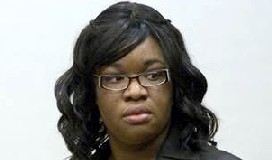 Jessica Tata
Murderer · USA · 2011
Jessica Tata was a Houston home day care owner who fled to Nigeria after a fire…
4 victims
Jessica Tata
Murderer · USA · 2011
Jessica Tata was a Houston home day care owner who fled to Nigeria after a fire…
4 victims
 Amanda Bennett
Murderer · USA · 2011
Amanda Bennett was an Indiana woman who shot her three children and set the fam…
3 victims
Amanda Bennett
Murderer · USA · 2011
Amanda Bennett was an Indiana woman who shot her three children and set the fam…
3 victims
 Jean-Louis Turquin
Murderer · France · 1991
Jean-Louis Turquin was a Nice veterinary surgeon who was convicted of murdering…
1 victim
Jean-Louis Turquin
Murderer · France · 1991
Jean-Louis Turquin was a Nice veterinary surgeon who was convicted of murdering…
1 victim
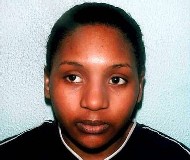 Kemi Adeyoola
Homicide · United Kingdom · 2005
Kemi Adeyoola was convicted of murdering 84-year-old Anne Mendel. Adeyoola had…
1 victim
Kemi Adeyoola
Homicide · United Kingdom · 2005
Kemi Adeyoola was convicted of murdering 84-year-old Anne Mendel. Adeyoola had…
1 victim
 James Tenner
Murderer · USA · 1987
James Tenner was convicted of the hanging and murders of Alvin Smith and Donna…
2 victims
James Tenner
Murderer · USA · 1987
James Tenner was convicted of the hanging and murders of Alvin Smith and Donna…
2 victims
 Ferdinand Bourdlais
Murderer · 1952
Name: Ferdinand Bourdlais · Also known as: Vernon Bourdlais · Age at death: 27…
1 victim
Ferdinand Bourdlais
Murderer · 1952
Name: Ferdinand Bourdlais · Also known as: Vernon Bourdlais · Age at death: 27…
1 victim
 Stephen Nefstad
Murderer · USA · 1987
Stephen Nefstad was an Oregon state prisoner. He appealed the district court’s…
1 victim
Stephen Nefstad
Murderer · USA · 1987
Stephen Nefstad was an Oregon state prisoner. He appealed the district court’s…
1 victim
- Gender
- female
- Country
- USA
- Location
- Durham County, North Carolina, USA
- Date of birth
- July 18, 1978
- Age at first offence
- 33
- Characteristics
- rape, kidnapping, domestic violence, arson, drug addict
- Victim profile
- Reginald Daye, 46 (her boyfriend)
- Method of murder
- Stabbing with knife
- Date(s) of murder
- April 3, 2011
- Years active
- 2011
- Date of arrest
- Same day
- Status
-
Imprisoned
Sentenced to 14 to 18 years in prison on November 22, 2013
Case overview
Crystal Gail Mangum (born July 18, 1978) was an African American woman known for making false allegations of rape against white lacrosse players in the Duke lacrosse case. In November 2013, she was found guilty of second-degree murder related to a fatal attack on her boyfriend.
Timeline
- Late 1996 — Mangum filed a police report making rape allegations she later backed away from.
- March 13, 2006 — At a house rented by Duke University men’s lacrosse team captains, Mangum arrived with a fellow stripper for a strip tease and later made an allegation of rape.
- March 28, 2006 — Duke University suspended the lacrosse team for two games.
- April 3, 2011 — Mangum’s boyfriend, Reginald Daye, was stabbed.
- February 17, 2010 — Durham police were called to Mangum’s residence after her nine-year-old daughter reported events involving Mangum and her live-in boyfriend; police found her and her live-in boyfriend fighting and said she set fire to his clothing.
- April 2, 2011 — Mangum was involved in events leading to the April 3, 2011 stabbing.
- April 10, 2006 — Defense attorneys stated time-stamped photographs exist showing the dancer was injured upon arrival and very impaired.
- April 17, 2010 — (No event stated beyond the February 17, 2010 arrest timing.)
- April 18, 2006 — Two lacrosse team members, Collin Finnerty and Reade Seligmann, were arrested and indicted on charges including first degree forcible rape, first degree sexual offense and kidnapping.
- May 15, 2006 — David Evans was indicted on charges including first-degree forcible rape, sexual offense and kidnapping.
- December 22, 2006 — District Attorney Mike Nifong dropped the rape charges against all three lacrosse players.
- January 11, 2007 — More inconsistencies were said to have come to light after the defense filed a motion detailing an interview.
- January 12, 2007 — Nifong asked to be taken off the case.
- January 13, 2007 — Attorney General Roy Cooper’s office took over the case.
- April 11, 2007 — The attorney general’s office announced it had dismissed all charges against the three lacrosse players and declared them innocent.
- November 22, 2013 — Mangum was found guilty of second-degree murder.
- November 22, 2013 — Judge Paul Ridgeway sentenced her to a minimum of 14 years, 2 months and a maximum of 18 years in prison (also stated as 14 to 18 years in prison).
Background
Mangum was born and grew up in Durham, North Carolina, to a father who drove trucks. She claimed to have been born and grown up in Durham, with her father driving trucks. She was said to have been the youngest of three children and to have grown up not far from where she later alleged she was assaulted in 2006.
Family accounts about the alleged 1993 incident differed. Her father said he did not believe any such incident occurred involving force. Her mother believed a similar incident could have occurred, but three years later rather than in 1993. Another account stated that her ex-husband, Kenneth Nathanial McNeill, said he believed the 1993 rape accusations were true.
1993 alleged kidnapping and rape
In 1993, at age 14, Mangum claimed she had been kidnapped by three assailants, driven to Creedmoor, North Carolina, and raped. One of those she accused was her boyfriend, who was 21 at the time.
Police report filed late 1996; later backing away
Mangum filed a police report making these allegations in late 1996. She subsequently backed away from the charges, which relatives claimed was motivated by fear for her life. She filed a report on Aug. 18, 1996, three years after the alleged rapes allegedly took place, according to a police document described in the narrative. The account said the case was not pursued because the accuser backed away from the charges out of fear for her life.
The account also stated that, the year after the alleged Creedmoor rape, Mangum saw a psychiatrist and took prescription medication for a year because trauma from the assault had left her suicidal.
High school and Navy
After graduation from high school in 1996, she joined the U.S. Navy. She served for less than two years before being discharged from the service after becoming pregnant. Another narrative stated she began two-year active duty in the summer of 1997, married her husband in the fall of that year, and later accused her husband on June 16, 1998 of taking her into a wooded area and threatening to kill her; he denied it, and when she failed to appear at a court hearing the complaint was dismissed. The marriage was said to have separated after 17 months, and she was discharged from the Navy pregnant by a sailor she began a relationship with.
Work after return to Durham; education
By 2002, Mangum had returned to Durham and was working as a stripper. In 2004, she gained an associate’s degree from Durham Technical Community College. She subsequently enrolled full-time at North Carolina Central University in police psychology and was said to have been in her second year at the time of the Duke lacrosse allegations, studying police psychology and maintaining a 3.0 average. She later graduated from North Carolina Central University in May 2008 with a degree in police psychology.
2003 taxi theft and guilty plea
In 2003, she was arrested on ten charges after stealing the taxicab of a customer to whom she had given a lap dance. This prompted a police pursuit at moderate speeds of up to 70 miles per hour, though occasionally in the wrong lane. After being stopped, she attempted to run over a police officer, succeeding only in hitting his patrol vehicle. She was found to have a BAC of just over twice the legal limit. Ultimately, she pleaded guilty on four counts, serving three weekends in jail, paying $4,200 in restitution and fees, and being given two years probation. In another narrative, the guilty plea in 2003 was described as covering four misdemeanors: larceny, speeding to elude arrest, assault on a government official, and DWI.
Mental health and medications
The narrative stated that Mangum had a history of mental problems and had been diagnosed with bipolar disorder. It also stated she had taken anti-psychotic medications, including Seroquel, described as mood stabilizers. The narrative also stated she had taken Ambien, methadone, Paxil, and amitriptyline, although it said when she began taking these medications was uncertain.
The offence
Duke lacrosse case: allegation of rape and related events
In March 2006, after arriving intoxicated with a fellow stripper for a strip tease at a house rented by three Duke University men’s lacrosse team captains, Mangum became involved in an argument with the occupants of the house and left. After becoming involved in an altercation with her fellow stripper that necessitated police assistance, she made a false allegation of rape.
A narrative described what happened during the party at the off-campus residence of Duke lacrosse team captains on March 13, 2006. It described the players consuming alcohol. The players requested two white strippers, and the women who arrived were described as respectively half-black and half-Asian. A player asked about sex toys and Roberts responded by asking if the player’s penis was too small. Another player brandished a broomstick and suggested she “use this [as a sex toy].” The exchange ended the performance; both strippers went inside the home’s bathroom. While the women were still in the bathroom, Seligmann and Finnerty left the house. After the women came out, Mangum roamed around the yard half-dressed and shouting.
The narrative described that shortly before 1 a.m., Mangum and Roberts entered Roberts’ vehicle. Roberts reportedly called the attenders “Short dick white boys,” and “how he couldn’t get it on his own and had to pay for it,” which prompted a player yelling “We asked for whites, not niggers.” The narrative then stated Mangum and Roberts departed in Roberts’ car. Kim Roberts then called 911 and said white men who came out of 610 N. Buchanan yelled “nigger” at her from near the East Campus wall. It also described inconsistencies in the 911 call, stating the caller first said she was driving and later said she was walking when the slur was yelled.
After Roberts drove away with Mangum, the two women began to argue. Roberts pulled over and attempted to push Mangum out. When that measure failed, Roberts drove Mangum to a nearby Kroger supermarket, went inside, and spoke to a security guard. The guard walked to the car and asked Mangum to leave, but Mangum stayed in the vehicle. The guard said she did not smell alcohol on Mangum’s breath but thought she might have been under the influence of other drugs. At 1:22 a.m., the guard called 911 after Mangum refused to leave the car.
Police then arrived, tried to remove Mangum from the car, questioned her, and took her to the Durham Access Center for involuntary commitment. During admission, Mangum claimed she had been raped prior to her arrival. She was transferred to Duke University Medical Center and received treatment for genital injuries; the narrative described that it was unclear whether injuries were consistent with rape. It stated there were no abrasions, tears, or bleeding in the vaginal area, but investigators found swelling in the vaginal area, with tenderness in Mangum’s breasts and lower-right quadrant. It stated there was no blunt-force trauma, and it described two non-bleeding scratches on her right knee and one on her right heel. It described diffuse swelling of the vagina and that investigators did not note any other injuries in the rest of the report.
The narrative also described that Mangum later claimed she had performed using a vibrator for a couple in a hotel room shortly before the lacrosse-team party, and said the activity or a yeast infection might account for the swelling.
Investigation and prosecution narrative in the Duke case
DNA tests were described as failing to connect Mangum’s allegations to Duke lacrosse players. The narrative stated that shortly after the party, the prosecution ordered 46 of 47 team members to provide DNA samples, although it said the only black member of the team was exempt since Mangum had stated that her attackers were white. It said cheek swabs and statements were provided the day after the party and players were offered to take polygraph tests, but the police turned them down.
The narrative stated that on April 10, 2006, it was revealed that DNA testing failed to connect any of the 46 tested members to the case. It said that after the initial rounds of testing by the state crime lab, the district attorney sought the services of a private laboratory to conduct additional tests. It said DNA from multiple males was found inside Mangum and on rape kit items, but none matched any of the lacrosse players.
The narrative described an ethics trial phase in which complete DNA findings were revealed during Brad Bannon’s testimony on June 14, 2007, including that the lab discovered unidentified male DNA in Mangum’s pubic region, rectum, underpants, and at least one identified male DNA in her vagina. It also described that defense lawyers had argued that the DNA report provided to Nifong’s office was incomplete because it omitted information showing that none of the genetic material from several men found on her woman matched DNA samples taken from any of the players, and that the director of the DNA lab, Brian Meehan, acknowledged violating lab policies.
The narrative stated that the attorney general later declared the players innocent and dismissed charges, saying there was no credible evidence against them. It also said the Durham Police Department faced criticism for violating their own policies by allowing Nifong to act as the de facto head of the investigation, giving a suspect-only photo identification procedure to Mangum, pursuing the case despite discrepancies, and distributing a poster presuming the guilt of suspects. It stated that Mangum faced no charges for her false accusations as Cooper declined to prosecute her.
2010–2013 domestic-related offences and killing
Before the 2013 conviction, the narrative described a domestic case in 2010 involving an alleged domestic violence incident in which Durham police were called to Mangum’s residence by her nine-year-old daughter on February 17, 2010. Upon arrival, police said they found Mangum and her live-in boyfriend fighting and said Mangum set fire to some of his clothing in a bathtub in their presence. The building suffered heavy smoke damage. The narrative said she was arrested on charges of attempted murder, first-degree arson, assault and battery, identity theft, communicating threats, damage to property, resisting an officer, and misdemeanor child abuse. It said she was ordered to remain in jail on $1 million bond, and her bond was lowered to $100,000 in May with release from jail to live in a friend’s house. She was required to wear an electronic monitoring device. It stated that on July 12, 2010, she was released from house arrest and required to move in with her mother, allowed to visit her three children only under supervision of social services. It stated she was arrested again on August 25, 2010, held on $150,000 bond for failure to comply with restrictions on her child visitation order.
On December 17, 2010, the narrative described Mangum’s conviction of contributing to the delinquency of a juvenile, injury to personal property and resisting a public officer. It said the jury deadlocked 9-3 for not guilty on the felony arson charge but was unable to reach a decision on it. After the verdict, Judge Abe Jones sentenced her to 88 days in jail, which she had already served, and left the custody decision in the hands of social services. It said Durham Assistant District Attorney Mark McCullough announced on January 21, 2011, that he would not retry Mangum on arson charges.
For the second-degree murder case, the narrative described that Mangum was arrested on April 2, 2011, after accusations she stabbed and seriously injured her boyfriend Reginald Daye. It stated she was charged with assault with a deadly weapon with intent to kill inflicting serious bodily injury, a class C felony in North Carolina. It stated Daye later died in the hospital and Mangum was indicted on a murder charge. It stated that as of April 19, she was held in jail under a $300,000 secured bail bond set prior to her boyfriend’s death. It stated that in November, Mangum was deemed competent to stand trial for murder.
During trial, Mangum claimed the stabbing was self-defense, describing Daye beating her in a jealous rage when she grabbed a knife and “poked him in the side.” She said she was trying to survive and felt like Daye was trying to kill her. A police investigator who interviewed Daye in the hospital before he died testified that Daye told her he had ordered Mangum out because he was tired of her bringing other men to the apartment and that he demanded Mangum return two money orders. The narrative stated the investigator described Daye acknowledging kicking open the bathroom door and dragging Mangum by her hair during the argument. The narrative also stated that two money orders totaling $700 were found in a nearby apartment where police arrested Mangum after the stabbing.
The narrative included descriptions of the medical findings from Dr. Clayton Nichols, including that the stab wound punctured Daye’s left lung, stomach, left kidney, spleen, and large intestine. It stated Nichols found defensive wounds on Daye’s left arm. It stated Meier challenged hospital records and noted Daye’s apparent recovery until his condition worsened after several days, describing that Nichols said the likely cause of death was infection linked to the stab wound.
The narrative stated that jurors acquitted Mangum of two counts of larceny and that authorities alleged she stole two money orders totaling $700 from Daye after she stabbed him.
Investigation
Durham police domestic incident investigation (2010)
The narrative described that Durham police were called to Mangum’s residence by her nine-year-old daughter on February 17, 2010, and that upon arrival police said she set fire to some of her live-in boyfriend’s clothing in a bathtub in their presence. Police arrested her and set bond at $1 million, later lowered to $100,000 in May, with release to live in a friend’s house and electronic monitoring.
Stabbing investigation (2011)
The narrative stated that Mangum was arrested on April 2, 2011 after accusations she stabbed and seriously injured her boyfriend Reginald Daye. It stated that she was charged with assault with a deadly weapon with intent to kill inflicting serious bodily injury, a class C felony in North Carolina. It stated that as of April 19 she was held under a $300,000 secured bail bond.
Competency and procedural events
The narrative stated that in November she was deemed competent to stand trial for murder. It also stated that on May 1, 2012 her attorney withdrew after Mangum released confidential information regarding her case to her supporters. It stated that on February 20, 2013 she was released on bail until trial.
Arrest
- February 17, 2010 — Durham police arrested Mangum after they were called to her residence by her nine-year-old daughter; police said she set fire to some of her live-in boyfriend’s clothing in a bathtub; police said the building suffered heavy smoke damage.
- August 25, 2010 — Mangum was arrested again and held on $150,000 bond for failure to comply with restrictions on her child visitation order.
- April 2, 2011 — Mangum was arrested following accusations she stabbed and seriously injured her boyfriend Reginald Daye.
- Late 1996 — Mangum filed a police report making rape allegations.
Trial
Trial for second-degree murder
A seven-man, five-woman jury found Mangum guilty of second-degree murder. The narrative stated she was charged in relation to the April 3, 2011 stabbing of her boyfriend, 46-year-old Reginald Daye. It stated that Daye died 10 days later of complications at Duke University Hospital. It stated that the jury deliberated for about six hours over two days before reaching their verdict. It stated that she claimed the stabbing was self-defense, asserting Daye beat her in a jealous rage, that she grabbed a knife, and that she “poked him in the side.”
The narrative described closing arguments and testified statements. It stated that, before he died two years earlier, a Durham man told police that he was trying to leave the apartment he shared with Crystal Mangum following an argument when she stabbed him, according to an investigator. It stated that prosecutors wrapped up their case Tuesday afternoon, with defense attorney Daniel Meier saying he planned to present some evidence starting Wednesday morning and no decision was announced as to whether Mangum would testify.
It included testimony described from Mangum about meeting Daye in January 2011 when he was painting a room in a friend’s house, that she decided to move in with him, that Daye became more possessive over time dictating time with him, and the progression of their relationship. It described that on April 2, 2011 Daye had been drinking all day when they went to a party at his aunt’s house, and that when they returned home after midnight, Mangum said she approached a Durham police officer she knew who was helping tow a car. The narrative stated Daye flew into a rage and struck her repeatedly inside the apartment, knocking her to the floor, and that Mangum testified Daye scratched her face and dragged her to the kitchen and returned with knives that he began throwing at her. She described hiding behind the mattress, running to the bathroom, locking the door, and that Daye kicked open the door, grabbed her by her hair and dragged her back to the bed, where he began choking her. She testified she grabbed a knife and “I grabbed a knife and poked him in the side.” The narrative quoted her: “I was just trying to survive. I felt like Reginald was trying to kill me.”
The narrative also included a dispute described by defense and prosecutors. It said Durham County Assistant District Attorney Charlene Franks argued Mangum could not recall details that jibed with other testimony and suggested staging. The narrative said Franks noted that paramedics found no evidence Mangum had been beaten or choked.
Domestic violence expert testimony
The narrative stated that a domestic violence expert, Kit Gruelle, testified that Mangum had been in numerous abusive relationships over the years, and that men routinely controlled and threatened her. It stated Judge Paul Ridgeway prevented Gruelle from testifying whether Mangum’s past relationships affected her actions in Daye’s stabbing or whether those actions were consistent with those of an abuse victim. It stated Ridgeway ruled Gruelle did not have enough academic training and had not done enough research to offer such a “diagnosis.” Franks challenged Gruelle’s conclusion, and Gruelle replied: “I think that’s right,” in response to a question about whether she was also an abuser as well as a victim. It also stated that Franks called Mary Outterbridge, who lived with Daye for the better part of a decade, to rebut the notion that Daye was abusive, and that Outterbridge said: “Reggie never hit me. He never raised his hand to me,” and “He wasn’t a violent person.”
Sentencing
Judge Paul Ridgeway sentenced Mangum to serve a minimum of 14 years, 2 months and a maximum of 18 years in prison. Another statement described this as “Sentenced to 14 to 18 years in prison on November 22, 2013.”
Appeals
The narrative stated that defense attorney Daniel Meier said he planned to appeal the conviction after the jury verdict did not agree with Mangum’s self-defense argument. No appellate outcome was provided.
Outcome
- Duke lacrosse case outcome — The narrative stated that the attorney general dropped all charges and declared the three players innocent. It stated that Mangum would not be prosecuted for the false accusations. It stated the case outcome resulted in disbarment of lead prosecutor Mike Nifong, and it described ethics actions involving him.
- Second-degree murder case outcome — The jury found Mangum guilty of second-degree murder on November 22, 2013. The sentencing was a minimum of 14 years, 2 months and a maximum of 18 years.
Other details
Charges and outcomes in the 2010 domestic case
The narrative stated that on December 17, 2010, Mangum was convicted of contributing to the delinquency of a juvenile, injury to personal property and resisting a public officer. It stated the jury deadlocked 9-3 for not guilty on the felony arson charge but was unable to reach a decision on it. Judge Abe Jones sentenced her to 88 days in jail, which she had already served, and left the custody decision to social services. On January 21, 2011, Assistant District Attorney Mark McCullough announced he would not retry Mangum on arson charges.
Juror count and verdict details in the 2013 case
The narrative stated that the jury was composed of seven men and five women and found Mangum guilty of second-degree murder. The narrative also stated that jurors acquitted her of two counts of larceny.
Individuals mentioned in relation to the Duke lacrosse case
The narrative included mention of attorney general Roy Cooper, Durham County District Attorney Mike Nifong, assistant district attorney Charlene Franks in the murder trial, defense attorney Daniel Meier, and Judge Paul Ridgeway. It also referenced lacrosse players Reade Seligmann, Collin Finnerty, and David Evans, and their attorneys and associated individuals.
Medication and substance detail from the Duke lacrosse case narrative
The narrative stated that Mangum had consumed alcohol and Flexeril before the party and that she later took Ambien, methadone, Paxil, and amitriptyline, with when she began taking these medications described as uncertain.
Domestic dispute description and identity theft and threats (2010 arrest)
The narrative specified that, when arrested on February 17, 2010, police charged her with attempted murder, first-degree arson, assault and battery, identity theft, communicating threats, damage to property, resisting an officer, and misdemeanor child abuse.
Quoted statements included
- Mangum’s sister Shantia Lawrence, addressing Judge Ridgeway: “Reggie deserved to be here with us. He didn't deserve the type of treatment that happened to him,” “He was very cared for, very loved, and he was a loving person.”
- Daye cousin Tracey Daye-Wilson: “We are just so overwhelmed,” and “I thank God the jury made the correct decision, and we are just very happy.”
- Durham County Assistant District Attorney Charlene Franks: “Whatever happened as far as Duke lacrosse or anything else, it was not about that. It was not about 'THE Crystal Mangum.' It was about Reginald Daye and what occurred April 3, 2011,” and “Reginald Daye finally got justice today. The family got justice.”
- Defense attorney Daniel Meier: “I was disappointed the jury didn't agree with Mangum's self-defense argument, and he plans to appeal the conviction.” and “The fact that we are all here, it's not because someone murdered her boyfriend. It's because Crystal Mangum was charged with murdering her boyfriend.”
- Franks’ question to Gruelle and Gruelle’s reply: “So, she also was an abuser as well as a victim?” and “I think that's right,”
- Mary Outterbridge: “Reggie never hit me.
- Mangum during her stabbing account: “poked him in the side.” and “I was just trying to survive.

Spotted an error, or have more information about this case?