
James Tenner
Murderer Brian Kevin Rosenfeld
Murderer · USA · 1985
Brian Kevin Rosenfeld Brian Kevin Rosenfeld was sentenced to three concurrent l…
23 victims
Brian Kevin Rosenfeld
Murderer · USA · 1985
Brian Kevin Rosenfeld Brian Kevin Rosenfeld was sentenced to three concurrent l…
23 victims
 Yahweh ben Yahweh
Murderer · USA · 1980
Yahweh ben Yahweh was born and legally named Hulon Mitchell Jr. (October 27, 19…
23 victims
Yahweh ben Yahweh
Murderer · USA · 1980
Yahweh ben Yahweh was born and legally named Hulon Mitchell Jr. (October 27, 19…
23 victims
 Russell Ellwood
Murderer · USA · 1991
Russell Ellwood was a former taxi driver. Authorities suspected him of killing…
20 victims
Russell Ellwood
Murderer · USA · 1991
Russell Ellwood was a former taxi driver. Authorities suspected him of killing…
20 victims
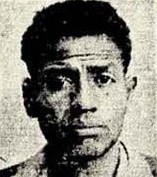 Jorge Villanueva Torres
—
Jorge Villanueva Torres was known as el 'Negro Torpedo' and as el 'Monstruo de…
Jorge Villanueva Torres
—
Jorge Villanueva Torres was known as el 'Negro Torpedo' and as el 'Monstruo de…
 Shawna Forde
Murderer · USA · 2009
Shawna Forde was sentenced to death on February 22, 2011. She was convicted of…
2 victims
Shawna Forde
Murderer · USA · 2009
Shawna Forde was sentenced to death on February 22, 2011. She was convicted of…
2 victims
 Margaret Rudin
Murderer · USA · 1994
Margaret Rudin (born May 31, 1943) was an American woman convicted in the Decem…
1 victim
Margaret Rudin
Murderer · USA · 1994
Margaret Rudin (born May 31, 1943) was an American woman convicted in the Decem…
1 victim
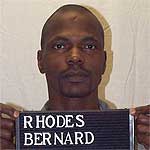 Bernard Rhodes
Murderer · USA · 1997
Bernard Rhodes was convicted of first degree murder and first degree robbery. T…
1 victim
Bernard Rhodes
Murderer · USA · 1997
Bernard Rhodes was convicted of first degree murder and first degree robbery. T…
1 victim
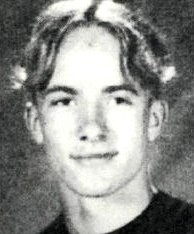 David Anderson
Homicide · USA · 1997
David Anderson was convicted by a jury of four counts of aggravated first-degre…
4 victims
David Anderson
Homicide · USA · 1997
David Anderson was convicted by a jury of four counts of aggravated first-degre…
4 victims
- Gender
- male
- Country
- USA
- Location
- Cook County, Illinois, USA
- Date of birth
- 1944
- Age at first offence
- 43
- Characteristics
- domestic violence, kidnapping, torture, rape, mentally ill
- Victim profile
- Alvin Smith and Donna Sauls
- Method of murder
- Shooting
- Date(s) of murder
- September 2, 1987
- Years active
- 1987
- Date of arrest
- Next day
- Status
-
Life imprisonment
Sentenced to death on March 12, 1990; commuted to life in prison by former Governor George Ryan on January 10, 2003
Case overview
James Tenner was convicted of the hanging and murders of Alvin Smith and Donna Sauls, the attempt murder of Albert Sauls, and related restraint offenses. He was sentenced to death on March 12, 1990. His death sentence was later commuted to life in prison.
Background
James Tenner and Albert Sauls worked together in various businesses throughout the 1970s. By the mid-1980s, both operated trucking companies and they shared a garage in South Chicago Heights.
In early 1987, Tenner met Shirley Garza at a Dunkin' Donuts. Tenner later introduced Shirley Garza to Donna and Albert Sauls and to Alvin Smith. Tenner and Shirley Garza began dating and lived together for a short period during the spring of 1987, but by July 1987 Shirley Garza had left Tenner and they no longer lived together.
The offence
On September 2, 1987, after finishing work for the day, Albert Sauls and Alvin Smith went to the garage at 3202 South State Street, Chicago Heights where both men rented space. Albert and Alvin arrived at approximately 6:00 p.m. Repairs on Saul’s truck began at the garage. Shirley Garza and Donna Sauls arrived at a short time later.
When Alvin Smith attempted to leave, Tenner met him outside, pointed a shotgun at him, and ordered him back into the garage. Tenner then pointed his shotgun at Alvin Smith, Shirley Garza, Donna Sauls, and Albert Sauls and ordered them to lie down on the floor. Tenner told them he would tie them up and tell them what he thought of them.
Tenner removed several pieces of rope from his pocket, each with a loop tied with a slip knot at both ends. He ordered Shirley Garza to tie Alvin Smith’s ankles together and tie Alvin Smith’s hands behind his back. He ordered Donna Sauls to tie Albert Sauls the same way and then gave Shirley Garza two more ropes and forced her to tie Donna’s hands and feet. With the group’s hands and feet bound, Tenner ordered Donna Sauls, Albert Sauls, and Alvin Smith to kick their feet and make the ropes tighter.
Tenner then told them he was going to take a short walk around the garage to the section of the same building that he rented for his trucks and that he was going to tell them what he thought of them and when he finished he would leave. The group refused to go with Tenner. He explained that if they did not comply, he would shoot them. They moved slowly due to their bound feet and entered the back of Tenner’s garage premises.
As they walked they saw three ropes of different lengths hanging from overhead beams, and the end of each rope was tied into a noose. Tenner waved his shotgun and walked back and forth in front of the victims while yelling about their alleged interference in his relationship with Shirley Garza. He ordered them to stand under the specific rope that corresponded to their height.
Tenner told Shirley Garza that she messed up his plans when she arrived at the garage and said he would have to make another noose for her. Before putting the nooses around the necks of Donna Sauls, Albert Sauls, and Alvin Smith, Tenner ordered Shirley Garza to place the nooses around the necks of the other three.
Tenner got duct tape and forced Shirley Garza to place the tape over the victims’ mouths. When she was done, Tenner made another noose, put the loop over Shirley Garza’s head, tied her feet and hands, and put tape over her mouth. With all victims bound, mouths taped, and necks in nooses, Tenner again began yelling about the Sauls involvement in his break up with Shirley Garza.
Tenner then asked Shirley Garza to choose which of her friends should die first, while looking at his watch and telling all of them they had just about run out of time and that they had lived their last few minutes. Tenner let Shirley Garza go and ordered her to go out into the street, to wait, and not to do anything “crazy” or he would kill her.
Tenner turned to the other victims and told Donna Sauls and Albert Sauls and Alvin Smith, “ ... I guess this is it.” He pointed his shotgun at Donna Sauls and shot her in the face and in the shoulder. As Donna Sauls slumped to the floor, the noose tightened and caused her neck to break.
Tenner then turned his shotgun on Alvin Smith and shot him in the abdomen, which caused him to slump into his noose. After shooting Donna Sauls and Alvin Smith, Tenner turned his gun on Albert Sauls and fired twice. Albert Sauls had managed to get his hands free from the rope that bound them together and had his hands up trying to remove the noose around his neck. Tenner shot Albert Sauls in the arm and in the eye.
After the shooting, Tenner fled the scene with Shirley Garza in his car as a hostage. He drove to O'Hare Airport, where he picked up his wife, Triva Tenner, and then drove in the direction of Rockford, where Triva lived. Tenner told Shirley Garza he was going to kill her there. Tenner never made it to Rockford because an all-points bulletin was sent and he was stopped while driving near the airport.
A loaded shotgun was recovered from the front driver's area of the car, along with a couple of boxes of shotgun shells from the back seat on the driver's side.
Albert Sauls lay bleeding on the ground of the garage for sometime before he was able to move. He tried to cut the rope from his neck with a knife but dropped the knife on the ground. Eventually, Albert Sauls was able to get his hands on the rope and untie it where it was anchored on the wall. He tried several times to get up but fell each time. Unable to see because of the gunshot wound to his eye, he crawled over 250 feet to a house across the street and yelled for help.
Daniel Castine heard Albert Sauls yelling. Daniel Castine saw Albert Sauls bleeding from the face and arm and with a noose around his neck. Daniel Castine had to force his fingers under the rope to cut the noose from Albert Sauls’ neck.
At trial, Tenner admitted that he went to his garage the day of the murders, cut several pieces of rope, tied slip knots on both ends in the shape of a noose which he threw over the beam of the garage, and “ran into” Alvin Smith as he was walking outside. He admitted that he told everybody to get on the floor and that he gave Shirley Garza the ropes so that she could tie their hands and feet. He admitted he took the group to his side of the garage and, when they got there, made Shirley Garza put the nooses on their necks and tape over their mouths. He said he was “afraid” that they were going to try and kill him so he picked up his shotgun and started shooting.
Tenner admitted preparing the ropes and shooting the victims. His defense at trial was that he sought to protect Shirley Garza from the Saulses and therefore committed second rather than first degree murder.
In a description of the events, the jury found Tenner guilty after hearing the testimony and the evidence adduced at trial: the jury found him guilty for the hanging and murders of Alvin and Donna and for the attempt murder of Albert.
Investigation and arrest
An all-points bulletin was sent for Tenner after he fled the scene in his car with Shirley Garza as a hostage. Tenner was stopped while driving near the airport.
Trial
A jury found Tenner guilty for the hanging and murders of Alvin Smith and Donna Sauls and the attempt murder of Albert Sauls. The state sought the death penalty.
Tenner’s sentencing included aggravation and mitigation evidence. The state presented aggravation testimony concerning Tenner’s history of beating women in his life. An incident involved Shirley Garza who reported to police that she was in her car at a stop light when Tenner opened the door, got in, and pulled a knife. He cut her on the left arm and in the abdomen and told her to drive across the street to where he held her in the car at knifepoint until 2:30 a.m. A police captain with the Chicago Police Department testified that when Shirley Garza came into the police station he saw the stab wounds on her arm and stomach.
The State presented a certified copy of conviction indicating that on December 3, 1968 Tenner pled guilty to burglary and was sentenced to two years probation.
Tenner called twelve witnesses, including six family members. The witnesses testified that Tenner was a hard worker and had been an important part of their lives. Officer Sorell of the Cook County Department of Corrections testified that Tenner was a good inmate and had done work for her.
Following the evidence and arguments in aggravation and mitigation, the jury returned a verdict indicating that there were no mitigating factors sufficient to preclude the imposition of the death penalty. Tenner was sentenced to death on March 12, 1990 by the Honorable Will Gierach.
Sentencing
On March 12, 1990, Tenner was sentenced to death by the Honorable Will Gierach.
During the sentencing hearing, Tenner asked the jury to show mercy, offering evidence that “he had redeeming human qualities,” and the Seventh Circuit wrote that he presented the testimony of a prison guard that Tenner was a peaceful influence in his cellblock who helped resolve quarrels between other inmates, did not join fights, and helped keep the unit clean.
Appeals and post-conviction proceedings
Tenner’s convictions and sentence were affirmed on direct appeal. People v. Tenner, 157 Ill. 2d 341, 626 N.E.2d 138 (1993).
A collateral attack in state court was unsuccessful. People v. Tenner, 175 Ill. 2d 372, 677 N.E.2d 859 (1997).
In federal court, Tenner’s federal collateral attack was unsuccessful. Tenner v. Gilmore, 1998 U.S. Dist. Lexis 16188 (N.D. Ill. 1998). The Seventh Circuit affirmed in Tenner v. Gilmore, 184 F.3d 608 (1999).
Later, Illinois re-evaluated its death penalty sentencing procedure amid allegations of irregularities in the 1990s, leading to commutation.
A separate Illinois appeal concerned the Cook County circuit court’s dismissal of Tenner’s second post-conviction petition without an evidentiary hearing. The Supreme Court of Illinois affirmed that dismissal in a decision authored by Justice Fitzgerald. The court rejected claims concerning competence at trial and sentencing and addressed procedural issues related to the second post-conviction petition. The decision resulted in “Affirmed.”
Outcome and aftermath
On January 10, 2003, while Tenner’s petition for rehearing was pending, former Governor George Ryan commuted the sentences of all Illinois death row inmates, including Tenner, to life imprisonment without the possibility of parole or mandatory supervised release.
Tenner’s death sentence was therefore commuted to life in prison.

Spotted an error, or have more information about this case?