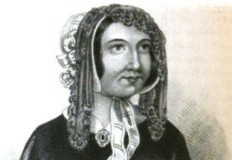
Maria Manning
Murderer Catherine Wilson
Murderer · United Kingdom · 1854
Catherine Wilson was a British nurse who poisoned victims after befriending the…
7 victims
Catherine Wilson
Murderer · United Kingdom · 1854
Catherine Wilson was a British nurse who poisoned victims after befriending the…
7 victims
 Sarah Dazley
Murderer · United Kingdom · 1842
Sarah Dazley was born in 1819 as Sarah Reynolds. Her date of execution was 5 Au…
3 victims
Sarah Dazley
Murderer · United Kingdom · 1842
Sarah Dazley was born in 1819 as Sarah Reynolds. Her date of execution was 5 Au…
3 victims
 Margaret Waters
Murderer · United Kingdom · 1866
Margaret Waters was an English murderess who was hanged by executioner William…
19 victims
Margaret Waters
Murderer · United Kingdom · 1866
Margaret Waters was an English murderess who was hanged by executioner William…
19 victims
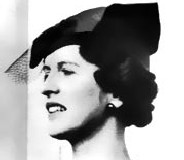 Florence Ransom
Murderer · United Kingdom · 1940
Florence Ransom was a middle-aged woman who was described as physically beautif…
3 victims
Florence Ransom
Murderer · United Kingdom · 1940
Florence Ransom was a middle-aged woman who was described as physically beautif…
3 victims
 Frederick Michael Baer
Murderer · USA · 2004
Frederick Michael Baer was sentenced to death on June 9, 2005. Aggravating circ…
2 victims
Frederick Michael Baer
Murderer · USA · 2004
Frederick Michael Baer was sentenced to death on June 9, 2005. Aggravating circ…
2 victims
 James William Hamblen
Murderer · USA · 1984
James William Hamblen was a state prisoner in Florida who was condemned to die.…
2 victims
James William Hamblen
Murderer · USA · 1984
James William Hamblen was a state prisoner in Florida who was condemned to die.…
2 victims
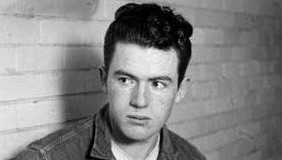 William Edward Hickman
Murderer · USA · 1926
William Edward Hickman was a man who tried to solve his financial problems by k…
5 victims
William Edward Hickman
Murderer · USA · 1926
William Edward Hickman was a man who tried to solve his financial problems by k…
5 victims
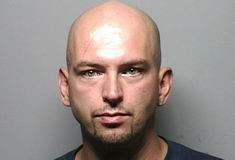 Scott Eby
Murderer · USA · 2004
Scott Eby — defendant · Riley Fox — victim; three-year-old girl · Kevin Fox — R…
1 victim
Scott Eby
Murderer · USA · 2004
Scott Eby — defendant · Riley Fox — victim; three-year-old girl · Kevin Fox — R…
1 victim
- Gender
- female
- Country
- United Kingdom
- Location
- London, England, United Kingdom
- Date of birth
- 1825
- Age at first offence
- 24
- Characteristics
- robbery
- Victim profile
- Patrick O'Connor, 50 (her lover)
- Method of murder
- Shooting / Beating with a crow bar
- Date(s) of murder
- August 9, 1849
- Years active
- 1849
- Date of arrest
- August 21, 1849
- Status
-
Executed
Executed by hanging outside Horsemonger Lane Jail on November 13, 1849
Other names and identification
Maria Manning was also identified as Marie Manning and Marie de Roux.
Background
Maria Manning was born in Switzerland in 1821. Her maiden name was de Roux. She entered domestic service in England.
She worked as a lady’s maid to Lady Blantyre, who was the daughter of the Duchess of Sutherland. She previously worked as a maid to Lady Palk of Haldon House, Devon. She married Frederick George Manning, a publican.
Maria developed a taste for a luxurious lifestyle. She feared poverty and resolved that she would never live in that way.
Frederick George Manning had worked on the railways but was discharged on suspicion of being involved in several robberies. He later took charge of a public house.
Patrick O’Connor was a gauger in the London Docks and was also described as a money lender who charged extraordinary interest. He was wealthy.
The offence
On 9 August 1849, O’Connor dined with the Mannings at their house, 3 Miniver Place, Bermondsey. Husband and wife then murdered their guest and buried his body under the flagstones in the kitchen.
On the same day Mrs. Manning visited O’Connor’s lodgings in Greenwood Street, Mile End Road, and repeated the visit next day, stealing the dead man’s railway scrip and money. O’Connor’s last movements were traced, leading investigators to visit the Mannings’ residence and conduct a search of the premises.
O’Connor’s remains were discovered on 17 August. The body was found under the flagstones in the back kitchen. The mortar between two flagstones was still damp when it was noticed during the search. The body was concealed beneath flagstones and quicklime/“lime” had been used.
The Mannings were described as attempting to steal cash and valuables, including foreign railway stocks. The case described the theft of several hundred pounds in cash, gold watches and chains, and a wad of foreign bonds.
Investigation
Police discovered O’Connor’s remains on 17 August and soon after apprehended his murderers.
Maria Manning was tracked down to Edinburgh. She was caught when trying to exchange some of O’Connor’s property, where a listing had been published. Frederick Manning was caught on Jersey.
It was described that Maria was arrested after she tried to sell railway stock to a firm of brokers. The brokers were warned that some railway stock had been stolen in London and were suspicious of Maria’s thick French accent and her explanation that her father was a Mr Robertson, a native Scot.
After Maria was apprehended and returned to London, she was charged with murder and lodged in Horsemonger Lane Jail.
Frederick’s detention followed after another week of freedom. He had been drinking prodigious amounts of brandy each day while in St Helier, then fled toward St Lawrence. A man who had known Frederick in London later read about the case and told police, leading to Frederick’s apprehension in his room on August 21st and return to London.
Arrest and custody
Maria was taken into custody in Edinburgh and was subsequently returned to London.
Frederick was apprehended in his room on August 21st and returned to London.
Maria was lodged in Horsemonger Lane Jail.
Trial
The Mannings were tried at the Old Bailey on 25 and 26 October 1849. Their trial began at the Old Bailey on 25 October before Chief Justice Cresswell and lasted two days.
The trial involved an argument that the jury had to include people of French or Swiss ancestry in fairness to Maria.
During the trial, Frederick said that he “never liked him [O’Connor] very much”.
At the end of the trial, the jury found both defendants guilty. It was described that the jury took less than an hour (and also separately described as taking 45 minutes) to find both guilty. The Mannings were sentenced to death.
Maria yelled imprecations at the British as a perfidious race. After the verdict, she screamed at the jury: “You have treated me like a wild beast of the forest.” She continued to rage at the judge as he tried to pass sentence of death upon her.
Sentencing and condemned status
They were moved from Horsemonger Lane to Newgate prison for trial, then returned to Newgate and across London to Horsemonger Lane Gaol to await execution. They were expected to be executed about two weeks later and were described as spending just over two weeks in condemned cells.
Horsemonger Lane Gaol was described as being built between 1791 and 1799 in Southwark as the county prison for Surrey. It was renamed the Surrey County Gaol in 1859. It was closed in 1878 and demolished in 1880. Between 1800 and 1877, 131 men and 4 women were executed there.
Maria was guarded round the clock. It was stated that after Mary Ann Milner had hanged herself at Lincoln Castle two years earlier, the custom was to guard prisoners.
It was reported that Maria was a suicide risk and was guarded by three warderesses who slept in the cell with her. Maria tried to strangle herself and puncture her windpipe with her own hands while the warderesses were asleep, and it took the combined efforts of all three women to stop her.
Maria wrote a letter from her cell to Queen Victoria asking for a reprieve, and the request was denied. The case narrative also stated that it was said Queen Victoria studied the letter and took an interest in the case and concluded that her guilt was proven.
Appeals
No appeals were included in the provided material.
Execution
The executions were set for the morning of Tuesday 13 November 1849 at “the prison where they were last confined”, namely Horsemonger Lane Gaol.
William Calcraft officiated and Maria became the twentieth woman he would put to death.
They were hanged together on a gallows outside Horsemonger Lane Jail on 13 November 1849.
A crowd estimated to be between thirty thousand and fifty thousand people watched, described as the largest crowd ever assembled in Britain to watch a public execution. Between 500 and 1000 police were said to have been on hand to marshal the crowd. The gallows was erected on the flat roof above the main gate.
Maria wore a black satin dress on the scaffold. A black silk handkerchief was used for blindfolding under a black veil.
The execution was fully reported in the Times newspaper with verbatim quotations:
“At a quarter past eight Manning and his wife entered the (prison) chapel. The Sacrament was administered to them when the governor appeared and said that time pressed. Calcraft also came forward and the wretched pair were conducted to different parts of the chapel to be pinioned. The operation was performed on the male prisoner first and he submitted to it with perfect resignation. In the pinioning of Mrs. Manning a longer time was occupied. When the cords were applied to bind her arms her great natural strength forsook her for a moment, and she was nearly fainting, but a little brandy brought her round again, and she was pinioned without any resistance. She drew from her pocket a black silk handkerchief and requested that she might be blindfolded with it, a request that was acceded to. Having had a black lace veil fastened over her head, so as to completely conceal her features from the public gaze, she was conducted to the extremity of the chapel, where the fatal procession was at once formed and in a slow and solemn manner moved forwards towards the drop, the prison bell tolling.”
“The procession passed along a succession of narrow passages, fenced in with ponderous gates, side rails and chevaux de frise of iron. In its course a singular coincidence happened. The Mannings walked over their own graves, as they had made their victim do over his. Mrs. Manning walked to her doom with a firm, unfaltering step. Being blindfolded she was led along by Mr. Harris, the surgeon. She wore a handsome black satin gown.”
“At last nine o'clock struck and shortly after the dreadful procession emerged from a small door in the inner side of a square piece of brickwork which rests on the east end of the prison roof. To reach this height a long and steep flight of stairs had to be climbed, and it only wonderful that Manning, in his weak and tottering state, was able to ascend so far. As he ascended to the steps leading to the drop his limbs tottered under him and he was scarcely able to move. When his wife approached the scaffold he turned round with his face towards the people, while Calcraft proceeded to draw over his head the white nightcap and adjust the fatal rope. The executioner then drew the nightcap over the female prisoner's head and all the necessary preparations now being completed the scaffold was cleared of all it occupants except the two wretched beings doomed to die. In an instant Calcraft withdrew the bolt, the drop fell, and the sentence of the law was fulfilled. Frederick died almost without a struggle while Maria writhed for some seconds. Their bodies were left to hang for the customary hour before they were taken down and in the evening buried in the precincts of gaol.”
“Scarcely a hat or cap was raised when the drop fell and the bodies of the murderers had hardly ceased to oscillate with the momentum of their fall before the spectators were hurrying from the spot.”
Other people and interactions during the case
It was stated that Charles Dickens attended the execution and wrote a letter to The Times on the same day expressing revulsion at the wickedness and levity of the immense crowd. The letter included quoted phrases:
“I believe that a sight so inconceivably awful as the wickedness and levity of the immense crowd collected at that execution this morning could be imagined by no man, and could be presented in no heathen land under the sun.”
A separate Dickens quotation also appeared in the material:
“I was a witness of the execution at Horsemonger Lane this morning”
Wilkie Collins’s novel The Woman in White included a comment attributed to a character referring to Manning:
“Mr. Murderer and Mrs. Murderess Manning were not both unusually stout people?”
A note in the material also quoted Dickens’s letter with additional passages:
“I was a witness to the execution at Horsemonger Lane this morning. I went there with the intention of observing the crowd gathered to behold it and I had excellent opportunities of doing so at intervals throughout the night, and continuously from daybreak, until after the spectacle was over. I believe that a sight so inconceivably awful as the wickedness and levity of the immense crowd could be imagined by no man, and could be presented in no heathen land under the sun.”
“When the two miserable creatures who attracted all this ghastly sight about them were turned quivering into the air there was no more emotion, no more pity, no more thought that two immortal souls had gone to judgement, than if the name of Christ had never been heard in this world.”
Other details
Maria was described as having previously made a friendship with Patrick O’Connor before her marriage. Her acquaintance was continued after her marriage.
The material described meetings and competing relationships: Frederick was described as a guard on the Great Western Railway; Maria and Frederick married in St James’ Church, Piccadilly, in May 1847.
A preconcerted plan was described for the murder and burial.
The narrative included details about a suicide attempt by Maria while guarded in the cell.
Frederick’s statement during the trial was included as: “never liked him [O’Connor] very much”.
Frederick was also described as having made a confession later in which he said Maria had shot O’Connor and that he had finished him off with the ripping chisel. The confession was presented in the text as likely being about the truth of the matter.
The material also included descriptions of the crowd and entertainment at the execution, plus details about Maria’s dress and veil.
A statement was included from a spectator at her execution in a letter to The Times: “Thank God she wasn't an English woman”.
The case narrative also stated that the trial was not described as one of the most fascinating in terms of legal problems, except for the jury argument related to French or Swiss ancestry.

Spotted an error, or have more information about this case?