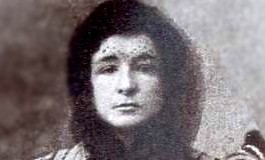
Enriqueta Martí
Serial killer Francisca Ballesteros
Serial killer · Spain · 1990
Francisca Ballesteros was born in 1969 and was a Spanish serial killer. She was…
3 victims
Francisca Ballesteros
Serial killer · Spain · 1990
Francisca Ballesteros was born in 1969 and was a Spanish serial killer. She was…
3 victims
 Júlia Fazekas
Serial killer · Hungary · 1911
Júlia Fazekas was a midwife in Nagyrév, Hungary, who arrived in Nagyrév in 1911…
45 victims
Júlia Fazekas
Serial killer · Hungary · 1911
Júlia Fazekas was a midwife in Nagyrév, Hungary, who arrived in Nagyrév in 1911…
45 victims
 Bertha Gifford
Serial killer · USA · 1909
Bertha Gifford (1872- August 20, 1951) was a farmwife in rural Catawissa, Misso…
17 victims
Bertha Gifford
Serial killer · USA · 1909
Bertha Gifford (1872- August 20, 1951) was a farmwife in rural Catawissa, Misso…
17 victims
 José Antonio Rodríguez Vega
Serial killer · Spain · 1987
José Antonio Rodríguez Vega was a Spanish serial killer nicknamed El Mataviejas…
16 victims
José Antonio Rodríguez Vega
Serial killer · Spain · 1987
José Antonio Rodríguez Vega was a Spanish serial killer nicknamed El Mataviejas…
16 victims
 Francisco García Escalero
Serial killer · Spain · 1987
Francisco García Escalero was born on May 24, 1948 in Madrid, Spain. He was des…
11 victims
Francisco García Escalero
Serial killer · Spain · 1987
Francisco García Escalero was born on May 24, 1948 in Madrid, Spain. He was des…
11 victims
 Joan Vila Dilme
Serial killer · Spain · 2009
Joan Vila Dilme was a security guard and care-home worker at the La Caritat hom…
11 victims
Joan Vila Dilme
Serial killer · Spain · 2009
Joan Vila Dilme was a security guard and care-home worker at the La Caritat hom…
11 victims
 Eleazar Paula Mendez
Murderer · USA · 2006
Eleazar Paula Mendez pleaded guilty to three counts of capital murder. She was…
3 victims
Eleazar Paula Mendez
Murderer · USA · 2006
Eleazar Paula Mendez pleaded guilty to three counts of capital murder. She was…
3 victims
 Roy Michael Roberts
Murderer · USA · 1983
Roy Michael Roberts was convicted and sentenced to death for alleged participat…
1 victim
Roy Michael Roberts
Murderer · USA · 1983
Roy Michael Roberts was convicted and sentenced to death for alleged participat…
1 victim
 Anthony Hardy
Serial killer · United Kingdom · 2002
Anthony John Hardy (born May 31, 1951) was an English serial killer who was con…
3 victims
Anthony Hardy
Serial killer · United Kingdom · 2002
Anthony John Hardy (born May 31, 1951) was an English serial killer who was con…
3 victims
 Vlado Taneski
Serial killer · Macedonia · 2005
Vlado Taneski (1952 - June 23, 2008) was a Macedonian crime reporter turned ser…
3 victims
Vlado Taneski
Serial killer · Macedonia · 2005
Vlado Taneski (1952 - June 23, 2008) was a Macedonian crime reporter turned ser…
3 victims
 Robert Thompson
Homicide · United Kingdom · 1993
Robert Thompson (born 23 August 1982) abducted, tortured and murdered James Bul…
1 victim
Robert Thompson
Homicide · United Kingdom · 1993
Robert Thompson (born 23 August 1982) abducted, tortured and murdered James Bul…
1 victim
 Brian Field
Murderer · United Kingdom · 1968
Brian Field was convicted of the murder, rape, and strangling of 14-year-old bo…
1 victim
Brian Field
Murderer · United Kingdom · 1968
Brian Field was convicted of the murder, rape, and strangling of 14-year-old bo…
1 victim
- Gender
- female
- Country
- Spain
- Location
- Barcelona, Spain
- Date of birth
- 1868
- Age at first offence
- 34
- Characteristics
- child killer, kidnapping, serial rapist
- Victim profile
- C hildren
- Method of murder
- ???
- Date(s) of murder
- 1902 - 1912
- Years active
- 1902–1912
- Date of arrest
- February 27, 1912
- Status
-
Died in custody
Died in prison on 12 May 1913
Case record: Enriqueta Martí i Ripollés
Background
Enriqueta Martí i Ripollés was a Spanish child murderer, kidnapper and procuress of children. She was born in Sant Feliu de Llobregat in 1868 and died in Barcelona on 12 May 1913.
Enriqueta moved from her hometown of Sant Feliu de Llobregat to Barcelona, where she worked as a maidservant and nanny. She later turned to prostitution, both in brothels and in places dedicated to this activity, including the Port of Barcelona and the Portal de Santa Madrona.
In 1895, she married a painter called Joan Pujaló. The marriage failed. According to Joan Pujaló, Enriqueta’s affairs with other men, her strange, false, unpredictable character, and her continuous visits to houses of disrepute caused the separation. Despite the marriage, she continued to visit locales of prostitution and people of doubtful virtue. The pair reconciled and separated approximately six times. At the time of Enriqueta’s detention in 1912, the couple had been separated for five years and had not had children.
Enriqueta led a double life. During the day, she dressed in rags and begged at houses of charity, convents and parishes in the destitute parts of town, where she selected children who looked the most abandoned. She would take the children by the hand and make them pass as her children. Later, she prostituted or murdered them. She did not have any need to beg since her double work as a procurer and prostitute gave her sufficient money to live well.
By night, she dressed in luxurious clothes, hats and wigs, and attended places where the wealthy of Barcelona gathered, including El Liceu and the Casino de la Arrabassada. It was probable that in these places she offered her services as a procurer of children.
Enriqueta was also practising as a witch-doctor. She used ingredients made from the remains of the children she killed. The children ranged from infants to children of 9 years. From these children she used what she could, including fat, blood, hair, and bones, which she normally turned into powder. The material she used included greasy lard, coagulated blood, children’s hair, skeletons of hands, powdered bones, and pots with the potions and prepared ointments and salves.
Wealthy people paid large sums of money for her remedies. She offered salves, ointments, filters, cataplasms and potions, especially to treat tuberculosis, which was highly feared at the time, and other diseases that did not have a cure in traditional medicine.
It was suspected that she kidnapped an indeterminate, though large, number of children, as she operated over a span of twenty years. It was stated that she acted for many years in Barcelona and that the public suspected that babies were being kidnapped, with many children disappearing without a trace and dread among the population.
The offence
Enriqueta was accused of running a brothel that offered sexual services from children between the ages of 3 and 14 years. She was also alleged to have kidnapped children from impoverished families and to have forced them to live under her control.
A major part of the case involved the disappearance and captivity of children, including the final victim, Teresita Guitart Congost. In Enriqueta’s detention and searches, investigators found evidence that included bloody clothing, a boning knife, human bones, preserved human remains, and materials prepared for sale, including potions, ointments, and salves.
Angelita’s testimony added detail to the killing of a small boy named Pepito. Before Teresita’s arrival to the flat, a five-year-old boy named Pepito was present. Angelita stated that she secretly saw Enriqueta, whom she was calling “mom”, kill him on the kitchen table.
Enriqueta’s activities also included producing remedies from human remains. The forensic experts differentiated a total of twelve children from the small amount of evidence recoverable.
Investigation
Enriqueta was arrested in 1912, at the time of her detention when investigators were searching for missing children. It was stated that in the course of the search the authorities had been extremely passive regarding missing children, and public indignation increased.
On the day Enriqueta was arrested, evidence was found in flats in Barcelona where she had lived previously, including locations with false walls and human remains in ceilings. Investigators also searched additional properties where Enriqueta had lived, including a flat in Tallers Street, a third in Picalqués Street, and a little house in Jocs Florals Street, in Sants.
In the house on Jocs Florals Street, investigators found a skull of a three-year-old child and bones that corresponded to 3, 6 and 8-year-old children. Some remains still had pieces of clothes, such as a darned sock.
Further investigation revealed more housing in Sant Feliu de Llobregat, property of Enriqueta’s family. In these premises, investigators found remains of children in vases and jars as well as books of remedies. The house belonged to the Martí family and was known in the population by the nickname of “Lindo”. Juan Pujaló claimed he was barred from the property because of the bad administration of Enriqueta’s father.
In Ponent’s flat, investigators found an ancient book with parchment covers, a book of notes where she had written recipes and potions in elegant calligraphy, a package of letters and notes written in coded language, and a list with names of families and very important figures in Barcelona. It was said that this list was controversial, as it was believed among the population that it was the list of Enriqueta’s rich clients. Police tried to stop the list from leaking, but rumours ran that it was a client list of doctors, politicians, businessmen and bankers. It was stated that authorities calmed the public with newspaper articles explaining that the list included the names of people to whom Enriqueta begged and that these families and personalities had been swindled by the lies and requests of the murderer.
Arrest and detention
Enriqueta was finally arrested in a flat in El Raval, mezzanine number 29 of Ponent Street (today Joaquim Costa Street). It was stated that more evidence was found in other flats.
The material stated that on February 10, 1912 Enriqueta kidnapped her last victim: Teresita Guitart Congost. For two weeks the city looked for her. A suspicious neighbour, Claudia Elías, found Teresita’s trail.
On February 17, Elías saw a girl with cropped hair looking from a casement from the interior court of her stairs. The girl was playing with another child. Claudia asked her neighbour if the girl was hers. The neighbour was Enriqueta Martí, who closed the window without saying a word. Claudia then told a mattress-maker down the street about the observation and her suspicion that the girl was Teresita Guitart Congost, and she informed him about Enriqueta’s strange life.
The mattress-maker informed a municipal agent, Jose Asens, of Claudia’s suspicions. Jose Asens communicated this to the chief of the Ribot brigade. On February 27, the Ribot brigade and two more agents went to look for Enriqueta with the excuse of a complaint about the possession of chickens in the flat. They found her in the court of Ferlandina Street and informed her of the accusation, then escorted her to her flat.
When the policemen entered, two girls were found in the flat. One was Teresita Guitard Congost and another girl called Angelita. After a statement, Teresita was returned to her parents. She explained that Enriqueta took her by the hand, promising candies, and that Teresita realized she was being taken too far from her house and wanted to return. Enriqueta covered her with a black rag and forced her to the flat at mezzanine number twenty-nine.
After reaching the flat, Enriqueta cut Teresita’s hair and changed her name to Felicidad. She told the child that she no longer had parents and instructed her to call her “step mother”. Enriqueta fed Teresita potatoes and stale bread and preferred to pinch rather than beat the child. Teresita was prohibited from going out to the windows and balconies and from several rooms in the flat. Teresita also told authorities that Enriqueta had been in the habit of leaving the two girls alone and that one day they risked exploring the rooms Enriqueta forbade them to enter. In that exploration, they found a sack with girls’ clothes covered with blood and a boning knife also covered with blood. Teresita never left the flat during her captivity.
Angelita’s declaration described the prior presence and killing of Pepito. Angelita said that before Teresita’s arrival to the flat, there was a five-year-old boy called Pepito. Angelita stated that she secretly saw Enriqueta, whom she was calling “mom”, kill Pepito on the kitchen table. Angelita ran to hide in the bed and pretended to sleep.
Angelita’s identity was said to be more difficult to pinpoint because of the vagueness of Enriqueta’s first statements. Angelita did not know her real surname and affirmed Enriqueta’s claim that her father was called Juan. Enriqueta maintained that Angelita was her daughter by her estranged husband Juan Pujaló. Juan Pujaló presented himself before the judge of his own will after he discovered his wife’s arrest and declared that he had not lived with her for years, that they had not had children and that he did not know where Angelita came from.
Eventually, Enriqueta stated that she had taken Angelita as a newborn from her sister-in-law, whom she made believe that the girl had died at birth.
Enriqueta Martí Ripollés was detained and deposited in the “Reina Amalia” prison.
Searches and forensic findings
In the second inspection of the flat, detectives found the sack containing bloody clothing and the knife. Investigators also found another sack with dirty clothes and at least thirty human bones of small dimensions. The bones showed evidence that they were exposed to fire.
Investigators found a lounge sumptuously decorated with a cupboard with nice clothes for a boy and girl, contrasting with the rest of the flat, which was described as austere and impoverished and smelling badly.
In another locked room, investigators found what was described as the horror Enriqueta was hiding: fifty pitchers, jars and washbowls with preserved human remains, including greasy lard, coagulated blood, children’s hair, skeletons of hands, powdered bones, and pots with the potions, ointments and salves already prepared for sale.
Investigators also searched two more flats where Enriqueta had lived: a flat in Tallers Street and a third in Picalqués Street. In both, they found false walls and, in the ceilings, human remains.
The public searches also extended to property in Sant Feliu de Llobregat, where investigators found remains of children in vases and jars as well as books of remedies.
Trial
Enriqueta was imprisoned in the “Reina Amàlia” jail to await judgement. She was never tried for her crimes.
It was also stated that she had been arrested previously in 1909 on the Tragic Week, when she was accused of running a brothel that offered sexual services from children between the ages of 3 and 14 years. With her, a young man of a wealthy family was arrested. Through her contacts with high Barcelona society that were contracting her services as procurer of children, Enriqueta was never tried in that earlier matter, and the brothel matter was lost in the judicial and bureaucratic system.
Sentencing
There was no trial outcome because Enriqueta was never tried.
Public indignation exploded over the absence of a trial and because the people wanted Enriqueta face trial and execution by the garrote. The authorities of the prison made known through the press that measures had been taken to ensure that Enriqueta was not left alone. Three inmates with more authority in the prison were sharing cell with her, with instructions to uncover her in bed when she had covered herself to avoid any hidden suicide attempt.
Enriqueta tried to commit suicide by slashing her wrists with a knife of wood.
Appeals
No appeals were recorded.
Outcome
Enriqueta was never tried. She died a year and three months after her arrest and after the public outrage, killed by her prison mates. Her companions in prison killed her by lynching her on one of the prison patios. Her death was described as occurring in the early morning of May 12, 1913, with an official explanation of a long illness, while the truth was stated to be as a consequence of a brutal beating.
She was buried secretly in a common grave of the Cementerio del Sudoeste, situated on the mountain of Montjuïc in Barcelona.
Aftermath
The death of Enriqueta robbed authorities of the opportunity to completely expose all of her secrets.
Enriqueta’s declarations and testimonies
Enriqueta had changed her surname, Martí, to Marina. With this surname she leased floors and flats, almost always missing paying rent. During interrogation, she confessed her real surname, corroborated by testimony from her husband, Juan Pujaló.
When Enriqueta was interrogated about the presence of Teresita Guitart in her house, she stated that she had found the girl lost and hungry the day before in the Ronda de Sant Pau. Claudia Elías denied this because she had seen the girl in her flat several days before the arrest.
Interrogators questioned her about the presence of bones, human remains, creams, potions, poultices, ointments, blood bottles prepared to sell, and the boning knife. They asked if she subjected the bones to high temperatures, meaning if they had been burned or cooked, as forensics suggested.
During interrogation, Enriqueta first argued that she made studies of human anatomy. Under pressure, she ended up confessing that she was a healer and used children as raw material for the production of her remedies. She claimed to be an expert and stated that her preparations were highly sought after by wealthy people of good social position.
During interrogation, she disclosed locations of her other flats, including Tallers Street, Picalqués, Jocs Florals and her home in Sant Feliu de Llobregat, and told investigators where to look inside them. She was already known for and confessed to her services as a procurer for pedophiles. However, out of anger at the fate that awaited her, Enriqueta did not name a single customer.
Investigators knew of the existence of the little boy known as “Pepito” from Angelita’s testimony and from Claudia Elias’s testimony, whom she had seen on occasion. Enriqueta claimed Pepito had been entrusted to her by a family that could not care for him. When asked for his whereabouts, she said he was not with her, that he had gone to the country because he had become ill. She had used this excuse with Claudia Elías.
Overwhelming evidence and testimony by Angelita shattered the excuse. The material said she could not refute bloody clothes in a sack, the knife, and remnants of fresh fat, blood and bones, described as those of Pepito. She also could not identify the family that had entrusted her with the child, indicating that the boy was another kidnapped child.
An Aragonese woman from Alcañiz recognized her as the kidnapper of her infant son about six years earlier in 1906. The woman said that Enriqueta displayed extraordinary kindness after a long journey and allowed her to hold the child. Enriqueta then moved away on an excuse and disappeared. The mother never found her son and never learned what she did with him. It was suspected Enriqueta used the baby to manufacture her remedies.
Enriqueta tried to pass Angelita as her daughter by Juan Pujaló. She taught the girl to say that her father was called Juan, but the girl was unaware of who Juan was and had never seen her supposed father. Pujaló denied that the girl was his, stating he had never seen her before and claiming that Enriqueta had faked a pregnancy and childbirth in the past. A medical examination corroborated that Enriqueta had not delivered.
The final testimony of Enriqueta stated that Angelita was actually the daughter she stole from her sister-in-law, Maria Pujaló, whom she had assisted in childbirth, making her believe the child had died at birth to keep her.
Literature
Los diarios de Enriqueta Martí by Pierrot, which centered on supposed diaries Enriqueta Martí wrote before beginning her murderous career, was illustrated by the author.
El misterio de la calle Poniente by Fernando Gómez described the February 1912 disappearance of a three-year-old girl in Barcelona and stated that the investigation and later discoveries showed a series of macabre murders that shook the city recovering from the Tragic Week. The book was described as strolling over many prominent figures who helped shape the story.
El Cielo Bajo los Pies by Elsa Plaza presented the case that shocked Barcelona in 1912. Enriqueta Martí was described with the derisive names “The Vampiress of Barcelona” and “The Bad Woman,” and the narrative discussed rumours and suspicions about making children disappear, turning them into objects of pleasure for wealthy people, and making cosmetics and salves to prolong life.
Other details
Enriqueta’s apparent name changes and marital identity were part of the case, including the claim that she changed her surname to Marina and the marital context involving Joan Pujaló.
She tried to commit suicide in prison by slashing her wrists with a knife of wood, and she was later killed by prison inmates by lynching her on a prison patio.

Spotted an error, or have more information about this case?