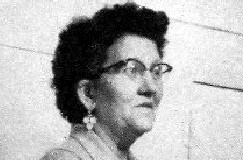
Rhonda Bell Martin
Serial killer Anna Marie Hahn
Serial killer · USA · 1932
Anna Marie Hahn (née Filser; July 7, 1906 in Bavaria, Germany – December 7, 193…
5 victims
Anna Marie Hahn
Serial killer · USA · 1932
Anna Marie Hahn (née Filser; July 7, 1906 in Bavaria, Germany – December 7, 193…
5 victims
 Morris Bolber
Serial killer · USA · 1932
Morris Bolber was prosecuted as part of a Philadelphia poison-murder ring invol…
50 victims
Morris Bolber
Serial killer · USA · 1932
Morris Bolber was prosecuted as part of a Philadelphia poison-murder ring invol…
50 victims
 Jake Bird
Serial killer · USA · 1930
October 30, 1947 — Jake Bird broke into the home of Bertha Kludt and her daught…
44 victims
Jake Bird
Serial killer · USA · 1930
October 30, 1947 — Jake Bird broke into the home of Bertha Kludt and her daught…
44 victims
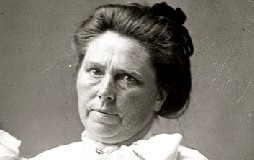 Belle Gunness
Serial killer · USA · 1880
Belle Gunness was Norwegian-born. She was born as Brynhild Paulsdatter Størseth…
42 victims
Belle Gunness
Serial killer · USA · 1880
Belle Gunness was Norwegian-born. She was born as Brynhild Paulsdatter Størseth…
42 victims
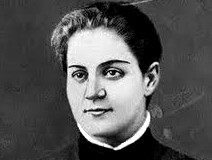 Jane Toppan
Serial killer · USA · 1887
Jane Toppan (1880-1901) was a nurse from Boston, Massachusetts. Another record…
31 victims
Jane Toppan
Serial killer · USA · 1887
Jane Toppan (1880-1901) was a nurse from Boston, Massachusetts. Another record…
31 victims
 Gordon Northcott
Serial killer · USA · 1928
Gordon Stewart Northcott was a Canadian-born ranch owner who later murdered boy…
20 victims
Gordon Northcott
Serial killer · USA · 1928
Gordon Stewart Northcott was a Canadian-born ranch owner who later murdered boy…
20 victims
 Lakhvir Singh
Murderer · United Kingdom · 2009
Defendant: Lakhvir Singh Known alias/nickname: "The Curry Killer" Method used:…
1 victim
Lakhvir Singh
Murderer · United Kingdom · 2009
Defendant: Lakhvir Singh Known alias/nickname: "The Curry Killer" Method used:…
1 victim
 Miguel Richardson
Murderer · USA · 1979
Miguel Richardson was sentenced to death for the intentional murder of John Ebb…
2 victims
Miguel Richardson
Murderer · USA · 1979
Miguel Richardson was sentenced to death for the intentional murder of John Ebb…
2 victims
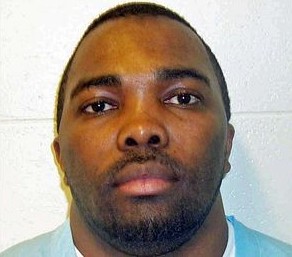 Edward Nathaniel Bell
Murderer · USA · 1999
Defendant: Edward Nathaniel Bell (male, Black; Jamaican national). · Victim: Sg…
1 victim
Edward Nathaniel Bell
Murderer · USA · 1999
Defendant: Edward Nathaniel Bell (male, Black; Jamaican national). · Victim: Sg…
1 victim
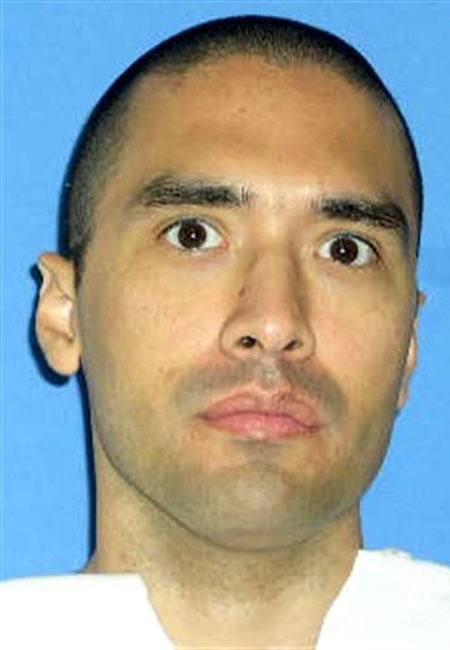 Rolando Ruiz
Murderer · USA · 1992
Rolando Ruiz was convicted of capital murder and was sentenced to death in Bexa…
1 victim
Rolando Ruiz
Murderer · USA · 1992
Rolando Ruiz was convicted of capital murder and was sentenced to death in Bexa…
1 victim
 Willie Darden
Murderer · USA · 1973
Willie Jasper Darden (also identified as Willie Jasper Darden, Jr.) was convict…
1 victim
Willie Darden
Murderer · USA · 1973
Willie Jasper Darden (also identified as Willie Jasper Darden, Jr.) was convict…
1 victim
- Gender
- female
- Country
- USA
- Location
- Montgomery, Montgomery County, Alabama , USA
- Date of birth
- 1907 Victim s profile: Emogene Garrett, 3 (her daughter) / George Garrett (her second husband) / Anna Carolyn Garrett, 6 (her daughter) / Ellyn Elizabeth Garrett, 11 (her daughter) / Mrs. Mary Frances Gibbon (her mother) / Claude Carroll Martin, 51 ( her fourth husband)
- Age at first offence
- 30
- Characteristics
- poisoner, attempt to collect insurance money
- Victim profile
- —
- Method of murder
- Poisoning (arsenic)
- Date(s) of murder
- 1937 - 1951
- Years active
- 1937–1951
- Date of arrest
- March 1956
- Status
-
Executed
Executed by electrocution in Alabama on October 11, 1957
Case record: Rhonda Bell Martin
Background
Rhonda Bell Martin was an American serial killer known for poisoning multiple family members in Birmingham, Alabama. She was later given the electric chair in 1957.
Rhonda Bell Thomley Martin was born in 1907 and was executed on October 11, 1957.
She was also described as a 49-year-old waitress in Montgomery, Alabama, who confessed during March 1956 to poisoning her mother, two husbands, and three of her own children. She denied killing two other children.
Authorities investigated deaths tied to her fifth husband, Ronald Martin, formerly her son-in-law, who survived the poisoning but was left paraplegic from the waist down and confined to a hospital in Biloxi, Mississippi. The illness that left Ronald Martin paraplegic led authorities to look into the strange deaths surrounding Martin.
She married Martin’s son eight months after the death of his father. In the Alabama Supreme Court opinion, her conviction and sentence were for the murder of Claude C. Martin, her husband, and the case proceeded under Alabama’s automatic appeal statute.
The offence
Rhonda Bell Martin was convicted of murdering Claude C. Martin.
The indictment charged that Rhonda Bell Martin “unlawfully and with malice aforethought killed Claude C. Martin by administering to him a quantity of arsenic, a poison, against the peace and dignity of the State of Alabama.”
In the signed confession introduced at trial, she admitted placing poison in her husband’s coffee over a period of several months preceding and during his fatal illness.
Her confession also included references to her marriage to her deceased husband’s son, and exchanges about insurance connected with that son.
In her signed statement and confession references:
- She confessed to poisoning her mother, two husbands, and three of her children.
- She denied killing two other children, whose deaths were also the subject of investigation.
- She admitted feeding rat poison to three daughters: 3-year-old Emogene Garrett in 1937, Anna Carolyn Garrett in 1940, and Ellyn Elizabeth Garrett in 1943.
- She admitted that she killed her mother, Mrs. Mary Frances Gibbon, in 1944.
- She admitted poisoning her second husband, George Garrett, in 1939.
- Prosecutors said collecting insurance proceeds prompted her serial killing spree, and evidence was also presented that she collected insurance money on victims in turn, including on insurance policies.
Investigation
After Ronald Martin’s illness led authorities to look into the strange deaths surrounding Martin, prosecutors and authorities pursued the case.
City and state authorities arrested Mrs. Martin Friday in Mobile.
After three days of questioning, Circuit Solicitor William F. Thetford announced that the waitress had signed a statement admitting she poisoned the two Martins and five other kins-people.
Rhonda was vague about a motive for the killings, but detectives learned she collected insurance money on each of the victims in turn.
The amount of insurance was not disclosed in one account, but Thetford said she recalled receiving between of Claude Martin in relation to the insurance on him.
Arrest
Rhonda Bell Martin was arrested Friday in Mobile.
She waived preliminary hearing in City Court.
She was bound over to the Montgomery County Grand Jury without bond and ordered moved from the city to the county jail.
Trial
Rhonda Bell Martin entered pleas of “not guilty” and “not guilty by reason of insanity.”
A psychiatrist testified that he examined Rhonda Bell Martin and in his opinion she was a sehizophrenic. The psychiatrist also testified that schizophrenia is a permanent mental disorder existing throughout the life of one afflicted, and that she was probably a schizophrenic at the time she poisoned her husband.
Expert opinion evidence to the effect that Rhonda Bell Martin was sane was offered in rebuttal by the state.
The trial judge’s remarks during voir dire concerned the term “schizophrenic” and the symptoms of schizophrenia. The Alabama Supreme Court opinion quoted the exchanges involving the judge and prospective jurors:
“The Court. Are each of you familiar with the term 'schizophrenia'? It was explained a while ago. 'Mr. Cameron. Judge, the word, 'a dual personality,' is misleading. It is insanity, definitely applied to insanity. 'The Court. I am sure they are not familiar with that, because the court is not. I am sure they are not familiar. '(No response.) 'The Court. Each of you familiar with the term 'schizophrenic' or the symptoms of schizophrenia? I know you are not. Do any of you all know anything about that? 'A Juror: I don't know what it is. 'The Court. I don't know much myself. 'Mr. Cameron. If you will, have them identify themselves. 'The Court. All right. '(The jurors at the rail identified themselves.) 'The Court. You are qualified. 'The Clerk. Next group. 'The Court. That is no disqualification? Any of you familiar with the term 'schizophrenic' or know the symptoms of schizophrenia? 'A Juror. I am sure you are not. 'A Juror. Just what do you mean by that? 'Mr. Cameron. It is a type of insanity where a person loses contact with realization. In other words, they have no control over their actions. Skis-o-frenia is the correct pronounciation of it, I believe. 'The Court. You want their names called? 'Mr. Cameron. Yes, sir; please. 'The Court. All right. Start.'”
The defense argued that remarks made by the trial judge prejudiced prospective jurors against the insanity defense. The Alabama Supreme Court found no prejudice and stated it examined the comments in the light of the entire record.
During the trial, the sole defense was insanity, and counsel for appellant had also argued that evidence in the confession relating to her marriage to her deceased husband’s son was error because it related to a separate criminal offense. The court’s opinion addressed the incestuous marriage argument and the admissibility of confession portions.
A jury of 12 men deliberated three hours and 10 minutes before convicting her of poisoning Claude Martin after about a year or married life. One account described the verdict as the result of being tried only for the death of the fourth husband.
When the verdict was read, Mrs. Martin buried her head in her arms and sobbed.
Her attorney based the defense on a plea of insanity.
The prosecution countered that she served arsenic in coffee to her husband in order to “collect some paltry amount of insurance and to get him out of the way so she could marry his son.”
Sentencing
Rhonda Bell Martin was sentenced to death by electrocution.
The Alabama Supreme Court opinion stated:
- “Appellant, Rhonda Belle Martin, was convicted of murder in the first degree and sentenced to death by electrocution.”
- The appeal proceeded under the automatic appeal statute, Act No. 249, approved June 24, 1943, Gen. Acts 1943, p. 217.
The sentence was postponed until the appeal was decided in one account, reflecting Alabama’s automatic appeal law.
Appeals
The appeal was heard by the Supreme Court of Alabama. The opinion was delivered by Goodwyn, Justice.
The opinion stated: “All the Justices concur except Stakely, J., not sitting.”
The Supreme Court affirmed the conviction and death sentence:
- “No error to reverse appearing, the judgment is due to be, and is, affirmed.”
- “Affirmed. All the Justices concur.”
On Motion for Rehearing, counsel insisted the court erred in holding it was not reversible error to receive evidence about Rhonda Bell Martin’s marriage to her deceased husband’s son. The court discussed Tagert v. State and held the relationship ceased upon the husband’s death unless there was living issue. The court also found the evidence admissible to show motive for the poisoning of the husband, “that is, to get rid of him so that she could marry his son.”
The motion for rehearing was denied: “Rehearing denied.”
Outcome
Rhonda Bell Martin was executed by electrocution in Alabama on October 11, 1957.
One account described the procedure and events leading up to her execution:
- Prison officials found a note she had written Oct. 14, 1956 in her Bible and it was turned over to authorities at Kilby Prison, where the electrocution was carried out.
- Her note asked for her body to be given to a scientific institution and included concern about understanding why she committed the crimes.
- The condemned woman was strapped in the chair at 12:07 a.m., and received 2,200 volts of electricity three minutes later after one false start, when electrodes had not been plugged into the chair on the first attempt.
Her last statement at execution was described as follows: asked if she had anything to say, she shook her head silently.
The Supreme Court’s decision affirmed her conviction and death sentence.
Aftermath
Rhonda Bell Martin left behind a wish for her body to be turned over to a medical institution to learn “why I committed the crimes I have committed.”
“At my death, whether it be a natural death of otherwise, I want my body to be given to some scientific institution to be used as they see fit, but especially to see if someone can find out why I committed the crimes I have committed. “I can’t understand it, for I had no reason whatsoever. There is definitely something wrong. Can’t someone find it and save someone else the agony I have been through.”
One account described her last meal as hamburger, mashed potatoes, cinnamon rolls and coffee.
She also was described as clutching a New Testament in her left hand at the time of death.
Victims and dates stated in the record
The case record identified multiple victims by name and included ages and years for some deaths:
- Claude C. Martin (described as 51-year-old in one account) was murdered in 1951 by arsenic poisoning delivered via surreptitious administration in his coffee. The Alabama Supreme Court opinion referenced the indictment and conviction for murder in the first degree and discussed his fatal illness.
- George Garrett was poisoned in 1939.
- Emogene Garrett (3-year-old) was poisoned in 1937.
- Anna Carolyn Garrett (6) was poisoned in 1940.
- Ellyn Elizabeth Garrett (11) was poisoned in 1943.
- Mrs. Mary Frances Gibbon (her mother) was killed in 1944.
The record also described other deaths, including:
- Her mother, 2 husbands, and 3 children were among those she confessed to poisoning.
- She denied killing two other children whose deaths were also under investigation.
Ronald Martin was the fifth husband, formerly her son-in-law, who survived the poisoning and was left paraplegic from the waist down and confined to a hospital in Biloxi, Mississippi.

Spotted an error, or have more information about this case?