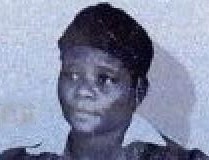
Ruby McCollum
Murderer Marie Noe
Murderer · USA · 1949
Marie Noe was convicted in June 1999 of murdering eight of her children. Betwee…
8 victims
Marie Noe
Murderer · USA · 1949
Marie Noe was convicted in June 1999 of murdering eight of her children. Betwee…
8 victims
 Earle Dennison
Murderer · USA · 1952
Earle Dennison was a widow and worked as a surgical nurse. She worked at the We…
2 victims
Earle Dennison
Murderer · USA · 1952
Earle Dennison was a widow and worked as a surgical nurse. She worked at the We…
2 victims
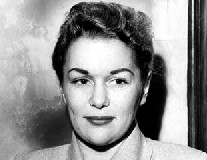 Barbara Graham
Murderer · USA · 1953
Barbara Graham (June 26, 1923 – June 3, 1955) was an American criminal and conv…
1 victim
Barbara Graham
Murderer · USA · 1953
Barbara Graham (June 26, 1923 – June 3, 1955) was an American criminal and conv…
1 victim
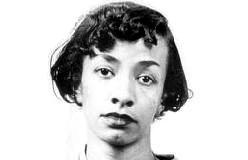 Betty Butler
Murderer · USA · 1952
Betty Butler was executed on June 11, 1954. She was 26 years old and was of the…
1 victim
Betty Butler
Murderer · USA · 1952
Betty Butler was executed on June 11, 1954. She was 26 years old and was of the…
1 victim
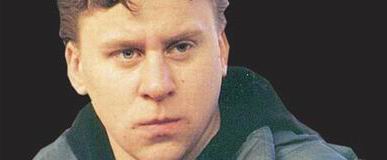 Aleksandr Rubel
Serial killer · Estonia · 1997
Aleksandr Rubel (born 25 December 1980) was a serial killer convicted of six mu…
7 victims
Aleksandr Rubel
Serial killer · Estonia · 1997
Aleksandr Rubel (born 25 December 1980) was a serial killer convicted of six mu…
7 victims
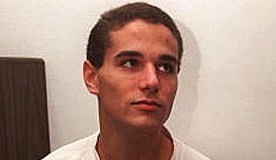 Samuel Sheinbein
Homicide · USA · 1997
Samuel Sheinbein was a Jewish-American teenager who killed an acquaintance, Alf…
1 victim
Samuel Sheinbein
Homicide · USA · 1997
Samuel Sheinbein was a Jewish-American teenager who killed an acquaintance, Alf…
1 victim
 Harry Charles Moore
Murderer · USA · 1992
Harry Charles Moore was an Oregon double murderer. Moore’s mother, a former min…
2 victims
Harry Charles Moore
Murderer · USA · 1992
Harry Charles Moore was an Oregon double murderer. Moore’s mother, a former min…
2 victims
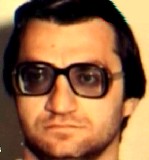 Valery Asratyan
Serial killer · Russia · 1988
Valery Asratyan was a Russian serial killer. He was identified as an ethnic Arm…
3 victims
Valery Asratyan
Serial killer · Russia · 1988
Valery Asratyan was a Russian serial killer. He was identified as an ethnic Arm…
3 victims
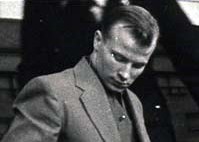 Fredrik Fasting Torgersen
Murderer · Norway · 1957
Fredrik Ludvig Fasting Torgersen was born October 1, 1934. He was a Norwegian c…
1 victim
Fredrik Fasting Torgersen
Murderer · Norway · 1957
Fredrik Ludvig Fasting Torgersen was born October 1, 1934. He was a Norwegian c…
1 victim
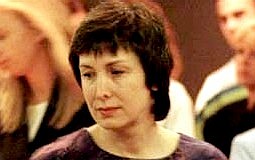 Amy DeChant
Murderer · USA · 1996
Amy DeChant became romantically involved with Bruce Charles Weinstein, an illeg…
1 victim
Amy DeChant
Murderer · USA · 1996
Amy DeChant became romantically involved with Bruce Charles Weinstein, an illeg…
1 victim
- Gender
- female
- Country
- USA
- Location
- Live Oak, Suwannee County, Florida, USA
- Date of birth
- August 31, 1909
- Age at first offence
- 43
- Characteristics
- rape
- Victim profile
- Dr. Clifford Leroy Adams, Jr., 44 (Florida physician and state senator-elect)
- Method of murder
- Shooting
- Date(s) of murder
- August 3, 1952
- Years active
- 1952
- Date of arrest
- Same day
- Status
-
Died in custody
Sentenced to death on January 17, 1953; sentence overturned on July 20, 1954; declared mentally incompetent and incarcerated in the Florida State Hospital for mental patients on September 24, 1954; released in 1974; died on May 23, 1992
Case record: Ruby McCollum
Personal details
Ruby McCollum (August 31, 1909–May 23, 1992) was the subject of a notorious murder trial in 1952.
She was born to Gertrude and William Jackson in Zuber, Florida. She was the second child and first daughter among her six siblings.
In 1929, she married Sam McCollum. The couple moved to Nyack, New York, where she delivered a son, Sam, Jr. After relocating, they moved to Fort Myers, Florida.
In Fort Myers, Sam’s brother Buck had amassed considerable wealth managing a Bolita gambling business.
Accusations relating to the case
McCollum accused Dr. C. Leroy Adams of forcing her to submit to sex and bear his child.
The offence
On Sunday morning, August 3, 1952, McCollum shot and killed prominent Live Oak, Florida physician and state senator-elect, Dr. C. Leroy Adams.
First trial
McCollum was prosecuted by state's attorney Keith Black.
She was convicted of first degree murder on December 20, 1952, and sentenced to death, despite her assertion that Adams had forced sex upon her and insisted that she bear his child.
Appeals
Her conviction and death sentence were overturned by the Florida Supreme Court on July 20, 1954.
The Florida Supreme Court cited Judge Hal W. Adams, the presiding judge, for failing to be present at the jury's inspection of the scene of the crime.
Second trial and mental health outcome
At the second trial, defense attorneys filed a motion of suggestion of insanity.
Upon examination by court-appointed physicians, the state attorney Randall Slaughter agreed.
McCollum was declared mentally incompetent and incarcerated for 20 years in the Florida State Hospital for mental patients at Chattahoochee, Florida.
Coverage and impact
Zora Neale Hurston covered the trial for the Pittsburgh Courier from the fall of 1952 through the early months of 1953. After the conviction, she wrote a series of articles for the Courier entitled, “The Life Story of Ruby McCollum,” which ran in the early months of 1953 following McCollum's conviction.
Hurston wrote that McCollum's trial sounded the death knell for “paramour rights.”
Hurston was not present at the appeal or the second trial.
Hurston collaborated with William Bradford Huie, who, after investigating the story and attending the appeal and second trial, published Ruby McCollum: Woman in the Suwannee Jail. Huie’s book was described as the principal account of the case.
In Huie’s book, Hurston’s notes on the first trial—at which Huie was not present—included the fact that the jury was made up entirely of white men.
Hurston also noted that:
“Ruby was allowed to describe how, about 1948, during an extended absence of her husband, she had, in her home, submitted to the doctor. She was allowed to state that her youngest child was his. Yet thirty-eight times Frank Cannon attempted to proceed from this point; thirty-eight times he attempted to create the opportunity for Ruby to tell her whole story and thus explain what were her motives; thirty-eight times the State objected; and thirty-eight times Judge Adams sustained these objections.”
Hurston continued that Frank Cannon, frustrated by the persistence of the state prosecuting attorney, turned to the judge and said:
“May God forgive you, Judge Adams, for robbing a human being of life in such a fashion.”
C. Arthur Ellis, Jr., Ph.D., who published the entire transcript of the trial, stated that some incidents in the case would be considered unacceptable by contemporary standards.
These included that Dr. Dillard Workman, who was Adams' medical associate, was also Ruby McCollum's physician for her prenatal care of Adams’ child by her. Dr. Workman testified to McCollum's sanity at the trial, conducted Adams' autopsy, and testified to that autopsy during the murder trial.
Timeline
- August 3, 1952 — McCollum shot and killed Dr. C. Leroy Adams in Live Oak, Florida.
- December 20, 1952 — McCollum was convicted of first degree murder and sentenced to death.
- January 17, 1953 — McCollum was sentenced to death.
- July 20, 1954 — The Florida Supreme Court overturned McCollum’s conviction and death sentence, citing Judge Hal W. Adams for failing to be present at the jury's inspection of the scene of the crime.
- September 24, 1954 — McCollum was declared mentally incompetent and incarcerated in the Florida State Hospital for mental patients.
- 1974 — McCollum was released.
- May 23, 1992 — McCollum died of a stroke.
Later life and death
In 1974, Frank Cannon, McCollum’s lead attorney at her trial, appeal, and second trial, visited her in the mental hospital and filed papers to have her released under the Baker Act.
In November 1980, Al Lee of the Ocala Star Banner interviewed McCollum at the rest home in Silver Springs, Florida, where she had retired after leaving Chattahoochee.
Lee stated that McCollum's memory of the entire ordeal had faded.
The State Mental Hospital at Chattahoochee was known for mis-treatment such as keeping patients on Thorazine and giving electroshock therapy.
On May 23, 1992, at 4:45 a.m., McCollum died of a stroke at the New Horizon Rehabilitation Center, at the age of eighty-two, following the death of her brother, Matt, by less than a year.
McCollum was buried beside her brother Matt in the cemetery behind the New Hope Baptist Church.
Her name was entered on her death certificate as “Ruby McCollumn,” and her burial place as a “rural cemetery” near Ocala.
Bibliography
- Diaz, John A. “Woman Chased by Mob After Slaying Doctor: Murder of White Medico Touches Off Powder Keg.” (the Pittsburgh Courier, August 16, 1952)
- Ellis, C. Arthur (Jr.). State of Florida vs. Ruby McCollum, Defendant (Morrisville, N.C.: Lulu Press, 2007).
- Ellis, C. Arthur (Jr.). Zora Hurston And The Strange Case Of Ruby McCollum (Chattanooga, TN: Gadfly Publishing, 2009).
- Evans, Tammy. The Silencing of Ruby McCollum: Race, Class, and Gender in the South (Gainesville, Fla.: University Press of Florida, 2006).
- Davis, Thulani. “Everybody’s Ruby” (Samuel French, Inc., 2000, 79 pages).
- Huie, William Bradford. Ruby McCollum: Woman in the Suwannee Jail (New York: E. P. Dutton, 1956). Second Edition (title change only): The Crime of Ruby McCollum. (London: Jarrolds Publishers, 1957). Third Edition: The Crime of Ruby McCollum. (London: Grey Arrow, 1959). Fourth Edition (revised and updated): Ruby McCollum: Woman in the Suwannee Jail. (New York: Signet Books, 1964).
- Hurston, Zora Neale. Series of articles covering the trial. (the Pittsburgh Courier, October, 1952–January, 1953). Also, “The Life Story Of Ruby McCollum” (the Pittsburgh Courier, Jan–March, 1953).
Spotted an error, or have more information about this case?