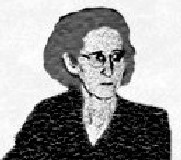
Earle Dennison
Murderer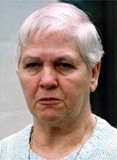 Marie Noe
Murderer · USA · 1949
Marie Noe was convicted in June 1999 of murdering eight of her children. Betwee…
8 victims
Marie Noe
Murderer · USA · 1949
Marie Noe was convicted in June 1999 of murdering eight of her children. Betwee…
8 victims
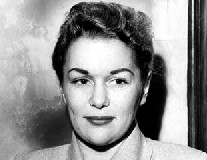 Barbara Graham
Murderer · USA · 1953
Barbara Graham (June 26, 1923 – June 3, 1955) was an American criminal and conv…
1 victim
Barbara Graham
Murderer · USA · 1953
Barbara Graham (June 26, 1923 – June 3, 1955) was an American criminal and conv…
1 victim
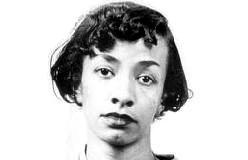 Betty Butler
Murderer · USA · 1952
Betty Butler was executed on June 11, 1954. She was 26 years old and was of the…
1 victim
Betty Butler
Murderer · USA · 1952
Betty Butler was executed on June 11, 1954. She was 26 years old and was of the…
1 victim
 Bonnie Heady
Murderer · USA · 1953
Bonnie Emily Brown Heady — convicted under the Lindbergh Act; kidnapper and mur…
1 victim
Bonnie Heady
Murderer · USA · 1953
Bonnie Emily Brown Heady — convicted under the Lindbergh Act; kidnapper and mur…
1 victim
 Thomas Paul West
Murderer · USA · 1987
Defendant: Thomas Paul West · Victim: Don Bortle (Donald Bortle / Donald Bortle…
1 victim
Thomas Paul West
Murderer · USA · 1987
Defendant: Thomas Paul West · Victim: Don Bortle (Donald Bortle / Donald Bortle…
1 victim
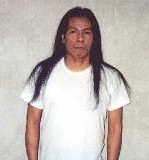 Jerald Harjo
Murderer · USA · 1988
Jerald Wayne Harjo was convicted of first degree murder in Seminole County, Okl…
1 victim
Jerald Harjo
Murderer · USA · 1988
Jerald Wayne Harjo was convicted of first degree murder in Seminole County, Okl…
1 victim
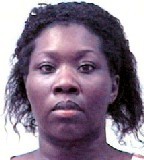 Natashay Ward
Murderer · USA · 2005
Natashay Ward was charged in connection with the deaths of her three children:…
3 victims
Natashay Ward
Murderer · USA · 2005
Natashay Ward was charged in connection with the deaths of her three children:…
3 victims
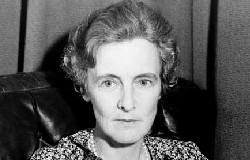 Grace Fortescue
Murderer · USA · 1932
Grace Hubbard Fortescue (née Grace Hubbard Bell; 1883–1979) was a New York soci…
1 victim
Grace Fortescue
Murderer · USA · 1932
Grace Hubbard Fortescue (née Grace Hubbard Bell; 1883–1979) was a New York soci…
1 victim
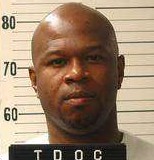 Tyrone Chalmers
Murderer · USA · 1994
Defendant: Tyrone Chalmers Case name: Tyrone Chalmers v. State of Tennessee Jur…
1 victim
Tyrone Chalmers
Murderer · USA · 1994
Defendant: Tyrone Chalmers Case name: Tyrone Chalmers v. State of Tennessee Jur…
1 victim
- Gender
- female
- Country
- USA
- Location
- Elmore County, Alabama, USA
- Date of birth
- 1900
- Age at first offence
- 52
- Characteristics
- poisoner, attempt to collect insurance money
- Victim profile
- Shirley Diann Weldon, 2 (her niece)
- Method of murder
- Poisoning (arsenic)
- Date(s) of murder
- May 1, 1952
- Years active
- 1952
- Date of arrest
- 7 days after
- Status
-
Executed
Executed by electrocution at Kilby Prison on September 4, 1953
Background
Earle Dennison was a widow and worked as a surgical nurse. She worked at the Wetumpka General Hospital for more than 25 years. She poisoned her infant niece, Shirley Diann Weldon.
Shirley Diann Weldon was about 2 years old when she became ill. Shirley was the daughter of Cora Belle Weldon and Gaston Weldon’s family included other children: an older sister named Polly Ann and a brother named Orville. Shirley was about a little over two years old when her aunt, Earle Dennison, visited the family’s farmhouse in rural Elmore County.
Earle Dennison was related to the Weldon family through her marriage to the late Lem Weldon, making her an “aunt-in-law.”
The offence
On May 1, 1952, Earle Dennison visited the Weldons’ home in rural Elmore County. During the visit, she gave Shirley an orange drink that included a substance very bad for little girls. When Shirley began to vomit, Earle Dennison gave her a bottle of Coca-Cola that was also laced with something. Shirley became terribly sick and her mother insisted on rushing her to Wetumpka General Hospital.
While doctors treated Shirley, Earle Dennison left the hospital. In the accounts of the case, authorities later contended that Earle Dennison poisoned Shirley to collect money from insurance policies.
Shirley Diann Weldon died after suffering vomiting and severe illness. Pathologists concluded that earlier medical treatment would not have saved her life. Her death was described as similar to an earlier tragedy involving Polly Ann, who had also become profoundly ill with stomach pains and vomiting after being given a celebratory ice cream cone by Earle Dennison, and had died in the same hospital where Earle worked.
Arsenic was found connected to Shirley’s poisoning. The autopsy revealed the presence of arsenic in Shirley and that arsenic was also found in the cup and Coca-Cola bottle from which she drank. Arsenic was also found on dresses worn by Shirley’s mother and aunt where Shirley had vomited.
Authorities also exhumed Polly Ann and found fatal traces of arsenic. The case record states that Lem Weldon’s body was exhumed as well, but it apparently died of natural causes.
Investigation
Dr. C. J. Rehling, the state toxicologist, performed an autopsy after Cora Belle Weldon and Gaston Weldon demanded one. Rehling examined Shirley’s organs and found signs associated with heavy metal poisoning, including the mucosa displaying an uncharacteristic bright red color and “Aldrich-Mee’s Lines” on Shirley’s fingernails. Rehling examined tissues for arsenic and found arsenic in above-normal amounts.
Gaston Weldon gathered items he believed were connected to Shirley’s illness, including a paper bag containing the vomit-soaked dress, the little girl’s similarly coated clothes, a towel, and a Coca-Cola bottle. The items were stored at his brother’s house until Shirley died, and then turned over to the county coroner. The coroner gave the items to Rehling, who detected large amounts of arsenic on the clothing. The narrative states there was no arsenic found in the soda bottle.
At the Weldon home, police found the cup Shirley used to drink the orange soda, and the cup was found to have trace amounts of arsenic. The narrative states that two witnesses later said they saw Earle Dennison take the Coke bottle and cup into the kitchen, although no one saw her wash them.
Authorities also learned that Earle Dennison paid a past-due premium on a life insurance policy she had taken out on Shirley and that the policy was set to lapse due to non-payment on May 2, 1952. Investigators later learned Earle Dennison had taken out $5,500 worth of insurance on Shirley. Another account states that she had insured Shirley for $6,500. The case record also describes two insurance policy amounts: $500 and $5,000.
The Alabama Supreme Court later opined, “If, therefore, it were necessary to search for a motive we would find it here.”
Arrest
On May 8, 1952, Earle Dennison was arrested for the murder of Shirley Weldon. When the sheriff arrived to take her into custody, she was found in bed. While she dressed, the narrative states she took an overdose of barbiturates in a suicide attempt. She was taken to the hospital and had her stomach pumped.
Within the same account, she later had been taken to Julia Tutwiler Prison for Women in Wetumpka, where she confessed in writing.
Trial
The trial began the next day after her scheduled trial date of August 14, 1952 was disrupted by another suicide attempt. The narrative states that the day before she was to appear in court she smuggled a razor blade into her cell and attempted suicide; it was foiled and she apologized to the matrons in the prison, saying: “I’m sorry, I must have been out of my mind.”
During questioning at Julia Tutwiler Prison for Women in Wetumpka, Earle Dennison confessed in writing to the murders in the presence of the prison superintendent Edwina Mitchell, Dr. C. J. Rehling, and Sheriff Lester Holley. During the four-hour questioning, Holley told the press: “as cool as anyone could be,”
At trial, the prosecution presented overwhelming evidence. Earle Dennison countered by admitting she had access to arsenic but saying she was using it as a bug killer. The all-male jury convicted her and recommended a death sentence. The case record identifies the supreme court appeal as Dennison v. State, 259 Ala. 424 (1953).
Sentencing
Earle Dennison was found guilty of murder and sentenced to death. The Alabama Supreme Court unanimously affirmed the decision in Dennison v. State, 259 Ala. 424 (1953).
Appeals
The Alabama Supreme Court unanimously affirmed the decision (Dennison v. State, 259 Ala. 424 (1953)).
Outcome
Earle Dennison was executed in the electric chair on September 4, 1953, at Kilby Prison. She was described as 55 years old at execution.
Her last words were: “Please forgive me for everything I did. I forgive everybody.” In another statement preserved in the case record, she said: “God has forgiven me for all I have done,” “Please forgive me for what I did. I forgive everyone.”
Aftermath
Before the execution, Gov. Gordon Persons refused to spare her life. The narrative states that in a dramatic announcement to newsmen following a clemency hearing, Pearsons said: “I will not interfere with the sentence.” It also states that the governor said: “I am sorry, of course, to have to be the governor to make this decision for the first time. The poisoned child is just as dead as if the crime had boon committed by a man ”
The narrative further preserved the governor’s statement: “God bless Mrs. Dennison's soul.” It also states that her clemency hearing included a last-minute plea from the condemned woman to “have mercy on me. Save my life.”
Gaston Weldon made post-execution comments: “I feel nothing but sorry for Mrs. Dennison and her family, but at the same time I have to remember that she did not show any mercy to my little girl.”
The Weldon family later won a $75,000 wrongful death settlement against the companies that insured the two girls. Their argument was that Earle had no “insurable interest” in the children and that the companies should have been suspicious of her motives. The Alabama Supreme Court stated that the “acts of the defendants placed the insured child in a zone of danger, with unreasonable harm to her and that the defendants in issuing the alleged illegal contracts, knew, or by the exercise of reasonable diligence should have known that… Mrs. Dennison had no insurable interest in the life of the insured.”
A report segment also states that she was charged with killing Shirley Weldon and Polly Ann but was never tried for the Polly Ann offense; it also states that arsenic was found in the bodies of both girls.
Other details
The case record states that Earle Dennison’s life was salvaged at the hospital after her overdose and that she thereafter confessed on several occasions and in writing.
The narrative says she was scheduled to die shortly after midnight at Kilby Prison and described her as an 85-year-old widow at the time of the clemency hearing, clad in a plain black dress.
The narrative also states that her last appearance as a scheduled to die “tonight” followed clemency hearing, and that she was scheduled to die after midnight.

Spotted an error, or have more information about this case?