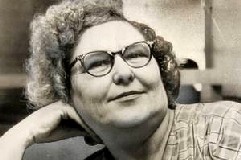
Ann Doser
Murderer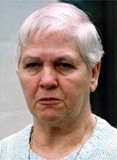 Marie Noe
Murderer · USA · 1949
Marie Noe was convicted in June 1999 of murdering eight of her children. Betwee…
8 victims
Marie Noe
Murderer · USA · 1949
Marie Noe was convicted in June 1999 of murdering eight of her children. Betwee…
8 victims
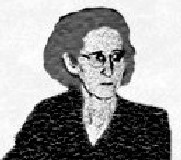 Earle Dennison
Murderer · USA · 1952
Earle Dennison was a widow and worked as a surgical nurse. She worked at the We…
2 victims
Earle Dennison
Murderer · USA · 1952
Earle Dennison was a widow and worked as a surgical nurse. She worked at the We…
2 victims
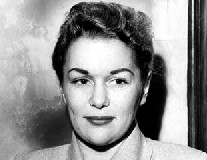 Barbara Graham
Murderer · USA · 1953
Barbara Graham (June 26, 1923 – June 3, 1955) was an American criminal and conv…
1 victim
Barbara Graham
Murderer · USA · 1953
Barbara Graham (June 26, 1923 – June 3, 1955) was an American criminal and conv…
1 victim
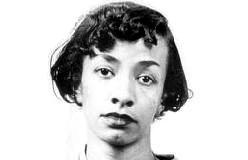 Betty Butler
Murderer · USA · 1952
Betty Butler was executed on June 11, 1954. She was 26 years old and was of the…
1 victim
Betty Butler
Murderer · USA · 1952
Betty Butler was executed on June 11, 1954. She was 26 years old and was of the…
1 victim
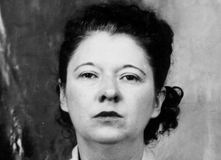 Bonnie Heady
Murderer · USA · 1953
Bonnie Emily Brown Heady — convicted under the Lindbergh Act; kidnapper and mur…
1 victim
Bonnie Heady
Murderer · USA · 1953
Bonnie Emily Brown Heady — convicted under the Lindbergh Act; kidnapper and mur…
1 victim
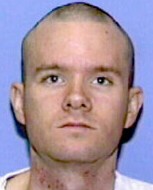 James Scott Porter
Murderer · USA · 1995
James Scott Porter was a defendant in a capital murder case. · 1990 — Porter pl…
2 victims
James Scott Porter
Murderer · USA · 1995
James Scott Porter was a defendant in a capital murder case. · 1990 — Porter pl…
2 victims
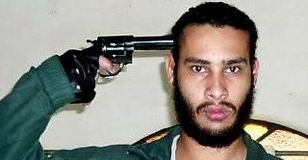 Wellington Menezes de Oliveira
Mass murderer · Brazil · 2011
Wellington Menezes de Oliveira (July 13, 1987 - April 7, 2011) carried out a sh…
12 victims
Wellington Menezes de Oliveira
Mass murderer · Brazil · 2011
Wellington Menezes de Oliveira (July 13, 1987 - April 7, 2011) carried out a sh…
12 victims
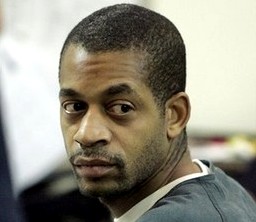 Shelly Andre Brooks
Serial killer · 2001
Shelly Andre Brooks was a homeless man whom authorities believed killed at leas…
7 victims
Shelly Andre Brooks
Serial killer · 2001
Shelly Andre Brooks was a homeless man whom authorities believed killed at leas…
7 victims
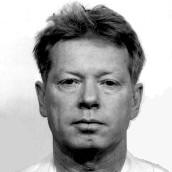 Benjamin Boyle
Murderer · USA · 1979
Benjamin Herbert Boyle was convicted for the murder of Gail Lenore Smith, and h…
2 victims
Benjamin Boyle
Murderer · USA · 1979
Benjamin Herbert Boyle was convicted for the murder of Gail Lenore Smith, and h…
2 victims
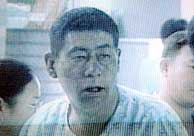 Kim Dae-Han
Mass murderer · South Korea · 2003
Name: Kim Dae-Han · Age: 56 · Occupation/background: He was an unemployed forme…
198 victims
Kim Dae-Han
Mass murderer · South Korea · 2003
Name: Kim Dae-Han · Age: 56 · Occupation/background: He was an unemployed forme…
198 victims
- Gender
- female
- Country
- USA
- Location
- Atoka County, Oklahoma, USA
- Date of birth
- 1926
- Age at first offence
- 19
- Characteristics
- burglary, robbery
- Victim profile
- Mcgraw Edward Streckenfinger
- Method of murder
- Shooting
- Date(s) of murder
- August 21, 1945
- Years active
- 1945
- Date of arrest
- —
- Status
-
Life imprisonment
Sentenced to life in prison in October 1946
Case information
Defendant: Ann Doser (18) Offence: Murder in Atoka county, Oklahoma Murder victim: McGraw Edward Streckenfinger Other defendants: Oma Dixon Claunch, Junior (15), William Eugene Slussler (17), Ernest England (14)
Timeline
- August 16 to August 31, 1944 — Ann Doser worked in the Austin State Hospital as a psychopathic nurse.
- August 21, 1945 — Ann Doser and accomplices were charged with the murder of McGraw Edward Streckenfinger in Atoka county, Oklahoma.
- May 1946 — Ann Doser’s first trial ended in a hung jury.
- October 1946 — Ann Doser was sentenced to life in prison.
- 02/09/1949 — The Oklahoma Court of Criminal Appeals decided Doser v. State, 203 P.2d 451, 88 Okl.Cr. 299.
Background
Ann Doser was 18 years of age at the time involved. She lived in Nicoma Park, a suburb of Oklahoma City, with her mother and stepfather. During 1944, she made a trip to Austin, Texas, where she was employed in the Austin State Hospital as a psychopathic nurse from August 16 to August 31, 1944. While working there, she first met Slussler and his family, and she later worked for Slussler’s family for a short while. She returned to Oklahoma City and remained until early August when she determined to again return to Austin.
On August 8, 1945, she arrived in Austin seeking employment as a telephone operator, but because she was not in possession of a birth certificate, her employment as a telephone operator was delayed and never consummated. She also endeavored to get employment as a waitress, but failed because she had no health certificate and was without funds to procure it. She sought financial aid from her stepfather, a Mr. Bill Adams, without success. She became an object of charity and stayed at the home of a Mrs. Epps in Austin until the night before she returned to Oklahoma, which night she spent with a girl friend.
During her stay in Austin, she met Claunch and England, and shortly thereafter she expressed a desire to leave Austin and return to Oklahoma City.
The offence
Ann Doser was charged in the district court of Atoka county, Oklahoma, by information jointly with Oma Dixon Claunch, Junior, William Eugene Slussler, and Ernest England with the murder in Atoka county of McGraw Edward Streckenfinger.
The information alleged, in substance, that Ann Doser did in Atoka county, Oklahoma, on or about August 21, 1945, willfully, etc., without authority of law, with premeditated design to effect the death of McGraw Edward Streckenfinger while acting conjointly and in furtherance of a common purpose with Claunch, Slussler, and England, make an assault with a certain revolver and fire it into Streckenfinger’s body, inflicting mortal wounds from which Streckenfinger died as intended.
The sufficiency of the information was not questioned, and the court’s jurisdiction over the defendant and the subject matter was conceded.
Investigation and arrests
The record stated that Slussler and Claunch pleaded guilty to murder and received life terms, while England was tried separately and was found guilty by a jury with punishment fixed at life imprisonment. Ann Doser’s trial followed.
The arrests came quickly because the juveniles had nowhere to flee and no way to get there.
Trial
First trial (hung jury)
Ann Doser was tried in May 1946, and the trial resulted in a hung jury because she denied everything alleged by the state and her co-conspirators.
Ann Doser’s defense included:
- She testified she wanted to return to Oklahoma City and that Slussler proposed marriage, which she looked on with favor but said she needed her mother’s permission first.
- She denied participating in burglaries and denied knowing that the car that took her from Austin was stolen.
- She admitted participating in a second burglary at Denison in which she got some food, stating it was prompted by intense hunger.
- She denied knowledge of a plot to kill Streckenfinger and stated she was asleep when the boys murdered him.
The jury confronted conflicting testimony.
Second trial (guilty; life imprisonment)
The second trial resulted in a verdict of guilty and fixing of punishment at life imprisonment in the penitentiary.
The record described the state’s evidence as showing a conspiracy and a sequence of burglaries, theft, and an attempted robbery culminating in Streckenfinger’s murder. It also described conflicts between witnesses for different portions of the events, including conflicts about the timing of burglaries and who procured a hunting knife, and conflicts in testimony about who acted and when during the final attempted robbery.
State’s theory and evidence (as described in the opinion)
The state offered evidence of a conspiracy on Thursday night before the murder to engage in pilfering, burglarizing, and marauding and violating the law, culminating in the murder of McGraw Edward Streckenfinger north of Atoka in Atoka county, Oklahoma.
The state offered evidence by the accomplices that:
- They burglarized two houses in Austin, Texas.
- From one house, they obtained a .45 caliber pistol and a long hunting knife and other articles.
- They appropriated the .45 caliber pistol to Billie Slussler’s own use and benefit.
- There was conflict as to who procured the hunting knife, but no conflict that it was appropriated to their own use and benefit.
The record described how the stolen 1939 Oldsmobile was found with keys in it, and that Ann Doser and Claunch and England pushed the automobile down a grade to get it started.
The record described statements attributed to Billie Slussler about federal law and expected sentencing if they stole the car, including:
- “This is a stolen car and will come in the Federal and will cost us five years, and if you want to go all right, it don't make me a damn;”
The state’s evidence described leaving Austin and traveling through Fredericksburg, Texas, selling the hunting knife to obtain gasoline, spending the first night in the car, and discussing travel intentions before the trip continued north. The record stated that Ann Doser said they were going to Oklahoma City where her mother lived, and she stated that her father was on the police force and her uncle had a place for them. The record stated that she said she would tell her mother that she and Billie Slussler were married, that Oma Claunch was his younger brother, and that Ernest England was Billie Slussler’s nephew.
The state’s evidence described:
- Being picked up by a farmer and his wife after running out of gas, who bought them five gallons of gas and fed them.
- The farmer and his wife stop occurring during a time when Ann Doser insisted Billie rob them, which the others refused.
- A later attempt or intention to burglarize a farmhouse interrupted by the owner.
- At some point at Sherman, Texas, testimony that Ann Doser wanted to forge a check, and that Oma Dixon Claunch and Billie Slussler testified about wanting to rob a lone filling station attendant, which they did not do.
- Arrival in Denison at different times depending on witness testimony, with an agreement to burglarize further due to being out of money and needing food.
- A Denison burglary in which they obtained clothes, food, and firearms including a .38 caliber Colt’s Special pistol held by Claunch, and some jewelry held by Ann Doser.
- A discussion about getting a second automobile and a plan to hitchhike with a driver and rob the driver of money and automobile, strip the driver naked, and not allow notification to police until four or five miles away.
The record described the attempted robbery and killing of Streckenfinger after the group flagged down Streckenfinger, who was driving a Hudson with a cloth top coach. It described a stopping for gas in Durant and a highway patrol check revealing Streckenfinger was a discharged Merchant Marine heading back to Kansas.
Witness testimony and events at the attempted robbery (as described in the opinion)
The record stated that the group planned that Slussler would tap England on the back of the neck as a signal, and that Claunch asked Streckenfinger to pull over so Claunch could relieve himself and Streckenfinger agreed.
The record described a divergence in testimony and included verbatim statements attributed to Claunch during the attempted robbery:
- “a little further up the road,”
- “now,”
- “Pull up. This is a stick up,” and statements attributed to others:
- “He’s going for a gun!”
The record also stated that Claunch fired twice at Streckenfinger, and that Slussler, armed with the .45, discharged the pistol, shooting out a car window as he claimed to attempt to scare the driver.
The record described the car traveling at about 65 to 70 mph when Streckenfinger was hit, Claunch trying to grab the wheel, England thrown to the floor, Slussler attempting to reach for the ignition, and Slusser losing his footing and the .45 discharging again, this time hitting Ann Doser in the mouth.
The record described that the car left the road and came to rest in a field.
It stated that:
- Streckenfinger was dead from Claunch’s two shots.
- Ann Doser was bleeding from a gunshot wound to the face, and no one else was seriously hurt.
- Slussler took Streckenfinger’s wallet and divided the cash between himself, England, and Claunch, advising them to “get out of the country.”
- Slussler said he would take Ann Doser to a hospital.
The record described the state’s account of Ann Doser’s survival, including the bullet path through her mouth, knocking out a couple of teeth, destroying her upper palate and exiting by her left temple.
Evidence involving statements and declarations
The opinion described the state’s evidentiary use of declarations and statements allegedly made by conspirators and by Ann Doser on the trip from Austin, including suggestions to rob benefactors who bought gasoline and fed them, and to rob a filling station operator as well as the driver who gave gas out of his tractor, and to strip the driver naked to delay police notification.
The record stated the defense argued that evidence of proposed crimes and criminal associations before leaving Austin was not in furtherance of a single conspiracy purpose.
Sentencing
Ann Doser was convicted for the crime of murder and sentenced to life imprisonment in the penitentiary, with the status line indicating she was sentenced in October 1946.
The record also stated:
- Claunch and Slussler pleaded guilty to murder and received life terms.
- England was convicted of murder at trial and his punishment was fixed at life imprisonment.
Appeals
Ann Doser appealed after her second trial.
The Oklahoma Court of Criminal Appeals discussed a sharp conflict in testimony and quoted from its reasoning about the credibility dilemma:
“Either the defendant’s accomplices told the truth or they perpetrated one of the most shameful cases of perjury to which a young woman was ever subjected. The record reveals they were vigorous in pressing the case against the defendant. No one can deny that. They asked no quarter and they gave none. …either the defendant told the truth or proved herself one of the most artful fabricators of fiction to confront a jury.”
The appellate court stated:
“To weigh the evidence is the responsibility of the jury in any trial,”
“Under such conditions the function of this court, within our power, is to see that the defendant who seeks appellate aid is accorded a fair and impartial trial.”
The appellate court reversed Ann Doser’s conviction because the state put her character on trial as part of an effort to prove her willingness to act in conspiracy with the others.
The appellate court identified evidence it held to be incompetent and highly prejudicial, including:
- Evidence permitted that she liked guys with plenty of guts and wanted to go with Slussler to Houston, Texas, where together they would blackjack soldiers.
- The appellate court described alleged plans for contacting soldiers in “honkey tonks,” “toll them outside,” and “highjack” them.
- Evidence permitted that she was run out of Houston for peddling dope and wanted to organize “a dope gang” in Austin.
- England’s testimony that “Ann got up and put some clothes on and England saw a man lying across the bed asleep.”
The appellate court concluded the evidence “threw no light whatsoever upon the crime spree that resulted in Streckenfinger’s death” and was only used to shape a picture of her in the jury’s mind.
The appellate court also addressed issues including:
- Admissions of evidence of other crimes and their exceptions.
- Admissibility of conspiracy declarations.
- Cross-examination scope and instructions to the jury regarding accomplice testimony corroboration.
- Alleged prejudicial questioning about family separation/divorce and where she lived as a child.
- Repetition of rebuttal evidence and other claimed procedural errors.
- Instructions on character evidence and the conditions under which the state could offer evidence of bad reputation.
Outcome
The Oklahoma Court of Criminal Appeals reversed Ann Doser’s conviction and remanded the case for a new trial.
Reversal and remand were ordered for a new trial.
Other details
Competency and admissibility arguments described in the opinion
The appellate opinion included a syllabus of legal propositions addressing:
- Conflicting evidence is the province of the jury.
- Substantial conflicting evidence is not reversed on insufficiency grounds.
- Evidence of other offenses is generally inadmissible, with exceptions.
- Exceptions where other crimes evidence tends to establish scheme, plan, res gestae, intent, or motive.
- Requirement that other offenses fall within exceptions; doubts resolved in favor of the defendant.
- Connection of charged offence with other offences forming part of an entire transaction.
- Admissibility of theft of automobile used by defendant as part of res gestae.
- Admissibility of commission of two burglaries where guns taken were used in the attempted robbery and murder.
- Admission of other crimes as throwing light on guilty knowledge.
- Competence of declarations of coconspirators after conspiracy shown.
- Admissibility of acts or declarations of conspirators.
- Admissibility of statements made by defendant in the presence of accomplices in furtherance of conspiracy.
- Character of defendant cannot be impeached unless put in issue.
- Cross-examination of defendant should be confined to issues and pertinent transactions.
- Scope of cross-examination must be designed to limit, explain, or modify direct evidence.
- Prejudicial and highly improper cross-examination aimed to degrade defendant via relationships of parents such as separation/divorce and involuntary childhood living matters.
- Improper to introduce testimony as to what a witness may have sworn on previous occasion simply to confirm or bolster absent impeachment.
- Court should not permit rehash of witness testimony under guise of rebuttal.
- Harmless error in instruction that is technically incorrect but favorable to defendant; reversal requires deprivation of substantial right.
- Essentials of evidence corroborating accomplice; need not cover every material point but must connect defendant on at least one material fact.
- Trial court should avoid unnecessary repetitions that give undue prominence to facts or law propositions.
- Trial court should avoid giving unnecessary instructions not covered by factual situation.
- Improper to instruct jury why state cannot offer evidence as to defendant’s character when defendant has not put it in issue.
Trial court and appellate court personnel named in the record
The appeal was from District Court, Atoka County; Roy Paul, Judge. The opinion included counsel names:
- Joe Ralls of Atoka for plaintiff in error.
- Brown, Darrough & Ball of Oklahoma City for plaintiff in error.
- Mac Q. Williamson, Atty. Gen., and Owen J. Watts, Asst. Atty. Gen., for defendant in error. The opinion was authored by BRETT, J., with concurring judges JONES, P. J., and BAREFOOT, J.
Physical description of injuries and weapons described in the opinion
The opinion described:
- Ann Doser was shot in the mouth with a .45, knocking out some upper teeth, tearing out the palate, and emerging in the region of the left temple.
- Streckenfinger was shot in the left side near the left nipple with a .38; the bullet came out near the center of the left side, and either the same or another bullet went through his arm not quite breaking the skin of the left elbow.
- A .45 bullet hit Streckenfinger ranging straight across from the right side through his heart and emerging on the left side penetrating the left-hand door of the car.
- A bullet hole in the glass of the left front door apparently made by a .45.
- A jagged hole in the left rear cloth top of the automobile with blood and pieces of bone apparently made by a .45 as it emerged from the temple of Ann Doser.
- One of the pistols was thrown away and another buried, with recovery in a subsequent investigation with the aid of Slussler and Claunch.
Statements attributed in the opinion
The opinion contained verbatim statements that included:
- “If you ain't got the guts to, let me have it”
- “Now”
- “Pull up. This is a stick up”
- “Stick them up”
- “He is going for a gun!”
- “Grab the steering wheel”
- “get out of the country”
- “after getting in with the owner, they should rob him of his money and automobile, strip him naked of his clothes so he could not turn them in until they were four or five miles away.”

Spotted an error, or have more information about this case?