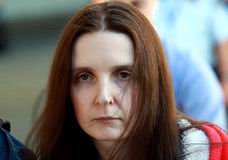
Allyson McConnell
Murderer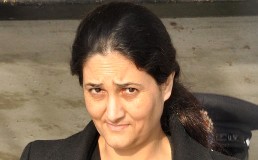 Tooba Yahya
Murderer · Canada · 2009
Tooba Yahya was a 41-year-old second wife in the polygamous Shafia household. H…
4 victims
Tooba Yahya
Murderer · Canada · 2009
Tooba Yahya was a 41-year-old second wife in the polygamous Shafia household. H…
4 victims
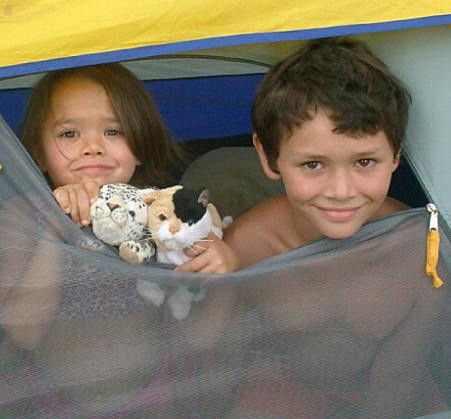 Jane LaMarsh
Murderer · Canada · 2009
Name: Jane LaMarsh Jane LaMarsh was a 50-year-old woman from Wallaceburg, Ontar…
2 victims
Jane LaMarsh
Murderer · Canada · 2009
Name: Jane LaMarsh Jane LaMarsh was a 50-year-old woman from Wallaceburg, Ontar…
2 victims
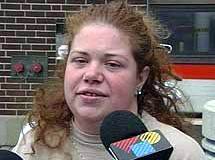 Melanie Alix
Murderer · Canada · 2001
Melanie Alix was a South Shore resident. Her brother, Francois Alix, was 18 mon…
2 victims
Melanie Alix
Murderer · Canada · 2001
Melanie Alix was a South Shore resident. Her brother, Francois Alix, was 18 mon…
2 victims
 Aset Magomadova
Murderer · Canada · 2007
Aset Magomadova was convicted of manslaughter for strangling her daughter, Amin…
1 victim
Aset Magomadova
Murderer · Canada · 2007
Aset Magomadova was convicted of manslaughter for strangling her daughter, Amin…
1 victim
 Catherine Andrus
Murderer · Canada · 2009
Catherine Andrus — common-law wife of Michel Leblanc; pleaded guilty to second-…
1 victim
Catherine Andrus
Murderer · Canada · 2009
Catherine Andrus — common-law wife of Michel Leblanc; pleaded guilty to second-…
1 victim
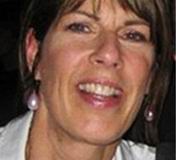 Kathrine Dufresne
Murderer · Canada · 2011
Kathrine Dufresne was the mother of seven-year-old Sophie Fitzpatrick, her adop…
1 victim
Kathrine Dufresne
Murderer · Canada · 2011
Kathrine Dufresne was the mother of seven-year-old Sophie Fitzpatrick, her adop…
1 victim
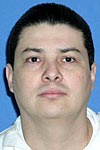 Jaime Elizalde
Murderer · USA · 1994
Name: Jaime Elizalde Also known as: Jaime Elizalde, Jr. Current status: Execute…
2 victims
Jaime Elizalde
Murderer · USA · 1994
Name: Jaime Elizalde Also known as: Jaime Elizalde, Jr. Current status: Execute…
2 victims
 Christopher Scarver
Murderer · USA · 1990
Christopher Scarver (born July 6, 1969) was a convicted American murderer. Whil…
3 victims
Christopher Scarver
Murderer · USA · 1990
Christopher Scarver (born July 6, 1969) was a convicted American murderer. Whil…
3 victims
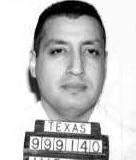 Jose Santellan
Murderer · USA · 1993
Jose Santellan, Sr. confronted his former girlfriend, Yolanda Garza, in 1993 an…
1 victim
Jose Santellan
Murderer · USA · 1993
Jose Santellan, Sr. confronted his former girlfriend, Yolanda Garza, in 1993 an…
1 victim
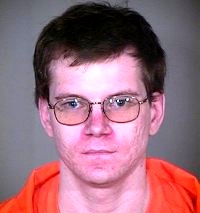 Christopher Hargrave
Murderer · USA · 2002
Christopher Hargrave worked at Jack in the Box from April to May of 2002 and ha…
3 victims
Christopher Hargrave
Murderer · USA · 2002
Christopher Hargrave worked at Jack in the Box from April to May of 2002 and ha…
3 victims
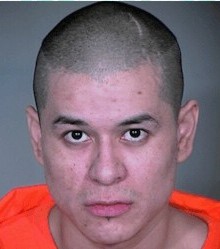 Tonatihu Aguilar
Homicide · USA · 1996
Tonatihu Aguilar was sent to a juvenile-detention center on April 25, 1995 for…
3 victims
Tonatihu Aguilar
Homicide · USA · 1996
Tonatihu Aguilar was sent to a juvenile-detention center on April 25, 1995 for…
3 victims
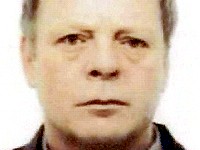 William Horncy
Mass murderer · United Kingdom · 2003
William Horncy (born 1954) was a British murderer. He was convicted of murderin…
5 victims
William Horncy
Mass murderer · United Kingdom · 2003
William Horncy (born 1954) was a British murderer. He was convicted of murderin…
5 victims
- Gender
- female
- Country
- Canada
- Location
- Millet, Alberta, Canada
- Date of birth
- 1978
- Age at first offence
- 32
- Characteristics
- parricide, revenge, history of mental illness
- Victim profile
- H er sons, 10-month-old Jayden and 2½-year-old Connor
- Method of murder
- Drowning
- Date(s) of murder
- Sometime between January 29 and February 1, 2010
- Years active
- 2010
- Date of arrest
- February 1, 2010
- Status
-
Released
Found dead under a bridge on September 17, 2013 after being deported to Australia; sentenced to six years in prison on June 4, 2012, with 15 months in custody and double credit for time spent in a mental hospital; released from a psychiatric hospital on April 4, 2013
Case record: Allyson McConnell
Overview
Allyson McConnell was convicted of manslaughter in the bathtub drowning of her two sons, Connor and Jayden. She later faced an appeal process, was sentenced to prison, released from a psychiatric hospital, deported to Australia, and was found dead under a bridge on September 17, 2013.
People
- Allyson McConnell — mother; convicted of manslaughter in the bathtub drowning of her two sons; later sentenced and deported; found dead under a bridge.
- Connor McConnell — son; 2½-year-old at the time of his death.
- Jayden McConnell — son; 10-month-old at the time of his death.
- Curtis McConnell — Allyson McConnell’s estranged husband; discovered the bodies of the two boys.
- Helen Meager — Allyson McConnell’s mother; traveled to Canada from Australia after the boys’ deaths.
- Peter Royal — lawyer who represented McConnell.
- Michelle Crighton — judge who sentenced McConnell and rejected second-degree murder in the earlier verdict.
- Jonathan Denis — Alberta Justice Minister.
- Vic Toews — Minister of Public Safety.
- Gordon Hatch — prosecutor.
- Michelle Davio — Alberta Justice spokeswoman.
- Jim McConnell — boys’ grandfather.
- Dr. Alberto Choy — forensic psychiatrist who testified during trial proceedings.
- Robert Ovadia — reporter with Seven News in Sydney.
- Vivian Holtby — neighbor of the McConnells.
- Cheryl Falkenberg — resident of Millet, Alta.
- Bernie Kroening — resident of the small community.
Timeline
- January 29, 2010 — The boys were last seen alive, when they went to a swimming play date in nearby Leduc.
- February 1, 2010 — The boys were found dead in the bathtub at the McConnell home in Millet, Alta.; Allyson drove to Edmonton, parked at a Toys “R” Us store, walked to the Delta Hotel to order lunch, and later jumped from an overpass into eastbound lanes of Whitemud Drive.
- March 12, 2012 — McConnell’s murder trial began in Wetaskiwin; she entered a not-guilty plea shortly after entering the courtroom.
- March 13, 2012 — Curtis McConnell testified about discovering the boys’ bodies floating in the bathtub.
- March 19, 2012 — McConnell testified that she could not remember what happened during the weekend when the boys were drowned; she described taking sleeping pills and drinking Bacardi Breezers.
- March 20, 2012 — Dr. Alberto Choy testified that McConnell likely saw the boys’ deaths as an extension of her own suicide.
- April 20, 2012 — Justice Michelle Crighton found McConnell guilty of manslaughter and rejected a second-degree murder conviction.
- June 4, 2012 — Justice Michelle Crighton sentenced McConnell to six years in prison, with double credit for time already served in a psychiatric hospital.
- October (scheduled) — An appeal of McConnell’s conviction was scheduled to be heard in October in Edmonton.
- April 4, 2013 — McConnell was released from a psychiatric hospital.
- April 28, 2013 — An Australian woman convicted of drowning her two sons told a newspaper she was open to having more children; she was living with her mother in Gosford and had been deported shortly after release.
- September 17, 2013 — McConnell was found dead under a bridge on Australia’s central coast.
Background
The case involved the deaths of two young boys, Connor (2½ years old) and Jayden (10 months old), who were found drowned in the bathtub of their home in Millet, Alta., about 40 kilometres south of Edmonton. The McConnells were involved in a difficult divorce proceeding and a custody battle.
McConnell was described as having significant depression and having made suicide attempts. During the murder trial, her lawyer stated she required a constant suicide watch while in custody at a psychiatric hospital in Edmonton. Her mental state was described as being central to the determination of whether she could form the intent required for conviction of second-degree murder.
The offence
McConnell’s case centered on the bathtub drowning of her two sons in Millet, Alta. Police found that the internet searches on the hard drive of her computer included:
- “How long does it take to drown?”
- “How long does it take to die from strangulation?”
- information on how long it takes a person to overdose on sleeping pills.
Investigators also found a rope tied to a joist in the basement and a chair was sitting underneath.
During her murder trial, the prosecution argued that McConnell killed the boys at the family home in Millet as revenge against her husband, Curtis McConnell, who had refused permission to let her return to her native Australia with the boys.
The defence argued that McConnell’s mind was so clouded by alcohol, sleeping pills, and severe depression that she could not have formed the intent required for second-degree murder.
In sentencing and subsequent discussion of the case, the legal conclusion in her trial proceedings was that she was convicted of manslaughter rather than second-degree murder.
Investigation
A forensic computer analyst testified that police found internet searches on the hard drive of McConnell’s computer from Jan. 13, 2010, asking: “How long does it take to drown?” Another search was from Feb. 1, 2010, asking: “How long does it take to die from strangulation?” A third search looked for information on how long it takes a person to overdose on sleeping pills.
Police also found electrical appliances submerged in a bathtub full of water, and alcohol and pill bottles strewn across the floor. A rope was tied to a ceiling joist in the basement.
Arrest and custody
McConnell was held under suicide watch in a psychiatric hospital in Edmonton during the murder trial.
Trial
Charges and plea
McConnell was charged with two counts of second-degree murder for the deaths of her sons Jayden (10 months) and Connor (2 years). She entered a not-guilty plea shortly after entering the Wetaskiwin courtroom at the beginning of the trial.
Prosecution position
Crown prosecutor Gordon Hatch told the court the case was about “why.” He argued that McConnell killed her boys at the family home in Millet as revenge against Curtis McConnell, who had refused permission to let her return to Australia with the boys. Hatch also said the boys were last seen alive on Jan. 29, 2010, when they went with others to a swimming play date in nearby Leduc. That night, McConnell tried to give away items, including car seats, a computer and cameras.
Defence position
The defence expected to focus on McConnell’s mental state and sought to establish that mental illness prevented her from forming the intent necessary to convict her of second-degree murder.
McConnell testified she could not remember drowning her sons. She described taking sleeping pills and drinking Bacardi Breezers, an alcoholic soda, on Friday Jan. 29, 2010, saying: “I hoped I would overdose.” She said: “I was totally overwhelmed.” She testified that she had no answer when asked whether her older son was alive while she consumed the alcohol. She described waking up vomiting with a metallic taste in her mouth and waking up in the bathtub holding electrical appliances.
She insisted she loved her sons and never had thoughts of harming them, only of hurting herself. She was adamant that she loved her sons and never had thoughts of harming them.
Events described in the agreed statement of facts
An agreed statement of facts described that McConnell tried to commit suicide in the home after drowning the boys. She then drove to Edmonton, parked at the southside Toys “R” Us store and walked to the Delta Hotel to order lunch. It stated:
“She became emotional during her time at the hotel, so she left and walked back to the overpass where Calgary Trail passes over Whitemud Drive.
She then jumped over the edge, falling into the eastbound lanes of Whitemud Drive.”
It also described injuries after the jump, including fracturing her collarbone, legs and pelvis.
Court’s reasoning and verdict
Justice Michelle Crighton rejected a conviction on the more serious charge of second-degree murder. She said:
“I would describe her as being tormented by the death of her boys, but at the same time confused regarding her role in that,”
and told the court she had reasonable doubt about whether McConnell could form the intent to kill her sons.
Crighton stated:
“Due to the black hole in the evidence, the court is left not knowing what happened in the McConnell home during the final few days of the McConnell children's lives, including what Allyson's mental state was when she drowned them,”
and:
“It is left with a reasonable doubt that she had the specific intent to kill her children,”
concluding:
“The accused is entitled to the benefit of that doubt and, accordingly, she cannot be convicted of second-degree murder.”
McConnell was found guilty of manslaughter. The Crown expressed disappointment with the decision, and indicated it would likely seek more jail time.
Psychiatric evidence
Dr. Alberto Choy testified in a crowded Wetaskiwin courtroom that McConnell saw her sons’ deaths as an extension of her own suicide. He said:
“It is not out of the realm of possibility.”
He also said:
“We believe that it is much more likely she overdosed after her children died … and that the death of her children was purposeful in that she wanted to keep her children with her when she made the decision she did not want to continue with her life,”
and said McConnell saw suicide as a way to give her some sense of control. Choy described the view that she did not want to be separated from her sons even in death and decided to take them with her.
Choy also testified that he had been treating McConnell at Alberta Hospital in Edmonton for the past two years. During therapy, McConnell revealed she had a flash of seeing herself holding a child down in the water, which he said McConnell did not mention during her testimony. Choy called the case complicated and said:
“We think the risk for her committing suicide is significant, if not high,”
McConnell testified during trial proceedings that she loved her children and never intended to harm them.
McConnell’s mother, Helen Meager, testified that when she arrived at the hospital, McConnell seemed unaware her children were dead and became hysterical upon hearing the news. Meager said:
“She was throwing herself all around,”
“I don't think she believed it.”
Closing and court proceedings
The trial evidence was described as wrapped up on Tuesday, with closing arguments to be made on Thursday after which the judge would reserve her decision. After the verdict, defence lawyer Peter Royal stated that “The most important thing now is her recovery,” and said it would not be appropriate for McConnell to serve her sentence in the Edmonton Institution for Women.
Curtis McConnell’s testimony
Curtis McConnell testified about discovering the bodies. He told the court that on Feb. 1, 2010, police called to tell him his wife, Allyson McConnell, had fallen from an overpass in Edmonton. His first thought was: “Where are the kids?” He went to the family home in Millet, Alta., about 40 kilometres south of Edmonton.
He testified that upon arriving at about 3:30 p.m., the television was blaring and all the lights were on. He checked the room of two-year-old Connor and said: “It's dark. I'm feeling the pillows of where he slept.” He then went to the next bedroom and said: “The bed's empty.” He noticed the bathroom door was locked shut, and jimmied the door open with a butter knife. He testified: “I fell to my knees.”
After removing the boys from the tub, he ran to a neighbour’s home, saying: “My kids are dead,” and also stated: “Allyson killed them. I can't look at them, but I know they're dead.”
Sentencing
On June 4, 2012, Justice Michelle Crighton sentenced Allyson McConnell to six years in prison and granted double credit for time already served in a mental hospital. Curtis McConnell wept outside the Wetaskiwin courthouse after sentencing.
Justice Michelle Crighton said the sentence would “punish her, but also afford her the best opportunity "to deal with psychological issues," and she recommended that McConnell serve her time at the Alberta Hospital until she was ready to be transferred.
Prosecutor Gordon Hatch called the sentence disappointing. He said the Crown would likely be looking for more jail time and that should the Crown’s appeal be successful, the sentence would be thrown out. Hatch indicated he had wanted McConnell to serve 12 years with three years credit for time served in a psychiatric hospital.
The boys’ grandfather Jim McConnell called the sentence “absolutely ridiculous” and a “bloody joke,” saying: “Is that all the boys' lives are worth?” and “This is crazy.”
Justice Michelle Crighton’s sentence left McConnell with 15 months left to serve and eligible for parole in March 2013, based on the description of the time served and credit.
Appeals
The appeal of McConnell’s conviction was scheduled to be heard in October in Edmonton. Alberta Justice Minister Jonathan Denis said that if the Crown was successful in persuading the courts to increase McConnell’s sentence, the province would try to extradite her from Australia to serve more time.
The appeal process and the Crown’s notice to appeal were described as relating to the manslaughter conviction and sentence, with the Crown believing McConnell should have been convicted of second-degree murder.
Deportation and release
McConnell was released from a psychiatric hospital on April 4, 2013, and Canada deported her to Australia shortly after release. Vic Toews stated that Allyson McConnell’s jail term ended Thursday and allowed the Canada Border Service Agency to begin her deportation process, which caused concern for Alberta because Alberta had been appealing the manslaughter conviction and sentence.
A deportation review had scheduled McConnell to leave Monday for Australia, and Toews said that the Alberta Justice Minister did not reach his office until the same day. McConnell remained in an Edmonton psychiatric hospital until deportation proceeded.
Defence lawyer Peter Royal said McConnell was anxious to return to Australia, and stated: “she's lived safely for the last three years.”
McConnell was described as living with her mother in Gosford, a city about 70 kilometres north of Sydney, after deportation.
Aftermath: interview statements and family reactions
After deportation and release, an account said McConnell told the Sydney paper she was a good mother and described the coverage as writing about her being a bad mother. She said:
“There have been a lot of things written about me being a bad mother,”
“I wasn’t a bad mother, I was actually a very loving mother. But you never hear about that.”
She said:
“At the moment I'm just trying to get over what has happened. It's been as upsetting for me as much as everyone else involved. I think about them every single day.”
When asked if she would like more children, she said:
“I wouldn't say no.”
During the sentencing phase, McConnell’s legal representative Peter Royal described the possible mental health placement and transfer plans. In the aftermath of sentencing, the Crown was appealing the manslaughter conviction and sentence.
Curtis McConnell fought against his estranged wife’s deportation, saying through a released family statement that he feared sending her to Australia would mean an appeal of her case would never be heard.
The McConnell family issued a statement to media on Wednesday, saying:
“Our thoughts are with Allyson's family and we send our condolences.”
Death in Australia
On September 17, 2013, a woman’s body was discovered by a passerby on rocks beneath Brian McGowan Bridge on Australia’s central coast. Australia’s New South Wales police force released a statement saying the woman was believed to be a 35-year-old from Gosford, about an hour’s drive north of Sydney.
Gosford was described as McConnell’s hometown. Lawyer Peter Royal said he spoke with McConnell’s mother early Wednesday morning and told CBC News there was little doubt the body was McConnell’s because identification papers were found with it. Royal described it as “very depressing” and said:
“I won't ever forget the evidence she gave in court,”
“It was very moving and upsetting. She didn't see any future and believed she would continue to try to kill herself.”
Royal added:
“There are not many cases that stay with you, but this is one of them,”
and said McConnell was under a doctor’s care in Australia but was not being watched around the clock. He said her disappearance was reported to police within a few hours and her body was found not long after.
Australian news reporting quoted Robert Ovadia as stating that a formal identification was expected Friday afternoon local time and that police were very confident that it was Allyson McConnell. Ovadia said:
“Police are very, very confident that it is Allyson McConnell.… Given that Miss McConnell had been reported missing yesterday, and given that a body has turned up that very much matches her description facially as well as personal effects on her, I think it's reasonable to say that it can be confirmed that it is her,”
and that police had reportedly told Australian news outlets the death was not considered suspicious. Ovadia said:
“She hasn't been on any sort of watch list from authorities or any sort of scrutiny whatsoever,”
“In fact, from what I understand she's been somewhat reclusive in her time here.
Her history of suicide attempts is obviously very well documented. I'm told that she has expressed suicidal thoughts since arriving home as well. So as sad as it to say, I guess that today seems somewhat of an inevitable conclusion.”
Alberta Justice Minister Jonathan Denis reacted to the news in a statement, saying:
“If this is indeed Ms. McConnell, then it marks a disturbing end to what has been a very tragic situation and is certainly not the outcome anyone wished for,”
and Robert Ovadia described expectations about confirmation on Friday afternoon local time.
Other details
- McConnell’s trial included discussion of her age; she testified: “I'm 33 years old, I believe,” and explained she “haven't kept track of it recently.”
- During the trial, McConnell responded in testimony when asked what would happen to her, saying: “Probably more tried and failed suicide attempts,” and when asked: “Will you recover?” she said: “I don't think I want to,” with her voice breaking.
- The brothers’ deaths were described as occurring in a bathtub sometime between Friday, Jan. 29 and Monday, Feb. 1, 2010.
- Curtis McConnell testified that their divorce had been bitter and that he pulled the lifeless bodies of the boys from a tub of freezing cold water and received police calls as events unfolded.
- The trial involved allegations that McConnell had tried to give away items including car seats, a computer and cameras on the night the boys were last seen alive.
- Search evidence on McConnell’s computer included inquiries about drowning time, strangulation time, and overdose time.
- The case included testimony that McConnell fractured collarbone, legs and pelvis after a suicide attempt involving jumping over an overpass into eastbound lanes of Whitemud Drive.
Spotted an error, or have more information about this case?