
Michelle Michaud
Murderer Megan Huntsman
Murderer · USA · 1996
Megan Huntsman was 40 at sentencing. She was a mother of three children who wer…
6 victims
Megan Huntsman
Murderer · USA · 1996
Megan Huntsman was 40 at sentencing. She was a mother of three children who wer…
6 victims
 Angela Johnson
Murderer · USA · 1993
Angela Jane Johnson was convicted in federal court of aiding and abetting the m…
5 victims
Angela Johnson
Murderer · USA · 1993
Angela Jane Johnson was convicted in federal court of aiding and abetting the m…
5 victims
 Catherine May Wood
Murderer · USA · 1987
Catherine May Wood was an American caregiver who worked at the Alpine Manor Nur…
5 victims
Catherine May Wood
Murderer · USA · 1987
Catherine May Wood was an American caregiver who worked at the Alpine Manor Nur…
5 victims
 Michele Kalina
Murderer · USA · 1996
Michele Kalina pleaded guilty to murder for one of five infants she initially w…
5 victims
Michele Kalina
Murderer · USA · 1996
Michele Kalina pleaded guilty to murder for one of five infants she initially w…
5 victims
 Tiffany Hall
Murderer · USA · 2006
Tiffany Hall was 24 when she was charged in September 2006. She later entered a…
5 victims
Tiffany Hall
Murderer · USA · 2006
Tiffany Hall was 24 when she was charged in September 2006. She later entered a…
5 victims
 Banita Jacks
Murderer · USA · 2007
Banita Jacks was a Washington, DC resident convicted of murdering her four daug…
4 victims
Banita Jacks
Murderer · USA · 2007
Banita Jacks was a Washington, DC resident convicted of murdering her four daug…
4 victims
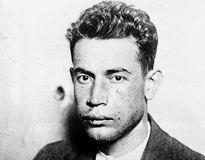 José de León Toral
Murderer · Mexico · 1928
José de León Toral (Matehuala, 23 December 1900 — Mexico City, 9 February 1929)…
1 victim
José de León Toral
Murderer · Mexico · 1928
José de León Toral (Matehuala, 23 December 1900 — Mexico City, 9 February 1929)…
1 victim
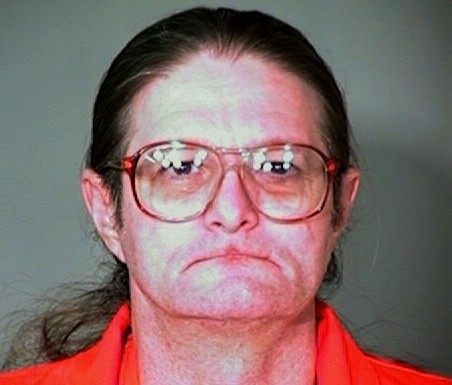 Joe Leonard Lambright
Murderer · USA · 1980
Joe Leonard Lambright was a defendant in a joint trial with Robert Douglas Smit…
1 victim
Joe Leonard Lambright
Murderer · USA · 1980
Joe Leonard Lambright was a defendant in a joint trial with Robert Douglas Smit…
1 victim
 Thomas Harries
Murderer · United Kingdom · 1953
Thomas Ronald Lewis Harries was executed by hanging at Swansea Prison on April…
2 victims
Thomas Harries
Murderer · United Kingdom · 1953
Thomas Ronald Lewis Harries was executed by hanging at Swansea Prison on April…
2 victims
 L'ubomír Harman
Mass murderer · Slovakia · 2010
Ľubomír Harman (31 March 1962 – 30 August 2010) was a Slovak spree killer. He a…
7 victims
L'ubomír Harman
Mass murderer · Slovakia · 2010
Ľubomír Harman (31 March 1962 – 30 August 2010) was a Slovak spree killer. He a…
7 victims
 William Kendrick Burns
Murderer · USA · 1980
William Kendrick Burns was executed by lethal injection in Texas on April 11, 2…
2 victims
William Kendrick Burns
Murderer · USA · 1980
William Kendrick Burns was executed by lethal injection in Texas on April 11, 2…
2 victims
- Gender
- female
- Country
- USA
- Location
- Pleasanton, Alameda County, California, USA
- Date of birth
- 1959
- Age at first offence
- 38
- Characteristics
- serial rapist, kidnapping, sexual assault
- Victim profile
- Vanessa Lei Samson, 22
- Method of murder
- Strangulation
- Date(s) of murder
- December 2, 1997
- Years active
- 1997
- Date of arrest
- Next day
- Status
-
Sentenced to death
Sentenced to death on September 25, 2002
Case details
Defendant: Michelle Lyn Michaud (age 38 at crime; white) Court: United States Court of Appeals for the Ninth Circuit Case name: United States of America v. Michelle Lyn Michaud Appeal docket: No. 99-10440 Victim: Vanessa Lei Samson (age 22; white female) Places mentioned: Pleasanton (Alameda County), Kern Court and Singletree Way (Pleasanton), South Lake Tahoe, Alpine County, Highway 88, Alpine County snowy embankment; Stateline, Nevada; Douglas County Courthouse; Reno; Placer County; Lakeside Inn (Stateline, Nev.); Sundowner Motel (South Lake, Lake Tahoe); Candlewood Hotel (Pleasanton); Motel 6 (Pleasanton); Motel 6 Room 137; Hayward Kmart; Not Too Naughty on First Street; Foothill High School; Livermore; Page courts; Gibraltar Drive; SCJ Insurance Services; Siesta Court; Candlewood Hotel; Kern Court; Singletree Way; Douglas County Sheriff's Office; women’s prison in Chowchilla; condemned women's quarters; women prison in Chowchilla; Alpine County; Highway 88; remote area of Placer County; Nevada’s Death Row is mentioned in connection with another person.
Timeline
- March 12, 2001 — Argued and submitted in San Francisco, California.
- December 2, 1997 — The kidnapping, sexual assault, and murder of Vanessa Lei Samson occurred in Pleasanton (Alameda County).
- December 3, 1997 — A day had passed after the slaying and the Samsons and their friends were in a panic; a trucker spotted the body off Highway 88 on a snowy embankment about 10:45 that morning.
- December 4, 1997 — Agents went to the Lakeside Inn in Stateline, Nevada; Michaud was arrested seconds later; Daveggio was playing a slot machine and was cuffed and hauled away; Michaud and Daveggio were arrested for a Reno rape and kidnapping and later convicted in 1999.
- December 5, 1997 — Michaud and her cellmate, Teresa Agoroastos, learned that Michaud and her boyfriend had been featured on a television news report in connection with a murder.
- December 6 — Campion and Placer County Detective Desiree Carrington interviewed Michaud again.
- December 8 — Officers spoke to Michaud again; Placer County yielded priority of prosecution to the federal government.
- December 9 — Michaud was taken into federal custody and promptly taken before a federal magistrate.
- October 27, 1998 — Michaud moved to suppress the statements she made during her interviews.
- November 13, 1998 — The district court denied the motion to suppress.
- August 12, 1999 — The court sentenced Michaud to 152 months in prison.
- February 5, 2002 — Prosecutor Angela Backers told jurors that Michaud described each vicious assault as an “adventure” and Daveggio referred to them as “huntings.”
- January 21, 2002 — Trial began for Daveggio and Michaud for the murder of Vanessa Samson.
- June 13, 2002 — A jury ruled that Michelle Lyn Michaud and James Anthony Daveggio should get the death penalty.
- September 25, 2002 — Michaud was sentenced to death by Alameda County Superior Court Judge Larry Goodman.
Background
Michelle Lyn Michaud was described as a white woman who was age 38 at the time of the crime. She was in a relationship with James Anthony Daveggio.
Vanessa Lei Samson was a 22-year-old white female. She was a community college student and was walking to work early on Dec. 2, 1997. She worked at an insurance office less than a mile from her home at SCJ Insurance Services. She left for work with her backpack and bag lunch.
The courtroom sentencing proceedings included relatives and friends of the slain woman. Many wore purple ribbons, because purple was Samson’s favorite color.
The offence
Michaud kidnapped and sexually assaulted Vanessa Lei Samson before strangling her and dumping her body on a snowy embankment in remote terrain.
The kidnapping occurred as Samson walked to her clerical job at SCJ Insurance Services. Police said she was abducted from Kern Court and Singletree Way in Pleasanton as she walked to work. Roofers working at a house on Page heard a “desperate scream,” observed a green van, and watched it inch away.
Prosecutors said Michaud and Daveggio kept Samson inside their green Dodge Caravan. The van was described as “rigged with hooks and ropes,” with rear seats removed, and was described as a mobile “murder and abduction chamber.” Prosecutors said Samson was tied up in the van, repeatedly tortured with altered curling irons, and forced to wear a rubber-ball gag designed to stifle her screams.
Prosecutors said Michaud and Daveggio strangled Samson with a 6-foot-long black nylon rope and dumped her body off Highway 88 later that day on an embankment in remote Alpine County.
Investigation
A joint investigation by the FBI and the Placer County, California Sheriff’s Department targeted the kidnapping and sexual assault.
Police said the slaying capped a series of sexual assaults on at least six other young women. Prosecutors said two of those other victims were relatives of the defendants.
Evidence recovered in the Samson case included a pornography audiotape titled “Submissive Young Girls,” a book on serial killers called “Dead of Night,” two curling irons with Michaud’s fingerprints on them, and a pack of serial-killer trading cards that featured the Gallegos.
Police said the defendants allegedly modeled their crimes after Gerald and Charlene Gallego, whose slayings made front-page news in the late 1970s as the “sex-slave murders.” Gallego was mentioned as being on Nevada’s Death Row; his former wife was said to have been released from prison in 1997.
A gag order prevented attorneys and witnesses from discussing the case outside court.
Arrest
After the joint investigation, law enforcement officials isolated Michaud and James Daveggio as suspects and located them at a motel in Stateline, Nevada.
The Placer County police secured warrants for their arrest on December 2, 1997. Aware of the existence of the state warrants, FBI Agent Lynn Ferrin led a group of agents to Michaud’s hotel the following day.
On the following day, another agent knocked on Michaud’s door, claimed to be the assistant manager of the hotel, and told her that her boyfriend was sick and needed her assistance. In reality, Daveggio had already been apprehended. When Michaud opened the door, the agents placed her under arrest, took her to another hotel room, and handcuffed her to a chair. Ferrin then secured Michaud’s signature on consent forms to search her room and her vehicle.
FBI agents and Placer County detectives advised Michaud of her Miranda rights. She signed another form indicating she understood and waived those rights.
When Michaud indicated she wanted to speak to a lawyer, the interview was terminated. She was booked into the Douglas County, Nevada jail on the state warrant and for possession of controlled substances.
Based on the search of Michaud’s van, a magistrate judge issued a federal arrest warrant for Michaud on December 5, 1997 on charges of kidnapping and aiding and abetting.
Custodial events and interviews (Edwards/counsel issue)
Michaud and her cellmate, Teresa Agoroastos, learned on December 5, 1997 that Michaud and her boyfriend had been featured on a television news report in connection with a murder. Michaud became distraught and began telling Agoroastos, “I'm scared. I'm in a lot of trouble.”
Agoroastos contacted Deputy Douglas Conrad over the intercom and said that Michaud needed to talk to somebody. Conrad told the women to meet him at the gate in front of their dorm. At this point, both women were crying. Agoroastos told Conrad that Michaud had information about a murder and needed to talk to somebody. Michaud remained silent, neither confirming nor denying the statement.
Conrad told the women to return to their cellblock and contacted his supervisor, Sergeant Arnie Digerud. Digerud instructed Conrad to place Michaud in a holding cell. Approximately one hour later, Douglas County Sergeant Timothy Minister took Michaud to an interview room, where they met with FBI Agent Christopher Campion.
After turning on a tape recorder, Campion said:
“Michelle, we just started talking and uh, I just wantto ask you just to make sure that I'm under, I'm clear that you want to talk to us, to me, and to Detective Minister here, Tim, um, about something that's obviously bothering you. You're obviously emotional right now and it's something that you, you need to get off your chest. Is that true?”
Michaud answered:
“I have some information about the young lady who was killed, a couple of days ago. Yes.”
Minister and Campion informed Michaud of her Miranda rights, including her right to have an attorney present during questioning. She indicated that she understood these rights and signed a waiver. The interview lasted roughly nine hours.
Campion and Placer County Detective Desiree Carrington interviewed Michaud again on December 6. The following day Michaud was hospitalized after collapsing in her cell. She was interviewed at the hospital for approximately an hour. The officers spoke to her again on December 8.
Placer County yielded priority of prosecution to the federal government on December 8. Michaud was taken into federal custody the next day, brought before a federal magistrate in Reno, and had counsel appointed for her.
Prosecution and charges
Michaud entered a conditional guilty plea to violating 18 U.S.C. § 1201(a)(1), kidnapping and transporting a victim across state lines.
The federal authorities later indicted her on charges of kidnapping and transportation across state lines and conspiracy to commit the same, in violation of 18 U.S.C. § 1201(a)(1) and (c).
On August 12, 1999, the court sentenced Michaud to 152 months in prison.
The later death-penalty phase proceeded after a jury convicted the pair.
Trial
An Alameda County jury convicted Michaud and James Anthony Daveggio of 1st degree murder with special circumstances of murder in the commission of rape and rape by instrument.
According to a prosecutor statement, Michaud and Daveggio abducted Samson from a Pleasanton street, forced her into a van, and drove off.
The jury was described as consisting of 4 men and 8 women. After deliberating for nearly 2 days, the jury decided Wednesday that the pair should die for the killing of Vanessa Lei Samson. The jury recommended the death penalty in June.
Prosecutors described evidence that the defendants used altered curling irons to sexually torture Samson as she lay restrained inside a van Daveggio and Michaud had rigged.
Prosecutors told jurors:
“Michaud described each vicious assault as an 'adventure.' Daveggio referred to them as 'huntings.'”
Prosecutor Angela Backers also described “Michaud described each vicious assault as an 'adventure.' Daveggio referred to them as 'huntings,' ” and stated it in court during the trial.
Samson’s brother, Vincent, addressed the defendants at sentencing. He called Daveggio a “demon” and said:
“You're pure evil, and you deserve to die.”
Daveggio replied:
“I, in fact, did not kill Ms. Samson. By law I am as guilty of her death as Michelle is. Do I care or feel for Ms. Samson? Yes, watching your family, unfortunately I have never seen love as you all have for her. Yes, I think about it every day.”
Michaud did not respond on the advice of her attorneys.
A framed picture of Vanessa Lei Samson was placed at the table where Daveggio sat, wearing a red jail shirt. Vincent Samson also placed the framed picture at Michaud’s sentencing.
Sentencing
At sentencing, the punishment was described as a death sentence imposed by Alameda County Superior Court Judge Larry Goodman in Oakland.
Judge Goodman said:
“The death penalty is the appropriate penalty,”
and also added that Samson’s slaying and torture was:
“vile, cruel, senseless, depraved, brutal, evil and vicious.”
Michaud was sentenced on September 25, 2002. The article also stated she would become the 14th woman to await execution on California’s Death Row and that she was expected to be housed at the condemned women's quarters at the women’s prison in Chowchilla.
Appeals
On appeal in the United States Court of Appeals for the Ninth Circuit, Appellant Michelle Michaud entered a conditional guilty plea to kidnapping and transporting a victim across state lines and challenged her conviction.
Michaud argued:
- her incriminating statements should have been suppressed;
- her sentence was improperly enhanced.
The Court of Appeals affirmed.
Issues considered by the Ninth Circuit
Lawfulness of the arrest and suppression motion: The Court held the use of deception to execute a valid arrest warrant was permissible and affirmed the district court’s denial of the suppression motion based on arrest lawfulness.
Alleged state and federal collusion: Michaud argued that Placer County officers colluded with the FBI to deprive her of her Sixth Amendment right to counsel and rights under Fed. R. Crim. P. 5(a) and 18 U.S.C. § 3501(c). The Court affirmed the district court’s holding that Michaud’s rights were not infringed by impermissible collusion between federal and state authorities, noting the absence of evidence of actual collusion.
Custodial interrogation after invocation of counsel (Edwards): Michaud argued that questioning violated Edwards after she invoked her right to counsel. The Court held that questioning was initiated by Michaud, not by the police, and therefore did not violate Edwards.
The dissenting opinion stated that the facts presented “a clear cut violation of Edwards v. Arizona” and argued there was “no basis in law for the unprecedented legal theory” adopted by the majority. The dissent argued that Michaud did not initiate communications as required by Edwards and contended that police initiated the exchanges after she was directed to meet Deputy Conrad and after she was placed in an isolation cell and brought to an interrogation room.
Sentencing guideline issue
The Court addressed the application of the Sentencing Guidelines:
- U.S.S.G. § 2A4.1 for kidnapping, abduction, and unlawful restraint established a base offense level of 24.
- Under U.S.S.G. § 2A4.1(b)(7)(A), the court cross-referenced U.S.S.G. § 2A3.1 for criminal sexual abuse of the type at issue.
- The base offense level of 27 under § 2A3.1 was adjusted upward by four levels because the offense was committed by means set forth in 18 U.S.C. § 2241(a) (aggravated sexual abuse by force or threat), and by an additional four levels due to abduction, resulting in an offense level of 35.
- Michaud argued for application of U.S.S.G. § 2A4.1(b)(5) for kidnapping involving sexual exploitation of the victim, which would yield a base level of 24 plus three levels for sexual exploitation, resulting in an offense level of 27.
- The Court held the district court did not err in applying the cross-reference because the cross-referenced section resulted in a higher offense level.
Outcome
The Court of Appeals affirmed the district court’s denial of Michaud’s suppression motion and held that the district court properly applied the Sentencing Guidelines.
Michaud received a death sentence on September 25, 2002.
Other details
James Anthony Daveggio was described as nicknamed “Froggie” for his raspy voice. He had once lived in Pleasanton. The material described him as a convicted sex offender.
Michaud was described as being expected to be housed at the condemned women's quarters at the women's prison in Chowchilla.
Michaud pleaded guilty in a Reno case in U.S. District Court and was sentenced to 15 years in prison. Daveggio received a 25-year sentence in that case. The Reno victim was described as scheduled to testify to jurors about what happened to her, as would other previous victims.
Daveggio and Michaud were described as being arrested the next day after their Reno case incident, in a separate case involving assault of a Reno community college student three months earlier.
Police said the defendants lured a Pleasanton college student into their specially rigged van, sexually tortured her, strangled her, and then dumped her body on a snowy embankment in 1997.
A manager, Mukesh Patel, checked them into Room 5 at the Sundowner Motel in South Lake Tahoe and noticed nothing out of the ordinary.
The article also mentioned books connected to the case: “Rope Burns” by Robert Scott and “Dead of Night” as recovered evidence.
A television news report in connection with a murder occurred before Michaud’s December 5 interviews, and Michaud became distraught after learning that the pair had been featured.


Spotted an error, or have more information about this case?