Kenneth Chapin
Murderer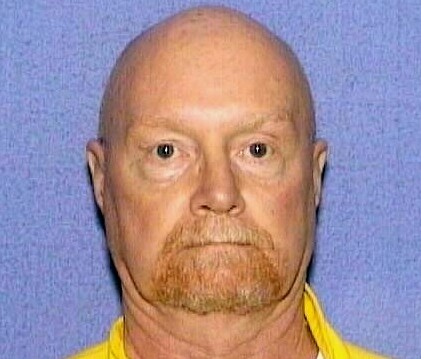 Gary Duane Rardon
Murderer · USA · 1962
Gary Duane Rardon killed a man in 1962 and later served 4 years for manslaughte…
4 victims
Gary Duane Rardon
Murderer · USA · 1962
Gary Duane Rardon killed a man in 1962 and later served 4 years for manslaughte…
4 victims
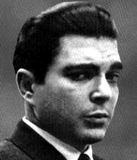 Charles Howard Schmid
Murderer · USA · 1964
Charles Howard Schmid was born on 8 July 1942 and was adopted by Charles and Ka…
3 victims
Charles Howard Schmid
Murderer · USA · 1964
Charles Howard Schmid was born on 8 July 1942 and was adopted by Charles and Ka…
3 victims
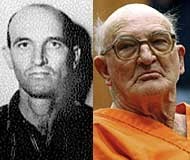 Edgar Ray Killen
Murderer · USA · 1964
Edgar Ray “Preacher” Killen (born 17 January 1925) was an American former Ku Kl…
3 victims
Edgar Ray Killen
Murderer · USA · 1964
Edgar Ray “Preacher” Killen (born 17 January 1925) was an American former Ku Kl…
3 victims
 Bill Douglas Gates
Murderer · USA · 1999
Bill Douglas Gates was sentenced to death on February 21, 2001. Gates had a TDC…
1 victim
Bill Douglas Gates
Murderer · USA · 1999
Bill Douglas Gates was sentenced to death on February 21, 2001. Gates had a TDC…
1 victim
 Gail Cutro
Murderer · USA · 1993
Gail Cutro (home daycare operator; appellant) Gail Cutro was convicted of killi…
2 victims
Gail Cutro
Murderer · USA · 1993
Gail Cutro (home daycare operator; appellant) Gail Cutro was convicted of killi…
2 victims
 Richard Charles Duncan
Murderer · USA · 1987
Richard Charles Duncan was the longtime homosexual partner and business partner…
2 victims
Richard Charles Duncan
Murderer · USA · 1987
Richard Charles Duncan was the longtime homosexual partner and business partner…
2 victims
 Amy Hebert
Murderer · USA · 2007
August 9, 1991 — Amy Hebert and Chad Hebert married. · July of 2005 — Amy Heber…
2 victims
Amy Hebert
Murderer · USA · 2007
August 9, 1991 — Amy Hebert and Chad Hebert married. · July of 2005 — Amy Heber…
2 victims
 Edwin Bell
Mass murderer · USA · 1999
February 12, 1999 — Edwin Bell shot his estranged girlfriend, their three young…
5 victims
Edwin Bell
Mass murderer · USA · 1999
February 12, 1999 — Edwin Bell shot his estranged girlfriend, their three young…
5 victims
- Gender
- male
- Country
- USA
- Location
- Springfield, Massachusetts, USA
- Date of birth
- 1936
- Age at first offence
- 18
- Characteristics
- —
- Victim profile
- Baby sitter Lynn Ann Smith, 14, and her charge Steven Ross Goldberg, 4
- Method of murder
- St abbing with a bayonet (38 and 23 times)
- Date(s) of murder
- September 25, 1954
- Years active
- 1954
- Date of arrest
- October 8, 1954
- Status
-
Life imprisonment
Sentenced to death in 1955; commuted to life in prison without parole in 1956
Case overview
Kenneth Chapin was convicted in the first degree for the murder of Lynn Ann Smith and the murder of Steven Ross Goldberg. In each case, sentence of death was imposed, and execution of the sentence was stayed as required by G. L. (Ter. Ed.) c. 279, Section 4, as appearing in St. 1935, c. 437, Section 3. The cases were tried together and were appealed together.
Timeline
- October 9, 1954 — Kenneth Chapin was arrested.
- October 25, 1954 — Indictments were returned for two indictments, one for the murder of Lynn Ann Smith and one for the murder of Steven Ross Goldberg.
- October 8, 1954 — A written statement given on this date was the only written statement described as having been given.
- October 22, 1942 — Application on behalf of Kenneth Chapin for an examination at the psychological laboratory.
- October 27, 1942 — Psychometric report of Kenneth Chapin dated when he was six years old and in the second grade.
- November 4, 1954 — A clinical psychologist administered six tests to Kenneth Chapin at the Hampden County jail.
- December 5, 6, 1955 — Commonwealth vs. Kenneth R. Chapin appeal was presented (333 Mass. 610).
- January 31, 1955 — Kenneth Chapin filed motions for continuance.
- February 14, 1955 — Hearings on the motions for continuance were held and denied.
- March 1, 1956 — Commonwealth vs. Kenneth R. Chapin (333 Mass. 610) continued (March 1, 1956 term).
- April 26, 1956 — Governor Herter stated there was no rational explanation for the two horrible crimes but that society would not be benefited by the execution of Kenneth Chapin.
- September 25, 1954 — Kenneth Chapin committed the killings of Lynn Ann Smith and Steven Ross Goldberg.
- November 28 (1956) — Dr. Frederick Wertham told the council that Kenneth Chapin “didn’t know right from wrong—he didn’t have the capacity to know.”
- December 1 (1956) — An execution date was scheduled for Kenneth Chapin.
- December 10, 1956 — An article described the executive council’s reversal and commutation decision.
Background
Kenneth Chapin was a high school student eighteen years of age. He lived at 63 Daviston Street, Springfield, two houses from Lynn Ann Smith, who lived at 53 Daviston Street, Springfield. Lynn Ann Smith was fourteen years of age and worked as a babysitter near the Goldberg home at 860 Sumner Avenue. Steven was four years of age and Robert was six years of age; Robert was unharmed.
Chapin was a friend of his sister. The evidence established that Lynn Ann Smith was a friend of Chapin’s sister, and that she was babysitting Steven in the Goldberg house.
After his arrest, Chapin underwent a routine psychiatric examination and was adjudged sane enough to stand trial. Eight Massachusetts psychiatrists pronounced him sane, and one psychiatrist said he was in the “early stages” of schizophrenia. The defense tried to prove Chapin a victim of psychomotor epilepsy, not necessarily related to insanity.
The offence
Murders at the Goldberg home
On the evening of September 25, 1954, when Lynn Ann and Steven had been stabbed to death, their parents returned about 11:30 P.M. Robert was unharmed.
There were thirty-eight wounds on the upper body and head of Lynn Ann Smith, and her neck was fractured. There were twenty-three stab wounds on the upper body and head of Steven Ross Goldberg, and his skull was fractured. At trial, the killings were described as stabbing deaths.
Confession and conduct described at trial
A confession given to the police by Kenneth Chapin was received in evidence without objection. The court stated the substance of the confession.
Chapin described that on the evening of September 25, he left his home to go to a store, departed by a driveway back of his garage, and walked along railroad tracks. When near some stores in the neighborhood he changed his mind and went on to Sumner Avenue. Passing the Goldberg house, he saw a light, got up on the steps, but could not see anybody within. He went to the side of the house and, looking in a window, saw Lynn Ann in a chair reading a book and watching television. He went home, got a knife, and returned by way of the railroad tracks. He went on the porch and knocked on the window. He motioned for Lynn to come to the door and described the following events:
“She opened the door and I had the knife in my hand, she saw it and she screamed and I had a hold of her coat. Then she got away from my grip. She tripped over the rug and fell towards the victrola. . . . [She] was on the floor in the front hall there, and then she tried to kick me away and I hit her a couple of times with the knife handle and she rolled over on her face. She got up on her knees and I hit her. I didn't hit her until she fell against the victrola and tried to kick me. I hit her with the handle. . . . She went down and then she kept hollering and screaming and I got hold of her and then she stopped, when I stabbed her. . . . It was in her back, she was crouched on the floor.”
He stated that her head was toward him and that he “kept stabbing her in the back” several times. He then described hearing a noise “like a child starting to cry.” He described that it was “a little boy who was trying to get out of bed in a room off the hallway,” and that he hit and stabbed him several times in the back toward the upper part of his body. He then stated that he heard something else and that Lynn Ann was trying to get up, and he stabbed her again several times. He described Lynn Ann as then “slid over right flat on her face.” The confession then described her location:
He said she was lying face down halfway in the living room and halfway in the hall. Chapin described then hitting her on the head with his bayonet and stabbing her again, then heading toward his home. He stated he saw a light, got scared, crossed between two houses, and went through a garden to the back door of his house. He then stated he got scared and went around to the front, concealed himself under a couch cover on his porch, and when it got hot in there, he went in the house. He described blood on his shirt.
He stated:
“She just screamed and I stabbed her. . . . It was intended to be a joke but it back-fired.”
He also described additional details later in the opinion, stating there was oral evidence that he told police that when he went to the Goldberg home he wore his father’s soft hat and jacket and a pair of dungarees; that he had a piece of cloth tied around the knife handle so as to leave no fingerprints; that “he went after the boy with the knife,” because he was afraid that the boy would recognize him; that when he left the Goldberg house he ran out the front door, down the sidewalk on Sumner Avenue, and across the lawn of the house on the corner of Daviston Street; that between the houses at 15 and 21 Daviston Street there was a street light which he did not wish to run under for fear of being seen; that he ran into a driveway, jumped a fence, and proceeded along a path to his back door; and that later, after he entered the house by the front door, he washed the blood off his shirt, hid the knife and holder in two bags in back of a chair in his bedroom, listened to the radio, and went to bed.
Other evidence included that Chapin had been a neighbor of Lynn Ann for about seven years and was one of the pallbearers at her funeral.
Investigation
Police launched a citywide manhunt described as a “powerful maniac.” Two weeks after the murders, Chapin freely confessed to Springfield police.
Chapin’s statements to police included that he had no reason for murdering Lynn Ann. In the later narrative, Chapin said:
“She just screamed and I stabbed her. It was intended as a joke but it back-fired.”
He also said that he “went after the boy with the knife because he was afraid the boy, [who awoke during the melee would] recognize him.”
After the slaying, Chapin ran to his own house where he washed the blood from his shirt and hid the knife in his bedroom. A few days later he acted as one of the pallbearers at Lynn Ann’s funeral.
Arrest
The defendant was arrested on October 9, 1954.
Trial
Indictments, joint trial, verdict
Indictments were returned on October 25, 1954, and Maurice H. Baitler, Esquire, entered his appearances for the defendant on the following day. Jean R. LaCroix, Esquire, entered his appearances on the date the motions were filed. The defendant had consecutive representation by the same counsel throughout all proceedings down to the present time.
The defendant’s trial included two indictments (murder of Lynn Ann Smith and murder of Steven Ross Goldberg). The cases were tried together. The defendant was found guilty in the first degree in each case.
The main issue at the trial was the criminal responsibility of the defendant.
Motions for continuance (Assignments of error 1)
Kenneth Chapin filed motions for continuance on January 31, 1955, and the court denied them on February 14, 1955. The motions read:
“Now comes the defendant in the above entitled case and moves that the trial of the above entitled case be continued from the assignment date of March 7, 1955, to such further time as the court may deem necessary and further cites as grounds for said request the following: 1. That additional counsel has been obtained in said case and that additional time is necessary for the preparation of an adequate defence. 2. That psychiatric and medical examinations have not been completed by the defence and that further time will be required for an adequate preparation. 3. That one of the psychiatrists employed by the defence has moved his residence and practice to the State of Florida and will not be available to testify until a later date.”
The court addressed their denial and related arguments about phenobarbital and electroencephalographic examinations.
Motions for production of statements and particulars (Assignments of error 2 and 3)
On March 7, 1955, the first day of trial, the defendant moved to order the Commonwealth to produce and furnish copies of any written statements, admissions or confessions alleged to have been signed by him which were in the possession of the Commonwealth or any of the Commonwealth’s witnesses. The court discussed the Massachusetts Declaration of Rights:
“No subject shall be held to answer for any crimes or offence, until the same is fully and plainly, substantially and formally, described to him; or be compelled to accuse, or furnish evidence against himself. And every subject shall have a right to produce all proofs, that may be favorable to him; to meet the witnesses against him face to face, and to be fully heard in his defence by himself, or his counsel, at his election.”
The trial judge allowed portions requesting particulars as to the exact time, exact place, the manner and means of the commission of the offences, and copies of post mortem examinations of the victims. The motion was denied only as to requiring the Commonwealth to “Set forth any confessions or admissions allegedly made by the defendant on which the Commonwealth will rely in order to prove the crime.” The court stated the rule that a defendant is not entitled to a copy of a confession.
Separately, the defendant moved to commit him to a mental institution for examination to determine sanity. The trial judge denied those motions, saying they should have been made “long, long ago, not on the day of trial,” and the appeal addressed statutory provisions regarding examinations.
Exclusion of childhood psychometric records (Assignments of error 5 and 6)
The court addressed exclusion as exhibits of:
- A psychometric report of the defendant dated October 27, 1942, when he was six years old and in the second grade.
- An application on behalf of the defendant dated October 22, 1942, for an examination at the psychological laboratory.
Cowing, a supervisor in the Springfield public school system, read both documents in full into the record, but the final step of marking them as exhibits was withheld.
Psychologist evidence excluded and offers of proof (Assignments of error 7, 8, 9, 16)
The defendant called Mr. Lanagan, a clinical psychologist in charge of the psychology department of the Northampton State Hospital. Lanagan administered six tests to Chapin at the Hampden County jail on November 4, 1954 at the request of Dr. Longpre, the superintendent of the Northampton State Hospital.
After a discussion at the bench, a specific offer of proof was made. The offer of proof stated that Lanagan’s impressions from the six tests involved the following conditions:
“I offer Your Honor in asking this psychologist as to his impressions from the entire six tests which he conducted on this defendant, which he has testified to partially up to the present time, I offer to prove that it is his impressions from these tests that there is evidence of the following conditions: `1. A personality structure involving a lack of sufficient ego controls together with strong drives of such a nature as to impel behavior which society cannot tolerate. 2. A lack of adequate comprehension of the "wrongness" of this behavior, i.e., an emotional detachment from such behavior. 3. Estrangement from people, from interpersonal relationships. 4. An element of depersonalization, i.e., feelings of unreality. 5. The occurrence of odd, distorted thinking. It is the impression of the examiner that the data indicates a psychotic adjustment and appears consistent with a schizophrenic reaction.'”
The report was admitted later in evidence during testimony of Dr. Kibbe, a psychiatrist called by the Commonwealth.
A subsequent question was excluded; the judge stated he would exclude it in light of prior offers of proof:
“THE JUDGE: And on which you have made an offer of proof -- then I will exclude it.”
Counsel later attempted a comparison with responses of hundreds of other tests; the court excluded a statement after a bench conference:
“COUNSEL FOR THE DEFENDANT: That the only comparable performances with those of the defendant were those of psychotic persons.”
The judge excluded the statement:
“THE JUDGE: Now, that is excluded and the exception of the defendant is duly saved.”
Cross-examination about prior legal insanity testimony (Assignment of error 12)
In cross-examination of Dr. Solomon, the defendant objected to questions about whether Dr. Solomon had previously testified on legal insanity in criminal cases.
The following exchange occurred:
“Q. You never have? A. Let me think, I haven't been in a court room for over fifteen years. I think once I was queried in such a way regarding a will case, but I have never appeared in this type of case before.
Q. So you have never appeared in court for the last fifteen years as a witness, is that right?
A. That's correct.
Q. Then only?
A. In any way.
Q. . . . Now, Doctor, prior to today have you ever testified previously at any time or in any place on legal insanity?
COUNSEL FOR THE DEFENDANT: I object to that, Your Honor, -- what relevance would that be in this case?
THE JUDGE: He may have it.
COUNSEL FOR THE DEFENDANT: Your Honor will note my exception?
THE JUDGE: Yes.
THE WITNESS: Yes, I have so testified.
Q. Now please tell us where and when.
A. I testified in a case where a will was being contested.
Q. I am speaking of a criminal case, Doctor.
A. Criminal case?
Q. Yes.
A. No, I have not.
Q. So that prior to this day, Doctor Solomon, you have never previously testified in a criminal case on the test of what is meant by legal insanity, is that correct?
The court stated the defendant was not harmed because the substance had been given correctly later.
Redirect examination exclusion relating to Lanagan reports (Assignment of error 13)
The judge excluded counsel’s attempt to carry into the record opinions or conclusions from Lanagan’s reports about psychosis for the particular defendant. The judge explained:
“I would permit you to make use of any part of that offer of proof and the evidence, except I will not permit you to carry into the record through this witness any opinion or any conclusion or any impression of the psychologist that appears in these two reports which are already marked for identification, which has anything to do with the opinion of the psychologist as to any psychosis on the part of this particular defendant . . .. When I say psychosis, I have in mind the definition which has been given to that word by this very witness, that it indicates some type of insanity as distinguished from feeblemindedness. In other words, if there is anything in there which indicates an impression of this witness as to mental disease or insanity, as such. I will not permit that psychologist's findings or conclusions to be read into the record.”
Exclusion of questions during cross-examination of Dr. Corwin (Assignment of error 14)
The defendant argued against a form of question posed to Dr. Corwin, and the exchange included the witness response:
“Q. The fact that this man realized that he was doing wrong by telling you that he killed the little boy because he was afraid he might recognize him, that would not change your diagnosis that this man did know what he was doing?
COUNSEL FOR THE DEFENDANT: I object to the question.
THE JUDGE: I will admit it.
THE WITNESS: I do not know that that is a fact.
COUNSEL FOR THE DEFENDANT; Exception please. . . .
THE WITNESS: I did not know that that is a fact. If I recall, that is not stated in the confession.
Q. Doctor, please, assuming it to be a fact?
A. It still would not change my diagnosis.
Q. The fact that this defendant would tell you that he killed someone so that that person would not recognize him as killer of the first person would not change your opinion at all as to whether or not he knew what he was doing?
A. It would not.”
The court found the defendant not harmed, stating the answer appears to have been beneficial.
Testimony on sanity by Dr. Longpre (Assignment of error 15)
Dr. Longpre, a psychiatrist called by the Commonwealth, testified:
“Q. Now, what was your opinion, doctor, after a study as to whether or not he was sane or insane at the time he committed this crime?
A. I believe that he was sane at that time.”
The court held there was no error, citing that the witness could express an opinion in the domain of professional knowledge and assist the jury.
Qualification and relevance of testimony by Dr. Tadgell (Assignments of error 17 and 18)
The Commonwealth called Dr. Tadgell, superintendent of the Belchertown State School, who testified that in the preceding twelve years he had made approximately two hundred fifty determinations of men facing criminal complaints and indictments as to their ability to distinguish between right and wrong at the time of commission of the crime.
The court held testimony was relevant and that Dr. Tadgell was qualified to testify, describing his background:
- He held the position since 1943.
- He became a physician in 1929 and held various medical positions in State mental institutions until 1941.
- After 1941 he became assistant to the commissioner of mental health.
- He had been actively connected with the study and practice of psychiatry in connection with his work for twenty-five years.
- He had been making determinations of criminal responsibility for twelve years.
Directed verdict of not guilty by reason of insanity (Assignments of error 19 and 20)
The defendant’s motions in each case for a directed verdict of not guilty by reason of insanity were denied.
The court noted a conflict between medical experts:
- Four experts testified the defendant was legally responsible on the evening of September 25, 1954, when he killed the two children.
- Four experts testified he was not legally responsible. The court described the issue as one for the jury, concluding that justice did not require a new trial and that judgments were affirmed.
Sentence at trial
Judge Charles Fairhurst sentenced Chapin to death and deferred execution pending motions for a new trial and an appeal to the state’s highest court.
Sentencing and clemency proceedings
Governor’s council commutation reversal
After the SJC sustained Chapin’s guilty verdict and death sentence, Governor Herter asked Dr. Jack Ewalt, Massachusetts Commissioner of Mental Health, to examine Chapin. Ewalt’s report found Chapin legally sane but stated he “appeared to be a schizod, isolated, emotionally flattened individual.”
On the basis of Ewalt’s report, Herter recommended commutation to life imprisonment. In Herter’s statement:
“There is no rational explanation for the two horrible crimes committed by Chapin,”
but “society would not be benefited by the execution of Chapin because of his abnormal characteristics and questionable personality condition, as well as his youth and complete lack of prior criminality.”
The executive council initially rejected Herter’s recommendation. Councilor Endicott “Chub” Peabody declared he could not vote for commutation because Chapin was sane at the time of the murder. The council later granted another six-month respite to allow defense attorneys to pursue an appeal to the Supreme Court.
Attorney General Fingold’s pro-death penalty position in speeches
The Attorney General, Fingold, was described as pushing his pro-death penalty agenda and making speeches. The New Bedford Standard Times cheered the Attorney General for calling attention to murderers who escaped the death penalty due to executive clemency. The Boston Independent Democrat quoted Fingold as blaming the “current reign of terror” on the fact that Massachusetts was not enforcing the death penalty, and stated he told a Boston audience that the state should “dust away the cobwebs which have grown over the electric chair at Charlestown.” The narrative also included a quote from a speech to the Beverly Women’s Republican Club:
“No one goes to the chair in Massachusetts is becoming the slogan among criminals.”
The narrative stated that authorities moved Chapin to Walpole Prison’s death house and scheduled his execution for December 1.
Appeals
SJC proceedings and judgment
The Massachusetts Supreme Judicial Court (Commonwealth vs. Kenneth R. Chapin, 333 Mass. 610) considered the appeals with a consolidated summary of the record, a transcript of the evidence, and assignments of error.
The main issue on appeal involved the criminal responsibility of the defendant. The SJC addressed multiple assignments of error including motions for continuance, production of written statements, requests to commit the defendant to a mental institution, exclusion of psychometric records, exclusion of psychologist testimony and reports during trial, evidentiary rulings related to psychiatric experts, and the denial of directed verdict motions on insanity.
The court held there was no error in the denial of the motions for continuance and rejected arguments that phenobarbital affected electroencephalographic examinations based on disputed medical theory. The court also held that the defendant was not entitled to a copy of a confession and addressed statutory questions about committing a defendant to a mental institution.
The SJC concluded that justice did not require a new trial and that the judgments were affirmed.
Supreme Court certiorari denial
The narrative stated that the Supreme Court capped off Fingold’s popular demand and the Council’s opposition to commutation when it denied certiorari on October 8, 1956.
Outcome and post-outcome events
Executive council commutation decision
The narrative described that attorney Sears and Governor Herter asked the council to hear testimony from Dr. Frederick Wertham, a New York psychiatrist who had examined Chapin. On November 28, Wertham stated:
“didn’t know right from wrong—he didn’t have the capacity to know.”
He also stated that to deliberately take the life of a mentally ill person would “compound the wrong,” and that:
“we won’t accomplish that end by sending a sick boy to the electric chair.”
After Wertham’s testimony, three members of the council reversed themselves and the body voted 6-3 for commutation.
The narrative included a conclusion attributed to Wertham that electrocution would have been no deterrent to others because “it was a crazy crime and no juvenile on the street associates himself with this boy.”
A group gathered to await the council’s decision. Shortly after 11:30 a.m., attorney Sears called Ehrmann with the good news: the council voted six to three in favor of commutation.
The narrative included an angry statement by one councilor claiming commuting Chapin’s death sentence “declared open season on children,” and it stated that Councilor Peabody reversed his earlier negative vote and approved commutation.
Final legal status
Chapin’s death sentence was commuted to life in prison without parole in 1956.
Other details
Family and relationships mentioned
The offense involved Lynn Ann Smith, and Steven Ross Goldberg was one of the two children under Smith’s care. Robert, aged six, was unharmed.
The narrative described that after the slaying, Chapin ran to his own house where he washed the blood from his shirt and hid the knife in his bedroom.
Chapin’s statements at time of commutation board
In the narrative, Chapin told the committee he could give no motive beyond the fact that Lynn Ann Smith had screamed when she saw the bayonet in his hand. As he told it:
"She opened the door, and the knife was in my hand, and she screamed. I was pushed from behind, or catapulted, but nobody was there."
When asked whether he wanted his sentence commuted to life imprisonment, Chapin muttered:
"Just as soon go, just as soon go."
Claim about lack of reason
Chapin stated he had no reason for the murders. In the later narrative this was stated as: “He said he had no reason for murdering Lynn Ann.”
Court facts and setting
Lynn Ann Smith lived at 53 Daviston Street, Springfield; Chapin lived at 63 Daviston Street, Springfield. The babysitting was near at 860 Sumner Avenue in the home of a family named Goldberg. The killings occurred when the parents returned about 11:30 P.M.
The SJC described the case as Commonwealth vs. Kenneth R. Chapin (and a companion case against the same defendant), 333 Mass. 610, with dates: December 5, 6, 1955 and March 1, 1956, and listed the justices present: QUA, C.J., WILKINS, SPALDING, WILLIAMS, & WHITTEMORE, JJ.; with opinion by WILKINS, J.
Spotted an error, or have more information about this case?