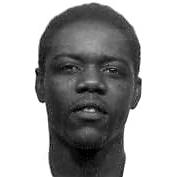
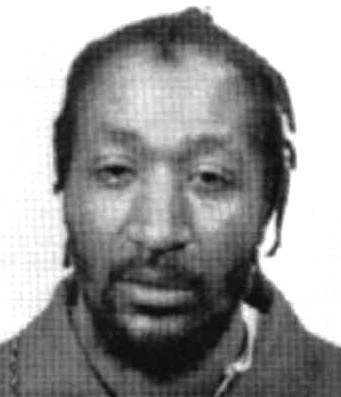
William Kendrick Burns
Murderer Ervil LeBaron
Murderer · USA · 1972
Ervil Morrell LeBaron (1925 to August 16, 1981) was the leader of a polygamous…
35 victims
Ervil LeBaron
Murderer · USA · 1972
Ervil Morrell LeBaron (1925 to August 16, 1981) was the leader of a polygamous…
35 victims
 Brian Kevin Rosenfeld
Murderer · USA · 1985
Brian Kevin Rosenfeld Brian Kevin Rosenfeld was sentenced to three concurrent l…
23 victims
Brian Kevin Rosenfeld
Murderer · USA · 1985
Brian Kevin Rosenfeld Brian Kevin Rosenfeld was sentenced to three concurrent l…
23 victims
 Marvin Gray
Murderer · USA · 1975
Marvin Gray was convicted killer who claimed responsibility for 23 slayings and…
23 victims
Marvin Gray
Murderer · USA · 1975
Marvin Gray was convicted killer who claimed responsibility for 23 slayings and…
23 victims
 Yahweh ben Yahweh
Murderer · USA · 1980
Yahweh ben Yahweh was born and legally named Hulon Mitchell Jr. (October 27, 19…
23 victims
Yahweh ben Yahweh
Murderer · USA · 1980
Yahweh ben Yahweh was born and legally named Hulon Mitchell Jr. (October 27, 19…
23 victims
 Lois Nadean Smith
Murderer · USA · 1982
Lois Nadean Smith was convicted of the July 4, 1982 murder of 21-year-old Cindy…
1 victim
Lois Nadean Smith
Murderer · USA · 1982
Lois Nadean Smith was convicted of the July 4, 1982 murder of 21-year-old Cindy…
1 victim
 Nathuram Godse
Assassin · India · 1948
Nathuram Vinayak Godse (May 19, 1910 – November 15, 1949) was born at Baramati,…
1 victim
Nathuram Godse
Assassin · India · 1948
Nathuram Vinayak Godse (May 19, 1910 – November 15, 1949) was born at Baramati,…
1 victim
 Daniel Morris Thomas
Murderer · USA · 1976
Daniel Morris Thomas was convicted and sentenced to death for the New Year's Da…
1 victim
Daniel Morris Thomas
Murderer · USA · 1976
Daniel Morris Thomas was convicted and sentenced to death for the New Year's Da…
1 victim
 Greagree Davis
Murderer · USA · 1984
Greagree C. Davis told the roommate of his sexual interest in her. He had prior…
1 victim
Greagree Davis
Murderer · USA · 1984
Greagree C. Davis told the roommate of his sexual interest in her. He had prior…
1 victim
 Richard Zeitvogel
Murderer · USA · 1981
Richard Steven Zeitvogel was executed by lethal injection in Missouri on Decemb…
2 victims
Richard Zeitvogel
Murderer · USA · 1981
Richard Steven Zeitvogel was executed by lethal injection in Missouri on Decemb…
2 victims
 Angelica Alvarez
Mass murderer · USA · 2006
Angelica Alvarez was 27 years old. She was described as an Elkhart County mothe…
4 victims
Angelica Alvarez
Mass murderer · USA · 2006
Angelica Alvarez was 27 years old. She was described as an Elkhart County mothe…
4 victims
- Gender
- male
- Country
- USA
- Location
- Bowie County, Texas, USA
- Date of birth
- J uly 4, 1958
- Age at first offence
- 22
- Characteristics
- robbery, revenge
- Victim profile
- Leon Calahan / Johnny Lynn Hamlett, 18
- Method of murder
- Shooting
- Date(s) of murder
- February 23, 1980 / March 28, 1981
- Years active
- 1980–1981
- Date of arrest
- April 1981
- Status
-
Executed
Executed by lethal injection in Texas on April 11, 2002
Case details
William Kendrick Burns was executed by lethal injection in Texas on April 11, 2002.
Timeline
- March 28, 1981 — Johnny Lynn Hamlett was shot to death in the boiler room of a wood preserving creosote plant in Texarkana, Texas; Hamlett was found dead with 14 gunshot wounds in his neck, chest and head.
- March 27, 1981 (about midnight) — William Burns, his brother Victor, and Danny Harris showed up at Texarkana Wood Preserving, a creosote plant where William Burns had been fired two months earlier and had promised revenge.
- April 11, 2002 — Burns was pronounced dead at 6:21 p.m. CDT after lethal drugs took effect during his execution.
- Dec. 6, 2001 — William Kendrick Burns was sentenced to death for the capital murder of Johnny Lynn Hamlett.
- Jan. 8, 2002 — Burns petitioned to the United States Supreme Court for certiorari review.
- April 1, 2002 — The request for certiorari review was denied.
- Dec. 6, 2002 — The 202nd Judicial District Court of Bowie County, Texas, scheduled Burns’s execution for Thursday, April 11, 2002.
- Dec. 18, 2000 — The district court issued an order denying habeas relief.
- Jan. 31, 2001 — A certificate of appealability (COA) was denied.
- April 27, 2001 — The United States Court of Appeals for the Fifth Circuit denied COA in an unpublished opinion.
- Nov. 9, 2001 — Rehearing was denied in the Fifth Circuit.
- Jan. 31, 2000 — An amended writ petition was filed.
- Jan. 29, 1999 — A federal petition for habeas corpus relief was filed.
- July 31, 1998 — A supplemental petition was filed in state habeas proceedings.
- Jan. 27, 1998 — The Court of Criminal Appeals denied habeas relief in an unpublished order.
- April 21, 1997 — A second state habeas application was filed.
- April 1985 — Burns’s state writ petition was dismissed because direct appeal was pending.
- Dec. 1984 — Burns filed his first state writ petition.
- September 1981 — Burns and his brother were tried, convicted and sentenced to death in a joint trial.
- May 11, 1981 — William Burns and his brother Victor were jointly indicted for capital murder; Danny Ray Harris was indicted separately.
- 1985 — The Texas Court of Criminal Appeals overturned Burns’s convictions based on error in the jury charge.
- July 1986 — Prior to retrial, the Burns brothers moved for severance and the request was granted.
- July 1986 — William Burns was retried, convicted and sentenced to death.
- Aug. 24, 1989 — Burns was found guilty in his third trial.
- Aug. 25, 1989 — Burns was sentenced to death for a third time.
- Oct. 4, 1993 — The United States Supreme Court denied certiorari review.
Background
William Kendrick Burns had been fired from his job as a nighttime boiler operator at an east Texas creosote plant. After being fired, Burns left the president of the company a note saying that he would get even with him or that the president would be sorry.
The offence
William Kendrick Burns, his brother Victor Burns, and Danny Ray Harris were accused of the March 28, 1981, robbery and murder of 18-year-old high school student Johnny Lynn Hamlett in Texarkana, Texas.
Hamlett was apparently working the same late shift job Burns had been fired from two months earlier, and he was found dead at the plant in the boiler room with 14 gunshot wounds in his neck, chest and head.
Authorities determined that money and a wallet were taken from Johnny Hamlett.
The record reflected that Burns carried a .22-caliber Winchester rifle and also had a .22-caliber pistol tucked into his pants during the shooting. Burns looked through a crack in the tin wall of the “treating room,” saw Hamlett working inside, and fired through the crack; he later heard the rifle start popping off, and estimated that ten or eleven shots were fired from the rifle. Burns and Harris then went inside, and the wallet was taken and split. Burns kept the wallet after it was emptied of the money.
Investigation
Acting on a tip, police questioned Burns and determined that a discarded coffee can on an uninhabited dirt road contained Hamlett’s driver’s license, social security card, and school identification card, and also contained a highway patrol ticket issued to Burns.
When Burns was arrested, he was in possession of a wallet later identified as belonging to Hamlett. The wallet contained a newspaper clipping concerning the police investigation of Hamlett’s murder.
After his arrest, Burns directed officers to personal papers of Hamlett and directed officers to the rifle used in the shooting. The rifle was found in the attic of an open carport at Burns’s mother’s residence.
Ballistics testing confirmed that the rifle fired at least seven of the 11 bullets recovered from Hamlett’s body. Eight .22-caliber spent shell casings were recovered from the murder scene and were fired from the rifle. A .22-caliber bullet was found in the pocket of Burns’s jacket when he was arrested. Two other bullets recovered from Hamlett’s body were identified as having not been fired from the rifle. Burns told police a .22-caliber pistol could be found under his mattress, but despite police searching the residence, the second weapon was never recovered.
Arrest
William Burns and his brother Victor were arrested after investigation tied them to the offense involving Johnny Lynn Hamlett.
Trial
Charges and joint trial
On May 11, 1981, William Burns and Victor were jointly indicted for capital murder, while Danny Ray Harris was indicted separately.
In September 1981, both brothers were tried, convicted, and sentenced to death in a joint trial.
Reversal and retrial
The Texas Court of Criminal Appeals overturned the convictions in 1985 due to error in the jury charge.
Before retrial, the Burns brothers moved for severance, and the trial court granted the request in July 1986. In July 1986, William Burns was retried, convicted, and sentenced to death, but the conviction was later reversed based on improperly excluded mitigating evidence. In the second retrial, the jury charge instructed that the jury could find Burns guilty of capital murder either as a principal or as a party.
Third trial and conviction
In the third and final trial, Burns was found guilty on Aug. 24, 1989, and was sentenced to death on Aug. 25, 1989.
The Court of Criminal Appeals affirmed Burns’s conviction and sentence in an unpublished opinion.
Evidence presented and jury issues
The evidence at the guilt/innocence stage consisted primarily of statements made by Burns, statements made by the parties, physical evidence those statements led to, and testimony of co-indictee Danny Ray Harris. The State also called witnesses whose testimony described the deceased’s character and an expert doctor to testify as to cause of death. The verdict depended in part on jury instructions about whether Harris was an accomplice and whether Burns’s statements were voluntary.
The jury answered the special issues under Art. 37.071(b), V.A.C.C.P affirmatively, whereupon the court assessed the mandatory penalty of death. Appellants raised sixteen grounds of error, and the appeals court addressed only the ground related to the jury charge.
In the guilt stage charge, the trial court submitted the issue of whether Harris was an accomplice as a question of fact for the jury to decide during deliberations, and the charge included the instruction:
"Now, if you find and believe from the evidence that DANNY R. HARRIS is an accomplice, you cannot convict either of the Defendants upon his testimony alone ..."
The trial court also included a paragraph submitting the issue of voluntariness of the statements given by appellants to the police. Burns’s challenge related to the failure to instruct Harris as an accomplice as a matter of law.
Written statement read to the jury
Burns gave a written statement to police after his arrest and the statement was read to the jury:
"I am giving this statement to Detective Jim Reed who has identified himself as a police officer with the Texarkana, Texas Police Department. This statement is in reference to the shooting of Jimmy Hamlett at the Texarkana Wood Preserving Plant. . .When me and Drew [Danny Ray Harris] and Victor walked down the railroad track to the creosote plant. I was carrying the rifle. I also had the pistol, a 22[,] stuck down my pants. The others didn't know I had the pistol my shirt tail was covering it up. We approached this big tin building that they call the treating room. I peeped through this crack in the tin and I saw this guy throwing wood in the burner. I told the others to be quiet because there was someone in there. Danny told me to shoot with the rifle, he didn't know I had the pistol. He kept saying shoot, so I gave the rifle to him. Danny took the rifle and stepped around on the side were the conveyor belt goes in. There is a big opening there. I took the pistol out and shot through the crack. There were only two bullets there. I took the pistol out and I shot through the crack. There were only two bullets in the pistol and I shot them. Then I heard the rifle start popping off. Sounded like about ten or eleven shots. I heard the guy start hollering. I went around and went in the building. The guy was laying over a machine. You could see the guys [sic] billfold sticking out of his back pocket on the right hand side. Danny reached and got the wallet. We went out the door on the other side between the two buildings. Vic was standing outside by the wood piles. Vic said that the guy probably got paid today. Danny opened up the wallet. It looked like there might be eighty or ninety dollars in the wallet. Vic pulled the money out and started to throw the billfold away and I said that I didn't have a billfold and that I wanted that one. I kept the billfold. I took all the stuff out of the billfold and put it in a coffee can and carried it down around Domino and put it out beside the road. This was on the next day that I did it."
Punishment phase evidence
No evidence of prior criminal convictions was presented to the jury at the punishment phase. However, the jury heard testimony that Burns and Victor were responsible for the shooting death of Leon Calahan at a nightclub on Feb. 23, 1980, and for the kidnapping of Bryan Keith Sanders that same night, during which both Burns brothers threatened to kill Sanders.
Sanders testified at Burns’s retrial that William Burns drove from the nightclub and headed toward a lake, but stopped about two miles away in order to kill Sanders by the side of the road. A fight ensued outside the car and it was interrupted when a Department of Public Safety vehicle arrived. A Department of Public Safety trooper and two Texarkana police officers testified for the State regarding the Calahan murder, retrieval of a .22-caliber revolver from the scene, and the arrest of William and Victor Burns.
At the punishment stage, no psychological or psychiatric testimony was presented relating to Burns’s potential for future dangerousness.
In addition, immediately before the punishment charge was read, the trial court heard bills of exception outside the jury’s presence, including:
"Q Were you and your husband together all the time that you were married? A We separated for a few years, but we still communicated with each other. Q Your Honor, had we been permitted to have that question answered, I would have followed it up with questions to develop it further. Can I do that at this time? THE COURT: No, that's not a part of that. I sustained the objection to one single question as being immaterial and irrelevant to any issue before the Court. You can make your bill on those questions, only. Q The other question is as follows, Mrs. Burns. What types of jobs did [appellant] have after he finished school? A He worked at St. Michael's Hospital, he worked over to the wood preserving plant, and he worked at Central Christian Church. Q Is that all? Is that all? A That's all I can think of."
The appeals court later reversed and remanded based on the trial court’s failure to admit the answers from Mrs. Burns.
Sentencing
Burns was sentenced to death multiple times before his final execution.
- In September 1981, he was convicted and sentenced to death in a joint trial.
- In July 1986, he was retried and again convicted and sentenced to death, but the conviction and sentence were later reversed due to improperly excluded mitigating evidence.
- In August 1989, Burns was convicted and sentenced to death again for a third and final time.
By Dec. 6, 2001, Burns was again sentenced to death for the capital murder of Johnny Lynn Hamlett.
Appeals
Direct appeal (1985)
On appeal in Burns v. State, 703 S.W.2d 649 (Tex.Cr.App. 1985), the Court of Criminal Appeals found merit in Burns’s challenge to the jury charge. The court reversed the judgment of the trial court and remanded for new trial. The reasoning included that the jury instruction allowed conviction based on Harris’s testimony alone if the jury found statements involuntary, and thus could have improperly convicted appellants.
Direct appeal (1988)
In Burns v. State, 761 S.W.2d 353 (Tex.Cr.App. 1988), the Court of Criminal Appeals reversed and remanded for new trial due to the trial court’s failure to admit mitigating evidence, concluding that the trial court abused its discretion.
Supreme Court and later habeas proceedings
The United States Supreme Court denied certiorari review on Oct. 4, 1993.
Burns filed his first state writ petition in Dec. 1984, and it was dismissed in April 1985 because direct appeal was pending. He filed a second state habeas application on April 21, 1997, and filed a supplemental petition on July 31, 1998. After an evidentiary hearing, the Court of Criminal Appeals denied habeas relief in an unpublished order on Jan. 27, 1998.
On Jan. 29, 1999, Burns filed a federal petition for habeas corpus relief, and on Jan. 31, 2000, he filed an amended writ petition. Magistrate Judge Caroline Malone (now Craven) issued findings and conclusions later adopted by the district court with one exception in a Dec. 18, 2000 order denying habeas relief. The district court denied a certificate of appealability (COA) on Jan. 31, 2001. The Fifth Circuit denied COA in an unpublished opinion on April 27, 2001, and denied rehearing on Nov. 9, 2001.
Outcome
Burns’s execution proceeded after he made a final statement and then lethal drugs began taking effect. He gasped, coughed and gasped again before being pronounced dead.
Burns’s final statement included:
"I just want to tell my mom that I am sorry I caused her so much pain." He also expressed love for his family and said he: "hurt for the fact that they are going to be hurting. I really hate that and I'm just hoping they can be OK." He indicated he was finished with his final statement, then mentioned talking "to the victims," when the lethal drugs began taking effect.
Several family members, including his mother, were scheduled to be witnesses but declined to attend. Johnny Lynn Hamlett’s widow, Anita, and daughter initially declined to speak to reporters after the execution but later changed their minds.
Aftermath
Burns’s age was reported as 43 at the time of execution.
Burns’s brother Victor Burns was convicted and sentenced to Life without Parole and was out on bail awaiting trial for a killing and kidnapping at the time of the murder; his parole eligibility and later parole status were referenced. Charges against Danny Ray Harris were eventually dismissed.
An individual identified as assistant district attorney James Elliott described Burns and Victor Burns as having been “bad people who just owned the town and could do what they bloody well pleased,” and said:
"They felt they were bad people who just owned the town and could do what they bloody well pleased. And for a while, they did."
Elliott also said: "Sometimes you see guys undergo a genuine change in prison. Burns is like a rattlesnake in a jar after 20 years. He's the same thing. He hasn't changed."
Hamlett’s widow said:
"He's been dead longer than he was alive, at this point,"
and: "I look back and it was like a wonderful dream that ended in a monstrous nightmare."

Spotted an error, or have more information about this case?