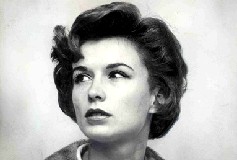
Carole Tregoff
Murderer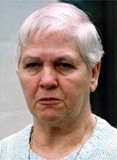 Marie Noe
Murderer · USA · 1949
Marie Noe was convicted in June 1999 of murdering eight of her children. Betwee…
8 victims
Marie Noe
Murderer · USA · 1949
Marie Noe was convicted in June 1999 of murdering eight of her children. Betwee…
8 victims
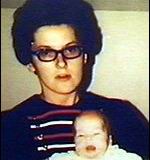 Waneta Ethel Hoyt
Murderer · USA · 1965
Waneta Ethel (Nixon) Hoyt was born in Richford, New York, and died in prison on…
5 victims
Waneta Ethel Hoyt
Murderer · USA · 1965
Waneta Ethel (Nixon) Hoyt was born in Richford, New York, and died in prison on…
5 victims
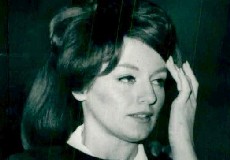 Alicia Crimmins
Murderer · USA · 1965
Name: Alicia Crimmins On her first trial in 1968 was charged only with the deat…
2 victims
Alicia Crimmins
Murderer · USA · 1965
Name: Alicia Crimmins On her first trial in 1968 was charged only with the deat…
2 victims
 Earle Dennison
Murderer · USA · 1952
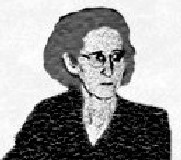
Earle Dennison was a widow and worked as a surgical nurse. She worked at the We…
2 victims
Earle Dennison
Murderer · USA · 1952
Earle Dennison was a widow and worked as a surgical nurse. She worked at the We…
2 victims
 Marie Dean Arrington
Murderer · USA · 1964
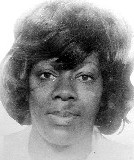
Marie Dean Arrington (born August 8, 1933) was an American criminal. She was al…
2 victims
Marie Dean Arrington
Murderer · USA · 1964
Marie Dean Arrington (born August 8, 1933) was an American criminal. She was al…
2 victims
 Alfonso Raymond Salazar
Murderer · USA · 1986
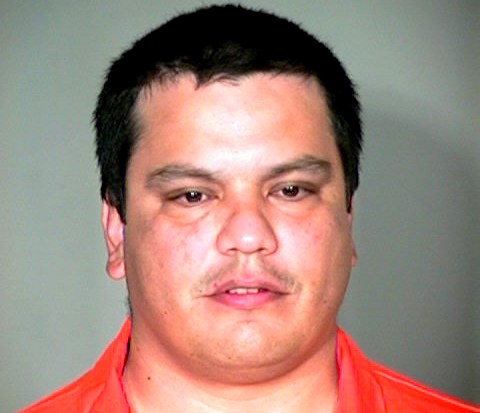
Alfonso Raymond Salazar Alfonso Raymond Salazar and Michael Davis entered the T…
1 victim
Alfonso Raymond Salazar
Murderer · USA · 1986
Alfonso Raymond Salazar Alfonso Raymond Salazar and Michael Davis entered the T…
1 victim
 Michael Wayne Nance
Murderer · USA · 1993
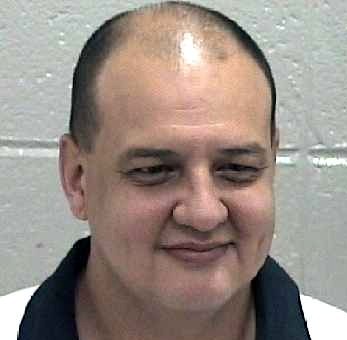
Michael Wayne Nance was convicted in Gwinnett Superior Court of malice murder,…
1 victim
Michael Wayne Nance
Murderer · USA · 1993
Michael Wayne Nance was convicted in Gwinnett Superior Court of malice murder,…
1 victim
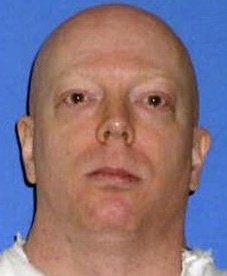 Eric Charles Nenno
Murderer · USA · 1995
Eric Charles Nenno was convicted of capital murder and rape for the rape and mu…
1 victim
Eric Charles Nenno
Murderer · USA · 1995
Eric Charles Nenno was convicted of capital murder and rape for the rape and mu…
1 victim
- Gender
- female
- Country
- USA
- Location
- West Covina, Los Angeles County, California, USA
- Date of birth
- 1937
- Age at first offence
- 22
- Characteristics
- love triangle
- Victim profile
- Barbara Jean Finch, 35 (her lover's wife)
- Method of murder
- Shooting
- Date(s) of murder
- July 18, 1959
- Years active
- 1959
- Date of arrest
- 11 days after
- Status
-
Released
Sentenced to 5 years to life in prison on March 27, 1961; Released on parole on April 29, 1969
Case details
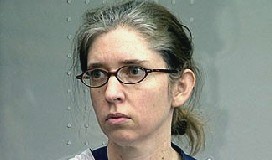
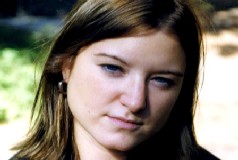
Carole Tregoff was convicted in connection with the murder of Barbara Finch. She stood trial jointly with Raymond Bernard Finch.
People involved
- Carole Tregoff — defendant (mistress / co-defendant with Raymond Bernard Finch)
- Raymond Bernard Finch — defendant and Dr. Finch; wealthy Los Angeles physician
- Barbara Finch — victim; Finch’s wife; mother of two children
- Marie Anne Lindholm — Finch maid; witness
- John Patrick Cody — self-confessed gigolo; prosecution witness
- Joseph Forno — divorce attorney for Barbara Finch (referenced as counsel)
- Don Williams — witness referenced as a childhood friend of Carole
- Richard A. Keachie — individual traced in Las Vegas; recommended John Patrick Cody (referenced)
- Mark Stevens — movie star witness; testified about advice given to Barbara Finch
- Jimmy Pappa — Carole’s husband (referenced in background)
Background
By 1959, Raymond Bernard Finch sought to elevate his affair with Carole Tregoff to something more permanent. Finch’s wife, Barbara, was supported by California community property laws. Finch’s estimated $750,000 fortune would be divided if Barbara could prove adultery, and the court could apportion community property it deemed fit to the aggrieved party.
Finch and Tregoff schemed to attempt to obtain evidence against Barbara Finch. In Las Vegas, Nevada—where Tregoff had gone to work—they attempted to hire someone to seduce Barbara Finch so evidence could be used in a countersuit of adultery.
They came into contact with self-confessed gigolo John Patrick Cody. After accepting a down payment of $350 and an airline ticket, Cody departed ostensibly to kill Barbara Finch in Los Angeles. The narrative described that Cody instead spent the weekend with girlfriends. A few days later Cody told Tregoff the matter had been taken care of. Tregoff paid an agreed balance of $850; Barbara Finch was later learned to still be alive. Cody then explained he killed the wrong woman and, for additional money, promised to rectify the error. Cody disappeared, leaving Finch and Tregoff desperate.
In the background of Carole’s relationship, Carole was introduced to Finch three weeks after she was hired as a receptionist at the West Covina Medical Center in Los Angeles. The narrative described Carole as eighteen at the time of her employment agency interview for the Center; it described her as tall, red-headed, and extremely pretty. After seven months as a receptionist, Carole became secretary to Dr. Finch. Carole later became involved in an account that Finch suggested lunch alone and later dinner, leading to an anniversary letter dated February 26, where Finch wrote to Carole while both served life sentences.
The narrative described that Carole was married to Jimmy Pappa, whom she had first dated during high school, and that her marriage was not working. It also described that Finch had a surgical practice and that the Finches lived with a small son and Barbara Finch’s young daughter by a previous marriage.
The narrative described that in late events leading to the murder:
- On September 9, 1958, Barbara Finch called Jimmy Pappa and accused Carole.
- Carole moved out the next day.
- In January 1959, Barbara Finch began talking to divorce attorney Joseph Forno about a divorce and employed private detectives to follow Finch and Carole.
- On May 16, 1959, Barbara Finch told the lawyer the doctor had stuck her with a pistol, opening a wound over her eye that required stitches.
- Divorce papers were filed against Finch on May 20.
- On May 21, Barbara Finch sought a restraining order forbidding Finch from molesting her and from withdrawing or disposing of funds or property; she included a statement that on May 15 Finch had done bodily harm and threatened her life.
- Finch agreed to a hearing on June 11 and on that day the restraining order was signed into the record.
- The narrative stated that on July 18, at about 11:30 O.M., Barbara Finch was shot dead.
The offence
At 10:00 p.m. on July 18, 1959, Raymond Bernard Finch and Carole Tregoff arrived at Finch’s opulent house on Lark Hill Drive in suburban West Covina. Barbara Finch was not at home at that time. Just over an hour later, Barbara Finch drove up in her red Chrysler. Finch went across to talk to her. A struggle broke out, and at some point Barbara Finch was shot dead by a .38-caliber bullet.
The narrative described that for reasons not fully explained, Finch and Tregoff became separated. Finch, after stealing two cars, made his way back to Las Vegas where he was joined early the next morning by Tregoff. The narrative then described Finch’s arrest and charge with murder and Tregoff’s similar charge 11 days later.
The narrative also described events around the shooting as follows:
- The trial account described that the maid Marie Anne Lindholm ran to the garage after hearing Barbara Finch scream and seeing Dr. Finch with a gun standing over his semiconscious wife.
- It described Lindholm being stunned after Finch banged her head against the garage wall.
- It described Barbara Finch breaking free and running.
- It described Finch pursuing and a shot, after which Lindholm ran to the house and called the police.
The narrative described that when police arrived, they found Barbara Finch dead and that neither Finch nor Tregoff was anywhere to be seen, although Tregoff stated she was hiding in shrubbery during police activities.
The narrative described that Finch later described the gun going off during a struggle and that Barbara Finch’s last words were:
- “What happened, Barb? Where are you hurt?”
- “Shot … in … chest,” she gasped.
- “Don’t move a thing. I’ve got to get an ambulance for you and get you to [the] hospital.”
- “Wait. I'm sorry, I should have listened.”
- “Barb, don’t talk about it now. I've got to get you to [the] hospital.”
- “Don’t leave me. Take care of the kids.”
Investigation
The narrative described the prosecution’s “murder kit” claim and evidence connected to the case. It described a brown leather attaché case found on the lawn containing two pairs of rubber gloves, some rope, a butcher knife, sedatives, a hypodermic, some .38-caliber ammunition, and a flashlight; it was later dubbed “the do-it-yourself murder kit.”
The narrative described that forensic discussion included that a finger of a rubber surgical glove was found in the car Barbara Finch drove into her garage on the night of her death. It also described that little packages of powder used by surgeons to make gloves slip easily onto the fingers had been torn open and the powder apparently used.
The narrative also described that Barbara Finch’s purse, and a gun, were described as not found.
Arrest
The narrative described:
- Finch was arrested in Las Vegas and charged with murder on the day after the shooting.
- Tregoff was charged with murder 11 days later.
Trial
Charges and defence / prosecution
Carole Tregoff was tried jointly with Raymond Bernard Finch.
- Crime Charged: Murder
- Chief Defense Lawyers: Don Bruggold, Grant Cooper, Rexford Egan, and Robert A. Neeb, Jr.
- Chief Prosecutors:
- First trial: Clifford C. Crail, William H. McKesson, and Fred N. Whichello
- Second trial: Clifford C. Crail
- Third trial: Clifford C. Crail
- Judges:
- First trial: Walter R. Evans
- Second trial: LeRoy Dawson
- Third trial: David Coleman
Trial dates and verdicts
- First trial: January 4-March 12, 1960 — Verdict: Mistrial
- Second trial: June 27-November 7, 1960 — Verdict: Mistrial
- Third trial: January 3-March 27, 1961 — Verdict: Guilty — Finch, first degree; Tregoff, second degree
Events during testimony
Marie Anne Lindholm’s testimony and letter
Prosecutor Fred Whichello called Marie Anne Lindholm as the Finch maid and described her testimony:
- she ran to the garage after hearing Barbara Finch scream and seeing Dr.
- it was described that Finch banged Lindholm’s head against the garage wall
The narrative stated that Lindholm’s allegations included Finch regularly abusing and threatening Barbara Finch. Over defence objections, a letter Lindholm wrote to her mother in Sweden before the murder was admitted into evidence. The narrative stated the letter described a beating Finch had given Barbara Finch and his threats that he had hired “someone in Las Vegas” to kill her.
Questioning of John Patrick Cody
When Cody took the stand, the narrative included cross-examination exchanges attributed to defence lawyers:
- Grant Cooper:
- Question: What did you do?
- Answer: I loafed.
- Question: How did you support yourself?
- Answer: By my wit.
- Question: (Later in reference to one of Cody’s girlfriends): Did she support you?
- Answer: Yes.
- Rexford Egan:
- Question: Would you lie for money?
- Answer: (After a long, thoughtful pause) It looks like I have.
The narrative included Cody’s account of a “homily” given to Finch:
- Cody also told the court of a homily that he had delivered to Finch to dissuade him from murder: “Killing your wife for money alone isn't worth it. Let her have every penny. Take Carole up on a mountaintop and live off the wild. If the girl loves you, she's going to stick with you.”
The narrative included a statement said to be snapped by Carole Tregoff to Cody:
- “Jack, you can back out. But if you don't kill her, the doctor will; and if he doesn't, I will.”
Finch’s testimony and last words narrative
The narrative described Finch’s testimony as including:
- Barbara Finch pulled a gun on him
- he clubbed her with it, inflicting two skull fractures
- Finch claimed Barbara Finch later snatched up the gun and took dead aim at Tregoff
- Finch claimed the gun went off and drilled a fatal hole in Barbara Finch’s back
The narrative included direct statements by Finch to the court:
- “What happened, Barb? Where are you hurt?”
- “Shot … in … chest,” she gasped.
- “Don't move a thing.
- “Wait.
- “Barb, don't talk about it now.
- “Don't leave me. Take care of the kids.”
- “She was dead.”
The narrative described that Finch later claimed under cross-examination that seven days of testimony did little to undermine him and that his story was described as implausible but he “stuck to it”.
The narrative included a response attributed to Finch when prosecutor Whichello asked about affairs with other women:
- “Did you tell these women that you loved them?”
- “I think under the circumstances that would be routine.”
The narrative also described the cross-examination of Finch in which Whichello asked:
- “When you were sharing an apartment with Carole, did you ever give any thought to adultery and the fact that it might be wrong and that you should exercise self-control until both of you were divorced and free to marry?”
- “No, sir,” Dr. Finch answered.
The narrative included Finch’s opinion about a wife giving permission to adultery:
- “Is it your opinion, Doctor, that a wife is free to give her husband permission to commit adultery, and that makes it all right?”
- “Yes, sir,” the doctor replied promptly.
The narrative included Finch’s estimates and answers about his wealth and community property awareness, including:
- “You realized this was community property?”
- “I never thought about it.”
Tregoff’s testimony and cross-examination
The narrative described that Carole Tregoff took the stand for an eight-question examination by her attorney and denied complicity in harming Mrs. Finch.
Assistant District Attorney Crail’s cross-examination included questions about the scene in the Finch garage and the timing of seeing a gun:
- “What is the next thing that happened?”
- “The next thing that happened, she had a gun.”
- “How long after she said – whatever it was she said – before you saw the gun?”
- “Just the time it took her to turn around, take the gun out of the car, and turn around again,” she said.
The narrative also included questions about the attaché case and cartridges and Carole’s responses about when she recalled the bag’s contents:
- “Since I have remembered it, no,” Carole said.
- “However, there was a time when it wasn't important. I just never thought about the bag. It didn't seem to have any significance.”
The narrative described her explanation for hiding as “her habit” to run and hide when things became unpleasant and that she had always done so since childhood.
Preliminary hearing and “Exhibit 60”
The narrative described defence counsel’s argument that Tregoff had been compelled to testify at the preliminary hearing for the state in a serious criminal case in which she was deeply involved. It stated that Exhibit 60 was not admitted after Judge Evans agreed with Neeb, and that Exhibit 60 never became part of the state’s case.
Jury deliberations and mistrials
The narrative described that first and second trials ended in deadlock and mistrials:
- In the first trial, a jury deadlocked after announcement that they were unable to agree on a verdict; racial tension was described as having led to ugly scenes in the jury room.
- In the second trial, a deadlock also occurred despite an admonition by Judge LeRoy Dawson. The narrative described the second trial ended in deadlock November 7, 1960.
The narrative described the first trial’s deliberation and racial composition:
- it stated a jury member was black and another Hispanic, and that pressure exerted by white jurors led to ugly scenes.
- it later described the mistrial jury’s voting as “Ten wanted Dr. Finch convicted of murder; two insisted on acquittal. Four voted guilty for Carole in both the murder and the conspiracy; eight voted not guilty.”
The narrative described the jury’s disagreement on conspiracy and that dissenting jurors did not find either Carole or the surgeon guilty of conspiracy because Cody was not a co-defendant.
Sentencing
On March 27, 1961, the jury convicted:
- Raymond Bernard Finch of first-degree murder
- Carole Tregoff of second-degree murder
Both received life imprisonment.
In 1969, the narrative described Tregoff was paroled.
Appeals
No appeal-specific outcome was provided in the supplied material. A bond stipulation appears within the narrative, and parole is described as occurring.
Outcome
The third trial resulted in conviction for both defendants:
- Finch: guilty of first-degree murder
- Tregoff: guilty of second-degree murder
The narrative then described:
- Tregoff was paroled in 1969.
- Finch was released two years later and practiced medicine in Missouri for a decade before returning to West Covina in 1984.
Aftermath and other details
Name change and employment
The narrative described that after parole, Tregoff changed her name and found work at a hospital in the Pasadena area.
Bond stipulation
The narrative included an attorney’s stipulation:
- It stated that on “the fifteenth of September, 1959,” Carole Tregoff was released on bond after a request bond was granted.
- It stated she remained out of jail until “October seventh” when she voluntarily surrendered herself.
Additional dated background letter
The narrative described a letter:
- On February 26, 1961, Carole Tregoff received a letter from Dr. Bernard Finch in which he told her of undying love and of his thoughts about their future together, and that it was an anniversary letter celebrating the first time they lunched téte-a-téte four years before.
Spotted an error, or have more information about this case?