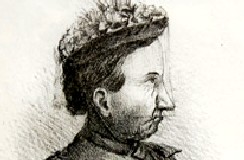
Williamina Dean
Murderer Gay Oakes
Murderer · New Zealand · 1993
Gay Oakes — convicted of the murder of her partner Doug Gardner. · Doug Gardner…
1 victim
Gay Oakes
Murderer · New Zealand · 1993
Gay Oakes — convicted of the murder of her partner Doug Gardner. · Doug Gardner…
1 victim
 Gwenda Sloane
Murderer · New Zealand · 2012
Gwenda Leigh Sloane, also known as Pluss, was a Rotorua process worker aged 44…
1 victim
Gwenda Sloane
Murderer · New Zealand · 2012
Gwenda Leigh Sloane, also known as Pluss, was a Rotorua process worker aged 44…
1 victim
 Sarah Makin
Murderer · Australia · 1892
Sarah Makin was also known as Sarah Jane Makin. John Makin (14 February 1845 –…
12 victims
Sarah Makin
Murderer · Australia · 1892
Sarah Makin was also known as Sarah Jane Makin. John Makin (14 February 1845 –…
12 victims
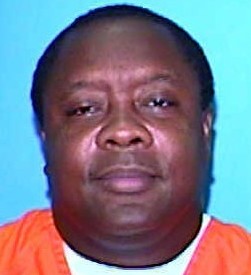 Alfred Lewis Fennie
Murderer · USA · 1991
Alfred Lewis Fennie was also known by the alias “Ezell Foster.” Fennie was indi…
1 victim
Alfred Lewis Fennie
Murderer · USA · 1991
Alfred Lewis Fennie was also known by the alias “Ezell Foster.” Fennie was indi…
1 victim
 Judy Buenoano
Serial killer · USA · 1971
Judy Buenoano was executed by electrocution in Florida on March 30, 1998. Judy…
3 victims
Judy Buenoano
Serial killer · USA · 1971
Judy Buenoano was executed by electrocution in Florida on March 30, 1998. Judy…
3 victims
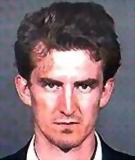 Kenneth Kimes
Murderer · USA · 1996
Kenneth Kimes was convicted and sentenced in relation to the murders of Irene S…
3 victims
Kenneth Kimes
Murderer · USA · 1996
Kenneth Kimes was convicted and sentenced in relation to the murders of Irene S…
3 victims
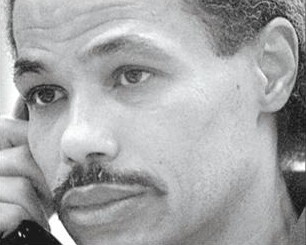 Willie Lloyd Turner
Murderer · USA · 1970
Willie Lloyd Turner was executed by lethal injection in Virginia on May 25, 199…
2 victims
Willie Lloyd Turner
Murderer · USA · 1970
Willie Lloyd Turner was executed by lethal injection in Virginia on May 25, 199…
2 victims
 Raymond Riles
Murderer · USA · 1974
Raymond Riles was an inmate from Houston who had been on death row for more tha…
1 victim
Raymond Riles
Murderer · USA · 1974
Raymond Riles was an inmate from Houston who had been on death row for more tha…
1 victim
- Gender
- female
- Country
- New Zealand
- Location
- East Winton, Southland Province, New Zealand
- Date of birth
- September 2, 1844
- Age at first offence
- 45
- Characteristics
- poisoner
- Victim profile
- Dorothy Edith Carter, one-year-old / Eva Hornsby, one-month-old
- Method of murder
- Suffocation - Poisoning (laudanum overdose)
- Date(s) of murder
- 1889 - 1895
- Years active
- 1889–1895
- Date of arrest
- May 2, 1995
- Status
-
Executed
Executed by hanging at Invercargill Prison on August 12, 1895
Name
Williamina Dean
Status and outcome
Williamina Dean was executed by hanging at Invercargill Prison on August 12, 1895.
Background
Williamina Dean was christened Williamina Dean and was born in Edinmburg, Scotland, in 1847. She was also known as Minnie Dean. She emigrated to New Zealand and lived in Southland. In 1868, she emigrated to New Zealand and lived in Southland with an old woman she called Granny Kelly. In 1872, she married Charles Dean. In 1886, the Deans moved to a 22-acre estate known as The Larches at East Winton. Winton was situated 19 miles from Invercargill on the railway that then ran from the Southland capital to Kingston. A fire destroyed their home when they first moved in, and a small twenty-two feet by twelve feet dwelling was built.
Dean set up a baby-farming business, advertising children for adoption. She took in illegitimate children brought from their mothers, and “provided no more questions were asked.” Dean used false names when advertising.
Dean had two daughters. What happened about the girls is described as unknown.
The offence
Infants died while in Dean’s care, and additional bodies were later found in the garden at The Larches.
In October 1889, Minne Irene Dean came to the attention of the authorities after a six-month-old baby died three days after being taken ill whilst in Dean's care, but the death certificate showed natural causes due to convulsions. Two years later, in May 1891, a six-week-old baby died again in Dean’s care. An inquest was held, and it found that death was from natural causes.
Dean became more secretive and began advertising using false names.
In May 1895, a railway guard reported seeing a woman board the train with a baby but disembark without it. Police began enquiries that led them to a Mrs Hornsby in Dunedin. Mrs Hornsby told police she had handed over her one-month-old grand-daughter with money to Dean at Milburn, four miles north of Milton.
The police brought Mrs Hornsby to The Larches, Dean’s residence, where she recognized Dean and also recognized a piece of baby’s clothing belonging to her grand-daughter. Police searched the flowerbeds and found two babies’ bodies buried. The bodies were identified as Eva Hornsby and Dorothy Edith Carter. Another baby’s body was later found during the continuing search.
Dean was charged with the murder of two infants. After further examination, the charges against Charles Dean were dropped.
A police theory described that Dean had taken the Carter infant on the train from Winton and changed trains to get to Lumsden, killed the child during the trip to Lumsden, and concealed the body in a hat box she was carrying.
The account of her movements described staying overnight in Lumsden and then boarding the Waimea Plains train to Gore, before boarding the Dunedin Express. At Milburn, she met Mrs Hornsby, leaving the hatbox and its contents in a waiting room. She was accompanied by Mrs Hornsby on another train to Clarendon, the next station on the way to Dunedin. She alighted with Eva Hornsby in her arms and waved goodbye to Mrs Hornsby, who continued on to Dunedin. It was stated that Eva Hornsby was smothered. Dean wrapped Eva’s body into a parcel and boarded the train back to Clinton. On the way she picked up the hatbox from Milburn. The narrative then describes her returning to Winton carrying two dead babies.
During the inquest and later examination described, the older baby Eva Hornsby was characterized as dying by “smothering” or asphyxiation, and Dorothy Edith Carter was described as dying from an overdose of laudanum. The cause of death for a third child later described was not determined.
Investigation
Police investigations began after the railway guard reported a woman boarding with a baby and disembarking without it. The enquiries led to a Mrs Hornsby who resided in Dunedin. Mrs Hornsby stated she had handed over her one-month-old grand-daughter with money to Dean at Milburn, four miles north of Milton.
At The Larches, Mrs Hornsby recognized Dean and a piece of baby's clothing belonging to her grand-daughter. The search continued and another baby’s body was found.
Dean was arrested and sent to Dunedin to await trial. Charles Dean was also arrested, and the six children in their care were taken away by police.
During later examinations, several bottles of laudanum and chlorodyne were found in Dean’s bedroom.
Arrest
Dean was arrested after Mrs Hornsby recognized her at The Larches. Charles Dean was also arrested.
Trial
The case was heard at Invercargill.
Witness evidence included:
- Oilcloth wrapped around Dorothy Edith Carter’s body was from the Dean’s home.
- The railway guard who saw Dean get on the train with the hatbox and baby and leave carrying a hatbox only.
- A friend who lived with the Deans for fourteen years identified Minnie’s handwriting as the signature “M.Gray” in the Bluff poison register.
- Clothing found in Dean’s possession was identified as that of Dorothy Edith Carter.
- Several bottles of laudanum and chlorodyne were found in Dean's bedroom.
Dean claimed she had carried flower bulbs in the hatbox, but the woman who Dean said she had got them off said she had only given her flower cuttings.
Even though Dean was identified by both grandmothers as the woman they gave their grand-daughters to, Dean denied it, but finally admitting it under duress and with the evidence of the clothes was described in the case summary.
Dean was found guilty of Dorothy Edith Carter murder and was sentenced to death. The trial opening date is described as the case being heard at the Invercargill Supreme Court beginning on June 18, 1895 in one account, and as beginning on 18 June 1895 in another account, with the verdict described as handed down on 21 June 1895.
A quoted comment from the judge in the trial narrative was included:
“It seems to me that the real honest issue is whether the accused is guilty of intentionally killing the child or is innocent altogether.” The narrative also included the defence counsel’s closing argument claim: Dean’s lawyer argued that all deaths were accidental and that they had been covered up to prevent adverse publicity of the sort that Dean had previously been subjected to. The closing address described the verdict options, with a “verdict of manslaughter” characterized as “a weak-kneed compromise.”
The account also described that Hanlon’s appeal on the grounds of the inadmissibility of evidence of other infant deaths was unsuccessful.
Sentencing
Dean was sentenced to death.
Appeals
Hanlon’s appeal on the grounds of the inadmissibility of evidence of other infant deaths was unsuccessful.
Outcome
Dean was executed by hanging at Invercargill Prison on August 12, 1895.
Dean’s final words were:
“No, I have nothing to say, except that I am innocent”.
Dean was marched to the gallows on August 12, 1895. Another account described her as hanged by the official executioner Tom Long at the intersection of Spey and Leven streets, in what is now the Noel Leeming carpark.
Aftermath
Dean was buried in Winton, alongside her husband. Her husband died in a house fire at Winton in 1908.
Her crimes led to the passage of child welfare legislation in New Zealand, including the Infant Life Protection Act 1893 and the Infant Protection Act 1896.
Dean was described as the only woman to be hanged for murder in New Zealand and as the only woman to be executed in New Zealand.
In popular culture, in 1985, Dean's trial was the subject of “In Defence of Minnie Dean,” the first episode of the Emmy-nominated Hanlon New Zealand television drama series about the career of Dean's lawyer. The episode won awards in 1986 at the Listener Television Awards (also called the GOFTA Awards), including “Best Director, Best Drama Programme, Drama Script, and Performance, Female, in a Dramatic Role categories,” and it was described as contributing to a “re-evaluation” of Dean’s conviction.
Dean was referenced in Dudley Benson’s 2006 song “It's Akaroa's Fault” with the line: “I don't want to meet Minnie Dean at the end of my life/If I were to meet her I'd keep her hatbox in sight”.
Authors Lynley Hood and John Rawle wrote posthumous accounts and reconstructions of the case as the centenary of her apprehension and execution occurred in 1995.
On Friday 30 January 2009, the Otago Daily Times reported that a headstone had appeared mysteriously on Dean's grave with the text: “Minnie Dean is part of Winton's history Where she now lies is now no mystery” It was described as unknown who placed the headstone there, while Dean’s family was described as having been considering it but claiming that it was not their doing. The Southland Times reported on 23 February 2009 that the family laid a headstone to honour Dean and her husband's grave.
Other details
Dean was also described as having been known as “The Southland Witch”.
Another account described a mother, Elizabeth Swan, died of cancer in 1857, and a father, John McCulloch, was a railway engineer. It described her being using her birth name, McCulloch. It described her marrying Charles Dean on 19 June 1872 at his home in Etal Creek, Southland.
One narrative described that a legal agreement was signed for most of the babies she took in, and some were taken for 5s. to 8s. a week, while others were adopted for lump sums between £10 and £30. It described that she claimed to have cared for twenty eight children, with five healthy well-cared-for children living at The Larches at the time of her arrest, six known to have died, and one reclaimed by its family. It described that the fate of the others was unknown and that Dean claimed seven children were adopted by families who wished to keep adoptions secret. It also described that the police and the public believed the missing children were murdered.
A narrative described other women previously tried and sentenced to death, with sentences commuted to life imprisonment in those cases: Caroline Whitting (1872), Phoebe Veitch (1883: d.1891), and Sarah-Jane and Anna Flannagan (1891). It also mentioned Daniel Cooper and described that he was convicted of baby farming and also executed in 1926, with his second wife Martha acquitted.
Spotted an error, or have more information about this case?