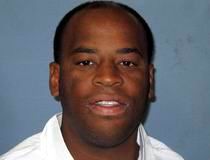
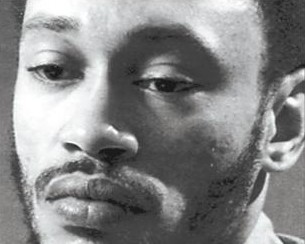
Derrick Mason
Murderer Brian Kevin Rosenfeld
Murderer · USA · 1985
Brian Kevin Rosenfeld Brian Kevin Rosenfeld was sentenced to three concurrent l…
23 victims
Brian Kevin Rosenfeld
Murderer · USA · 1985
Brian Kevin Rosenfeld Brian Kevin Rosenfeld was sentenced to three concurrent l…
23 victims
 Russell Ellwood
Murderer · USA · 1991
Russell Ellwood was a former taxi driver. Authorities suspected him of killing…
20 victims
Russell Ellwood
Murderer · USA · 1991
Russell Ellwood was a former taxi driver. Authorities suspected him of killing…
20 victims
 Robert Martines Perez
Murderer · USA · 1994
Name: Robert Martines Perez · Other name used in proceedings: Robert Martinez P…
15 victims
Robert Martines Perez
Murderer · USA · 1994
Name: Robert Martines Perez · Other name used in proceedings: Robert Martinez P…
15 victims
 Billy Frank Vickers
Murderer · USA · 1993
Billy Frank Vickers Vickers was executed by lethal injection in Texas on Januar…
14 victims
Billy Frank Vickers
Murderer · USA · 1993
Billy Frank Vickers Vickers was executed by lethal injection in Texas on Januar…
14 victims
 Demarco McCullum
Murderer · USA · 1994
Demarco Markeith McCullum was executed by lethal injection in Texas on November…
1 victim
Demarco McCullum
Murderer · USA · 1994
Demarco Markeith McCullum was executed by lethal injection in Texas on November…
1 victim
 Gary Etheridge
Murderer · USA · 1990
Gary Wayne Etheridge was convicted of capital murder and sentenced to death for…
1 victim
Gary Etheridge
Murderer · USA · 1990
Gary Wayne Etheridge was convicted of capital murder and sentenced to death for…
1 victim
 Philip Markoff
Murderer · USA · 2009
Philip Haynes Markoff (February 12, 1986 – August 15, 2010) was an American med…
1 victim
Philip Markoff
Murderer · USA · 2009
Philip Haynes Markoff (February 12, 1986 – August 15, 2010) was an American med…
1 victim
 James Walter Moreland
Murderer · USA · 1982
James Walter Moreland was executed by lethal injection in Texas on January 27,…
2 victims
James Walter Moreland
Murderer · USA · 1982
James Walter Moreland was executed by lethal injection in Texas on January 27,…
2 victims
 Elisa Baker
Murderer · USA · 2010
Elisa Baker pleaded guilty to second-degree murder in connection with the death…
1 victim
Elisa Baker
Murderer · USA · 2010
Elisa Baker pleaded guilty to second-degree murder in connection with the death…
1 victim
- Gender
- male
- Country
- USA
- Location
- Madison County, Alabama, USA
- Date of birth
- August 9, 1974
- Age at first offence
- 20
- Characteristics
- robbery, rape?
- Victim profile
- Angela Cagle, 25 (convenience store clerk)
- Method of murder
- Shooting (.380-caliber pistol)
- Date(s) of murder
- March 24, 1994
- Years active
- 1994
- Date of arrest
- 5 days after
- Status
-
Executed
Executed by lethal injection in Alabama on September 22, 2011
Parties and identification
Derrick O'Neal Mason was an inmate identified as Derrick O'neal Mason (gender: M, race: B, date of birth: 8/9/1974). He was sentenced to die by lethal injection. He was received by Prison Holman on 8/25/1995. DOC# Z582 was listed.
Angela Cagle was identified as the victim. She was 25 years old.
Status
Derrick O'Neal Mason was executed by lethal injection in Alabama on September 22, 2011. He was pronounced dead at 6:49 p.m. local time. Several people visited him before the execution, and five of Mason's family members were expected to witness the execution, while four of the victim's relatives were set to be witnesses. Their names were not released.
Timeline
- March 24, 1994 — Mason shot Angela Cagle in the face twice with a handgun during an early morning robbery at a convenience store in Huntsville; her body was found in the back room of the store storeroom.
- March 27, 1994 — Angela Cagle was found slain in the back room of the convenience store.
- March 29, 1994 — The unidentified informant led police to Mason's car; Mason was arrested on an outstanding warrant for misdemeanor assault; police conducted an inventory search and found a gun later determined to be the murder weapon.
- March 30, 1994 — Mason was advised of his rights at 016 hours on 3/30/94 and confessed to James (Bud) Parker.
- 1994 — Mason was accused of shooting Angela Cagle at close range after ordering her to take her clothes off.
- 1998 — Mason was convicted of murder committed during the course of a robbery in the first degree or an attempt thereof and was sentenced to death by the Madison County jury and trial court.
- 2000 — Ex parte Mason, 768 So.2d 1008 (Ala. 2000), was decided on direct appeal.
- 2010 — Mason v. Allen, 605 F.3d 1114 (11th Cir. 2010), was decided in federal habeas review.
- September 21, 2011 — Alabama governor Robert Bentley declined to commute Mason's sentence to life in prison without the chance of parole.
- September 22, 2011 — Mason was executed by lethal injection; he refused to eat breakfast and stated he was fasting.
Background
Angela Cagle worked as a clerk in a Huntsville convenience store. Mason entered the store in the early morning and directed Cagle to a backroom at gunpoint.
The offence
Mason ordered Angela Cagle to take her clothes off. Mason shot Cagle in the face twice with a handgun. Cagle was found partially nude in the storeroom.
Mason described his conduct to police and later in his confession. In his statement recounted in court, Mason stated he went into the store to rob it, forced Cagle to go to the back, and instructed her to unplug the camera. Mason said he threatened to shoot her if she did not unplug the camera and that he had put a bullet in the chamber earlier. He stated that she took the key over to the other door and left it in the key hole, that he grabbed her by the shoulder and that her jacket and shirt ripped, and that he heard the buttons fly off. Mason stated, “If you don't unplug the camera, I will make you take all your clothes off,” and he stated she took all her clothes off.
In his confession, Mason stated he was “high” and said it was “Marijuana.” Mason stated that the “gun went off” and that he shot her, that he then observed her leg move, and that he shot her a second time so she would not be able to identify him.
Mason also stated he went to the Executive Lodge and parked for about 10 minutes to cope after the shooting. He stated he took nothing from the store and that he left through the north door.
Mason stated he did not rape the victim: “I asked him if he raped the victim, and he said, ‘No.’”
During trial sentencing proceedings, retired Madison County Circuit Court Judge Loyd Little stated Mason made Cagle remove her clothes and shot her at close range “while she sat naked and completely vulnerable” to Mason.
Victim and discovery of the body
Angela Cagle was found lying in the back storeroom area across a desk. The victim was partially nude. Lechman observed the partially nude body lying in the storeroom, and Lechman telephoned for help.
Paul Hatfield, a patrol officer with the Huntsville Police Department, was one of the first officers to arrive. Hatfield found the partially nude body lying across a desk and reported that she was wearing only her socks and had suffered a gunshot wound to the right side of her face.
Evidence at the scene included:
- A bullet recovered from the west wall in the area above Cagle's hips.
- A second bullet found on some shelves located directly north of the victim's head.
- A shell casing in book-shelves and another casing on the floor near the victim's body.
- A second bullet wound found on the victim's left cheek when the coroner removed the body.
- Black buttons found near the body and another button stuck to the victim's chest.
- A negroid pubic hair, consistent with a known pubic hair from the appellant, found in the combings from Cagle's pubic hair.
- Cloth fibers that did not match Cagle's clothing found on her left inner thigh and calf.
Susan Marcum testified she was the manager of the Majik Mart and had spoken with Angela Cagle several times by telephone that night, last around 2:00 a.m. Marcum testified that the last sale occurred at 2:58 a.m., that no money was missing from the store, and that no gasoline had been stolen. Marcum testified that the only way to make the cash register emit the tone heard at the scene was to hit an incorrect button.
Lechman observed a sign on the door reading, “This door locked. Use other door.” (R. 825.) Lechman noticed the “gas pump machine” was beeping and reflected $5.00, and the cash register was emitting a continuous tone; she turned off the gas pump machine and tried unsuccessfully to turn off the cash register.
Investigation
Harry Renfroe, a homicide investigator with the Huntsville Police Department, assisted in the investigation.
On March 28, 1994, Dewey Miller informed Renfroe that a black male approached Miller and asked what type of gun was involved. Miller told the individual he did not know. The individual told Miller where he could be reached. Miller conveyed this information to Renfroe, and Renfroe telephoned the individual.
Renfroe reported that the man asked what type of .380 had been used in the shooting. Renfroe asked what type of weapon the man was interested in. The man replied a “.380.” (R. 1154.) The individual declined to meet with Renfroe that day. When the man telephoned Renfroe the next day, Renfroe asked about what type of .380 had been used, and the individual indicated he was not sure. Renfroe was aware at that time that forensic tests performed on bullets recovered from the scene indicated the weapon was most likely a Davis .380. The man subsequently telephoned Renfroe and told him the weapon was a Davis .380. Renfroe agreed to meet with the individual at a local fast-food restaurant where the man gave Renfroe the appellant's name.
When Renfroe asked why the man thought the appellant was involved, the individual replied that the appellant had a .380 pistol and that the appellant was trying to make a name for himself. The individual said the appellant “was out of control.” (R. 1157.) Renfroe informed other investigators of the information he had received. Investigators obtained a physical description of the appellant, his address, and a description of his vehicle. A “be-on-the-lookout” was issued for the appellant.
At a suppression hearing, testimony indicated officers discovered an outstanding warrant for the appellant's arrest for third-degree assault; this information was not provided to the jury.
Renfroe later testified that laboratory results indicated that the weapon recovered was the murder weapon when confronted with ballistics testing results.
Arrest and vehicle search
That night, James Goings, a member of the Huntsville Police Department special response team, and another officer spotted the appellant's vehicle and stopped it after it entered the drive-through lane of a fast-food restaurant.
Goings stopped the appellant's vehicle and officers placed the appellant under arrest after ordering him out of the vehicle. The appellant cooperated with officers. The appellant was transported to the criminal investigation division (CID).
Lisa Hamilton, an evidence technician with the Huntsville Police Department, assisted by Officer Dwight Hasty, performed an inventory search of the appellant's vehicle. A Davis .380 pistol wrapped in a shirt and a clip containing five rounds of ammunition were found in the appellant's vehicle.
Hamilton transported the weapon and the clip to Brent Wheeler, a firearms expert with the Alabama Department of Forensic Sciences. Ballistics tests indicated that bullets found at the crime scene were fired through the recovered weapon.
Within a few days after the murder, police received a tip that the appellant was the killer. Police later discovered the outstanding warrant for assault in the third degree and issued a be-on-the-lookout.
Custodial statements and confession
Harry Renfroe first spoke with the appellant on the night of March 29, 1994. After being apprised of his rights, the appellant waived his rights and talked with Renfroe. The appellant admitted having a Davis .380 weapon in his truck and stated he borrowed the weapon from “Barrington.” The appellant told Renfroe that the gun had been fired twice. When Renfroe inquired about his whereabouts on the night of the murder, the appellant stated he had fallen asleep on the couch at his girlfriend's apartment while watching television.
Renfroe informed the appellant that ballistics tests indicated the gun was the murder weapon. The appellant continued to deny involvement in the murder. The appellant then asked everyone but James (Bud) Parker to leave the room and confessed to Parker that he killed Angela Cagle.
Parker testified regarding the statement:
“ I identified myself, and at 016 hours on 3/30/94 I advised him of his rights. He said he understood and would tell me what happened. “I first asked him if his name was Derrick O'Neal Mason, date of birth 8/9/74. He said, ‘Yes, sir.’ I asked him if he shot the victim. He said, ‘Yes sir.’ I asked him why he went into the store. And he said, ‘To rob it.’ I asked him why he shot the victim. He said, ‘I just did it. It just happened.’ I asked him what time he went into the store. He said, ‘It was late.’ “During the course of the interview the suspect stated he went in the door on the side near the Circle K, which would have been the south door. The victim was from behind—from behind the counter working on a shelf with the merchandise. He had the gun out and was trying to cover his face with his arm. He told her to lock the door, which she did. And she took the key over to the other door and left it in the key hole. He told her to unlock the cash register and to give him the money. She said she could not until the next transaction. He told her to go to the back and to unplug the camera. She went to the back and he went behind her. He kept telling her to unplug the camera, and she said there was no camera in the store. He then said, ‘I did not want to go back out front with the camera on.’ He said, ‘She kept saying there was no camera in the store.’ He did not believe her because he thought all stores had cameras. He told her, ‘If you don't unplug the camera, I will be forced to shoot you,’ he said. ‘I had put a bullet in the chamber earlier and was just going to shoot.’ He said, ‘I had the safety on.’ I asked him if the clip was in the gun, and he said, ‘Yes.’ I asked him if it was loaded, and he said, ‘Yes.’ He then said, ‘I thought I was going to get carjacked earlier.’ He then said, ‘I kept telling her to unplug the camera, and she kept saying they did not have a camera, and I did not believe her.’ She said, ‘Let me go get you the money,’ and I thought she was going to push some button. The victim started walking and he grabbed her by the shoulder and her jacket and shirt ripped. He heard the buttons fly off. “He then said, ‘I saw her private area.’ He said, ‘She was crying and I got real nervous.’ He then told her, ‘If you don't unplug the camera, I will make you take all your clothes off.’ He looked outside to see if any car had stopped for gas. He told her to take all her clothes off, which she did. He told her, ‘Now unplug the camera and show me how to open the cash register.’ “He then said, ‘I was high.’ I asked him what he was on. He said, ‘Marijuana.’ He then said he heard what he thought was a car. He said, ‘She was sort of standing in the floor in front of the desk and she came at me.’ He again said, ‘I was high and the gun went off and I shot her.’ He said, ‘It scared me....’ He then said, ‘I looked and saw her leg move and I did not want her to identify me.’ He said, ‘I turned my head and put the gun down there and shot her the second time.’ “I asked him how far away he was when he shot her, and he said, ‘About from me to you,’ which was three to four feet. I asked him if he aimed the gun for her face, and he said, ‘I just saw her shoulder. I thought I shot her in the chest.’ I asked him why he shot her the second time, and he said, ‘I did not want her to identify me; I just did it.’ “I then asked him where he went after the shooting. He said, ‘I went up the street to the Executive Lodge and parked for about 10 minutes and tried to think, to cope with what I had done.’ I asked him what he took out of the store, and he said, ‘Nothing.’ I asked him which door he went out as he was leaving the store. He said, ‘The other door,’ which would have been the north door. I then asked him if he raped the victim, and he said, ‘No.’ I asked him if he touched her in any way with his hands. He said, ‘Nothing sexually.’ I asked him where he went when he left the Executive Lodge Apartments, and he said, ‘I went home and then went to my girlfriend's.’ “I asked him if his girlfriend knew what happened, and he said, ‘No.’ I asked him if anyone knew, and he said, ‘I tried to tell my brother to get it off my chest, but I did not.’ I asked him who owned the gun, and he said, ‘Barrington.’ I asked him if anyone else was with him, and he said, ‘No.’ I asked him how long he stayed in the store, and he said, ‘About 10 minutes.’ “I then asked him why he did that. He said, ‘I was robbing the store to get the money to open a barber shop.’ I then asked him how he was dressed that night. He said, ‘The jeans and shoes that I have on and a purple shirt, which is at my girlfriend's house.’ I then asked him if he knew the victim. He said, ‘I have never seen her before.’ I then asked him if she was sitting up on the desk when the first shot was fired, and he said, ‘Her feet—her feet [were] on the floor,’ and he thought she was going to come at him. He said he shot and thought he hit her in the chest. He then said, ‘Fuck, if she lives, that will be a witness. I held the gun over her and pulled the trigger, turning my head.’ “I asked him what he was driving that night, and he said his mother's blue Oldsmobile and had it parked at Warren House Apartments and had walked to the store. I then asked him if he pumped some gas in his car before he shot the victim, and he then said, ‘I did get $2 in gas about 30 minutes before it happened.’ I asked him if he got it at that store, and he said, ‘Yes. I just rode around.’ I then told him to tell me the truth and asked if he pumped $5 in gas from the north pump, and he said, ‘No, I parked at the door which was locked.’ I asked him if he had anything else he wanted to tell me, and he said, ‘No, I can't think of anything else.’ “.... “... I then told him there was one other thing I needed to know, and I asked him if he tried to open the cash register. And he said, ‘Yes, I pushed some buttons and it started beeping and I went out the door.’ ” (R. 1250–56.)
Evidence concerning prior gun loan
Barrington Loyd Dames, a student at Oakwood College at the time of the murder, testified that he was an acquaintance of the appellant. Dames loaned the Davis .380 pistol to the appellant on two occasions: he first loaned it approximately a week and a half before the murder and the appellant returned it two days later; Dames again loaned it on the Thursday before Angela Cagle was murdered. Dames saw the appellant approximately two days after Cagle was murdered and the appellant told Dames he still had the gun. The appellant did not return the gun to Dames.
Forensic pathology
Dr. Joseph Embry, a forensic pathologist for the Alabama Department of Forensic Sciences, performed the autopsy on Angela Cagle. Embry testified that the victim had several bruises on her body, including bruises on her left thigh, right knee, left arm, and buttocks that appeared to be recent. Embry testified that Cagle had two bruises on her head, which appeared to have been inflicted by the same instrument.
Embry testified that Cagle suffered two gunshot wounds to her head: the right side wound passed through her brain stem and killed her instantly, and Embry testified the victim had a second bullet wound to her left cheek.
Trial
A Madison County jury convicted Derrick O'Neal Mason of capital murder committed during the course of a robbery in the first degree or an attempt thereof, a violation of § 13A–5–40(a)(2), Code of Alabama 1975.
The jury voted 10-2 to sentence him to death, and the trial court followed the jury recommendation and sentenced the appellant to death.
In the closing arguments issues discussed on appeal, the appellant contended improper vouching, facts not supported by the record, personal opinions about the evidence, misstatements of the law, and misstatements of the role of the jury and the function of a prosecutor; appellate courts addressed multiple specific arguments about the prosecutors’ remarks, including statements prefaced by “I believe” and “I think,” arguments about confidential informant admissions, fingerprint statistics, statements about evidence not admitted, and comments during rebuttal and sentencing phases.
Sentencing
The trial court found two statutory aggravating circumstances:
- The murder was committed while the appellant was engaged in the commission of a robbery in the first degree or an attempt thereof.
- The capital offense was especially heinous, atrocious, or cruel compared to other capital offenses. (§ 13A–5–49(4) and (8), Code of Alabama 1975.)
The trial court found two statutory mitigating circumstances:
- The appellant had no significant history of prior criminal activity.
- The appellant was 19 years old at the time of the crime. (§ 13A–5–51(1) and (7), Code of Alabama 1975.)
The trial court found nonstatutory mitigating factors including:
- The family background of the defendant.
- Apparent troubles he had in the public schools of this county.
- Diagnosis at an early age with attention deficit disorder.
- Cooperation with investigators following arrest.
- Numerous letters addressed to the court by friends or acquaintances of the defendant or of his family, most requesting life without parole. (C.R.256–57.)
The trial court’s findings on the especially heinous, atrocious or cruel factor included the following, stated in the record:
“The capital offense was especially heinous, atrocious or cruel compared to other capital offenses. The Court reaches this conclusion based upon the following evidence: “(a) The victim, Mrs. Cagle, was alone, defenseless and of no physical threat to the Defendant. “(b) The Defendant caused or directed the victim to disrobe in his presence, obviously inflicting great fear and humiliation in the victim prior to her death. There is no logical explanation for this behavior on the part of the Defendant except his indifference and even enjoyment of the suffering of this victim. “(c) The victim was shot twice at close range as indicated by the expert testimony. The first shot did not kill the victim but caused great pain as a result of the shattering of the bone or bones in her face. The second shot was fired into her face as she lay helpless and suffering from the first gunshot wound to the other side of her face. “(d) The Defendant planned this crime in advance, obtaining the gun used to kill the victim several days earlier and by parking his vehicle out of view and behind the store. “(e) The Defendant intended to kill the victim by shooting her the second time, realizing that she was still alive, so that there would be no witness to this crime. “(f) The most heinous, atrocious or cruel aspect of this crime was the execution-style killing of this victim. The court can conclude from the evidence presented, and from the confession of the Defendant, that he first made the victim go into the back storage room of the convenience store, which was not visible from the other parts of the store, or to anyone who might pass. He caused the victim to completely disrobe except for her socks, all of her clothing being found under or near the desk on which her body was found. He shot her at close range while she sat naked and completely vulnerable to the actions of the Defendant. Realizing that Mrs. Cagle was not dead because he saw her move, he inflicted the fatal gunshot wound at close range into the right side of her face. The Court concludes that the crime of this Defendant was extremely wicked, shockingly evil, outrageously wicked and vile and cruel, with the actions of the Defendant designed to inflict a high degree of pain and fear in the victim, with utter indifference to, or even enjoyment of, the suffering of this victim. Any murder of a defenseless victim is to some extent heinous, atrocious and cruel, but the degree of heinousness, atrociousness and cruelty, with which this offense was committed, exceeds that common to all capital offenses.” (C.R.253–54.)”
Appeals
Mason v. State, 768 So.2d 981 (Ala. Crim. App. 1998). (Direct Appeal)
- The appellant was convicted and sentenced to death; the Court of Criminal Appeals affirmed.
- The Court of Criminal Appeals addressed issues including prosecutorial closing argument, inventory search legality, refusal to disclose the identity of the informant, effective assistance of counsel, and appropriateness of the death sentence.
Ex parte Mason, 768 So.2d 1008 (Ala. 2000). (Direct Appeal)
- The Supreme Court affirmed on certiorari review.
Mason v. Allen, 605 F.3d 1114 (11th Cir. 2010). (Habeas)
- The Court of Appeals affirmed the denial of federal habeas relief.
- The holdings included that Mason was not entitled to consideration of Fourth Amendment claims, that his confession coercion claim was procedurally defaulted, and that the prosecutor’s use of statements made to police by an unidentified informant violated his Sixth Amendment right to confront witnesses, but Mason was unable to show prejudice required to reverse his conviction or to order a new sentencing hearing.
Outcome
Mason’s conviction and death sentence were affirmed. He was executed by lethal injection in Alabama on September 22, 2011.
Aftermath
In his final statement, Mason apologized to the victim's family for the “hurt and pain” he caused, and thanked the victim's father for getting in touch years ago and granting him his forgiveness. During the execution process, a prison chaplain held Mason's hand and kneeled down and said a prayer before stepping back.
Mason refused to eat breakfast before the execution, and he stated he was fasting. Several people visited him during the final hours before the execution.
Spotted an error, or have more information about this case?