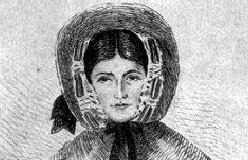
Grace Marks
Homicide Kelly Ellard
Homicide · Canada · 1997
Kelly Ellard was a juvenile in the relevant period. She was born August 9, 1982…
1 victim
Kelly Ellard
Homicide · Canada · 1997
Kelly Ellard was a juvenile in the relevant period. She was born August 9, 1982…
1 victim
 Mary Beth Harshbarger
Homicide · Canada · 2006
Mary Beth Harshbarger (born February 19, 1965) was an American woman who rose t…
1 victim
Mary Beth Harshbarger
Homicide · Canada · 2006
Mary Beth Harshbarger (born February 19, 1965) was an American woman who rose t…
1 victim
 Melissa Todorovic
Homicide · Canada · 2008
Melissa Todorovic was convicted of first-degree murder for orchestrating the st…
1 victim
Melissa Todorovic
Homicide · Canada · 2008
Melissa Todorovic was convicted of first-degree murder for orchestrating the st…
1 victim
 Rachel Capra Craig
Homicide · Canada · 2001
Rachel Capra Craig was a Canadian woman accused of the murder of her fourteen-y…
1 victim
Rachel Capra Craig
Homicide · Canada · 2001
Rachel Capra Craig was a Canadian woman accused of the murder of her fourteen-y…
1 victim
 David Michael Krueger
Homicide · Canada · 1956
David Michael Krueger was best known by his birth name, Peter Woodcock. In 1982…
4 victims
David Michael Krueger
Homicide · Canada · 1956
David Michael Krueger was best known by his birth name, Peter Woodcock. In 1982…
4 victims
 David Michael Krueger
Homicide · Canada · 1956
Peter Woodcock (birth name) was a Canadian serial killer and child rapist. · Da…
4 victims
David Michael Krueger
Homicide · Canada · 1956
Peter Woodcock (birth name) was a Canadian serial killer and child rapist. · Da…
4 victims
 Elisa Baker
Murderer · USA · 2010
Elisa Baker pleaded guilty to second-degree murder in connection with the death…
1 victim
Elisa Baker
Murderer · USA · 2010
Elisa Baker pleaded guilty to second-degree murder in connection with the death…
1 victim
 Bennie Eddie Demps
Murderer · USA · 1971
Bennie Eddie Demps was convicted of the September 7, 1976 stabbing death of Alf…
3 victims
Bennie Eddie Demps
Murderer · USA · 1971
Bennie Eddie Demps was convicted of the September 7, 1976 stabbing death of Alf…
3 victims
 Derrick Leon Jackson
Murderer · USA · 1988
Derrick Leon Jackson was executed by lethal injection in Texas on July 20, 2010…
2 victims
Derrick Leon Jackson
Murderer · USA · 1988
Derrick Leon Jackson was executed by lethal injection in Texas on July 20, 2010…
2 victims
 John Richard Baltazar
Murderer · USA · 1997
John Richard Baltazar was executed in Texas. · September 27, 1997 — John Baltaz…
1 victim
John Richard Baltazar
Murderer · USA · 1997
John Richard Baltazar was executed in Texas. · September 27, 1997 — John Baltaz…
1 victim
 Jose Alfredo Rivera
Murderer · USA · 1993
Jose Alfredo Rivera was sentenced to death on June 2, 1994. His direct appeal r…
1 victim
Jose Alfredo Rivera
Murderer · USA · 1993
Jose Alfredo Rivera was sentenced to death on June 2, 1994. His direct appeal r…
1 victim
 Bruno Lüdke
Serial killer · Germany · 1928
Bruno Lüdke (3 April 1908 – 26 April 1944) was an alleged German serial killer.…
84 victims
Bruno Lüdke
Serial killer · Germany · 1928
Bruno Lüdke (3 April 1908 – 26 April 1944) was an alleged German serial killer.…
84 victims
- Gender
- female
- Country
- Canada
- Location
- Toronto, Ontario, Canada
- Date of birth
- c. 1828
- Age at first offence
- 15
- Characteristics
- juvenile (16), dismemberment, history of mental illness
- Victim profile
- Her employer Thomas Kinnear and his housekeeper, Nancy Montgomery
- Method of murder
- Strangulation with a scarf / Shooting
- Date(s) of murder
- July 28, 1843
- Years active
- 1843
- Date of arrest
- —
- Status
-
Released
Sentenced to death on November 4, 1843; commuted to life in prison; pardoned and released in 1873
Case record: Grace Marks
Background
Grace Marks (c. 1828 – after c. 1873) was a Canadian maid who was convicted in 1843 of murder in the death of her employer Thomas Kinnear and his housekeeper, Nancy Montgomery.
Marks was born and raised in Northern Ireland. She had 8 siblings, with another 3 who were stillborn. Her father was a stone mason who was an alcoholic and abusive person. The family immigrated to Canada in 1840 when she was 12. Her mother died on the ship en route to Canada and was buried at sea. Marks was described by lawyer Kenneth McKenzie as having “a slight graceful figure,” with eyes “a bright blue, her hair auburn, and her face would be rather handsome were it not for the long curved chin, which gives, as it always does to most persons who have this facial defect, a cunning cruel expression.”
Grace Marks emigrated from Northern Ireland to Canada when she was about 13 with her parents, four brothers, and four sisters. James McDermott had arrived in Canada in 1837 and had served with the Glengarry Light Infantry until it was disbanded and he was discharged.
The case was tried in 1843 alongside James McDermott. Marks was later committed to an asylum and was transferred to Kingston Penitentiary while McDermott was hanged.
The offence
Grace Marks and James McDermott were connected to the deaths of Thomas Kinnear and Nancy Montgomery at Kinnear’s farm near Toronto.
While Kinnear left on July 27 on an overnight trip to pick up funds, murder was planned. McDermott decided to follow Marks’ idea to kill Montgomery first. He tried several times during the night, and “common decency stopp[ed] him each last minute.” In the morning, Marks “whispered with a sneer, ‘Aren’t you a coward,'” said McDermott, quoted by Susanna Moodie in Life in the Clearings Versus the Bush (R. Bentley Publisher, London 1853).
While Marks went out the door to milk the cows, McDermott whacked Nancy Montgomery on the back of her head with his axe. McDermott heaved her limp body into the cellar and closed the hatch. Montgomery was not dead. Creeping down the ladder into the cellar, Marks and McDermott were horrified to find her dazed but conscious. McDermott lunged onto the housekeeper, and both he and Marks strangled her with a scarf. Dismembering the body, McDermott hid Montgomery under a large tub.
After 7 p.m., McDermott lured Capt. Kinnear into the kitchen with a story of a damaged saddle. On hearing a gun blast, Marks said in her confession, “I ran into the kitchen and saw Mr. Kinnear lying dead on the floor, and McDermott standing over him; the double-barrelled gun was on the floor.” She stated McDermott then shot at her as she fled the house; her account was later proved true by the round found in the door jamb by police.
Each accused claimed the other wanted to steal the large bundle of cash Kinnear was bringing home. McDermott told McKenzie: “You know, Sir, that we got safe on board the steamer at Toronto but owing to an unfortunate delay, we were apprehended...” McDermott also said: “While I harnessed the riding horse into his new buggy, Grace collected all the valuables in the house,” to McKenzie.
Investigation
After Grace Marks’ sentence was commuted and she was later incarcerated, a number of theories were offered regarding her mental state. The theories included that she was pretending to have psychological problems to get into the asylum, that she had multiple personality disorder, or that she was possessed by the consciousness of her deceased friend Mary Whitney.
Another theory, controversial but supported by some evidence, was that Marks had died, not Whitney, and Whitney had adopted Marks’ name and identity.
What was known of Marks on the historical record came primarily from Susanna Moodie’s book Life in the Clearings Versus the Bush.
Arrest
Grace Marks was tried with James McDermott for the murder of Thomas Kinnear. The trial for Montgomery’s murder was to follow but was seen as unnecessary, as both were sentenced to death.
Grace Marks’ sentence was commuted to a prison term. She entered the Provincial Penitentiary in Kingston, Ont., on Nov. 19, 1843.
Trial
Marks was tried alongside James McDermott. They were tried for the murder of Kinnear, and the trial for Montgomery’s murder was to follow but was seen as unnecessary, as both were sentenced to death.
Found guilty at the trial on Nov. 3, 1843, McDermott was sentenced to hang on the 21st for the death of Kinnear. At her trial the next day, Marks “too was issued a decree of hanging.” She fainted briefly on hearing the sentence.
The judge recommended mercy to the jury, and short time later Marks’ sentence was commuted to a prison term. The Crown did not proceed with a trial for the murder of Nancy Montgomery for either McDermott or Marks.
A signed confession attributed to James McDermott said: “Grace Marks is wrong in stating she had no hand in the murder; she was the means from beginning to end,” in his signed confession to Mr. George Walton in The Trials of James McDermott and Grace Marks at Toronto, Upper Canada, November 3rd and 4th, 1843.
In his confession, McDermott also said: “Grace Marks could not obliterate the searing eyes of the murdered woman from her tormented mind.” (This appeared in the account recounting what Moodie had been told by a visiting lawyer.)
McDermott’s confession included the claim that he had been told by Marks that Montgomery would poison both the housekeeper and Mr. Kinnear by mixing poison with porridge. The confession included: “and the housekeeper used often to quarrel, and she told me she was determined if I would assist her, she would poison both the Housekeeper and Mr. Kinnear by mixing poison with porridge,” stated McDermott in his confession. “I told her I would not consent to anything of the kind.”
McDermott also said: “But the idea had been planted.” It also included that Montgomery told McDermott that when the Captain returned, his employment would be terminated. McDermott said he was goaded by Marks calling him a coward, and he acquiesced to her demands.
Marks’ confession stated: “I ran into the kitchen and saw Mr. Kinnear lying dead on the floor, and McDermott standing over him; the double-barrelled gun was on the floor.” She also stated that McDermott then shot at her as she fled the house.
Marks and McDermott had been described as new workers who took a liking to each other, and it was said that Marks became bitter with resentment over the other woman.
Sentencing
Grace Marks was sentenced to death on November 4, 1843. Her sentence was commuted to a prison term.
McDermott was sentenced to hang on the 21st for the death of Kinnear. Marks’ decree of hanging was also followed by commutation to a prison term after the judge recommended mercy to the jury.
Grace Marks was initially committed to an asylum but was later transferred to Kingston Penitentiary.
Appeals
The material provided did not describe an appeal.
Outcome
Grace Marks served in Kingston Penitentiary in Kingston, Ont., after entering on Nov. 19, 1843.
After almost thirty years of incarceration, Marks was pardoned and released in 1873. She moved to Northern New York.
After she was released, “all trace of her was lost.”
Aftermath
After about eight-and-one-half years into her sentence, Grace began to exhibit signs of insanity. The account stated: “Approximately eight-and-one-half years into her sentence, Grace began to exhibit signs of insanity,” and it described her moving “from peaceful to rowdy, from overly happy to mired in depression.”
She endured daily illusions imagining she sees strange figures invading her. The account included: “daily illusions imagining she sees strange figures invading her. She sleeps badly and wanders about her room for most part of the night in search often of the subject of her false illusions (Kingston Penitentiary Medical Registry 290).”
Marks was sent to the Toronto Lunatic Asylum and was treated in the Toronto facility for close to a year and a half. She was labeled a “criminal lunatic.” Returned to Kingston Penitentiary, she served nearly 20 more years before she was pardoned and released in 1873.
Moving to New York, Grace Marks, alias Mary Whitney, disappeared from recorded history.
The material included discussion of classification and treatment of criminal women. It stated that classification of criminal women, especially those deemed lunatic, was troublesome for prison authorities, and it described punishments including floggings, bread-and-water rations, solitary confinement, and possibly “the hole.”
Marks was described as one of the first women at Kingston Penitentiary and one of the few diagnosed, and she was placed among a growing number of inmates classed as lunatic. The account described other women sentenced for stealing money: Charlotte Reveille, Rose Bradley, Bridget Cain, and Bridget Maloney received three- to four-year sentences for stealing money and were sent to the Toronto Lunatic Asylum due to outrageous and disturbing behaviour. It also stated that Ann Little was found guilty of murdering her lover and was designated criminally lunatic.
The material also included mention of fictional and critical treatments. In 1996, author Margaret Atwood published a novel about Marks, Alias Grace. Reviews were described as pointing out eerie similarities between Marks and Karla Homolka.
The bibliography listed:
- Margaret Atwood: Alias Grace: London: Bloomsbury: 1996: ISBN 0747527873
- Gina Westwood: Margaret Atwood's Alias Grace: A Readers Guide; Continuum: 2002: ISBN 0825457061
- Murderess or pawn? By Susanna McLeod - Kingston Whig-Standard July 3, 2012
A quoted passage included: “They glare upon me night and day, and when I close my eyes in despair, I see them looking into my soul ... And when I sleep, that face just hovers above my own, its eyes just opposite to mine.”
The text also included an extended discussion of Atwood’s research and interviews, including a quoted remark attributed to Atwood: “In those days you could visit prisons and insane asylums as a tourist attraction.” It also included: “she would be trotted out for them to look at.”
Another disputed account was described: “Whether or not she was guilty of murder, Grace Marks was haunted by visions while in Kingston Penitentiary, and became one of the first women in Canada to be deemed criminally insane.”
The material included comparison and commentary between historical recountings and Atwood’s novel, including references to Susanna Moodie’s portrayal of Grace as “a shrieking, capering madwoman,” and Moodie’s hope that the “raving maniac” would find “peace at the feet of Jesus” in the next world.
The material included references to an imagined exchange in Atwood’s work and quoted lines:
“Mrs Moodie is a literary lady, and like all such, and indeed the sex in general, She is inclined to- ‘
‘Embroider’, says Simon.
‘Precisely’, says Reverend Verringer. (p223)
The material also stated that sketches of Grace Marks and James McDermott from their trial in 1843 were held in the collection of the Toronto Public Library.
Other details
Marks had worked as a maid in the Kinnear home for a monthly pay of $3, providing assistance to the housekeeper, Nancy Montgomery.
James McDermott had been hired only days earlier. Marks’ family context included “another 3 who were stillborn” siblings, and her mother was buried at sea.
A quotation attributed to McKenzie described Marks’ appearance; a description attributed to Moodie stated that James McDermott found Marks moody but charming, and that the young Irish man attracted to the “pretty, soft-looking woman.”
The material included repeated narrative about the quarrel between Marks and the housekeeper, Montgomery spending time with Kinnear, sleeping in his bed when he was home, and issuing orders to the other servants.
The material included that Kinnear had left for an overnight trip on July 27 to pick up funds and that the murder was planned during his absence.
The material also included that Marks placed the heaviest blame on James McDermott in a confession about participation in the deaths of Capt. Thomas Kinnear and his housekeeper, Nancy Montgomery.
The material included a writer attribution: Susanna McLeod was described as a writer living in Kingston’s north end.
The material also included a mention of a review site name fragment: Qub.ac.uk June 21, 1999, and described Atwood’s interest in the Mark’s case as first raised by her work on the journals of Susanna Moodie, with additional commentary on Moodie’s memoir Roughing it in the Bush and Life in the Clearings Versus the Bush.


Spotted an error, or have more information about this case?