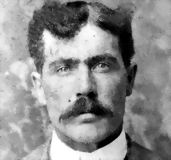
Wallace Wilkerson
Murderer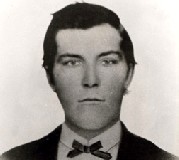 John Wesley Hardin
Murderer · USA · 1867
John Wesley (Wes) Hardin (1853-1895) was an American outlaw, gunfighter, and co…
42 victims
John Wesley Hardin
Murderer · USA · 1867
John Wesley (Wes) Hardin (1853-1895) was an American outlaw, gunfighter, and co…
42 victims
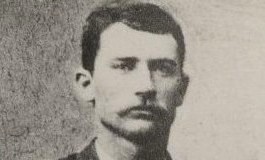 Henry Newton Brown
Murderer · USA · 1870
Henry Newton Brown — 19th century gunman; orphan; raised by relatives in Rolla,…
6 victims
Henry Newton Brown
Murderer · USA · 1870
Henry Newton Brown — 19th century gunman; orphan; raised by relatives in Rolla,…
6 victims
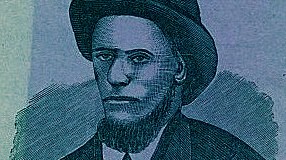 Joseph LaPage
Murderer · USA · 1874
Joseph LaPage was described as a French-Canadian trapper who donned a bearskin…
2 victims
Joseph LaPage
Murderer · USA · 1874
Joseph LaPage was described as a French-Canadian trapper who donned a bearskin…
2 victims
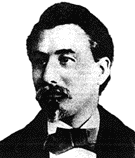 Louis Wagner
Murderer · USA · 1873
Louis Wagner had lived on Smuttynose Island with six Norwegian immigrants: Mare…
2 victims
Louis Wagner
Murderer · USA · 1873
Louis Wagner had lived on Smuttynose Island with six Norwegian immigrants: Mare…
2 victims
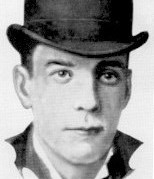 Marion Hedgepeth
Murderer · USA · 1870
Name: Marion Hedgepeth · Also known as: “Handsome Bandit,” “Debonair Bandit,” “…
2 victims
Marion Hedgepeth
Murderer · USA · 1870
Name: Marion Hedgepeth · Also known as: “Handsome Bandit,” “Debonair Bandit,” “…
2 victims
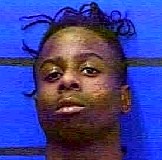 Jessie Campbell
Murderer · USA · 2000
Jessie Campbell was sentenced to death on August 16, 2007. Jessie Campbell shot…
2 victims
Jessie Campbell
Murderer · USA · 2000
Jessie Campbell was sentenced to death on August 16, 2007. Jessie Campbell shot…
2 victims
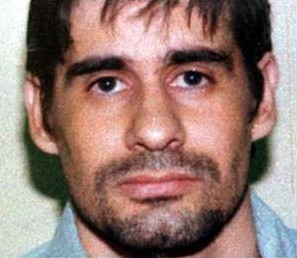 Angel Francisco Breard
Murderer · USA · 1992
Angel Francisco Breard was the petitioner-appellant. Samuel v. Pruett, Warden,…
1 victim
Angel Francisco Breard
Murderer · USA · 1992
Angel Francisco Breard was the petitioner-appellant. Samuel v. Pruett, Warden,…
1 victim
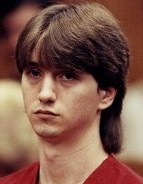 Mark Schwab
Murderer · USA · 1991
Mark Dean Schwab (born December 16, 1968; white; male; hair brown; blue eyes; 6…
1 victim
Mark Schwab
Murderer · USA · 1991
Mark Dean Schwab (born December 16, 1968; white; male; hair brown; blue eyes; 6…
1 victim
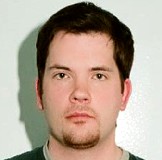 Mark Twitchell
Murderer · Canada · 2008
April 12, 2011 — Mark Twitchell was sentenced to life in prison with no chance…
1 victim
Mark Twitchell
Murderer · Canada · 2008
April 12, 2011 — Mark Twitchell was sentenced to life in prison with no chance…
1 victim
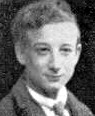 Henry Julius Jacoby
Murderer · United Kingdom · 1922
Henry Julius Jacoby was executed by hanging at Pentonville Prison on 5th June 1…
1 victim
Henry Julius Jacoby
Murderer · United Kingdom · 1922
Henry Julius Jacoby was executed by hanging at Pentonville Prison on 5th June 1…
1 victim
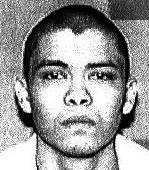 Efrain Perez
Homicide · USA · 1993
June 24, 1993 — Jennifer Ertman, 14, and Elizabeth Pena, 16, left a pool party…
2 victims
Efrain Perez
Homicide · USA · 1993
June 24, 1993 — Jennifer Ertman, 14, and Elizabeth Pena, 16, left a pool party…
2 victims
- Gender
- male
- Country
- USA
- Location
- Homansville, Territory of Utah, USA
- Date of birth
- March 30, 1845
- Age at first offence
- 32
- Characteristics
- argument
- Victim profile
- William Baxter (bartender)
- Method of murder
- Shooting
- Date(s) of murder
- June 11, 1877
- Years active
- 1877
- Date of arrest
- —
- Status
-
Executed
Executed by firing squad on May 16, 1879
Case record: Wallace Wilkerson
Background
Wallace Wilkerson (c. 1834 – May 16, 1879) was an American stockman. He was born in Quincy, Illinois, to a Mormon family. At the age of eight, he moved with his parents to the Territory of Utah. At the age of seventeen, Wilkerson worked as a stockman and horse breaker. He enlisted several times in the military, once serving as a drummer in San Francisco, California. In 1877, Wilkerson lived at Payson in Utah Territory and worked with his brothers at Homansville. He frequented a saloon nearby at Eureka.
The bartender, William Baxter, called Wilkerson a "California Mormon", which was considered a slur. Baxter used a six shooter to break up a conflict between Wilkerson and another patron in the saloon.
The offence
On June 11, 1877, Baxter stopped at a saloon owned by James Hightower in the Tintic Mining District while on the way to Homansville. Baxter met Wilkerson, and the two began to play a card game of cribbage for money. An argument broke out between the men over accusations of cheating. Baxter attempted to back out of the struggle, but was fatally shot in the forehead and temple by Wilkerson, who then fled.
Authorities determined that Baxter was unarmed at the time of the shooting.
Investigation and custody
The next morning, a coroner examined Baxter’s body. Authorities quickly captured Wilkerson and kept him under guard in Goshen to prevent him from being lynched.
Trial
Wilkerson was indicted for premeditated murder by a grand jury. On September 29, 1877, he pleaded not guilty and was placed in the Utah County jail.
His trial at the First District Court of Utah Territory began on November 22. He was convicted by the jury two days later. On November 28, state district judge P. H. Emerson sentenced Wilkerson to death and set an execution date of December 14, 1877.
Wilkerson professed his innocence. He chose to be executed by firing squad instead of hanging or decapitation, which were legal options in the territory at the time.
Appeals
A stay of execution was issued after Wilkerson’s attorney filed an appeal. The Supreme Court of Utah Territory denied the appeal in January 1878.
On January 8, 1879, attorneys E. D. Hoge and P. L. Williams submitted a writ of error to the Supreme Court of the United States during its October 1878 term, raising an argument of cruel and unusual punishment on behalf of Wilkerson.
On March 17, 1879, Justice Nathan Clifford delivered the U.S. Supreme Court ruling that upheld the verdict.
Cruel and unusual punishments are forbidden by the Constitution, but the authorities referred to are quite sufficient to show that the punishment of shooting as a mode of executing the death penalty for the crime of murder in the first degree is not included in that category, within the meaning of the eighth amendment.
U.S. Supreme Court, Wilkerson v. Utah (March 1879)
The U.S. Supreme Court decision included the following quotations and procedural details:
MR. JUSTICE CLIFFORD delivered the opinion of the court.
Duly organized Territories are invested with legislative power, which extends to all rightful subjects of legislation not inconsistent with the Constitution and laws of the United States. Rev. Stats., sect. 1851. Congress organized the Territory of Utah on the 9th of September, 1850, and provided that the legislative power and authority of the Territory shall be vested in the governor and legislative assembly. 9 Stat. 454.
Sufficient appears to show that the prisoner named in the record was legally charged with the wilful, malicious, and premeditated murder of William Baxter, with malice aforethought, by indictment of the grand jury in due form of law, as fully set forth in the transcript; and that he, upon his arraignment, pleaded that he was not guilty of the alleged offence.
Proceedings in the court of original jurisdiction being ended, the prisoner sued out a writ of error and removed the cause into the Supreme Court of the Territory, where the judgment of the subordinate court was affirmed. Final judgment having been rendered in the Supreme Court of the Territory, the prisoner sued out the present writ of error.
Proceedings in the court of original jurisdiction being ended, the prisoner sued out a writ of error and removed the cause into the Supreme Court of the Territory, where the judgment of the subordinate court was affirmed.
Regular proceedings followed, and the record also shows that [ Wilkerson v. Utah 99 U.S. 130 (1878) the presiding justice in open court sentenced the prisoner as follows: That 'you be taken from hence to some place in this Territory, where you shall be safely kept until Friday, the fourteenth day of December next; that between the hours of ten o'clock in the forenoon and three o'clock in the afternoon of the last-named day you be taken from your place of confinement to some place within this district, and that you there be publicly shot until you are dead.'
Judgment affirmed.
The decision also contained the court’s discussion concluding:
Sentencing
H.
Execution
On May 15, 1879, Wilkerson was transferred from Salt Lake City to a jail in Provo.
Wilkerson spent his last day together with his wife until half an hour before the execution. He declined visits by the clergy.
He was brought out of his cell by Sheriff John Turner, a deputy, and U.S. Marshal Shaughnessy. Wilkerson was dressed in black with a white felt hat and a cigar which he kept through the execution.
Wilkerson gave a farewell speech thanking the law enforcement officers and shook hands with some of the 25 people present in the jail yard in Provo. About 200 spectators were estimated to have gathered outside.
Wilkerson stated that he bore no grudge against anyone except a witness whom he accused of committing perjury at his trial. Some witnesses recalled that he appeared to be drunk.
Wilkerson was seated on a chair at a corner of the jail yard about 30 feet away from the shooters and declined to be blindfolded. He refused restraints, stating:
"I give you my word... I intend to die like a man, looking my executioners right in the eye."
A white three-inch paper target was pinned on Wilkerson’s chest over his heart. Wilkerson yelled:
"[A]im for my heart, Marshal!"
At approximately noon on May 16, 1879, the marshal signaled the men who were concealed in a shed to shoot. When Wilkerson heard the end of the count, he stiffened up in the chair, unwittingly moving the target.
The bullets missed Wilkerson’s heart. One of them shattered his arm and the rest hit his torso. Wilkerson leapt off the chair and screamed:
"Oh, my God! My God! They've missed it!"
Four doctors rushed to Wilkerson while he struggled and gasped on the ground. Officials were concerned at one point that they would have to shoot him again, but he was pronounced dead 27 minutes later, having bled to death. According to some accounts, he appeared to have died in about 15 minutes.
Outcome
Wallace Wilkerson was executed by firing squad on May 16, 1879. His case reached the Supreme Court of the United States as Wilkerson v. Utah, where the verdict was upheld.
Aftermath
Wilkerson’s body was carried to an office at the county courthouse. After being washed and placed in a coffin covered in black, the body was returned to Wilkerson’s wife to be taken to Payson for burial.
The Deseret News, published at the time by Latter Day Saint movement leader Brigham Young, proclaimed:
"divine law has been executed and human law honored"
It also proclaimed that Wilkerson "atoned for that deed as far as it is possible so to do by the pouring out of his own blood."
The Ogden Junction criticized the event by printing:
"...the French guillotine never fails."
In the April 2008 decision of Baze v. Rees, U.S. Supreme Court Justice Clarence Thomas cited the case of Wilkerson v. Utah in affirming that Kentucky’s method of execution by lethal injection did not constitute cruel and unusual punishment.
Other details
The case references U.S. Supreme Court WILKERSON v. UTAH, 99 U.S. 130 (1878) 99 U.S. 130 WILKERSON v. UTAH. October Term, 1878 ERROR to the Supreme Court of the Territory of Utah. It includes the statements:
Submitted by Mr. E. D. Hoge and Mr. P. L. Williams for the plaintiff in error, and by The Solicitor-General for the defendant in error.
Spotted an error, or have more information about this case?