Robert Wayne Sawyer
Murderer Ervil LeBaron
Murderer · USA · 1972
Ervil Morrell LeBaron (1925 to August 16, 1981) was the leader of a polygamous…
35 victims
Ervil LeBaron
Murderer · USA · 1972
Ervil Morrell LeBaron (1925 to August 16, 1981) was the leader of a polygamous…
35 victims
 Brian Kevin Rosenfeld
Murderer · USA · 1985
Brian Kevin Rosenfeld Brian Kevin Rosenfeld was sentenced to three concurrent l…
23 victims
Brian Kevin Rosenfeld
Murderer · USA · 1985
Brian Kevin Rosenfeld Brian Kevin Rosenfeld was sentenced to three concurrent l…
23 victims
 Marvin Gray
Murderer · USA · 1975
Marvin Gray was convicted killer who claimed responsibility for 23 slayings and…
23 victims
Marvin Gray
Murderer · USA · 1975
Marvin Gray was convicted killer who claimed responsibility for 23 slayings and…
23 victims
 Yahweh ben Yahweh
Murderer · USA · 1980
Yahweh ben Yahweh was born and legally named Hulon Mitchell Jr. (October 27, 19…
23 victims
Yahweh ben Yahweh
Murderer · USA · 1980
Yahweh ben Yahweh was born and legally named Hulon Mitchell Jr. (October 27, 19…
23 victims
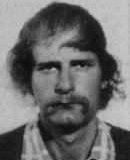 David Malcolm Gray
Mass murderer · New Zealand · 1990
David Malcolm Gray was an unemployed resident of Aramoana, New Zealand, who car…
13 victims
David Malcolm Gray
Mass murderer · New Zealand · 1990
David Malcolm Gray was an unemployed resident of Aramoana, New Zealand, who car…
13 victims
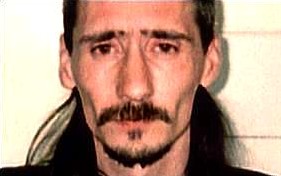 Lee Ford
Mass murderer · United Kingdom · 2000
Lee Ford · Lesley Ford (wife) · Michael Tranter (natural father of four childre…
5 victims
Lee Ford
Mass murderer · United Kingdom · 2000
Lee Ford · Lesley Ford (wife) · Michael Tranter (natural father of four childre…
5 victims
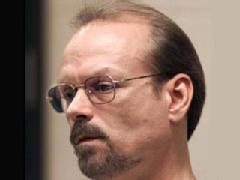 Philip Ray Workman
Murderer · USA · 1981
Name: Philip Ray Workman · Status: Executed by lethal injection in Tennessee on…
1 victim
Philip Ray Workman
Murderer · USA · 1981
Name: Philip Ray Workman · Status: Executed by lethal injection in Tennessee on…
1 victim
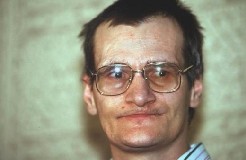 Francis Heaulme
Serial killer · France · 1984
Francis Heaulme was sentenced to several life sentences in different trials, 19…
9 victims
Francis Heaulme
Serial killer · France · 1984
Francis Heaulme was sentenced to several life sentences in different trials, 19…
9 victims
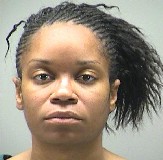 China Arnold
Murderer · USA · 2005
China Arnold (born March 29, 1980, in Dayton, Ohio) was a defendant in a murder…
1 victim
China Arnold
Murderer · USA · 2005
China Arnold (born March 29, 1980, in Dayton, Ohio) was a defendant in a murder…
1 victim
- Gender
- male
- Country
- USA
- Location
- Jefferson Parish, Louisiana, USA
- Date of birth
- 1951
- Age at first offence
- 28
- Characteristics
- rape, mutilation, torture
- Victim profile
- Frances Arwood (female, 23)
- Method of murder
- Pouring lighter fluid on her body and igniting it
- Date(s) of murder
- September 28, 1979
- Years active
- 1979
- Date of arrest
- Same day
- Status
-
Executed
Executed by lethal injection in Louisiana on March 5, 1993
Case record: Robert Wayne Sawyer
Overview
Robert Wayne Sawyer was an American murderer who was executed by lethal injection in Louisiana on March 5, 1993. He was tried, convicted, and executed in connection with the murder of Frances Arwood. Sawyer was the first inmate put to death by lethal injection in Louisiana.
The offence
On September 28, 1979, Robert Sawyer, Frances Arwood, and Charles W. Lane were at Cynthia Shano's mother’s house in Gretna, Louisiana. Arwood was Shano’s sister-in-law and was baby-sitting with Shano’s two small children, who were also present. Sawyer lived at the residence with Shano.
When Shano returned home at approximately 12:30 p.m., Sawyer, Lane, and Arwood were arguing. As the arguing continued, Sawyer pushed Arwood's head back against a sofa bed and hit her in the face. Lane also hit Arwood in the face with his fist. Sawyer then started hitting her in the chest. As Arwood tried to get up from the bed, Sawyer kicked her in the chest and told her to get up and go wash herself.
After Shano went into the bedroom with the children, she heard Lane hitting Arwood. When she came out of the bedroom, Shano observed Sawyer drag Arwood by the hair into the bathroom. When Arwood would not get into the bathtub, Sawyer kicked her in the chest, knocking her into the tub, and hit her head against the wall.
Lane then pulled Arwood out of the bathtub and undressed her. The bathroom door was closed for about twenty minutes. While Lane was in the bathroom alone with Arwood, Sawyer boiled hot water. Sawyer poured detergent over the victim's head and then poured the hot water on her. Lane ducked the victim’s head under the water and punched her with his fists. Sawyer and Lane then pulled Arwood out of the bathtub. When the victim resisted by hitting Sawyer, he screamed and kicked her in the chest. Arwood’s head hit either the windowsill or the bathtub and rendered her unconscious.
Sawyer and Lane carried the victim into the living room and dropped her face down on the floor. Lane started kicking Arwood in the rib area while Sawyer walked on her back. After Sawyer beat the victim with a leather belt, the two men put Arwood on a sofa bed. Shano, who had been screaming for them to stop, covered the victim’s body with a blanket.
While Shano was in the bathroom, after being nauseated, she heard Sawyer state to Lane: “I'll show you how cruel I can be.” When Shano returned from the bathroom, she observed smoke coming from the victim’s face and that the victim’s legs were open. Lane was laughing and informed her that his penis was burned because he was having sexual intercourse with the victim while Sawyer set them on fire.
After some of Shano’s relatives arrived at the house, the victim was transported to West Jefferson Hospital. Arwood arrived at the hospital in a coma. She had third degree burns all over her body, lacerations on her chin, and swelling of the face and neck. Arwood died on November 21, 1979, approximately two months later.
The cause of death was significant brain damage from a blunt head injury and extensive burns over most of her body. Sawyer and Lane continued to lounge about the residence listening to records and discussing the disposition of Ms. Arwood’s body. Lane fell asleep next to the beaten and swollen body of the victim.
Shortly after noon, Shano’s sister and nephew came to visit. When the nephew knocked insistently, Sawyer gave Shano the key to open the door, and she ran screaming to the safety of her relatives. Shano’s excited ravings were incomprehensible to her nephew and sister until they looked inside and saw the scene and Arwood’s beaten and blistered body. They also saw Sawyer sitting with his feet propped up on the edge of the couch.
Shano called for police and emergency units. When authorities arrived, they arrested Lane and Sawyer and rushed Arwood to a hospital.
Investigation and arrest
Police and emergency units arrived after Shano called for help. They arrested Lane and Sawyer and rushed Arwood to a hospital.
Trial
Sawyer and Lane were indicted for first degree murder by the Jefferson Parish Grand Jury. Lane was tried first and sentenced to life imprisonment. State v. Lane, 414 So.2d 1223 (La.1982).
Sawyer was convicted by a unanimous jury. The jury proceeded to sentence defendant to death.
At the sentencing hearing, the prosecution offered evidence that Sawyer had a previous conviction for involuntary manslaughter in Arkansas.
Sentencing
At the sentencing hearing, Sawyer received a death sentence following a unanimous jury conviction.
In a petition to the Pardon Board before his execution, Sawyer alleged his was mentally retarded, suffering from organic brain damage, and therefore should not be executed.
Appeals
Sawyer v. Smith was referenced as a prior review. The record also included Supreme Court proceedings involving successive federal habeas claims.
The Supreme Court case described the issue as follows:
Chief Justice Rehnquist delivered the opinion of the Court.
The issue before the Court is the standard for determining whether a petitioner bringing a successive, abusive, or defaulted federal habeas claim has shown he is "actually innocent" of the death penalty to which he has been sentenced so that the court may reach the merits of the claim.
The Supreme Court case identified:
- No. 91-6382
- ROBERT WAYNE SAWYER, PETITIONER v. JOHN WHITLEY, WARDEN
- On writ of certiorari to the united states court of appeals for the fifth circuit
- June 22, 1992
The Supreme Court decision stated:
We affirm the Court of Appeals and hold that to show "actual innocence" one must show by clear and convincing evidence that but for a constitutional error, no reasonable juror would have found the petitioner eligible for the death penalty under the applicable state law.
The Supreme Court decision further described how Louisiana law determined death penalty eligibility. It stated that Sawyer was eligible because he was convicted of first degree murder and because, at the sentencing phase, the jury found aggravating circumstances that included:
- that the murder was committed in the course of an aggravated arson; and
- that the murder was especially cruel, atrocious, and heinous.
The Supreme Court decision described Sawyer’s arguments about evidence not considered by the jury and his claims of constitutional error:
- Sawyer alleged a Brady violation relating to affidavits attacking the credibility of Cynthia Shano and an affidavit claiming that one of Shano’s sons told a police officer that Sawyer was not responsible for pouring lighter fluid on Arwood and lighting it, and that Sawyer tried to prevent Charles Lane from lighting Arwood on fire.
- Sawyer alleged ineffective assistance of counsel because medical records from Sawyer's stays as a teenager in two different mental health institutions were not introduced in the sentencing phase.
The Supreme Court decision concluded:
We therefore hold that petitioner has failed to show by clear and convincing evidence that but for constitutional error at his sentencing hearing, no reasonable juror would have found him eligible for the death penalty under Louisiana law.
The judgment of the Court of Appeals is therefore Affirmed.
State and federal case references in the record included:
- State v. Sawyer, 422 So.2d 95 (La., October 18, 1982)
- State v. Sawyer, 442 So.2d 1136 (La., November 28, 1983)
- State v. Lane, 414 So.2d 1223 (La., 1982)
- Sawyer v. Smith, 497 U. S. ___ (1990)
- Sawyer v. Louisiana, 463 U.S. 1223 (1983)
- Sawyer v. State, 442 So. 2d 1136 (1983), cert. denied, 466 U.S. 931 (1984)
- Louisiana ex rel. Sawyer v. Maggio, 479 So. 2d 360, reconsideration denied, 480 So. 2d 313 (La. 1985)
- Sawyer v. Butler, 848 F.2d 582 (CA5 1988), aff'd on rehearing en banc, 881 F. 2d 1273 (CA5 1989)
The record also included:
- 945 F.2d 812 (1991)
- 772 F. Supp. 297 (ED La. 1991)
- Wainwright v. Sykes, 433 U.S. 72 (1977)
- Kuhlmann v. Wilson, 477 U.S. 436 (1986)
- McCleskey v. Zant, 499 U.S. ___ (1991)
- Murray v. Carrier, 477 U.S. 478 (1986)
- Furman v. Georgia, 408 U.S. 238 (1972)
- Gregg v. Georgia, 428 U.S. 153 (1976)
- Proffitt v. Florida, 428 U.S. 242 (1976)
- Jurek v. Texas, 428 U.S. 262 (1976)
- Lockett v. Ohio, 438 U.S. 586 (1978)
- Zant v. Stephens, 462 U.S. 862 (1983)
- Caldwell v. Mississippi, 472 U.S. 320 (1985)
- Teague v. Lane, 489 U.S. 288 (1989)
- Dugger v. Adams, 489 U.S. 401 (1989)
- McCleskey v. Zant, supra
- Engle v. Isaac, 456 U.S. 107, 126-128 (1982)
- Smith v. Murray, 477 U.S. 527 (1986)
- United States v. Bagley, 473 U.S. 667 (1985)
- Strickland v. Washington, 466 U.S. 668 (1984)
- Johnson v. Singletary, 938 F.2d 1166 (CA11 1991), petition for cert. pending, No. 91-6576
- Deutscher v. Whitley, 946 F.2d 1443 (CA9 1991)
- Stokes v. Armontrout, 893 F.2d 152 (CA8 1989) (quoting Smith v. Armontrout, 888 F.2d 530 (CA8 1989))
- Gomez v. United States District Court, 503 U.S. ___ (1992) (per curiam)
- La. Code Crim. Proc. Ann., Art. 905.3 (West 1984)
- La. Rev. Stat. Ann. § 14:30 (West 1986 and Supp. 1992)
- La. Rev. Stat. Ann. § 14:24 (West 1986)
The Supreme Court decision included a recitation of trial findings and evidence:
- It stated the jury found three statutory aggravating factors and specified them in a note:
The jury found the following statutory aggravating factors: "(1) that [Sawyer] was engaged in the commission of aggravated arson, (2) that the offense was committed in an especially cruel, atrocious and heinous manner, and (3) that [Sawyer] had previously been convicted of an unrelated murder."
- The Supreme Court decision stated that:
The Louisiana Supreme Court held that the last aggravating circumstance was not supported by the evidence.
Execution
On March 5, 1993, Sawyer was executed by lethal injection at Louisiana State Penitentiary at Angola.
His final statement was:
"I would like to tell young kids who might read this, that drinking and handing (sic) with the wrong people will get you where I am sitting right here and I hope that nobody else ever has to go through what i have gone through, expecially (sic) young kids. I'm sorry for any hurt and pain they say I caused. I have no hard feelings toward anyone. I just want my sister, my brother-in-law, my son, all of my family and friends to know that I love them and I'll be waiting on them in heaven."
A later quotation also reproduced his final statement as:
"I would like to tell young kids who might read this that drinking and hanging with the wrong people will get you where I am sitting right here."
"I'm sorry for any hurt and pain they say I caused. I have no hard feelings toward anyone. "
"I just want my sister, my brother-in-law, my son, all of my family and friends to know that I love them and I'll be waiting on them in heaven."
Aftermath
Sawyer was executed and did not receive clemency. A petition to the Pardon Board was presented before his execution, alleging intellectual disability and organic brain damage.
The Supreme Court described the procedural posture as involving successive federal habeas claims and the standard for “actual innocence” of the death penalty:
Unless a habeas petitioner shows cause and prejudice, see Wainwright v. Sykes, 433 U.S. 72, (1977), a court may not reach the merits of: (a) successive claims which raise grounds identical to grounds heard and decided on the merits in a previous petition, Kuhlmann v. Wilson, 477 U.S. 436 (1986); (b) new claims, not previously raised which constitute an abuse of the writ, McCleskey v. Zant, 499 U. S. ___ (1991); or (c) procedurally defaulted claims in which the petitioner failed to follow applicable state procedural rules in raising the claims.
Other details
- Sawyer and Charles W. Lane were described as having returned to Sawyer’s home after a night of drinking, arguing with Arwood, and accusing her of drugging one of the children.
- The Supreme Court decision stated that Sawyer prevented Shano and her children from leaving during the attack:
Shano testified that petitioner prevented them from leaving.
- The Supreme Court decision stated that, at trial, the jury failed to credit Sawyer's “toxic psychosis” defense and convicted him of first degree murder.
- Sawyer testified at the sentencing phase that he was intoxicated at the time of the murder and remembered only bits and pieces of the events.
- Sawyer's sister, Glenda White, testified about his deprived childhood and said that as a teenager he had been confined to a mental hospital for “no reason” where he had undergone shock therapy.
- Lane was described as having been tried separately and sentenced to life imprisonment.
Spotted an error, or have more information about this case?