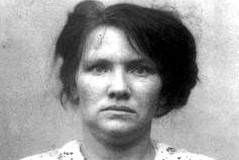
Dagmar Overbye
Serial killer Júlia Fazekas
Serial killer · Hungary · 1911
Júlia Fazekas was a midwife in Nagyrév, Hungary, who arrived in Nagyrév in 1911…
45 victims
Júlia Fazekas
Serial killer · Hungary · 1911
Júlia Fazekas was a midwife in Nagyrév, Hungary, who arrived in Nagyrév in 1911…
45 victims
 Bertha Gifford
Serial killer · USA · 1909
Bertha Gifford (1872- August 20, 1951) was a farmwife in rural Catawissa, Misso…
17 victims
Bertha Gifford
Serial killer · USA · 1909
Bertha Gifford (1872- August 20, 1951) was a farmwife in rural Catawissa, Misso…
17 victims
 Jeanne Weber
Serial killer · France · 1905
Jeanne Weber (born 7 October 1874) was a French child-care provider and serial…
10 victims
Jeanne Weber
Serial killer · France · 1905
Jeanne Weber (born 7 October 1874) was a French child-care provider and serial…
10 victims
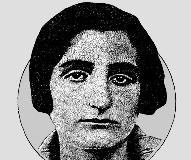 Della Sorenson
Serial killer · USA · 1918
Della Sorenson was a Nebraska woman who killed relatives by poisoning. She was…
8 victims
Della Sorenson
Serial killer · USA · 1918
Della Sorenson was a Nebraska woman who killed relatives by poisoning. She was…
8 victims
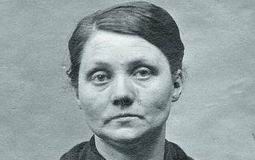 Hilda Nilsson
Serial killer · Sweden · 1915
Hilda Nilsson (1876 – 10 August 1917) was a Swedish serial killer from Helsingb…
8 victims
Hilda Nilsson
Serial killer · Sweden · 1915
Hilda Nilsson (1876 – 10 August 1917) was a Swedish serial killer from Helsingb…
8 victims
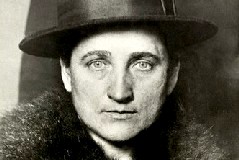 Tillie Klimek
Serial killer · USA · 1914
Ottilie “Tillie” Klimek, also known as Ottilie “Tillie” Klimek (or Tillie Gbure…
6 victims
Tillie Klimek
Serial killer · USA · 1914
Ottilie “Tillie” Klimek, also known as Ottilie “Tillie” Klimek (or Tillie Gbure…
6 victims
 Anthony Darrell Hines
Murderer · USA · 1985
Anthony Darrell Hines was tried in the Supreme Court of Tennessee (State of Ten…
1 victim
Anthony Darrell Hines
Murderer · USA · 1985
Anthony Darrell Hines was tried in the Supreme Court of Tennessee (State of Ten…
1 victim
 William Tahl
Murderer · USA · 1965
Name: William Tahl William Tahl clashed with authority for the first time at ag…
3 victims
William Tahl
Murderer · USA · 1965
Name: William Tahl William Tahl clashed with authority for the first time at ag…
3 victims
 Robert Jean Hudson
Murderer · USA · 1987
Robert Jean Hudson was convicted of capital murder and sentenced to death in Te…
2 victims
Robert Jean Hudson
Murderer · USA · 1987
Robert Jean Hudson was convicted of capital murder and sentenced to death in Te…
2 victims
 Stanley Lingar
Murderer · USA · 1985
Stanley Lingar was executed by lethal injection in Missouri on February 7, 2001…
1 victim
Stanley Lingar
Murderer · USA · 1985
Stanley Lingar was executed by lethal injection in Missouri on February 7, 2001…
1 victim
 Amy Bishop
Murderer · USA · 1986
Amy Bishop — biology professor and perpetrator · James Anderson — Bishop’s husb…
4 victims
Amy Bishop
Murderer · USA · 1986
Amy Bishop — biology professor and perpetrator · James Anderson — Bishop’s husb…
4 victims
- Gender
- female
- Country
- Denmark
- Location
- Nørrebro, Copenhagen, Denmark
- Date of birth
- April 23, 1887
- Age at first offence
- 26
- Characteristics
- serial rapist, child killer, abuse
- Victim profile
- Children (of which one was her own)
- Method of murder
- S he strangled them, drowned them or burned them to death
- Date(s) of murder
- 1913 - 1920
- Years active
- 1913–1920
- Date of arrest
- September 12, 1920
- Status
-
Died in custody
Sentenced to death on March 3, 1921; commuted to life in prison on May 25, 1921; died in prison on May 6, 1929
Case overview
Dagmar Johanne Amalie Overbye (April 23, 1887 – May 6, 1929) was a Danish serial killer. She murdered 25 children during a seven-year period from 1913 to 1920, including one child who was her own.
Overbye worked as a professional child caretaker, caring for babies born outside of marriage. She murdered her charges.
The offence
Overbye strangled children, drowned them, or burned them to death in her masonry heater. The corpses were either cremated, buried, or hidden in the loft.
Overbye was convicted of nine murders, with no proof established for the others.
Background
Overbye was abused herself as a baby. Her lawyer based the case on her being abused as a baby, but the argument did not impress the judge.
Trial and sentencing
On March 3, 1921, Overbye was sentenced to death in one of the most talked about trials in Danish history, which changed legislation on childcare.
The sentence was later commuted to life in prison on May 25, 1921. Overbye became one of the three women sentenced to death in Denmark in the 20th century, but she was reprieved.
Outcome
Overbye died in prison on May 6, 1929, at age 42.
Aftermath
Notes relating to her case were included in the Politihistorisk Museum (Museum of Police History) in Nørrebro, Copenhagen.
The Danish author Karen Søndergaard Jensen wrote a fiction novel called Englemagersken (The Angel Maker) based on Overbye.
Teatret ved Sorte Hest in Copenhagen performed a play named Historien om en Mo(r)der (Morder meaning "murderer" and moder meaning "mother") based on her life.

Spotted an error, or have more information about this case?