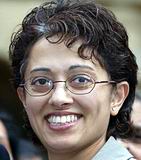
Trupti Patel
Justice miscarriage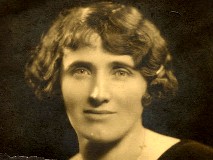 Beatrice Annie Pace
Justice miscarriage · United Kingdom · 1928
Beatrice Annie Pace was tried and acquitted for murdering her husband with arse…
0 victims
Beatrice Annie Pace
Justice miscarriage · United Kingdom · 1928
Beatrice Annie Pace was tried and acquitted for murdering her husband with arse…
0 victims
 Cynthia George
Justice miscarriage · USA · 2001
Cynthia George was 53 at the time of her release. She faced national media scru…
0 victims
Cynthia George
Justice miscarriage · USA · 2001
Cynthia George was 53 at the time of her release. She faced national media scru…
0 victims
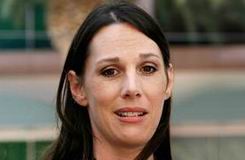 Cynthia Sommer
Justice miscarriage · USA · 2002
Cynthia Sommer was convicted of first-degree murder with the “special circumsta…
0 victims
Cynthia Sommer
Justice miscarriage · USA · 2002
Cynthia Sommer was convicted of first-degree murder with the “special circumsta…
0 victims
 Olivia Riner
Justice miscarriage · USA · 1991
Olivia Riner was a Swiss au pair accused in the arson death of 3-month-old Kris…
0 victims
Olivia Riner
Justice miscarriage · USA · 1991
Olivia Riner was a Swiss au pair accused in the arson death of 3-month-old Kris…
0 victims
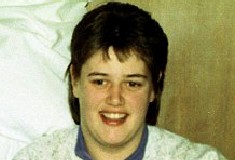 Beverley Allitt
Serial killer · United Kingdom · 1991
Beverley Allitt was a nurse who suffered from the mental illness Munchausen’s S…
4 victims
Beverley Allitt
Serial killer · United Kingdom · 1991
Beverley Allitt was a nurse who suffered from the mental illness Munchausen’s S…
4 victims
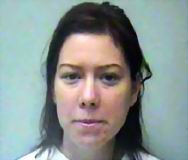 Nicola Edgington
Homicide/Murderer · United Kingdom · 2005
Nicola Edgington was a British woman convicted of manslaughter due to diminishe…
2 victims
Nicola Edgington
Homicide/Murderer · United Kingdom · 2005
Nicola Edgington was a British woman convicted of manslaughter due to diminishe…
2 victims
 Kimberly Renee Poole
Murderer · USA · 1998
Kimberly Renee Poole was a 21-year-old housewife and mother in the Winston-Sale…
1 victim
Kimberly Renee Poole
Murderer · USA · 1998
Kimberly Renee Poole was a 21-year-old housewife and mother in the Winston-Sale…
1 victim
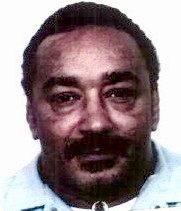 Manuel Pina Babbit
Murderer · USA · 1980
Manuel Pina Babbitt was convicted in Sacramento County of first degree murder w…
1 victim
Manuel Pina Babbit
Murderer · USA · 1980
Manuel Pina Babbitt was convicted in Sacramento County of first degree murder w…
1 victim
 William Sarmento
Homicide · USA · 1987
William Sarmento was confined indefinitely at the state Institute for Mental He…
2 victims
William Sarmento
Homicide · USA · 1987
William Sarmento was confined indefinitely at the state Institute for Mental He…
2 victims
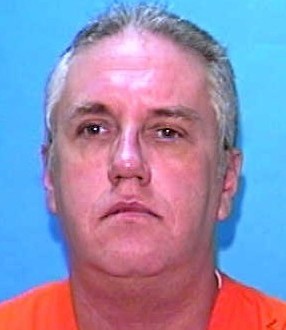 Jim Eric Chandler
Murderer
Jim Eric Chandler was convicted in the Nineteenth Judicial Circuit, Indian Rive…
1980 victims
Jim Eric Chandler
Murderer
Jim Eric Chandler was convicted in the Nineteenth Judicial Circuit, Indian Rive…
1980 victims
 Larry Keith Robison
Mass murderer · USA · 1982
August 10, 1982 (4:30 p.m.) — Junett Bryant arrived at the home of her adult so…
5 victims
Larry Keith Robison
Mass murderer · USA · 1982
August 10, 1982 (4:30 p.m.) — Junett Bryant arrived at the home of her adult so…
5 victims
 Evan Nakahara
Murderer · USA · 1989
Evan Teek Nakahara was convicted in Los Angeles County of his girlfriend Beatri…
1 victim
Evan Nakahara
Murderer · USA · 1989
Evan Teek Nakahara was convicted in Los Angeles County of his girlfriend Beatri…
1 victim
- Gender
- female
- Country
- United Kingdom
- Location
- Maidenhead, Berkshire, England, United Kingdom
- Date of birth
- 1978
- Age at first offence
- 19
- Characteristics
- infanticide, history of mental illness, convicted rapist, paedophile, rape
- Victim profile
- Her sons Amar and Jamie and daughter Mia (none of them survived beyond three months)
- Method of murder
- Suffocation
- Date(s) of murder
- 1997 / 1999 / 2001
- Years active
- 1997–2001
- Date of arrest
- May 2002
- Status
-
Acquitted / overturned
Acquitted on 11 June 2003
Case record: Trupti Patel
Background
Trupti Patel was a qualified pharmacist from Berkshire, England. She was born into a family of Punjabis who moved from India to England. She spent her childhood in Lancashire and attended grammar school. She attended King’s College London, where she gained a B.Sc. in pharmacy.
She met her future husband, Jayant, a qualified electrical engineer who later worked as a business analyst for British Telecom. They were married within seven months. Their first child, a girl, was born in 1995.
Patel lived in the family’s Berkshire home. Her surviving daughter had been subject to a court order that required her to be supervised when spending time with her after the death of Mia in 2001, and that order was being reassessed by social services in light of Patel’s acquittal.
The offence
Trupti Patel was accused of killing three of her children in the family home in Berkshire between 1997 and 2001.
None of the babies survived past three months. Patel always denied suffocating them.
The children were:
- Amar (5 September 1997–10 December 1997)
- Jamie (21 June 1999–6 July 1999)
- Mia (14 May 2001–5 June 2001)
Investigation
A police investigation was started after the pattern of infant deaths in the family. The investigation led to Patel’s arrest in May 2002.
The deaths involved postmortem findings that yielded no explanations for the deaths of the sons, but Mia was found to have four broken ribs.
Two key prosecution witnesses, both of whom examined Mia’s body and disputed Patel’s claim that the fractured ribs were caused by attempts at resuscitation, said they were no longer sure.
Professor Rupert Risdon, a paediatric pathologist, wrote to the judge saying that he had found evidence of rib fractures caused by resuscitation in three children that he had examined in the previous month alone.
Nathaniel Carey, a Home Office pathologist, said he could “no longer state categorically that the rib fractures were not due to resuscitation.”
A spokesman for Thames Valley Police defended the decision to investigate and said: “We took a decision that there was evidence which a jury should have an opportunity to decide on, as has now occurred,” he said.
Arrest
Patel was arrested following the death of Mia, the third of her children to die. She denied she had smothered her babies or restricted their breathing by squeezing their chests.
She was arrested in May 2002.
Trial
The case was heard at Reading Crown Court. It was one of a number of famous court cases in Britain in which mothers who reported more than one cot death were accused of murder. The trial included evidence from Roy Meadow, a controversial pediatrician, whose testimony had been involved in other high-profile cases.
Patel was charged with the murder of the three children.
Medical evidence and expert testimony
Prof Meadow gave evidence in Patel’s trial at Reading Crown Court in May 2003. He said their deaths were probably caused by an adult suffocating them or restricting their breathing.
He told the court there were four factors which supported his conclusion that the three babies were asphyxiated:
- The fractured ribs in Mia.
- The fact that the children underwent a lot of medical investigation in life before death.
- The fact that there was a very short interval for two of the children between being well and dying.
- The fact that three consecutive children died.
Prof Meadow acknowledged there was a “theoretical possibility” that an as-yet-unidentified illness or medical condition could have caused the deaths of Patel’s three children. He told the court he believed that was extremely unlikely.
Meadow gave the court other formulations of his reasoning. One of the cited indications was that the injuries suffered by the third child to die supported his view of guilt. Patel said the rib fractures had resulted from attempts at resuscitation.
The second and third points were that the children had undergone several medical examinations, and all had been well until shortly before their deaths.
The fourth point was that three consecutive children had died, and that, according to Meadow, “in general, sudden and unexpected death does not run in families.”
Prof Meadow’s claim that the likelihood of two babies dying from natural causes in the same family was one in 73 million prompted the Royal Statistical Society to write a letter of complaint to the Lord Chancellor, stating that the figure had “no statistical basis”; other experts said that when genetic and environmental factors were taken into account, the figure was closer to one in 200.
Defence evidence and counter-expertise
One of the defence witnesses was genetics specialist Professor Michael Patton. He testified that several cot deaths in the same family could be caused by an undiscovered genetic defect, and that the chances of experiencing more than one cot death could be as high as one in twenty.
The court heard evidence that Patel’s maternal grandmother lost five children in infancy, but that her remaining seven children were “alive and well”.
By the time the case came to court, Meadow’s claims about the likelihood of a second cot death in the same family had been largely discredited. Clarke’s conviction for the murder of her sons had been overturned some months earlier. Cannings’s guilt was disputed by many.
During the trial, with prosecution expert certainty undermined by the change in testimony from Rupert Risdon and Nathaniel Carey, the defence sought to plant further doubts in the jury’s minds.
Mrs Patel’s grandmother travelled from India to give evidence. Surajben Patel told the court that she had lost five of her 12 children in early infancy and that their deaths remained a mystery. She said none of the deaths had been investigated in her village because there was no hospital and no doctors.
The defence also called an expert witness, Peter Fleming, who said he had seen three other examples of triple cot death in his 20-year career.
Motive and character evidence
The prosecution did not put forward a motive for the alleged killings.
Helena Johnson, a community paediatric nurse who visited Patel after the death of Amar, thought Patel’s behaviour odd. She said Patel seemed undemonstrative towards her second son, Jamie, and did not fret as much as the nurse expected.
Patel’s husband, Jayant, told the court that Patel’s composure in public reflected her grief, saying: “She is quite composed in public, quite professional in public, but with friends and family she is a very emotional person. She is a really nice mum, loving, caring, compassionate, always considering [the children] first,” Mr Patel said. “I cannot think she would do anything bad to them or harm them in any way.”
Kieran Coonan, QC, Patel’s defence counsel, said Patel was “a perfectly normal, although anxious woman” who had no motive to kill her children and had told “not a single lie” to the court.
In his summing up, Judge Mr Justice Jack said Patel deserved pity whether or not she had killed her children. He said: “It is a tragic story.”
Patel’s evidence included a denial of applying force when asked about CPR. Asked by her defence barrister if she had applied force, Patel wept and said: “No. I was trying to save her life.”
Sentencing
Patel was acquitted and was not sentenced.
Outcome
On 11 June 2003, Patel was acquitted.
Patel announced shortly after her acquittal that her husband would have a vasectomy because they were unwilling to take the risk of having another child.
Shortly after the verdict, Patel said: “absolutely delighted”.
The jury of 10 men and one woman acquitted Patel shortly after being sent out to deliberate on Wednesday, following a six-and-a-half week trial.
Aftermath
Outside the court Patel’s reactions included putting both hands over her mouth and letting out a sob as she was cleared of three counts of murder.
The NSPCC called for an overhaul of the way child deaths are investigated. Chris Cloke, of the NSPCC, said: “Sometimes it can be very difficult to ascertain why infants die. It is therefore absolutely vital that these tragic incidents are properly investigated without stigmatising parents. The NSPCC wants to see systematic review and analysis of all child deaths by teams made up of health experts, police and social service professionals.”
Joyce Epstein, director of the Foundation for the Study of Infant Deaths, said most sudden infant deaths were natural and that there was a high risk of it happening with more than one child in a family. She said: “Unfortunately, there is a current eagerness by some to view all sudden and unexpected deaths with suspicion, particularly where there is a second death in the family,” she said.
Patel said she and her family wanted to “get back to some sort of normality” and said: “They have never wavered. And that's what families are all about.”
Patel’s solicitor, Margaret Taylor, said in a statement: “Trupti Patel has spent the last year in torment. She walks from the court a free woman. She wants to publicly acknowledge the tremendous support she has received from her husband, friends and family.”
Timeline
- 5 September 1997–10 December 1997 — Amar died between those dates.
- 21 June 1999–6 July 1999 — Jamie died between those dates.
- 14 May 2001–5 June 2001 — Mia died between those dates.
- May 2002 — Patel was arrested after the investigation into the deaths.
- May 2003 — Prof Meadow gave evidence at Reading Crown Court.
- 11 June 2003 — Patel was acquitted.


Spotted an error, or have more information about this case?