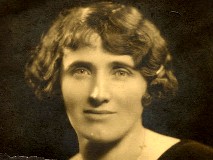
Beatrice Annie Pace
Justice miscarriage Trupti Patel
Justice miscarriage · United Kingdom · 1997
Trupti Patel was a qualified pharmacist from Berkshire, England. She was born i…
0 victims
Trupti Patel
Justice miscarriage · United Kingdom · 1997
Trupti Patel was a qualified pharmacist from Berkshire, England. She was born i…
0 victims
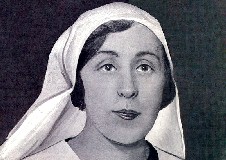 Dorothea Waddingham
Murderer · United Kingdom · 1935
Dorothea Waddingham (also referred to as Dorothea Nancy Waddingham) was born in…
2 victims
Dorothea Waddingham
Murderer · United Kingdom · 1935
Dorothea Waddingham (also referred to as Dorothea Nancy Waddingham) was born in…
2 victims
 Charlotte Bryant
Murderer · United Kingdom · 1935
Charlotte Bryant, also known as Charlotte McHugh, was born in Londonderry in 19…
1 victim
Charlotte Bryant
Murderer · United Kingdom · 1935
Charlotte Bryant, also known as Charlotte McHugh, was born in Londonderry in 19…
1 victim
 Edith Thompson
Murderer · United Kingdom · 1922
Edith Jessie Thompson (Edith Graydon; 25 December 1893 – 9 January 1923) was a…
1 victim
Edith Thompson
Murderer · United Kingdom · 1922
Edith Jessie Thompson (Edith Graydon; 25 December 1893 – 9 January 1923) was a…
1 victim
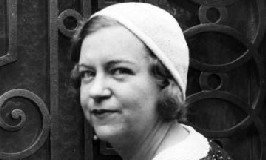 Elvira Barney
Murderer? · United Kingdom · 1932
Elvira Barney Elvira Barney was found not guilty on July 5, 1932. Michael Scott…
1 victim
Elvira Barney
Murderer? · United Kingdom · 1932
Elvira Barney Elvira Barney was found not guilty on July 5, 1932. Michael Scott…
1 victim
 David Lashley
Murderer · United Kingdom · 1977
David Lashley was the prime suspect in the murder of Janie Shepherd. In April 1…
1 victim
David Lashley
Murderer · United Kingdom · 1977
David Lashley was the prime suspect in the murder of Janie Shepherd. In April 1…
1 victim
 Anthony Doyle
Murderer · USA · 2003
Anthony Dewayne Doyle (TDCJ Number 999478) was born on 10/16/1984. He was male…
1 victim
Anthony Doyle
Murderer · USA · 2003
Anthony Dewayne Doyle (TDCJ Number 999478) was born on 10/16/1984. He was male…
1 victim
 Carlos Monzón
Murderer · Argentina · 1988
Carlos Monzón (August 7, 1942 – January 8, 1995) was an Argentine professional…
1 victim
Carlos Monzón
Murderer · Argentina · 1988
Carlos Monzón (August 7, 1942 – January 8, 1995) was an Argentine professional…
1 victim
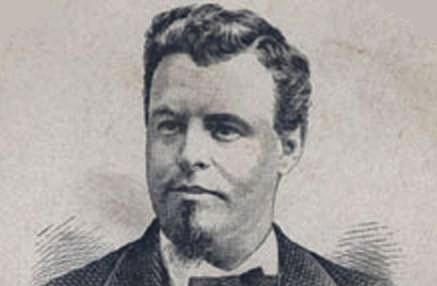 Rev. Herbert Hayden
Murderer · USA · 1878
Rev. Herbert H. Hayden was a married father and a minister of a Methodist churc…
1 victim
Rev. Herbert Hayden
Murderer · USA · 1878
Rev. Herbert H. Hayden was a married father and a minister of a Methodist churc…
1 victim
 Jamie Davis
Murderer · USA · 2010
Jamie Carole Davis was a Lakeland woman who was accused of fatally shooting ano…
1 victim
Jamie Davis
Murderer · USA · 2010
Jamie Carole Davis was a Lakeland woman who was accused of fatally shooting ano…
1 victim
- Gender
- female
- Country
- United Kingdom
- Location
- Fetterhill, Gloucestershire, England, United Kingdom
- Date of birth
- 1892
- Age at first offence
- 36
- Characteristics
- —
- Victim profile
- Harry Pace, 36 (her husband)
- Method of murder
- Poisoning (arsenic)
- Date(s) of murder
- January 10, 1928
- Years active
- 1928
- Date of arrest
- January 1928
- Status
-
Acquitted / overturned
Found not guilty by a jury on July 6, 1928
Case overview
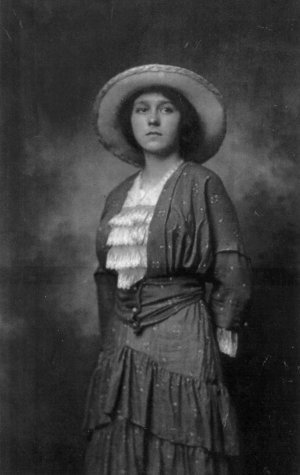
Beatrice Annie Pace was tried and acquitted for murdering her husband with arsenic in 1928.
Background
Beatrice Annie Pace was the wife of a Gloucestershire quarryman and sheep farmer. The Paces lived at Starveacre Farm, Bleak Moor, Forrest Dean, where they kept a few sheep.
The husband died early in January after a long illness. During the period of marriage, extensive pre-trial hearings revealed the dead man's physical and psychological brutality throughout eighteen years of marriage.
The offence
Beatrice Annie Pace was charged with murder for poisoning her husband with arsenic.
The coroner ordered an examination of the remains, which proved that the husband died from arsenical poisoning.
Investigation
An inquiry into the death of Harry Pace, a sheep farmer in the Forest of Dean, in Gloucestershire, ended this week when the jury found that death was due to arsenic and that the poison was administered by Beatrice Annie Pace, the widow.
Home Office experts were involved and they refused to accept a suggestion that the illness might have been due to absorption of arsenic through the skin while Harry Pace was dipping sheep.
Sir William Willcox, the Home Office medical advisor, gave results of investigations. He found 3.62 grains of arsenic in the liver and 1.018 grains in the kidneys, which indicated that a large dose had been taken within 48 hours of death. The stomach was free from arsenic, none could have been taken during the last six hours of life.
Sir William Willcox’s opinion was that Pace was suffering from acute arsenical poisoning from July 24, and that one or more doses were taken between Christmas Day, 1927 and January 10.
Professor Walker Hall, a Bristol pathologist, gave evidence that arsenic must have passed into the dead man’s liver for a period of at least 14 to 21 days, and he added that the period might have been extended to more than three weeks and, perhaps, up to six months.
Mrs. Pace’s counsel quoted a case in which “(6.5) grains of arsenic were extracted at a post-mortem examination, after it had gone through the skin,” and Professor Hall said that it was a case of a child, and that the skin of a child and that of an adult differed. He said that the skin of a healthy adult would not absorb arsenic.
Arrest and pre-trial
The coroner's inquest resulted in Beatrice Pace being committed for trial on a charge of poisoning her husband. The widow was kept in confinement at Harrow for four months before eventually being committed for trial.
As the inquest was adjourned and re-adjourned, the widow repeatedly collapsed under the long-drawn strain until the public demanded that the matter be brought to trial forthwith or the widow, released.
When arrested in court on the coroner’s warrant, Mrs Pace fell to the ground in an agony of tears, wailing: “No, I didn't, no, I didn't.”
The husband’s brother, Elton Pace, remembered that the widow had often said she wished “the old would die.” He suspected it was murder and publicly unbranded her as a murderess.
The trial opened at Gloucester on Monday last.
Trial
At trial, the prosecution case did not prove the administration of poison by the prisoner.
The Solicitor-General prosecuted the case. The Solicitor-General admitted that Beatrice Pace had loved her husband, but said she had 19 years of married misery.
Beatrice Pace’s counsel was Mr. Norman-Birkett, K.C., who submitted that he had no case to answer, as the Crown had not proved the administration of poison by the prisoner, but on the contrary had proved that she was a devoted nurse.
The judge was Justice Sir T. C. Herridge.
Evidence and disputed issues at trial
The cruelty described during the marriage included that her husband often thrashed her, and had even beaten her shortly before the birth of her baby. Doctors described her as a devoted nurse during her husband’s long illness and that she wore blisters on her feet through tramping upstairs and downstairs.
A doctor described that Beatrice Pace ploughed her way for three miles knee deep in the snow over a blizzard-swept hillside to fetch him and then retrudged home.
Elton Pace contended that the devotion and grief were playacting, that she wanted her husband to die, and he charged her with carrying on an intrigue.
During the five months of inquiry intense public sympathy was aroused on the widow’s behalf, and the trial became sensational.
On one day during the trial, Elton Pace, who had given evidence accusing the widow of designing his brother’s death, was mobbed, and another witness for the prosecution fainted.
A woman juror on the second day developed a heart attack, and the judge kept a doctor and nurse beside the jurybox for fear of further prolongation of the widow's ordeal if a fresh start were necessary.
Mrs. Pace’s testimony
Mrs. Pace said that her husband’s life was insured for £69 and that she had paid 8/6 arrears upon her husband’s insurance policy on the night before he died.
She said her husband was ill in bed between July 25 and August 19, complaining of pains in the stomach and then losing the use of his hands.
She said that on July 22 she had bought two packets of sheep dip, which her husband had put in a sheep box. She said she saw her husband empty a tub of dip a day or two after the dipping of the lambs, that the empty tub was left down by the railway line where the dipping took place, and that she helped her husband to do the dipping of the lambs. She said they used a “dolly tub” for the purpose.
The coroner pointed out the tub was only 21in wide and asked whether Mrs. Pace asserted that that was the one used. Mrs Pace replied: “Yes, I swear it, ”
The coroner referred to the breakfast which Pace took to work on the morning on which he was taken ill in July. Mrs Pace said it consisted of bread and butter, and cake and tea, which she prepared herself.
Mrs. Pace said that when her husband returned home he complained of pains in the stomach and head and he was very ill. She said that on the Sunday before he died she took him a glass of cornflour and milk. She placed it on the table beside him and went downstairs, and she believed that he took some of it later.
She said that during the whole of his illness, both before and after his admission to the infirmary, she prepared all his food and that she did everything for him.
She said that about a week or a fortnight before Christmas he cried nearly all the afternoon, and said that he would never be any good to her or the children any more, and he went to the window to throw himself out. She caught hold of him and got him back on to the bed, and told him that he would soon be better. When asked whether she removed anything with which he might do himself harm, she said: “I really did not think he meant it, for he had threatened it so many times,” said Mrs Pace.
She added that she subsequently found a bottle in the fender and said: “Harry, you haven't taken anything out of the bottle, you won't leave me and the children?”
She said she could not account for the finding of a bottle in a cupboard containing potassium permanganate and sheep dip.
In his summing up, the coroner told the jury that Harry Pace was organically sound, and asked whether it was conceivable that a man would dose himself with arsenic from July to January. The coroner asked: “Was it conceivable that a man would dose himself in July with sheep dip lotion to see how much he could take, or how long he could linger before he killed himself; and was it conceivable that he would take one big dose within a short space of his death.”
Verdict and immediate reaction
Mr. Norman-Birkett, K.C., for the widow submitted there was no case to answer.
The judge replied that he would direct the jury to return a verdict of not guilty. Immediately many of the jurors jumped up and gave their verdict before the Clerk had time to put the usual formal question to the foreman.
The judge quickly retired.
The spectators cheered so loudly that a crowd of 6000 outside knew the meaning of it and made a great demonstration, while a brass band played the National Anthem.
After the widow had been rejoined by her two children, who had been in the waiting room, the police escorted them along the motor way, and they were driven homeward amidst hysterical cheering to rejoin the widow’s children in the Galeford village.
The foreman of the jury wept when he announced the verdict, and there was hissing by the public in the court.
Sentencing
The judge directed the jury to return a verdict of not guilty, and the jury returned that verdict.
Appeals
No appeals were described.
Outcome
Beatrice Annie Pace was found not guilty by a jury on July 6, 1928.
Aftermath
It was believed that the Pace trial was the first time in connection with a murder charge wherein the full resources of the Crown, including the Solicitor-General, Scotland Yard, the Home Office and medical and poison experts had collapsed for lack of Crown evidence.
The matter was to be raised in the House of Commons, and it was suggested the inquest verdict should be quashed, and the police conduct of the case referred to the forthcoming Royal Commission on Police methods.
A strong squad of mounted police escorted Elton Pace’s motor for three miles after the trial.
The Daily News expressed the opinion that Coronial procedure as well as the police system needed investigation.
The Daily Mail wrote in a leader that it was “one of the most extraordinary trials in English annals” and said that the public would insist on the assurance that no persons in future would be allowed to suffer prolonged anguish before being brought to trial.

Spotted an error, or have more information about this case?