Elizabeth Richardson
Murderer Ann Beddingfield
Murderer · United Kingdom · 1762
Ann Beddingfield was convicted of petty treason for the murder of her husband,…
1 victim
Ann Beddingfield
Murderer · United Kingdom · 1762
Ann Beddingfield was convicted of petty treason for the murder of her husband,…
1 victim
 Elizabeth Brownrigg
Murderer · United Kingdom · 1767
Elizabeth Brownrigg was an eighteenth century murderer. Her victim, Mary Cliffo…
1 victim
Elizabeth Brownrigg
Murderer · United Kingdom · 1767
Elizabeth Brownrigg was an eighteenth century murderer. Her victim, Mary Cliffo…
1 victim
 Mary Edmondson
Murderer · United Kingdom · 1759
Mary Edmondson Mary Edmondson was the daughter of a farmer who lived near Leeds…
1 victim
Mary Edmondson
Murderer · United Kingdom · 1759
Mary Edmondson Mary Edmondson was the daughter of a farmer who lived near Leeds…
1 victim
 Margaret Waters
Murderer · United Kingdom · 1866
Margaret Waters was an English murderess who was hanged by executioner William…
19 victims
Margaret Waters
Murderer · United Kingdom · 1866
Margaret Waters was an English murderess who was hanged by executioner William…
19 victims
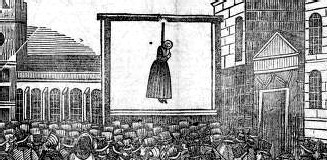 Catherine Wilson
Murderer · United Kingdom · 1854
Catherine Wilson was a British nurse who poisoned victims after befriending the…
7 victims
Catherine Wilson
Murderer · United Kingdom · 1854
Catherine Wilson was a British nurse who poisoned victims after befriending the…
7 victims
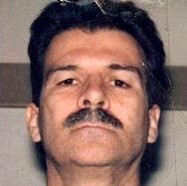 William Mentzer
Murderer · USA · 1983
William Mentzer was a contract killer with ties to drug syndicates. He was also…
5 victims
William Mentzer
Murderer · USA · 1983
William Mentzer was a contract killer with ties to drug syndicates. He was also…
5 victims
 Mary Courtney York
Murderer · USA · 2013
Mary Courtney York was a Del City woman. She previously entered a guilty plea t…
1 victim
Mary Courtney York
Murderer · USA · 2013
Mary Courtney York was a Del City woman. She previously entered a guilty plea t…
1 victim
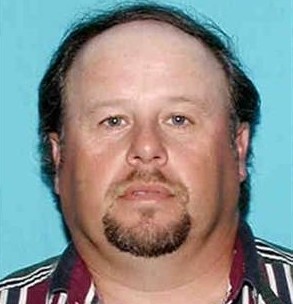 Ronald Dominique
Serial killer · USA · 1997
Ronald Joseph Dominique (born 1964) was an American serial killer from the Bayo…
23 victims
Ronald Dominique
Serial killer · USA · 1997
Ronald Joseph Dominique (born 1964) was an American serial killer from the Bayo…
23 victims
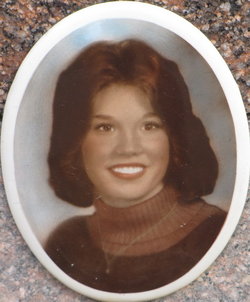 Janice Buttrum
Homicide · USA · 1980
Janice Buttrum was a seventeen-year-old caucasian woman. Demetra Faye Parker wa…
1 victim
Janice Buttrum
Homicide · USA · 1980
Janice Buttrum was a seventeen-year-old caucasian woman. Demetra Faye Parker wa…
1 victim
 Tony Roach
Murderer · USA · 1998
Tony Roach was convicted of capital murder and was sentenced to death. He was e…
1 victim
Tony Roach
Murderer · USA · 1998
Tony Roach was convicted of capital murder and was sentenced to death. He was e…
1 victim
 Jesse Clarence Pratt
Murderer · USA · 1986
Jesse Clarence Pratt was sentenced to death on February 22, 1988. His convictio…
1 victim
Jesse Clarence Pratt
Murderer · USA · 1986
Jesse Clarence Pratt was sentenced to death on February 22, 1988. His convictio…
1 victim
- Gender
- female
- Country
- United Kingdom
- Location
- London, England, United Kingdom
- Date of birth
- ????
- Characteristics
- jealousy
- Victim profile
- William Pimlot
- Method of murder
- Stabbing with knife
- Date(s) of murder
- November 14, 1768
- Years active
- 1768
- Date of arrest
- Same day
- Status
-
Executed
Executed by hanging at Tyburn on December 21, 1768
Case record: Elizabeth Richardson
Status and legal outcome
Elizabeth Richardson was executed by hanging at Tyburn on December 21, 1768.
Background
Elizabeth Richardson was identified as otherwise Forrister and described as a spinster. The narrative stated that she had been seduced from “the precepts of virtue and honour at an early period of life.” She later “subsist[ed] some years on the wages of casual prostitution” before being “taken into keeping by Mr Pimlot, an attorney-at-law, who had chambers in Symond's Inn.” The narrative stated: “Whether she had cause for jealousy is uncertain, but she was inflamed with that passion to a degree of violence, and frequently went to his chambers in the expectation of finding him engaged with some other woman.”
The offence
The account described an attack by Richardson at Mr Pimlot’s chambers in Symond’s Inn, Chancery Lane. The prosecution narrative described a sequence beginning with Pimlot being engaged with friends at a house in Fleet Street on “a Sunday evening,” followed by Richardson going to his chambers, finding him not there, and then waiting “till his return.”
At “about twelve o'clock” Mr Pimlot entered his chambers “without being perceived by the woman, and went to bed.” After “About half-an-hour afterwards” Richardson “in a most riotous manner insisted upon being admitted,” declaring that she would not leave “till she had seen Mr Pimlot.” The narrative stated that “This exasperating her to still greater outrage,” she used “the most profane language,” broke “one of the panes of the window,” and moved “towards the passage leading to Chancery Lane, but turning back, she was met by Mr Pimlot, who gave her into custody of the watch.”
The narrative stated that once in custody, Richardson used “a sharp-pointed penknife, with a blade about two inches long,” and struck Mr Pimlot “under the left breast.” It recorded the watchman’s response: “You break the peace, madam, and I must take you to the watch-house.”
Immediately afterward, the account described Mr Pimlot taking the knife from the wound and saying “in a faint and tremulous voice”: “Here, watchman, take this knife; she has stabbed me.”
The narrative stated that Mr Pimlot was taken to the watch-house with a constable and Richardson as his prisoner. The account described Pimlot opening his waistcoat and blood being seen from the wound, and that “he presently expired, without speaking.” The knife was examined and blood was found on the blade.
After the blood was seen, the narrative recorded Richardson clasping her hands and exclaiming: “What have I done! Oh, Mr Wilson, it was I that did this shocking deed: instantly send for a surgeon, send for a surgeon! I have murdered my dear Pimlot.”
Investigation and medical findings
After Richardson was taken into custody, she was “immediately sent to New Prison.”
A watchman was sent for “Mr Minors, a surgeon, in Chancery Lane,” but he was “in bed,” so “two of his pupils accompanied the watchman.” The account stated that on their arrival they found “the gentleman dead.”
On the following day, “the body was opened by Mr Minors,” who found “that the heart was penetrated,” and that “the wound exactly corresponded with the figure of the knife.”
The subsequent trial evidence included testimony about the wound:
Mr Minors testified:
“I found a wound in the interior ventricle of the heart, which I apprehend to be the immediate cause of his death.”
He described the wound location and appearance:
“It was between the fifth and sixth rib on the left side; it had the appearance of a small wound; (a wound will contract after given) it was larger internally than externally; it had the appearance as if given by a knife, or sharp instrument; it had not gone to the opposite side, it had only just penetrated the interior ventricle of the heart.”
He also testified:
“It was three or four inches; if the heart was beating to that side the body at the time the blow was given, the knife need not have reached so far as three or four inches to get at the heart. I believe, that wound to be the cause of his death.”
Arrest and custody
The arrest sequence was described in trial testimony.
Samuel Sowens testified that on “the 14th of November, being Monday, in the morning about half an hour after one o'clock,” he was in Weeden street, heard “watch called,” and followed Mr Pimlot into Chancery lane. He testified that Pimlot pointed out Richardson and that before the words were out, “she flew to him with her right hand, and gave him a push under his left breast.” He testified he seized her right hand and said:
“you strike, madam, you break the king's peace, I'll take you to the watch-house;”
Sowens testified that Pimlot then delivered the knife to the watchman, stating:
“Here, watchman, take this, delivering to me this knife.”
Sowens testified about the distance and subsequent observations:
“It was betwixt eighty and ninety yards.”
He testified that the knife blade was “partly all over bloody, fresh blood,” and described Pimlot opening his clothing, laying his belly “all naked,” and showing the wound. Sowens testified that after Pimlot fell into the constable’s chair, “he never said a word as I heard,” after saying: “(Here, watchman, take this) he flung his cloaths open and leaned his head;”
Sowens recorded Richardson’s statements after she saw the blood:
“Oh, Mr. Wilson! it was I that did it, it was I that did it! And I think she said, send for a surgeon. Then I imediately went for Mr. Minors, the surgeon;”
He testified that the surgeons came “in less than a quarter of an hour,” and that “to the best of my knowledge, that was some minutes before two o'clock.” Sowens also testified that the prisoner was then sent to “Clerkenwell New-Prison,” and that the constable accompanied him.
James Wilson testified he was beadle of the Rolls Liberty. He testified that when he threw the door open he saw the deceased and the watchman with Richardson under his arm, and that the deceased charged Richardson. He described then seeing Mr Pimlot open his breast and a wound. Wilson’s testimony included Richardson’s repeated requests:
“get a surgeon: Oh, said she, get a surgeon.”
He testified that Richardson said:
“Mr. Wilson, I did it.”
He also testified that Richardson said:
“it was I that have done it; get a surgeon, and save my dear Pimlot.”
Wilson further testified about her statement not wanting to screen herself:
“She repeated that several times. Q. What did you understand by her saying, she did not want to screen herself? Wilson. I understood it, that she meant she would not run away, if I went for a surgeon.”
Wilson testified about Pimlot’s death:
“I believe, there might be breath in him about seven minutes after he sat down in the chair; he died like a young child going to sleep, not an eye nor a hand, or any thing stirred; he never stirred hand or foot; he died without any stirring; he never spoke in the watch-house.”
Wilson testified that Richardson asked permission to kiss him and that:
“she went across the room and kissed him, and said, My dear Pimlot, I shall never see you more.”
John Robinson testified he was constable and that when he arrived, the two young surgeons were there and the deceased was dead. He testified about the wound probing and measurement:
“The surgeons probed the wound, and measured the probe to the blade of the knife, and said, it just answered to it.”
He testified that the penknife matched the hole and said that he asked Richardson “did you do it; she said, she did, twice over.”
Robinson testified about taking Richardson to New-Prison, that she refused to tell her name, and that “she seemed to be in a great deal of trouble.”
Trial
The narrative stated that Richardson was “brought to trial at the next sessions at the Old Bailey” and “being found guilty, she was sentenced to be executed on the following Monday.”
The trial text included a specific description of indictment and proceedings. The proceedings excerpt recorded:
“ELIZABETH Richardson , otherwise Forrister , spinster, was indicted for the wilful murder of William Pimlot ; she stood charged on the Coroner's inquest for the said murder,”
The excerpt also stated that the coroner’s jury found a verdict of “wilful murder” against the prisoner, and that she was “Guilty . Death .” and received sentence immediately “(this being Friday) to be executed on the Monday following, and her body to be dissected and anatomized.”
Witness and testimony
The proceedings excerpt included testimony by James Carpenter, Samuel Sowens, James Wilson, John Robinson, and Isaac Minors, along with comments about Richardson’s character.
James Carpenter testified he had chambers in Simond’s Inn and described hearing sounds and seeing Richardson. He said:
“I heard a window immediately break, as though somebody struck it with their hand; I heard the glass as plain as ever I did any thing in my life; after that she came away, swearing that he should see her in the morning.”
He testified about Richardson’s words:
“She swore I will see you, or you shall see me; I believe she said both:”
He also testified:
“I saw her come from that part and go out of the Inn: she went towards the gate for Chancery-lane.”
Carpenter additionally testified that he did not know whether the woman was the prisoner:
“I really do not know whether it was the prisoner or not.”
Samuel Sowens testified to watching Richardson’s approach and the push into Pimlot under the left breast, and described the knife and wound as well as Richardson’s statements.
James Wilson testified as beadle and described opening Pimlot’s breast, seeing the wound, asking for a surgeon, and Richardson’s statements including “save my dear Pimlot.”
John Robinson testified surgeons probed and measured and matched the knife to the wound and described Richardson’s admission “she said, she did, twice over.”
Isaac Minors testified about the heart wound and its likely cause of death, and said the prisoner said nothing in her defence:
“The prisoner said nothing in her defence.”
Sentencing and post-trial handling
The narrative stated that she was sentenced to be executed on the following Monday after the trial at the Old Bailey, and that after her body had hung the usual time, it was carried to Surgeons’ Hall for dissection.
The proceedings excerpt recorded sentence and immediate post-sentence actions:
“She received sentence immediately (this being Friday) to be executed on the Monday following, and her body to be dissected and anatomized.”
Other details: identity and character evidence
The proceedings excerpt included character testimony:
Catharine Davenport testified:
“I live in No. 3, New-Street Square, the prisoner lived with me a lodger some years ago; she was then a sober, modest, meek-spirited woman.”
Charles Doagale testified:
“I have known the prisoner about two-and-twenty years; she served her time to an aunt of mine, a mantua-maker, at that time she was a sober honest girl, looked upon to be a mild, meek girl; her right name is Forrister. I knew her father well, he was a very honest man.”
The account also used names and identifiers for Richardson, including “otherwise Forrister,” and for the deceased, “Mr Pimlot” and “William Pimlot.”


Spotted an error, or have more information about this case?