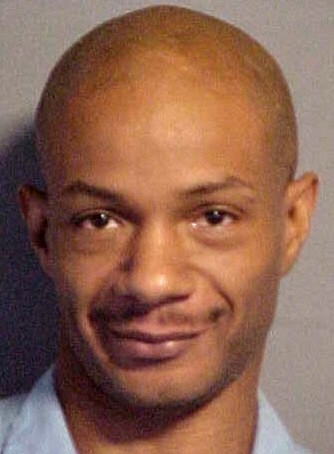
Tyrone Darks
Murderer Brian Kevin Rosenfeld
Murderer · USA · 1985
Brian Kevin Rosenfeld Brian Kevin Rosenfeld was sentenced to three concurrent l…
23 victims
Brian Kevin Rosenfeld
Murderer · USA · 1985
Brian Kevin Rosenfeld Brian Kevin Rosenfeld was sentenced to three concurrent l…
23 victims
 Russell Ellwood
Murderer · USA · 1991
Russell Ellwood was a former taxi driver. Authorities suspected him of killing…
20 victims
Russell Ellwood
Murderer · USA · 1991
Russell Ellwood was a former taxi driver. Authorities suspected him of killing…
20 victims
 Robert Martines Perez
Murderer · USA · 1994
Name: Robert Martines Perez · Other name used in proceedings: Robert Martinez P…
15 victims
Robert Martines Perez
Murderer · USA · 1994
Name: Robert Martines Perez · Other name used in proceedings: Robert Martinez P…
15 victims
 Billy Frank Vickers
Murderer · USA · 1993
Billy Frank Vickers Vickers was executed by lethal injection in Texas on Januar…
14 victims
Billy Frank Vickers
Murderer · USA · 1993
Billy Frank Vickers Vickers was executed by lethal injection in Texas on Januar…
14 victims
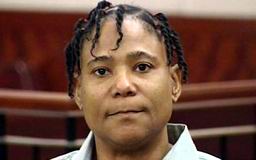 Mona Nelson
Murderer · USA · 2010
Mona Nelson was sentenced to life in prison without parole on August 27, 2013.…
1 victim
Mona Nelson
Murderer · USA · 2010
Mona Nelson was sentenced to life in prison without parole on August 27, 2013.…
1 victim
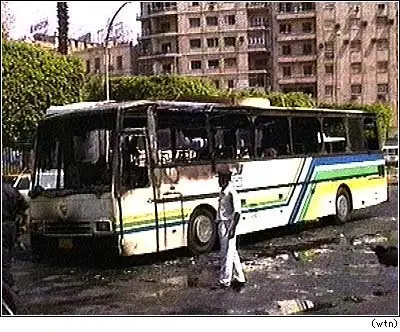 Saber & Mahmoud Abu el-Ulla
Mass murderers · Egypt · 1993
This case concerns Saber Abu el-Ulla and his brother, Mahmoud Abu el-Ulla, who…
13 victims
Saber & Mahmoud Abu el-Ulla
Mass murderers · Egypt · 1993
This case concerns Saber Abu el-Ulla and his brother, Mahmoud Abu el-Ulla, who…
13 victims
 Terrie Robinson
Murderer · USA · 2011
Terrie Robinson was a 25-year-old woman who pleaded guilty to the murder of her…
1 victim
Terrie Robinson
Murderer · USA · 2011
Terrie Robinson was a 25-year-old woman who pleaded guilty to the murder of her…
1 victim
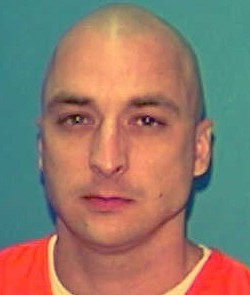 Johnny Kormondy
Murderer · USA · 1993
Name: Johnny Shane Kormondy DOB: 05/20/72 DC#: 200754 Case number: 93-3302 Cour…
1 victim
Johnny Kormondy
Murderer · USA · 1993
Name: Johnny Shane Kormondy DOB: 05/20/72 DC#: 200754 Case number: 93-3302 Cour…
1 victim
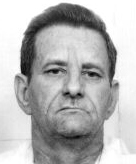 Dennis Dowthitt
Murderer · USA · 1990
June 13, 1990 — Gracie Purnhagen (16) and Tiffany Purnhagen (9) were last seen…
2 victims
Dennis Dowthitt
Murderer · USA · 1990
June 13, 1990 — Gracie Purnhagen (16) and Tiffany Purnhagen (9) were last seen…
2 victims
- Gender
- male
- Country
- USA
- Location
- Oklahoma County, Oklahoma, USA
- Date of birth
- August 26, 1964
- Age at first offence
- 30
- Characteristics
- parricide, domestic violence, rape
- Victim profile
- Sherry Deann Goodlow, 26 ( his ex-wife)
- Method of murder
- Shooting
- Date(s) of murder
- August 7, 1994
- Years active
- 1994
- Date of arrest
- Same day
- Status
-
Executed
Executed by lethal injection in Oklahoma on January 13, 2004
Case record: Tyrone Darks
Background
Tyrone Peter Darks was convicted of the first degree murder of his former wife, Sherry Goodlow, and was sentenced to death in Oklahoma state court. The jury found one aggravating circumstance: that Darks would constitute a continuing threat to society, and the trial judge sentenced Darks in accordance with the jury’s recommendation of death.
Darks was 39 at execution and was pronounced dead at 6:08 p.m. at the Oklahoma State Penitentiary. He became the first Oklahoma inmate executed in 2004.
The offence
On Sunday, August 7, 1994, Sherry Goodlow went to church with her two-year-old son, Scott, and her friend Shurl Gabriel. After the services, Goodlow and Scott, along with Gabriel and Gabriel’s sister-in-law, went to the grocery store and made purchases at 2:19 p.m.
Goodlow declined an invitation for dinner and wanted to go home.
At 2:52 p.m., Goodlow made a 911 call from a pay telephone and reported that Darks had run her off the road and taken their son. At 3:09 p.m., Goodlow made a second 911 call asking about the officer and was told there had been a delay.
When police arrived at Darks’ residence, neither Goodlow nor Darks was there, and Darks’ mother indicated she had not seen Goodlow that day.
A black male later identified as Darks drove into a nearby driveway, then backed out. The witness also saw a small white vehicle at the intersection, saw Darks’ vehicle follow it, and later heard what sounded like firecrackers exploding from the direction of Draper Lake.
Another witness saw a white Mustang driven by a woman parked at a driveway gate, heard screaming, and followed the woman in a pickup. The witness later discovered tire tracks in the grass leading from the road into the brush. The Mustang was found with flashers on and the engine running. No one responded to calls, and the witness telephoned 911.
Police officers discovered Goodlow lying across the seat of her Ford Mustang. She had been shot several times, and later information described her as being shot six times, suffering wounds to the arm, chest, and head, and that she was found slumped over in the front seat with her seatbelt still on. Evidence also described that Goodlow had been shot four times at close range—twice in the head, once in the back, and once in the arm—with a .38 caliber gun through the open window of her car.
Ballistics evidence stated that three bullets recovered from Goodlow’s body and one recovered from her car were consistent with a .38 caliber.
Darks provided statements to police about the day of the death. He told officers that Goodlow called him at 2:30 p.m. and asked him to pick up Scott, and that he did so about 3:00 p.m., then returned home. At 4:00 p.m., Goodlow came to his house asking for money, which he gave her, and she left. He stated he went to the mall with Scott at 4:30 p.m. and went to his girlfriend’s house at 5:30 p.m. Darks agreed to go to the police station for further questioning, where he gave approximately the same story and claimed Goodlow could not have called 911. Darks denied killing Goodlow but stated she had “gotten what she deserved and what goes around comes around.” He also told detectives they could not place him at the scene of the murder and that they had no gun or fingerprints.
After his arrest, while incarcerated in a cell with other inmates, Darks told a man in jail that he had killed his girlfriend. Darks told that he had taken Scott from Goodlow as she was coming from church, put the boy into his car, and that Goodlow followed him to Draper Lake, where he shot her twice in the head and three or four times in the back with a .38 caliber gun. The statement further described that Goodlow was sitting in the car with her foot on the brake and the car in drive when he shot her.
The victim’s father, Joe Goodlow, testified that the court had taken away Darks’ visitation rights. It was undisputed that Darks and Goodlow had an ongoing hostile relationship. Two days before the murder, Darks called Goodlow’s father and told him Goodlow should “get her insurance papers up to date because he's going to put a cap in her.”
Joe Goodlow explained at trial that he believed this meant Darks was going to kill his daughter. Five minutes after making that call, Darks drove by the Goodlow home. Goodlow had expressed fear of Darks and bad feelings toward him before her death.
Investigation
Sergeant Ken Davis received dispatch to go to Darks’ residence at 3:15 p.m. On arrival at 3:27 p.m., he found neither Goodlow nor Darks and was told by Darks’ mother that she had not seen Goodlow that day.
After a call at 3:55 p.m., police proceeded to the crime scene.
An officer went to Darks’ home to check on Scott and to talk to anyone who might know Goodlow. Darks was home and participated in questioning.
During his interrogation, Darks stated police could not place him at the scene and that they had no gun or fingerprints. During the interview, police arrested Darks.
The Oklahoma Court of Criminal Appeals later addressed evidence issues, including that irrelevant comments should have been redacted from a videotape of Darks’ post-arrest interview with detectives, and that the trial court’s admonishment to the jury made the error harmless. The direct appeal also addressed evidence admitted at trial, including a forged divorce decree granting child custody, and police comments made during the videotaped interview.
Trial
Darks was tried and convicted by jury of the crime of Murder in the First Degree, malice aforethought, in Case No. CF-94-1024 in the District Court of Cleveland County before the Honorable William C. Hetherington, Jr., District Judge.
The jury found one aggravating circumstance: that Darks would constitute a continuing threat to society. Based on the first and second stage evidence, the jury found that aggravator but did not find that the murder was committed to avoid lawful arrest or prosecution.
The jury assessed a death sentence, finding that the continuing threat aggravator outweighed the mitigating evidence.
During sentencing, the state presented evidence of the relationship between Goodlow and Darks. A store clerk testified about an incident in which Darks came up behind Goodlow and grabbed her neck while she was walking in the mall pushing Scott in a baby stroller. Darks released Goodlow and tried to pull Scott from the stroller while Goodlow pleaded for him not to take the child. A police officer took Darks into custody after the store clerk called security. At that time, Darks maintained that Goodlow had hit him first and that he wished to press charges.
Sergeant Aven Bull testified he had gone to Goodlow’s house two or three times after Darks reported Goodlow was abusing their son, but Bull found no evidence of child abuse by Goodlow.
A series of police reports from 1992 on concerned both Goodlow and Darks, with charges typically filed against Darks but not against Goodlow. From January to June 1994, police arrested Darks with increasing frequency. Evidence indicated Darks had broken the front and back windows on Goodlow’s car, spray-painted Goodlow’s mother’s new car, and called Goodlow’s mother to ask if she had enjoyed removing the paint.
Mitigation testimony included statements from family members, his pastor, and the pastor’s wife, including:
- The defendant is a good father.
- The defendant loved his son and went to jail in order to see his son.
- The defendant and Sherry Goodlow had a stormy relationship aggravated by mutual tempers, jealousies and random acts of aggression.
- The defendant is well educated and may provide valuable assistance to others and encourage educational pursuits.
- Throughout their eight year relationship both the defendant and Sherry Goodlow had periods of mutual happiness and love.
- The defendant has been a loving and supportive brother and son to his family.
- The defendant has no prior history of aggression, other than the incidents related to his relationship with decedent.
- The defendant has a personal relationship with God and can share his faith and prayers with others.
The jury rejected Darks’ alibi defense and found him guilty of first degree murder.
A question later became part of federal habeas litigation under Beck v. Alabama regarding whether the trial court should have instructed on first degree manslaughter as a lesser included offense. Federal and appellate discussions addressed whether the evidence warranted a heat of passion manslaughter instruction, the adequate provocation element under Oklahoma law, and the impact of that omission on the case.
Sentencing
Darks was sentenced to death by the trial judge in accordance with the jury’s recommendation.
A continuing threat aggravating factor was found. The jury did not find that the murder was committed to avoid lawful arrest or prosecution. The jury determined the continuing threat aggravator outweighed the mitigating evidence.
During second stage deliberations, the trial court called the jury into the courtroom and instructed further deliberation after the jury reported it was not unanimous as to punishment. The instruction stated:
Ladies and gentlemen of the jury, you have advised me through your foreperson that you have not reached a unanimous verdict as to punishment. I am going to ask you to deliberate further. You are advised that if upon further deliberation you are unable to agree unanimously as to a punishment recommendation, I shall discharge you, and according to law, I must impose either a sentence of life or a sentence of life without parole. You are excused at this time back into [the bailiff's] charge for further deliberations.
The jury later returned a unanimous verdict of death.
Appeals
On direct appeal, the Oklahoma Court of Criminal Appeals affirmed Darks’ conviction and sentence in 1998 (Darks v. State, 954 P.2d 152 (Okla. Crim. App. 1998)) and denied post-conviction relief in the same year (Darks v. State, 954 P.2d 169 (Okla. Crim. App. 1998)).
The direct appeal included findings and holdings such as:
- The admission of a forged divorce decree granting child custody was erroneous as it suggested other crimes, but the error was harmless.
- Irrelevant comments should have been redacted from videotape of Darks’ post-arrest interview, but the trial court’s admonishment to the jury made the error harmless.
- Darks’ confession to a jailhouse informant was voluntary and not the product of illegal detention for more than 48 hours without a probable cause hearing.
- Evidence sustained conviction.
- Evidence sustained finding of the aggravating sentencing factor of continuing threat to society.
- Trial court erred in admitting two photographs as victim impact evidence, but errors were harmless.
- Prosecutor’s closing arguments at guilt and sentencing phases were not improper.
- Counsel was not ineffective.
- Evidence sustained that Darks voluntarily, knowingly, and intelligently waived his right to be present during individual voir dire, return of verdict, and sentencing.
Federal habeas proceedings proceeded under the Anti-Terrorism and Effective Death Penalty Act of 1996. A federal district court granted habeas relief from both the conviction and sentence, holding that the trial court violated Beck v. Alabama by failing to instruct on first degree manslaughter as a lesser included offense and unconstitutionally coerced the death verdict with a supplemental instruction, also citing cumulative error.
The United States Court of Appeals for the Tenth Circuit reversed the district court’s grant of habeas relief. It held:
- The evidence did not warrant an instruction on first degree manslaughter under Beck.
- The supplemental instruction during second stage deliberations did not coerce a death sentence.
- Cumulative error relief was not warranted; the Tenth Circuit concluded Darks was not entitled to habeas relief from his conviction or from his sentence.
The Tenth Circuit described its review under AEDPA standards and the harmlessness framework for cumulative error analysis, and it concluded that any assumed errors were insufficient to undermine the continuing threat aggravator.
The Oklahoma Pardon and Parole Board denied clemency on Dec. 12.
Outcome
Darks’ execution was scheduled and carried out following the Supreme Court action lifting a stay. The U.S. Supreme Court decided 5-4 to vacate the stay of execution and allow the execution to proceed, and he was executed by lethal injection.
Darks was pronounced dead at 6:08 p.m. on January 13, 2004, at the Oklahoma State Penitentiary.
Darks had been scheduled for execution at 6 p.m., and the final moments included statements made to family members as he was being executed.
Aftermath
Sherry Goodlow’s father, Joe Goodlow, said after the execution that he forgave Darks before he was executed and that he did not expect Darks to apologize. Joe Goodlow’s account included that Darks told family members he loved them and urged them to take care of themselves but did not acknowledge the Goodlows. Joe Goodlow also said he planned to witness the execution with his daughter.
Darks’ mother, Judith McClendon, yelled “Thank you, Jesus! Thank you, Jesus!” while moving toward the glass of the execution chamber. She also shouted earlier during the moments before seating, and she cried unconsolably afterward. McClendon’s account included her religious statements made before and after Darks was pronounced dead.
In addition to his execution proceedings, federal allegations described Darks’ later activities while on death row. An Oklahoma death row inmate was charged in connection with trying to defraud a compensation fund for victims of the Sept. 11, 2001 attacks. A federal grand jury returned a four-count indictment charging Tyrone Peter Darks with two counts each of false statements and mail fraud. He was alleged to have applied for between $300,000 and $1 million from the September 11 Victims Compensation Fund, claiming his wife disappeared when she visited the World Trade Centers that day, with claims that his wife was a wealthy business executive who had earned $4.5 million in each of the last four years. Authorities also alleged that in 2001 he sent The Daily Oklahoman a letter made to look like a sworn affidavit from a recently executed inmate, claiming that inmate had been the real killer of Darks’ wife. Darks’ sentence in federal court was described as one year in prison and two years of supervised release following his term of imprisonment in state prison.
An appellate stay for the lethal injection claim was granted and then vacated by the U.S. Supreme Court, after which execution proceeded.
Darks had also been scheduled for additional execution dates referenced in other cases, including Hung Thanh Le scheduled to be executed Jan. 6, Norman Richard Cleary scheduled to die Feb. 17, and David Jay Brown set to die March 9.
In an update during the period before execution, the execution was described as scheduled for Tuesday evening at 6 p.m. and the U.S. Supreme Court lifted a stay of execution granted by the Tenth Circuit.
Other details
Tyrone Peter Darks had requested a last meal that included chicken breasts, a bag of jelly beans, licorice, lemon-glazed doughnuts, and cream sodas.
Darks was 38 or 39 in various accounts; one account described him as 38 and another as 39, and he was executed on January 13, 2004.

Spotted an error, or have more information about this case?