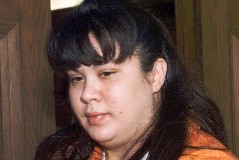
Christina Riggs
Murderer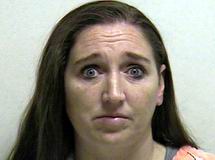 Megan Huntsman
Murderer · USA · 1996
Megan Huntsman was 40 at sentencing. She was a mother of three children who wer…
6 victims
Megan Huntsman
Murderer · USA · 1996
Megan Huntsman was 40 at sentencing. She was a mother of three children who wer…
6 victims
 Angela Johnson
Murderer · USA · 1993
Angela Jane Johnson was convicted in federal court of aiding and abetting the m…
5 victims
Angela Johnson
Murderer · USA · 1993
Angela Jane Johnson was convicted in federal court of aiding and abetting the m…
5 victims
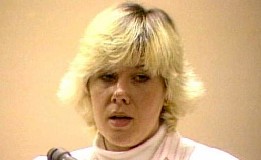 Catherine May Wood
Murderer · USA · 1987
Catherine May Wood was an American caregiver who worked at the Alpine Manor Nur…
5 victims
Catherine May Wood
Murderer · USA · 1987
Catherine May Wood was an American caregiver who worked at the Alpine Manor Nur…
5 victims
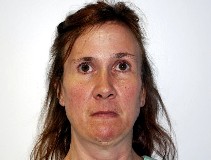 Michele Kalina
Murderer · USA · 1996
Michele Kalina pleaded guilty to murder for one of five infants she initially w…
5 victims
Michele Kalina
Murderer · USA · 1996
Michele Kalina pleaded guilty to murder for one of five infants she initially w…
5 victims
 Tiffany Hall
Murderer · USA · 2006
Tiffany Hall was 24 when she was charged in September 2006. She later entered a…
5 victims
Tiffany Hall
Murderer · USA · 2006
Tiffany Hall was 24 when she was charged in September 2006. She later entered a…
5 victims
 Banita Jacks
Murderer · USA · 2007
Banita Jacks was a Washington, DC resident convicted of murdering her four daug…
4 victims
Banita Jacks
Murderer · USA · 2007
Banita Jacks was a Washington, DC resident convicted of murdering her four daug…
4 victims
 Edward Paul Morris
Mass murderer · USA · 2002
Edward Paul Morris killed his wife and three children and dumped their bodies i…
4 victims
Edward Paul Morris
Mass murderer · USA · 2002
Edward Paul Morris killed his wife and three children and dumped their bodies i…
4 victims
 Angus Sinclair
Serial killer · United Kingdom · 1961
Angus Sinclair was sentenced to life in prison for the murders of Helen Scott a…
8 victims
Angus Sinclair
Serial killer · United Kingdom · 1961
Angus Sinclair was sentenced to life in prison for the murders of Helen Scott a…
8 victims
 Jeremiah Berry
Murderer · USA · 2008
Jeremiah Berry was convicted after pleading guilty to the second-degree murder…
1 victim
Jeremiah Berry
Murderer · USA · 2008
Jeremiah Berry was convicted after pleading guilty to the second-degree murder…
1 victim
 Carolyn King
Murderer · USA · 1993
Carolyn King was convicted along with Bradley Martin of the 1993 murder of 74-y…
2 victims
Carolyn King
Murderer · USA · 1993
Carolyn King was convicted along with Bradley Martin of the 1993 murder of 74-y…
2 victims
 Melissa Bates
Murderer · USA · 2011
Melissa R. Bates was 28 years old when she was sentenced. She entered an Alford…
1 victim
Melissa Bates
Murderer · USA · 2011
Melissa R. Bates was 28 years old when she was sentenced. She entered an Alford…
1 victim
- Gender
- female
- Country
- USA
- Location
- Pulaski County, Arkansas, USA
- Date of birth
- September 2, 1971
- Age at first offence
- 26
- Characteristics
- parricide, child killer
- Victim profile
- Justin Thomas, 5, and Shelby Alexis, 2 (her two children)
- Method of murder
- S mothering with a pillow
- Date(s) of murder
- November 4, 1997
- Years active
- 1997
- Date of arrest
- Next day ( suicide attempt )
- Status
-
Executed
Executed by lethal injection in Arkansas on May 2, 2000
Case details
Christina Riggs was executed in Arkansas by lethal injection.
Riggs was convicted of murder by smothering her two preschool-aged children in their beds at the family's Sherwood home. She obtained drugs and used them to drug and kill her children, then attempted suicide.
Timeline
- November 4, 1997 — Riggs obtained Elavil, morphine, and potassium chloride, gave a small amount of Elavil to her children to put them to sleep, injected Justin with undiluted potassium chloride, attempted further treatment with morphine, and smothered both children with a pillow; she placed the children side-by-side on her bed and wrote suicide notes.
- November 5, 1997 — Riggs did not show up for work; her mother, Carol Thomas, went to Riggs's apartment, found the children dead and Riggs unconscious, called 911, and paramedics arrived; Riggs was taken to Baptist Memorial Medical Center in North Little Rock and her stomach was pumped; Sherwood police conducted a search of Riggs's home and found suicide notes, Elavil, morphine, potassium chloride, and used syringes.
- November 6, 1997 — Detectives Charles Jones and Cheryl Williams arrived at Baptist Memorial Hospital to take Riggs's statement; at 9:20 a.m., Detective Jones gave Riggs Miranda warnings and took an eight-minute statement.
- June 1998 — Riggs went to trial in Pulaski County Circuit Court and entered a plea of not guilty by reason of mental disease or defect; the Pulaski County jury convicted her.
- June 30, 1998 — The jury took 55 minutes to find her guilty on two counts of first degree murder; the trial moved into sentencing.
- July 1998 — The state Supreme Court accepted a motion from Riggs that she was competent to be executed.
- May 2, 2000 — Riggs was executed by lethal injection in Arkansas.
The offence
Riggs obtained the anti-depressant Elavil from her pharmacist, the painkiller morphine and the toxic potassium chloride from the hospital where she worked. She gave her children a small amount of Elavil to put them to sleep and then placed each child in their beds.
Around 10 p.m., Riggs injected Justin, described as 5 years old, with undiluted potassium chloride. Unless diluted, the drug caused burning and pain; Justin woke and cried out in terror. Riggs then smothered Justin with a pillow. She then moved to Shelby, described as 2 years old, and Riggs suffocated Shelby with a pillow as well. Riggs then placed the children side-by-side on her bed and covered them with a blanket.
After the killings, Riggs wrote suicide notes to her mother and to her ex-husband Jon Riggs. She took 28 Elavil tablets, described as normally a lethal dose, and injected herself with enough undiluted potassium chloride to kill five people. She fell unconscious.
Investigation and arrest
After Riggs failed to show up for work the next day, Carol Thomas telephoned her daughter's home, received no response, and drove to Riggs's apartment. Thomas let herself in and found the children dead. Thomas thought Riggs was dead too, and called 911. Paramedics and police found Riggs barely alive and took her to Baptist Memorial Medical Center emergency room in North Little Rock. Doctors stabilized Riggs and later moved her to intensive care, where police kept her under guard after they found syringes and suicide notes.
Sherwood police conducted a search of Riggs's home and found suicide notes, the bottle of Elavil, morphine, potassium chloride, and used syringes.
The Pulaski County Coroner Mark Malcolm estimated that the children had been dead for 10 to 14 hours before they were discovered.
Police statement (Miranda and recorded interview)
On the morning of November 6, 1997, Detectives Charles Jones and Cheryl Williams of the Sherwood Police Department arrived to take Riggs's statement. At 9:20 a.m., Detective Jones gave Riggs Miranda warnings and took an eight-minute statement.
The following exchange was recorded and transcribed as part of Riggs's statement:
detective Jones: This is Detective Jones of the Sherwood Police Department. Today's date is November 6, 1997. The time is 9:20 a.m. Present in this inter.. room is Detective Cheryl Williams and Christina Riggs. Christina, do you understand that I am tape recording this? riggs: Yes, I do. detective Jones: Okay, Christina. I want to advise you of your rights. You have the right to remain silent. Anything you say, can and will be used against you in a court of law. You have the right to talk to a lawyer and have him present with you while you are being questioned. (Riggs crying) If you cannot afford to hire a lawyer, one will be appointed to represent you before any questioning, if you wish. (Riggs crying) You can decide at any time to exercise these rights and not answer any questions (Riggs crying) or make any statements. Do you understand your Miranda rights, Christina? (Riggs crying in the background) riggs: Yes, I do, sorry. detective Jones: You do. Okay. Christina, what we are doing is investigating the death of your two babies. Do you want to tell us what happened? riggs: (Crying) I killed them. detective Jones: What did you say? riggs: I said ․ detective Jones: Did you say you killed them? riggs: I'm sorry. dectective Jones: Christina, how did you go about doing that? riggs: I got some bottles (inaudible) and stuff from here ․ I need a cigarette (inaudible) ․ Darvocet. detective Jones: Are you saying that you got some medicine from the hospital? riggs: (no verbal response) detective Jones: Christina, how did you do it? Did you give them an injection? Did you give them a shot? riggs: I tried to ․ and ․ I did it with Justin, because I figured with him being the oldest one that he would give me more problem. detective Jones: Uh-huh. (yes) riggs: So, I tried it with him and I thought it would just stop his heart. But it hurt. Oh, he said it hurt ․ (inaudible ). detective Jones: Uh-huh. (yes) riggs: It didn't work, he just kept calling, “Momma! Momma! Momma!” I just figured it was too late now because I had no place to turn back to. I cleaned out my checking account and gave my mother all the money I had. (Crying) detective Jones: Christina, why did you do this? riggs: Because I wanted to die. But I didn't want to die and leave my kids behind or for them to be a burden to somebody else. I didn't want them to think I didn't love them and I didn't want them to grow up separately because they have two different Daddy's. And I knew if I passed away they would be fighting my Mother for custody and I didn't want that for nobody. detective Jones: You felt like you were doing it for the kids' sake? riggs: In a way, yeah. (Inaudible) ․ my piece of mind. detective Jones: Christina, did you really want to die? riggs: (Crying) detective Jones: And you felt it would be better if your children just die with you and ․ was the children already dead before you took your medicine? riggs: Yes. detective Jones: How long had they been dead before you took your medicine? riggs: About twenty minutes. detective Jones: About twenty minutes? riggs: That's because I drank and got up and smoked a cigarette and got back and sit for a minute and (inaudible) I was like, “Okay, I'm going to do it now. I can't turn back now because you've already killed Justin.” And ․ so I did it. detective Jones: What time did you give them the medicine? Do you remember? riggs: (inaudible) Justin about 10:15 or 10:30. detective Jones: 10:15 or 10:30 in the morning? riggs: No, in the evening. detective Jones: Oh, in the evening? riggs: Last night. detective Jones: Okay. riggs: Then I smoked another cigarette and waited ․ and suffocated Shelby. detective Jones: You suffocated Shelby? riggs: (Crying) detective Jones: What did ․ how did you suffocate her? riggs: I put a pillow over her head. detective Jones: Okay, Did you ․ riggs: (Crying) detective Jones: Had you given her any medicine at all, or ․ any of the Morphine or the Potassium Chloride? riggs: I slipped them ․ I made them drink half of an Elavil because I figured that would make them sleep a little bit better so that it wouldn't wake them (inaudible). detective Jones: So, Shelby, Shelley, you killed her with a pillow. You suffocated her. And what about the little boy. How did you do him? riggs: I gave him the medicine and when it didn't work (inaudible). detective Jones: You suffocated him too? riggs: (Crying) yes. detective Jones: With a pillow? riggs: (Crying) detective Jones: Were they fighting while you were suffocated (sic ) them? riggs: Justin did. Shelby a little bit but not much. (Crying) detective Jones: When did you decide to do this, Christina? On what day did you decide to do this? riggs: Uh ․ the best I remember it was Sunday night or Saturday night, because we was out talking and this and that and the other ․ and they caught me. detective Jones: Who caught you? riggs: The Sherwood (inaudible) got me depressed. I was thinking about what was going on in my life and that things aren't always working for me and (inaudible). detective Jones: When did you get those drugs from the hospital? riggs: When? detective Jones: Uh-huh? (Yes) riggs: Yesterday. detective Jones: Yesterday? riggs: (No verbal response) detective Jones: You mean the day that you killed them? Is that the day that you got the drugs? The last was it ․ riggs: (Inaudible) Seventh street right (inaudible). detective Jones: Was it the last day that you worked at the hospital or the day before that? riggs: I think ․ detective Jones: When you got ․ riggs: I got the drugs and I gave them to my kids. That's the only drugs that I had in my hand. And I know that there was three Valiums in a vial in there, but there wasn't enough to even cover the jar up (inaudible ) put it in my pocket and bring them home. detective Jones: Uh-huh. (yes) riggs: And I know I should have thought better ․ had somebody rinsing with me, but ․ they were just what came home in my pockets. detective Jones: Did you know what you were going to do when you took the drugs from the hospital? Did you have intentions of giving them to your children? And how many days did you think about this before you killed your children? riggs: About three weeks. Two weeks. detective Jones: Two or three weeks. In other words, you've been thinking about doing this for the last two or three weeks? riggs: (No verbal response) detective Jones: What made you decide to just go ahead and do it? riggs: I just can't take it no more. detective Jones: You couldn't take it any more. riggs: I felt like I was out of control. detective Jones: Did you just feel like your life was in a mess? riggs: (No verbal response) detective Jones: Had you talked to anybody about this? Your Mom or anybody? riggs: I've tried to talk to people about what I feel and what I think and they were just like, “I don't have time right now. We'll do it some other time.” So, I just got to where I don't care any more. I (inaudible) but they can't give me no help. detective Jones: So you just felt like nobody was listening to you? riggs: (Crying) detective Jones: Okay, Christina ․ riggs: Answer me something. Did you come down the escalators by yourself? detective Jones: Uh, did we come down the escalator by ourself? riggs: Your Mother. When ․ she came in town. detective Jones: Your Mother? riggs: It seems like I keep seeing some old people getting on the elevators ․ sitting down away from the (inaudible). She didn't like what was on it, so she put (inaudible ) just like your mother. detective Jones: Christina, do you have anything more to say about your babies or anything? riggs: I wish I hadn't done it now. detective Jones: Okay. Detective Williams, do you have anything to add to this interview? detective Williams: No. detective Jones: This is Detective Jones, the time is 9:28 a.m. This concludes this interview.
Trial
Plea and guilt phase
At trial in Pulaski County Circuit Court in June 1998, Riggs entered a plea of not guilty by reason of mental disease or defect. The defense did not dispute that she killed her children; it contended she had a long history of depression and low self-esteem.
Riggs was convicted by the Pulaski County jury of capital murder. The June 30, 1998 jury verdict found her guilty of two counts of first degree murder. The jury consisted of 7 women and 5 men and took 55 minutes.
Mental disease/defect and intent instructions
During the trial, the jury rejected Riggs's defense of mental incapacity caused by severe depression.
Sentencing
During the penalty phase, Riggs testified and asked that she be sentenced to death. She would not allow attorneys to put on a defense, and she wanted a death sentence. The jury sentenced her to death on both counts.
Circuit Judge Marion Humphrey sentenced Riggs to death by lethal injection.
Appeals and postconviction posture
Riggs initially refused to appeal, and the court ordered a mental determination under Franz v. State, 296 Ark. 181, 754 S.W.2d 839 (1988) to determine her capacity to choose between life and death under Franz. Before the trial court could conduct the hearing, Riggs agreed to appeal the guilt phase and instructed her attorney not to appeal issues related to the penalty phase.
Her appeal raised four points relating to the guilt phase:
- that her statement to police was involuntary and her waiver of Miranda rights was involuntary, unknowing, and unintelligently made due to her attempted suicide by drug overdose and alleged overreaching police conduct;
- that the trial court erred in refusing instructions directing the jury to consider her mental disease and defect when assessing her ability to form the necessary intent to murder;
- that the trial court erred in overruling her objection to prejudicial remarks in the prosecutor's opening statement; and
- that the trial court erred in admitting into evidence four prejudicial photographs.
The Arkansas Supreme Court affirmed and ruled that the issues did not warrant reversal. It also addressed Rule 4-3(h) review; it discussed that Riggs sought the death penalty in the penalty phase and did not contest it on appeal, and described the jury’s findings on aggravating and mitigating circumstances.
Execution
Setting and preparation
Riggs’s execution was set in Arkansas for May 2, 2000. She was flown from female death row at the Correction Department's McPherson Unit to the Cummins Unit three days prior to execution.
Execution procedure and last statements
The execution began 18 minutes late due to difficulty in finding a suitable vein for catheters. Riggs agreed to have the catheters placed in veins in her wrists.
Riggs’s last words were:
"There is no way no words can express how sorry I am for taking the lives of my babies," she said. and "Now I can be with my babies, as I always intended." She also said: "I love you, my babies".
Riggs was certified dead nine minutes later.
Other details
People mentioned in the case record
- Justin Thomas (age 5) — one of Riggs’s children killed by smothering after an injection of undiluted potassium chloride and an injection of morphine that did not quiet him.
- Shelby Alexis Riggs (age 2) — one of Riggs’s children killed by smothering with a pillow.
- Carol Thomas — Riggs’s mother; she attempted to locate Riggs, found the children dead, called 911, and later reported what she found to police.
- Jon Riggs — Riggs’s ex-husband; Riggs wrote suicide notes to him.
- Larry Jegley — prosecutor referenced in connection with trial proceedings and statements.
- John Wesley Hall — attorney referenced in connection with an interview and court proceedings.
- Mark Malcolm — Pulaski County coroner who estimated the time since death.
- David Smith and Steve Henker — officers who found Riggs and took her to Baptist Memorial Medical Center.
- Charles Jones and Cheryl Williams — Detectives of the Sherwood Police Department who took Riggs’s statement at 9:20 a.m. on November 6, 1997.
- Dr. Joe Buford — emergency room physician at Baptist Memorial Hospital; testified about a “probable overdose,” stomach pumping, and charcoal.
- Karen Stiles — registered nurse; testified about Riggs’s condition and observations including a Glascow Coma Scale score.
- Dr. Jim Rice — emergency room physician referenced as testifying at the suppression hearing.
- Julia Brown — nurse referenced as testifying at the suppression hearing.
- Roseanna Pickett, Mary Willis, Elizabeth Nottingham — family members who testified at the suppression hearing.
- Robert L. Brown — Justice who issued the court opinion.
- Robert L. Rice — referenced in the larger discussion as seeing Riggs at 9:30 a.m. on November 6, 1997 (not testified at the suppression hearing).
Drugs and materials used or found
- Elavil — anti-depressant obtained from Riggs’s pharmacist; used to drug the children and taken by Riggs before attempting suicide.
- morphine — painkiller obtained from the hospital where Riggs worked; injected into Justin after he woke in pain.
- potassium chloride — toxic substance obtained from the hospital where Riggs worked; injected into Justin and into Riggs during the suicide attempt. It was described as the same drug used in the lethal cocktail injected into condemned inmates in the death house.
Confession and admissions
The Arkansas Supreme Court record included that the prosecutor and defense counsel stipulated to the accuracy of Riggs’s statement to the detectives in the recorded interview and that the statement was admitted subject to suppression arguments.
Sentencing-related conduct
During the penalty phase, Riggs did not allow attorneys to put on a defense and asked for a death sentence; she asked for death and the jury obliged.

Spotted an error, or have more information about this case?