Warren McCleskey
Murderer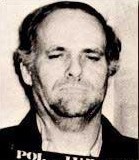 Ervil LeBaron
Murderer · USA · 1972
Ervil Morrell LeBaron (1925 to August 16, 1981) was the leader of a polygamous…
35 victims
Ervil LeBaron
Murderer · USA · 1972
Ervil Morrell LeBaron (1925 to August 16, 1981) was the leader of a polygamous…
35 victims
 Brian Kevin Rosenfeld
Murderer · USA · 1985
Brian Kevin Rosenfeld Brian Kevin Rosenfeld was sentenced to three concurrent l…
23 victims
Brian Kevin Rosenfeld
Murderer · USA · 1985
Brian Kevin Rosenfeld Brian Kevin Rosenfeld was sentenced to three concurrent l…
23 victims
 Marvin Gray
Murderer · USA · 1975
Marvin Gray was convicted killer who claimed responsibility for 23 slayings and…
23 victims
Marvin Gray
Murderer · USA · 1975
Marvin Gray was convicted killer who claimed responsibility for 23 slayings and…
23 victims
 Yahweh ben Yahweh
Murderer · USA · 1980
Yahweh ben Yahweh was born and legally named Hulon Mitchell Jr. (October 27, 19…
23 victims
Yahweh ben Yahweh
Murderer · USA · 1980
Yahweh ben Yahweh was born and legally named Hulon Mitchell Jr. (October 27, 19…
23 victims
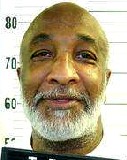 Walter Lee Caruthers
Murderer · USA · 1980
Walter Lee Caruthers was the defendant. Reginald Watkins was his co-defendant.…
1 victim
Walter Lee Caruthers
Murderer · USA · 1980
Walter Lee Caruthers was the defendant. Reginald Watkins was his co-defendant.…
1 victim
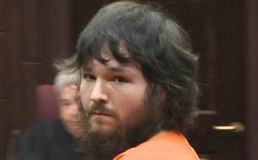 James Belknap
Mass murderer · USA · 2012
James Roy Belknap was a Nicholas County man who killed four people. He pleaded…
4 victims
James Belknap
Mass murderer · USA · 2012
James Roy Belknap was a Nicholas County man who killed four people. He pleaded…
4 victims
 James William Hamblen
Murderer · USA · 1984
James William Hamblen was a state prisoner in Florida who was condemned to die.…
2 victims
James William Hamblen
Murderer · USA · 1984
James William Hamblen was a state prisoner in Florida who was condemned to die.…
2 victims
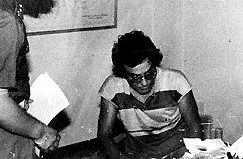 Giancarlo Giudice
—
Defendant: Giancarlo Giudice · Victim profile: Prostitutas italianas (incluyend…
Giancarlo Giudice
—
Defendant: Giancarlo Giudice · Victim profile: Prostitutas italianas (incluyend…
 John Lawrence Miller
Homicide - Murderer · USA · 1957
John Lawrence Miller was born about 1942 and was a native of Los Angeles. He wa…
3 victims
John Lawrence Miller
Homicide - Murderer · USA · 1957
John Lawrence Miller was born about 1942 and was a native of Los Angeles. He wa…
3 victims
 Mauricio Rodriguez Silva
Serial killer · USA · 1978
Mauricio Rodriguez Silva was born with “gigantism” which enlarges features and…
4 victims
Mauricio Rodriguez Silva
Serial killer · USA · 1978
Mauricio Rodriguez Silva was born with “gigantism” which enlarges features and…
4 victims
- Gender
- male
- Country
- USA
- Location
- Cobb County, Georgia, USA
- Date of birth
- 1957
- Age at first offence
- 21
- Characteristics
- —
- Victim profile
- Frank Schlatt ( police officer )
- Method of murder
- Shooting ( .38 caliber Rossi revolver)
- Date(s) of murder
- May 13, 1978
- Years active
- 1978
- Date of arrest
- —
- Status
-
Executed
Executed by electrocution in Georgia on September 25, 1991
Case record: Warren McCleskey
Timeline
- May 13, 1978 — Warren McCleskey, using his car, picked up Ben Wright, Bernard Dupree and David Burney.
- May 13, 1978 — The group planned to rob a jewelry store in Marietta, later targeted the Dixie Furniture Store in Atlanta, and the store was robbed.
- May 13, 1978 — Officer Frank Schlatt responded to a silent alarm, entered the store, and was shot twice; the head wound was fatal and the robbers fled.
- Two months earlier (relative to May 13, 1978) — McCleskey stole a .38 caliber Rossi handgun in a robbery of a Red Dot grocery store.
- Sometime later (relative to May 13, 1978) — McCleskey was arrested in Cobb County in connection with another armed robbery.
- June 1987 (as described) — McCleskey obtained a 21-page written statement of Offie Evans through a request under the Georgia Open Records Act, O.C.G.A. Sec. 50-18-72(a).
- July 1987 (as described) — After evidentiary hearings in July and August of 1987, the district court entered an order granting habeas corpus relief only as to McCleskey’s murder conviction and sentence based upon a finding of a Massiah violation.
- December 23, 1987 — The district court entered an order granting habeas corpus relief only as to McCleskey’s murder conviction and sentence based upon a finding of a Massiah violation (McCleskey v. Kemp, No. C87-1517A (N.D.Ga. Dec. 23, 1987)).
- February 6, 1990 — The United States Court of Appeals for the Eleventh Circuit reversed the district court’s judgment granting the writ of habeas corpus and denied the petition as an abuse of the writ (Warren Mccleskey, Petitioner-Appellee, v. Walter Zant, Superintendent, Georgia Diagnostic and Classification Center, Respondent-Appellant, No. 88-8085, 89-8085).
- September 25, 1991 — Warren McCleskey was executed by electrocution in Georgia.
Background
Warren McCleskey was convicted of the murder of a police officer during an armed robbery of the Dixie Furniture Store and was also convicted of armed robbery.
The offence
On the morning of May 13, 1978, Warren McCleskey, using his car, picked up Ben Wright, Bernard Dupree and David Burney. All four had planned to rob a jewelry store in Marietta. After Ben Wright went into the store to check it out, they decided not to rob it. All four then rode around Marietta looking for another place to rob but could not find anything suitable. They drove to Atlanta and decided on the Dixie Furniture Store as a target.
Each of the four was armed. McCleskey had a .38 caliber Rossi nickel-plated revolver. Ben Wright carried a sawed-off shotgun. The two others had blue steel pistols. McCleskey parked his car up the street from the furniture store, entered the store and “cased” it. After McCleskey returned to the car, the robbery was planned.
When executing the plan, McCleskey entered the front of the store and the other three came through the rear by the loading dock. McCleskey secured the front of the store. The others rounded up the employees in the rear and began to tie them up with tape. All the employees were forced to lie on the floor.
The manager was forced at gunpoint to turn over the store receipts, his watch and six dollars. George Malcom, an employee, had a pistol taken from him at gunpoint.
Before all the employees were tied up, Officer Frank Schlatt, answering a silent alarm, pulled his patrol car up in front of the building. Schlatt entered the front door and proceeded approximately fifteen feet down the center aisle. Schlatt was shot twice, once in the face and once in the chest. The chest shot glanced off a pocket lighter in Schlatt’s pocket and lodged in a sofa; that bullet was recovered. The head wound was fatal. The robbers fled.
Investigation
McCleskey was arrested in Cobb County in connection with another armed robbery sometime after the Dixie Furniture Store robbery. He confessed to participating in the Dixie Furniture Store robbery but denied the shooting.
Ballistics showed that Officer Schlatt had been shot by a .38 caliber Rossi revolver. The weapon was never recovered, but it was shown that McCleskey had stolen such a revolver in the robbery of a Red Dot grocery store two months earlier.
McCleskey admitted the shooting to a co-defendant and also to a jail inmate in the cell next to his, both of whom testified for the state. Offie Evans, a jail inmate housed near McCleskey, testified that McCleskey made a “jail house confession” in which he claimed he was the triggerman.
The police officer was killed by a bullet fired from a .38 caliber Rossi handgun. Although the weapon was not recovered, McCleskey had stolen a .38 caliber Rossi in a holdup of a Red Dot grocery store two months earlier.
Arrest
Sometime later, McCleskey was arrested in Cobb County in connection with another armed robbery.
Trial
McCleskey was tried and the jury convicted him.
The jury convicted McCleskey of murder and two counts of armed robbery. It sentenced McCleskey to death for the murder of the police officer and to consecutive life sentences for the two robbery counts.
Sentencing
McCleskey received a sentence of death for the murder of the police officer and consecutive life sentences for the two robbery counts.
Appeals
In 1980, McCleskey’s convictions and sentences were affirmed by the Georgia Supreme Court (McCleskey v. State, 245 Ga. 108, 263 S.E.2d 146, cert. denied, 449 U.S. 891, 101 S.Ct. 253, 66 L.Ed.2d 119 (1980)).
Habeas corpus and federal review
McCleskey petitioned for habeas corpus relief in the Superior Court of Butts County in January of 1981, asserting over twenty challenges to his conviction and sentence. In an amendment to his petition, he alleged a Massiah violation, claiming that the introduction into evidence of statements he made to an informer violated his rights under the sixth amendment (Massiah v. United States, 377 U.S. 201, 84 S.Ct. 1199).
The petition was denied after an evidentiary hearing. The Georgia Supreme Court denied McCleskey’s application for a certificate of probable cause to appeal. The United States Supreme Court denied McCleskey’s petition for certiorari (McCleskey v. Zant, 454 U.S. 1093, 102 S.Ct. 659, 70 L.Ed.2d 631 (1981)).
McCleskey filed his first federal habeas petition in district court in December of 1981, asserting eighteen grounds for granting the writ. That petition did not include a claim under Massiah, but included a claim under Giglio v. United States, alleging that the state prosecutor failed to reveal that Offie Evans had been promised favorable treatment as a reward for his testimony.
In 1984, the district court granted habeas corpus relief as to McCleskey’s Giglio claim, ordering that his conviction and sentence for malice murder be set aside while affirming his convictions and sentences for armed robbery (McCleskey v. Zant, 580 F.Supp. 338 (N.D.Ga.1984)).
Both parties appealed. In 1985, the Eleventh Circuit, sitting en banc, reversed the district court’s grant of the writ on the Giglio claim and affirmed on all claims denied by the district court (McCleskey v. Kemp, 753 F.2d 877 (11th Cir.1985) (en banc)).
The Supreme Court of the United States granted certiorari limited to consideration of the application of the Georgia death penalty and affirmed the Eleventh Circuit (McCleskey v. Kemp, 481 U.S. 279, 107 S.Ct. 1756, 95 L.Ed.2d 262). Petition for rehearing was denied (482 U.S. 920, 107 S.Ct. 3199, 96 L.Ed.2d 686 (1987)).
Second habeas petition and Massiah claim
McCleskey filed a subsequent petition for a writ of habeas corpus in state court in June of 1987. In an amendment to that petition, he raised a Massiah claim again, alleging that newly discovered evidence demonstrated that a jail inmate of McCleskey’s was acting on behalf of the State as an informant. The state court granted the State’s motion to dismiss, and the Georgia Supreme Court denied McCleskey’s application for a certificate of probable cause.
McCleskey filed the present petition for a writ of habeas corpus in federal district court in July of 1987. After evidentiary hearings on the petition in July and August of 1987, the district court granted habeas corpus relief only as to McCleskey’s murder conviction and sentence based upon a finding of a Massiah violation (McCleskey v. Kemp, No. C87-1517A (N.D.Ga. Dec. 23, 1987)).
The State appealed the district court’s grant of habeas corpus relief, asserting that the district court abused its discretion by not dismissing McCleskey’s Massiah allegation as an abuse of the writ and also that the district court erred in finding a Massiah violation.
Eleventh Circuit decision (abuse of the writ)
In a consolidated appeal by the State of Georgia, the United States Court of Appeals for the Eleventh Circuit reversed the district court without reaching the merits of the Massiah claim or the State’s Rule 60(b) motion. The Eleventh Circuit concluded that the district court abused its discretion by failing to dismiss McCleskey’s Massiah allegation as an abuse of the writ and denied the petition as an abuse of the writ.
The Eleventh Circuit stated it found abuse of the writ because McCleskey deliberately abandoned his Massiah claim.
The Eleventh Circuit discussed the “ends of justice” inquiry. It held that any Massiah error would constitute harmless error and that the district court erred in concluding otherwise. The Eleventh Circuit concluded that its determination that any Massiah error would be harmless precluded a finding that the ends of justice required it to entertain McCleskey’s claim on the merits. It therefore reversed and denied the petition as an abuse of the writ.
Outcome
The United States Supreme Court case McCleskey v. Kemp (No. 84-6811) resulted in affirmance. The record referenced syllabus opinion (Powell) and dissents (Brennan, Blackmun, Stevens). Warren McCleskey was executed by electrocution in Georgia on September 25, 1991.
Aftermath
On September 26, 1991, after McCleskey’s execution, the Georgia Board of Pardons and Paroles had turned down McCleskey’s clemency petition, and the execution process had included a series of stays issued by a Federal judge that were later lifted. Justice Thurgood Marshall dissented, writing:
"In refusing to grant a stay to review fully McCleskey's claims, the Court values expediency over human life. Repeatedly denying Warren McCleskey his constitutional rights is unacceptable. Executing him is inexcusable."
A spokesman for the Georgia Department of Pardons and Paroles described the process as “chaotic.”
McCleskey’s execution was initially scheduled for 7 P.M. Tuesday; after that, Federal District Judge J. Owen Forrester agreed to stay the execution until 7:30, then until 10 and then until midnight to hear a last-minute appeal filed in three different courts. Judge Forrester denied the appeal after a hearing ended around 11:20 P.M., but stayed the execution until 2 o’clock to allow lawyers to appeal it. At 2:17 A.M. McCleskey was placed in the electric chair, electrodes were attached to his skull, and a final prayer was read. He was unstrapped three minutes later. He was placed back in the chair at 2:53 A.M. under the assumption that no news from the Court meant the execution was still on. Word that the Court had denied a stay came just as the execution was ready to begin at 3:04. McCleskey was pronounced dead at 3:13.
Before the execution, McCleskey declined a last meal, was apologized to Officer Schlatt’s family for taking part in the attempted robbery, asked his own family not to be bitter about his death, professed his religious beliefs and decried the use of the death penalty. He did not confess to being the gunman and did not say he was innocent of the killing. He said:
"I pray that one day this country, supposedly a civilized society, will abolish barbaric acts such as the death penalty,"
Spotted an error, or have more information about this case?