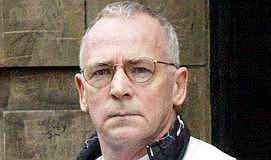
Angus Sinclair
Serial killer Frederick West
Serial killer · United Kingdom · 1967
Frederick West (29 September 1941 – 1 January 1995) was an English serial kille…
13 victims
Frederick West
Serial killer · United Kingdom · 1967
Frederick West (29 September 1941 – 1 January 1995) was an English serial kille…
13 victims
 Peter Manuel
Serial killer · United Kingdom · 1956
Peter Manuel (born in the United States; died July 11, 1958) committed crimes i…
12 victims
Peter Manuel
Serial killer · United Kingdom · 1956
Peter Manuel (born in the United States; died July 11, 1958) committed crimes i…
12 victims
 Ian Brady
Serial killer · United Kingdom · 1963
Ian Brady — Scottish serial killer. Ian Brady was born Ian Duncan Stewart on Ja…
5 victims
Ian Brady
Serial killer · United Kingdom · 1963
Ian Brady — Scottish serial killer. Ian Brady was born Ian Duncan Stewart on Ja…
5 victims
 Robert Black
Serial killer · United Kingdom · 1969
Robert Black was sentenced to life in prison (minimum 35 years) on May 19, 1994…
4 victims
Robert Black
Serial killer · United Kingdom · 1969
Robert Black was sentenced to life in prison (minimum 35 years) on May 19, 1994…
4 victims
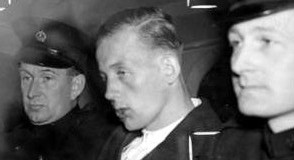 John Thomas Straffen
Serial killer · United Kingdom · 1951
John Thomas Straffen was sentenced to death on July 25, 1952. Home Secretary Si…
3 victims
John Thomas Straffen
Serial killer · United Kingdom · 1951
John Thomas Straffen was sentenced to death on July 25, 1952. Home Secretary Si…
3 victims
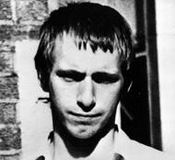 Bruce Lee
Serial killer · United Kingdom · 1973
Bruce Lee was born Peter George Dinsdale in 1960. He later changed his name to…
26 victims
Bruce Lee
Serial killer · United Kingdom · 1973
Bruce Lee was born Peter George Dinsdale in 1960. He later changed his name to…
26 victims
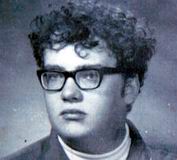 Michael Woodmansee
Homicide · USA · 1975
Michael Woodmansee was a sixteen-year-old junior at South Kingstown High School…
1 victim
Michael Woodmansee
Homicide · USA · 1975
Michael Woodmansee was a sixteen-year-old junior at South Kingstown High School…
1 victim
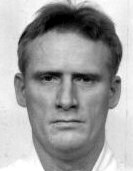 Jeffrey Doughtie
Murderer · USA · 1993
Jeffrey Doughtie was executed by lethal injection in Texas on August 16, 2001.…
3 victims
Jeffrey Doughtie
Murderer · USA · 1993
Jeffrey Doughtie was executed by lethal injection in Texas on August 16, 2001.…
3 victims
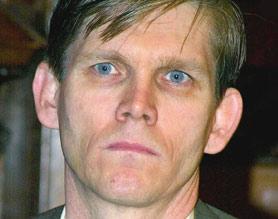 Theodore Maher
Homicide · Monaco · 1999
Theodore Maher was an American registered nurse and an ex-Green Beret. Maher wa…
2 victims
Theodore Maher
Homicide · Monaco · 1999
Theodore Maher was an American registered nurse and an ex-Green Beret. Maher wa…
2 victims
 Jose Luis Calva Zepeda
Serial killer · Mexico · 2004
Jose Luis Calva Zepeda was an aspiring horror writer in Mexico City who was acc…
3 victims
Jose Luis Calva Zepeda
Serial killer · Mexico · 2004
Jose Luis Calva Zepeda was an aspiring horror writer in Mexico City who was acc…
3 victims
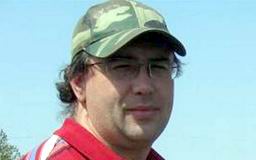 Matej Curko
Murderer · Slovakia · 2010
Matej Curko was an alleged cannibal. · May 10, 2011 — Matej Curko died in a fir…
2 victims
Matej Curko
Murderer · Slovakia · 2010
Matej Curko was an alleged cannibal. · May 10, 2011 — Matej Curko died in a fir…
2 victims
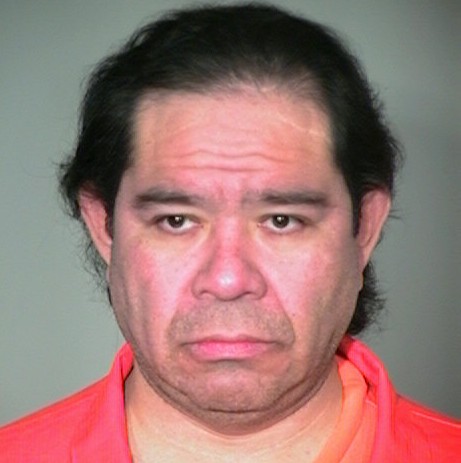 George Molina Lopez
Murderer · USA · 1989
George Molina Lopez lived in a Tucson apartment with his girlfriend and their 1…
1 victim
George Molina Lopez
Murderer · USA · 1989
George Molina Lopez lived in a Tucson apartment with his girlfriend and their 1…
1 victim
- Gender
- male
- Country
- United Kingdom
- Location
- Wales, United Kingdom
- Date of birth
- 1945
- Age at first offence
- 16
- Characteristics
- serial rapist, rape, torture, kidnapping, child abuse
- Victim profile
- Catherine Reehill, 7 / Frances Barker, 37 / Hilda McAuley, 36 / Agnes Cooney, 23 / Anna Kenny, 20 / Christine Eadie, 17, and Helen Scott, 17 / Mary Gallacher, 17
- Method of murder
- Strangulation
- Date(s) of murder
- 1961 / 1977 / 1978
- Years active
- 1961–1978
- Date of arrest
- —
- Status
-
Imprisoned
Sentenced to life in prison for the murders of Helen Scott and Christine Eadie; sentenced to a minimum of 37 years in prison on November 14, 2014
Case record: Angus Sinclair
Status
Angus Sinclair was sentenced to life in prison for the murders of Helen Scott and Christine Eadie; sentenced to a minimum of 37 years in prison on November 14, 2014.
Background
Angus Sinclair grew up in the St George's Cross area of Glasgow. He stole an offertory box from a Glasgow church when he was aged 13 in 1959. In 1959 he also had a housebreaking charge. In 1961 he committed lewd and libidinous practices on an eight-year-old girl. In 1970 he married trainee nurse Sarah Hamilton, Gordon Hamilton's sister, and he had a son two years later.
Sinclair was also described as having a history of theft, rape and murder dating back to 1959. A psychiatrist's report warned that Sinclair would remain a "very dangerous sexual case". The judge who heard the 1961 case, Lord Mackintosh, said Sinclair was "callous, cunning and wicked".
The offence
The World's End murders involved Christine Eadie and Helen Scott.
Christine Eadie and Helen Scott were last seen alive leaving the World's End Pub in Edinburgh. On the night of 15 October 1977, Christine Eadie and Helen Scott were seen leaving the World's End Pub at closing time. They had been at the busy Edinburgh pub on a Saturday night, enjoying drinks with friends. Toni Wale and Jacqueline Ingles were mentioned as being present earlier at the pub. The girls had been chatting to two men, Sinclair and Hamilton, as they went to leave. The conversation did not last longer than 25 minutes, and the pair were seen outside the pub at closing time.
Their bodies were found the following day. Christine Eadie's body was discovered in Gosford Bay, Aberlady, East Lothian, by hill walkers. Helen Scott's body was found in a wheat field near Haddington, six miles from Gosford Bay. Both girls had been badly beaten, raped and throttled with their own underwear. No attempt had been made to conceal their bodies.
Details of how the girls were tied and gagged were described:
- Christine Eadie was found on her back. Her wrists were bound with one leg of her tights. Her mouth was stuffed with a pair of knickers held in place by a bra. The other leg of the tights was tied around her neck. A footprint marked her face.
- Helen Scott was found hours later, face down, naked below the waist. Her coat belt bound her hands and Christine's belt was around her neck. Her top and her new coat were still on. The belt from her friend's jumpsuit was around her neck.
Scotland's senior prosecutor, Lord Advocate Frank Mulholland QC, told the trial that the girls had suffered "terrifying, horrific and barbaric" deaths. He also said: "Thankfully", and: "justice has no sell-by date in Scotland."
The indictment alleged that Sinclair and Gordon Hamilton persuaded or forced the girls into a motor vehicle and held them against their will in St Mary's Street, near the World's End pub. It was alleged that Sinclair then drove Eadie to Gosford Bay, Aberlady, and that there or elsewhere he attacked, stripped and gagged her with her underwear, and tied her wrists, before raping her and then killing her by restricting her breathing. The indictment further alleged that Sinclair raped and murdered Scott in the same way and drove her to a road near Haddington, and in a field there or elsewhere in Edinburgh and East Lothian attacking her.
Investigation
In late 1977 Lothian and Borders Police conducted a high-profile criminal investigation, collating a list of over 500 suspects and taking over 13,000 statements from members of the public. Despite their efforts, they were unable to identify a culprit.
Police appeals were described as using a photo-booth picture of the two girls. At the time, media reported that several witnesses had told police they had seen Helen Scott and Christine Eadie sitting near the public telephone in the bar, talking with two men. The two men mentioned by witnesses were not traced or presented themselves to police.
Speculation that the killings had been the work of two men was heightened by the revelation that the knots used to tie the girls' hands behind their backs were of different types. Police later announced in May 1978 that they were scaling down the investigation.
Cold case review and forensic developments were described:
- In 1988 a prisoner at Edinburgh’s Saughton jail claimed he had heard two inmates talking about the murders in a way that suggested inside knowledge. Archy Motion and Colin Coyne were interviewed but turned out to have alibis for the time of the murders.
- The case prompted a fresh look and a very basic DNA profile from a semen stain on Helen’s coat was extracted, but no match was found.
- By 1996 huge advances in DNA profiling allowed a 12 band profile to be extracted from the same stain and checked against the new national DNA database set up the previous year, but again there were no matches.
- Police then tried an intelligence-led DNA swabbing process involving hundreds of potential suspects. People approached were promised their DNA profiles would be checked for this case only and then destroyed. The exercise ultimately came to nought because the DNA profile belonged to a man who was not on the database. Gordon Hamilton had died in 1996.
- In 2000, during another cold case review, forensic scientist Lester Knibb untied the knots on the tights used to strangle the girls. A ‘soup’ of DNA belonging to more than one person was recovered.
- A later new DNA process involving comparison of Y chromosomes was described as coming on stream. A previously untouched section of staining on Helen’s coat yielded two DNA profiles, a dominant one and an underlying one.
- A police source said: "The dominant one gave sufficient material to do a low copy profile and we got a completely different DNA profile coming up. We ran it on the DNA database and it came back as Angus Robertson Sinclair. I knew of him. He was in jail for murder."
- A search of a flat in Glasgow’s Dennistoun was described as providing a DNA match proving Hamilton was Sinclair’s accomplice, because Hamilton had erected ceiling coving there and left his DNA on it.
Operation Trinity was described as a review of 1977 unsolved murders:
- In 2004 three Scottish police forces came together to launch Operation Trinity. The inquiry was led by the former deputy chief constable of Lothian and Borders Police, Tom Wood, who said there was a "pretty compelling" case that Angus Sinclair had killed many times.
- Forensic scientists who examined six cases for Operation Trinity concluded that Sinclair had killed Helen Scott, Christine Eadie, Frances Barker, Hilda McAuley, Agnes Cooney and Anna Kenny.
- The report stated that the circumstances of deaths and the methods used to bind, restrain and kill them had striking similarities and that "Angus Sinclair and Gordon Hamilton are responsible for all the linked crimes".
- The report quoted included: "The circumstances of their deaths and the methods used to bind, restrain and kill them, have striking similarities, findings not matched in any other group, or indeed in any other individual".
- Mr Wood was quoted: "There was a clear pattern". He said the victims had all disappeared off the streets after a night out, had been transported a distance, had been bound in exactly the same way, or very similar ways, and had all been assaulted and murdered in very, very similar ways: "They were all young women who had been out for the night, they had all disappeared off the streets, they had all been transported a distance, they had all been bound in exactly the same way, or very similar ways, they had all been assaulted and murdered in very, very similar ways."
- Despite the similarities, prosecutors decided there was not enough evidence to charge Sinclair with the Glasgow killings. Forensic evidence that might have enabled the case was described as lost or destroyed while in the case of Ms Barker, a man was already serving a life sentence for her murder. Thomas Ross Young died in July 2014 at the age of 79 having failed to overturn his conviction on appeal.
Arrest
Angus Sinclair was detained under section 14 of the Criminal Procedure (Scotland) Act 1995 on 25 November 2004. Mouth swabs were taken for analysis.
On 31 March 2005, Sinclair was arrested and charged by Lothian and Borders Police.
On 1 April 2005, he appeared on petition, in private at Edinburgh Sheriff Court, charged with the murder and rape of the two girls in October 1977. He made no plea or declaration at this time and was remanded in custody.
Trial
2007 trial for murders of Helen Scott and Christine Eadie
On 27 August 2007, the trial began in Court 3 at the High Court of Justiciary in Edinburgh. The presiding judge was Lord Clarke. The prosecution was led by advocate depute Alan Mackay, and the defence by Edgar Prais QC.
The indictment alleged on the night of 15–16 October 1977 that Sinclair and Gordon Hamilton persuaded or forced the girls into a motor vehicle and held them against their will in St Mary's Street, near the World's End pub. The indictment further alleged that Sinclair drove Eadie to Gosford Bay, Aberlady, and attacked her, stripped and gagged her with her underwear, tied her wrists, then raped and killed her by restricting her breathing. The indictment alleged the same approach against Scott, including driving her to a road near Haddington, and attacking her in a field or elsewhere in Edinburgh and East Lothian.
Sinclair pleaded not guilty to rape and murder.
At the commencement of the trial diet, Sinclair lodged special defences of consent and incrimination, stating that any sexual activity between him and the two girls had been consensual and furthermore that if the girls had come to any harm, the person responsible was Gordon Hamilton.
The jury of nine women and six men began hearing evidence on 28 August 2007. No eyewitness evidence was led; the Crown case was wholly circumstantial.
On 3 September 2007, detective constable Carol Craig gave evidence that Angus Sinclair owned a Toyota Hiace caravanette at the time of the murders and that he had since destroyed it. She confirmed police were unable to carry out forensic tests on any fabrics or seat upholstery inside the vehicle.
On 4 September 2007, forensic scientist Martin Fairley gave evidence that semen obtained from a vaginal swab of Ms Eadie and semen obtained from a vaginal swab of Scott shared the same DNA profile.
On 7 September 2007, another forensic scientist, Dr Jonathan Whitaker, gave evidence that semen matching swabs taken from Angus Sinclair was found mixed with cells with the same DNA profile as Scott, on a coat belonging to Scott. Whitaker told the court that brothers and sisters of Sinclair's dead brother-in-law Gordon Hamilton provided samples for DNA testing. Whitaker explained that the results obtained would be what he expected if semen found in the victims had come from a brother of the surviving Hamiltons. Whitaker was the final witness in the Crown case.
No case to answer and acquittal
On 7 September 2007, Edgar Prais QC made a submission under section 97 of the Criminal Procedure (Scotland) Act 1995 that Sinclair had no case to answer due to an insufficiency of evidence. The submission contended that the Crown failed to lead evidence that Angus Sinclair had been involved in acting with force or violence against the girls and that the advocate depute had not led evidence to prove that any sexual encounter between Sinclair and the girls had not been consensual.
On 10 September 2007, following legal arguments, the trial judge Lord Clarke upheld the defence submission of no case to answer and formally acquitted Sinclair.
Changes in double jeopardy and retrial
Scotland’s double jeopardy principle had prevented retrial after acquittal. The narrative described a 2011 legislative change that allowed retrials in certain circumstances when new evidence emerged, when the original trial was tainted, or when a suspect admitted the offence.
Lord Advocate Frank Mulholland QC decided to take personal charge of prosecuting the case. Speaking after Sinclair's conviction and sentencing, Mr Mulholland said:
The guilty verdict against Angus Sinclair was only made possible after the Scottish Government modernised our legal system by passing the double jeopardy law.
I gave the relatives my personal commitment that the Crown would do everything possible to ensure they received justice.
The introduction of the double jeopardy law meant I was able to apply for a retrial of Angus Sinclair as Scotland's first under this legislation.
As Lord Advocate I considered it my public duty to personally prosecute such an important case.
It was important for the families of Helen and Christine, and in the public interest, that this case was finally resolved and justice was delivered.
Sentencing
2014 retrial and conviction
The retrial commenced on 13 October 2014 at the High Court of Justiciary sitting in Livingston, West Lothian. The prosecutor was Frank Mulholland, the Lord Advocate, and the judge was Hugh Matthews, Lord Matthews.
At one stage the jury visited the scene of the murders in East Lothian.
On 14 November 2014, Sinclair was convicted of the murders of Helen Scott and Christine Eadie on 15 October 1977. The sentence imposed was:
- Sentenced to life in prison.
- Sentenced to a minimum prison term of 37 years. The minimum term meant Sinclair would be 106 years old before being eligible for parole.
Sentencing remarks
In his sentencing statement, Lord Matthews said Sinclair had shown no remorse.
Lord Matthews told Sinclair:
"You have displayed not one ounce of remorse for these terrible deeds. The evidence in this case as well as your record, details of which have now been revealed, shows that you are a dangerous predator, who is capable of sinking to the depths of depravity."
Lord Matthews said of the two teenage victims:
"Whatever dreams they had, they turned into nightmares shortly after they left the World's End Pub, the name of which has become synonymous with these notorious murders. "Little were they to know that they had the misfortune to be in the company of two men for whom the words evil and monster seem inadequate."
Lord Matthews also said:
'Unless one day your conscience, if you have one, motivates you to tell the truth, no one other than you will ever know precisely what part you and Gordon Hamilton played in these awful events. 'Perhaps it does not matter. What does matter is that the girls were subjected to an ordeal beyond comprehension and then left like carrion, exposed for all to see, with no dignity, even in death. 'For them at least the nightmare is over and if they were not resting in peace before today I hope that they are now. 'The nightmare for their families and friends, on the other hand, has gone on from those first awful moments when they heard the news no one should hear until even now, 37 years later and counting. It will never end. 'No one who saw the evidence of Helen's father, sisters and boyfriend and Christine's mother could fail to have been moved by it. They are an example to us all, waiting patiently for justice while the authorities have worked tirelessly to achieve it'.
The judge added:
'The evidence in this case as well as your record, details of which have now been revealed, shows that you are a dangerous predator, who is capable of sinking to the depths of depravity. 'I do not intend to waste many words on you. You are well aware that the only sentence I can pass is one of life imprisonment.
The judge recited the poem For The Fallen, usually reserved for paying tribute to soldiers on Remembrance Sunday:
'They shall grow not old as we that are left grow old. 'Age shall not weary them nor the years condemn. 'At the going down of the sun and in the morning we will remember them. 'I say that because, while all of their loved ones would have wished to see them live on to a ripe old age, the memories they will have of them will always be of two happy home-loving innocent girls unbesmirched by the ravages of time. 'That is, indeed, how I think the whole of the country will remember them.'
Appeals
No appeal outcome was described for the 2014 conviction; eligibility for parole was addressed through the minimum 37-year term.
Outcome
After the 2007 trial it was revealed that Angus Sinclair was a convicted murderer and serial sex offender serving two life sentences at HMP Peterhead.
In June 2001 he was given another life sentence for the murder of 17-year-old Mary Gallagher in November 1978. The narrative described that Mary Gallacher had been dragged into bushes, sexually assaulted, had had her throat cut and a ligature tied round her neck. It also described that Sinclair denied all knowledge despite being found guilty by a majority verdict and having a DNA matching statistic described as "a billion to one."
In 1961 Sinclair pleaded guilty and was convicted of the culpable homicide of Catherine Greenhill (the text also referred to Catherine Reehill). He was sentenced to 10 years and served six years in prison.
In 1982 Sinclair pled guilty to 11 charges libelling various rapes and indecent assaults committed against young boys aged between six and 14. He was sentenced to life imprisonment.
The World’s End retrial resulted in Sinclair being convicted and sentenced in November 2014.
Aftermath
After the 2014 conviction and sentencing, Helen Scott's family and others made statements. Helen Scott's family said: "We finally have justice for Helen and Christine". Helen's brother Kevin Scott said the 37-year minimum sentence was "appropriate" because it was 37 years since the murderers took place.
Kevin Scott described Helen Scott as a "country girl" with "beautiful blue eyes and a beautiful smile, never to forget". He said Christine Eadie was a "popular, friendly and likeable girl, who her family dearly-loved".
Reaction after 2007 collapse
Immediately after the 2007 case fell through, Miss Scott's father expressed his belief that Sinclair was involved in his daughter's death and stated:
'I am absolutely shattered - words can't explain how I feel. 'Thirty years of trying to get a conclusion ... I promised I would stick by this and get justice which, honestly, I don't think I got today.'
On 26 September 2007, the then Lord Justice General, Lord Hamilton, publicly criticised the Lord Advocate's decision to address parliament. In an open letter, Lord Hamilton wrote:
'the plain implication from your statements is that you were publicly asserting that the decision of the trial judge was wrong'
and explained that her actions could be seen to 'undermine public confidence in the judiciary'.
Former Solicitor General and retired Senator of the College of Justice, Lord McCluskey, gave an interview to The Herald. He was quoted as saying:
'He's quite wrong. What he fails to see is that it is sometimes essential for a minister to comment upon a case. It happens all the time in parliament'
Another retired Senator, Lord Coulsfield, was quoted as saying:
'The real issue here is whether a decision of the magnitude that Lord Clarke had to take should always be taken by a single judge'
System review and legal consequences
On 20 November 2007, the Cabinet Secretary for Justice, Kenny MacAskill MSP, referred several issues arising out of HMA V Sinclair to the Scottish Law Commission for investigation.
On 31 July 2008 the Scottish Law Commission published its first report, on the issue of Crown appeals. On 2 December 2008 the Commission published its second report, on the issue of double jeopardy. The commission published its final report, on the admissibility of bad character and similar fact evidence in criminal trials, in late 2012.
On 30 June 2010, the Scottish Parliament passed the Criminal Justice and Licensing (Scotland) Act 2010. Sections 73-76 made provisions for Crown rights of appeal against certain decisions taken by a trial judge sitting in solemn cases, including a mechanism for Crown appeals against rulings on no case to answer submissions. On 28 March 2011, sections 73-76 came into force.
On 22 March 2011 the Scottish Parliament passed the Double Jeopardy (Scotland) Act 2011, allowing circumstances where a person convicted or acquitted of an offence could be prosecuted anew.
Re-opening and trial scheduling
On 14 March 2012 the Crown Office issued a press statement saying that the Procurator Fiscal instructed Lothian and Borders Police to re-open the investigation into the murders of Christine Eadie and Helen Scott following the introduction of the Double Jeopardy (Scotland) Act 2011.
Three judges set aside eight days of court time in October 2013 to hear a bid from prosecutors pressing Sinclair to stand trial for the second time. On 15 April 2014, the Crown was granted permission to bring a new prosecution against Angus Sinclair.
Other details
Prior convictions and offences mentioned in the narrative
The narrative listed a history of offences and convictions involving multiple victims:
- 1959: stole an offertory box from a Glasgow church, aged 13.
- 1959: housebreaking charge.
- 1961: committed lewd and libidinous practices on an eight-year-old girl.
- 1961: convicted of killing Catherine Reehill, aged seven; sentenced to 10 years in prison and served six years.
- 1977: thought to have murdered six women within seven months; other suspected victims included Frances Barker (37), Hilda McAuley (36), Agnes Cooney (23), and Anna Kenny (20), all from Glasgow.
- 1977: murders of Helen Scott and Christine Eadie after a night out at the World's End pub.
- November 1978: murdered 17-year-old Mary Gallacher in Glasgow.
- 1980: illegal possession of a .22 calibre revolver.
- 1982: pleaded guilty to rape and sexual assault of 11 children aged six to 14; sentenced to life in prison.
- 2001: convicted of the murder of Mary Gallacher after a cold case review.
- 2007: trial for murders of Christine Eadie and Helen Scott collapses.
- 2014: retrial finds Sinclair guilty of World's End murders.
Gordon Hamilton
Gordon Hamilton was described as Sinclair's brother-in-law. The narrative said Hamilton died in 1996 without facing justice. The 2007 trial collapsed in controversial circumstances after a no case to answer submission. The judge ruled that there was no case to answer, and Sinclair was acquitted. The narrative stated that Sinclair voluntarily gave a DNA sample in the mid-1990s which led to convictions for the murders of three women two decades earlier.
Investigative witness and quotations
A police officer, John Rafferty, was described as having helped Christine Eadie to her feet when he spotted her stumbling as the pub closed. The officer was quoted as recalling:
"'take them where they needed to go'"
The narrative also quoted Helen Scott's father Morain Scott about the heartbreak he described:
'I can't put into words the heartbreak we have gone through.'
'My girl went off to work as happy as a lark on Saturday morning. She was going out with her chums right after work. 'I still can't believe that it's my little girl and her chum who are dead.'
He described what he had promised his wife Margaret on her deathbed in 1989 and stated:
"I wonder where she would have been today. Would she be married? Would she have children? Would I have grandchildren? "They've stolen life from two youngsters who had their whole lives ahead of them."
A witness to the 2007 trial account included the prosecution witnesses and defence conduct described, including that Sinclair lodged special defences of consent and incrimination.
Court logistics
During the 2014 retrial the jury visited the scene of the murders in East Lothian. The narrative also described that in the 2014 trial the jury at the High Court in Livingston had taken just over two hours to conclude Sinclair carried out the murders of Miss Scott and Miss Eadie with his late brother-in-law Gordon Hamilton. It also said the jury was made up of nine women and six men, and that Sinclair was convicted unanimously of both charges.
Detention and remand
After appearing on petition on 1 April 2005, Sinclair made no plea or declaration and was remanded in custody.
Spotted an error, or have more information about this case?