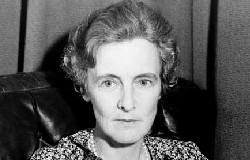
Grace Fortescue
Murderer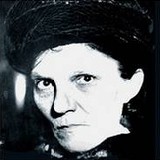 Martha Wise
Murderer · USA · 1924
Martha Wise (born 1885; died June 28, 1971), also known as “the Borgia of Ameri…
3 victims
Martha Wise
Murderer · USA · 1924
Martha Wise (born 1885; died June 28, 1971), also known as “the Borgia of Ameri…
3 victims
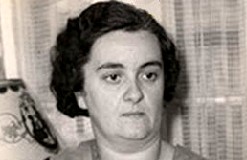 Mary Frances Creighton
Murderer · USA · 1923
Mary Frances Creighton (c. 1898 - July 16, 1936) was a housewife and was execut…
3 victims
Mary Frances Creighton
Murderer · USA · 1923
Mary Frances Creighton (c. 1898 - July 16, 1936) was a housewife and was execut…
3 victims
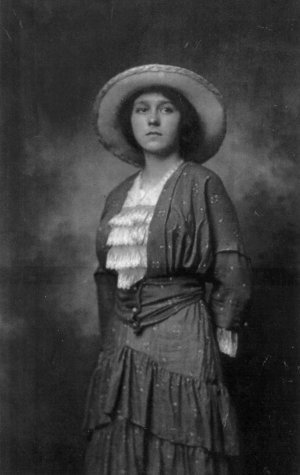 Inez Palmer
Murderer · USA · 1926
Inez Palmer — defendant; lived at the Stout farmhouse and pleaded guilty to a f…
2 victims
Inez Palmer
Murderer · USA · 1926
Inez Palmer — defendant; lived at the Stout farmhouse and pleaded guilty to a f…
2 victims
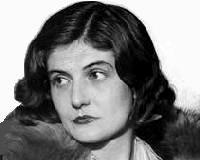 Winnie Ruth Judd
Murderer · USA · 1931
Winnie Ruth Judd (January 29, 1905 – October 23, 1998) was a Phoenix, Arizona m…
2 victims
Winnie Ruth Judd
Murderer · USA · 1931
Winnie Ruth Judd (January 29, 1905 – October 23, 1998) was a Phoenix, Arizona m…
2 victims
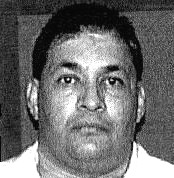 Joe Fedelfido Gonzales
Murderer · USA · 1992
September 18, 1996 — Joe Fedelfido Gonzales was executed by lethal injection in…
1 victim
Joe Fedelfido Gonzales
Murderer · USA · 1992
September 18, 1996 — Joe Fedelfido Gonzales was executed by lethal injection in…
1 victim
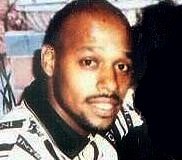 James Montell Chappell
Murderer · USA · 1995
James Montell Chappell was sentenced to death on March 20, 2007, after a Distri…
1 victim
James Montell Chappell
Murderer · USA · 1995
James Montell Chappell was sentenced to death on March 20, 2007, after a Distri…
1 victim
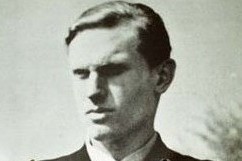 Walter Seifert
Mass murderer · Germany · 1964
Committed suicide by poisoning himself with cyanide the same day; died next day…
10 victims
Walter Seifert
Mass murderer · Germany · 1964
Committed suicide by poisoning himself with cyanide the same day; died next day…
10 victims
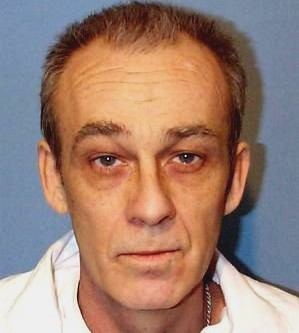 Daniel Lee Siebert
Serial killer · USA · 1979
Daniel Lee Siebert (53) was an American serial killer on Alabama's death row. D…
12 victims
Daniel Lee Siebert
Serial killer · USA · 1979
Daniel Lee Siebert (53) was an American serial killer on Alabama's death row. D…
12 victims
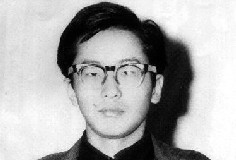 Otoya Yamaguchi
Murderer · Japan · 1960
Otoya Yamaguchi (山口 二矢, Yamaguchi Otoya, February 22, 1943 - November 2, 1960)…
1 victim
Otoya Yamaguchi
Murderer · Japan · 1960
Otoya Yamaguchi (山口 二矢, Yamaguchi Otoya, February 22, 1943 - November 2, 1960)…
1 victim
 Kenneth Myers
Mass murderer · USA · 2011
Kenneth Lee Myers was 47. He killed four women and then took his own life betwe…
4 victims
Kenneth Myers
Mass murderer · USA · 2011
Kenneth Lee Myers was 47. He killed four women and then took his own life betwe…
4 victims
- Gender
- female
- Country
- USA
- Location
- Honolulu, Hawaii, USA
- Date of birth
- Novembe3 3, 1883
- Age at first offence
- 49
- Characteristics
- revenge, rape
- Victim profile
- Joseph Kahahawai (one of the defendants in the alleged rape of her daughter)
- Method of murder
- Shooting
- Date(s) of murder
- January 8, 1932
- Years active
- 1932
- Date of arrest
- Same day
- Status
-
Imprisoned
Sentenced to 10 years in prison on May 3, 1932; commuted to one hour in the custody of Territorial Governor Lawrence M. Judd serving in his office under pressure from the Navy
Other details
Grace Hubbard Fortescue (née Grace Hubbard Bell; 1883–1979) was a New York socialite.
Background
Grace Hubbard Fortescue was born November 3, 1883 in Washington DC. Her father Charles John Bell was first cousin of inventor Alexander Graham Bell, who married her mother's sister. Her grandfather Gardiner Hubbard was the first president of Bell Telephone Company. Her mother was Roberta Wolcott Hubbard Bell (1859–1885). The family lived in Twin Oaks in Washington, DC.
Newspaper reports indicated that Grace could be classified as a prankster when a youth she and her friends stole a trolley car for a joy ride through the streets of Washington and on another occasion she blocked traffic on Pennsylvania Avenue by joining hands with friends and roller skating down the avenue.
She married U.S. Army Major Granville "Rolly" Fortescue (1875–1952), one of the sons of Robert Barnwell Roosevelt. Her husband was first cousin of U.S. President Theodore Roosevelt.
The marriage was not financially successful as she would have wished. In reality, financial affairs became a primary concern for them after Granville's final retirement from the army. With the exception of a short stint as a fiction editor for Liberty magazine in 1930, he did not have steady employment, preferring to wait for the fortune his wife would inherit at the death of her parents.
Grace Fortescue was the mother of three daughters: Marion Fortestcue who married Daulton Gillespie Viskniskki in 1934, Thalia Fortescue Massie (1911–1963), and Kenyon Forestcue Reynolds (1914–1990), better known as actress Helene Whitney.
As of January 8, 1932, a criminal record indicated that while in Honolulu, Grace Fortescue lived on Kolowalu Street in Manoa Valley, a short distance from her daughter's home on Kahawai Street.
A grawing woman of fair complexion, standing at 5-feet 6-inches (168 cm) tall and weighing 134 pounds (61 kg), Grace Fortescue was charged with murder and convicted by a jury of manslaughter after the death of Joseph Kahahawai, one of the defendants in the alleged rape of her daughter.
Attorney Clarence Darrow defended Fortescue, Jones, Massie and Lord and obtained a commutation of their sentence of ten-years imprisonment for manslaughter to one-hour in the executive chambers of Territorial Governor Lawrence M. Judd.
The offence
Grace Fortescue was charged with murder and convicted by a jury of manslaughter after the death of Joseph Kahahawai.
The death followed an abduction and an attempted “interrogation” in which Joseph Kahahawai underwent interrogation while Grace Fortescue, Thomas Massie, and two Navy enlisted men attempted to beat a confession out of him; eventually, one of the group of four shot Kahahawai. The group decided to dump Kahahawai's body off Koko Head, wrapped Kahahawai in a sheet, put him in Fortescue's rented car, and pulled down the shades to hide the interior.
A police motorcyclist, alerted to the kidnapping, saw the blinds and considered it suspicious; he pulled them over and immediately arrested all four for murder.
Investigation
The kidnapping and murder were followed by police arrest of Grace Fortescue and others.
Charges against the surviving four defendants in the rape case were dropped since the prosecution's lead witness, Thalia Massie, had left the Territory and could not be forced to return to testify.
Trial
Also charged and convicted with Fortescue were two sailors, Edward J. Lord and Deacon Jones, as well as Fortescue's son-in-law, Thomas Massie who participated in the abduction and murder of Kahahawai.
During the rape case, an earlier trial ended with jurors declared themselves deadlocked and a mistrial was declared after a three-week trial and lengthy jury deliberation.
In court, the case against Grace Fortescue and the others later resulted in a verdict of manslaughter rather than murder after a three-week trial and lengthy jury deliberation. The jury found the defendants guilty of manslaughter.
Sentencing
Judge Davis sentenced the defendants to 10 years in prison on May 3, 1932, but Governor Judd commuted the sentence to one hour in the custody of the sheriff. Under pressure from the Navy, Territorial Governor Lawrence M. Judd commuted the 10-year sentences of the convicted killers to one hour, to be served in his office.
The defendants spend the night celebrating their freedom at a Chinese restaurant.
Appeals
No appeal outcome was stated.
Outcome
The jury returned a verdict of manslaughter. The sentence was commuted to one hour under pressure from the Navy.
Days later the entire group, including the Massies, the two other Navy men, Fortescue and Darrow, boarded a ship and left the island in turmoil.
Aftermath
Thalia and Massie divorced in 1934; she committed suicide in 1963; he died in 1987. Grace Hubbard died in 1979. Albert Jones died on September 23, 1966.
In February 1986, CBS-TV aired a four-hour miniseries produced by Lorimar Productions titled Blood & Orchids, written for television by Norman Katkov, based his teleplay on his own novel of the same title. Katkov changed all the names of the principal characters and added other characters for whom no historical warrant can be found, including Police Captain Curtis Maddox.
Max Allan Collins's 1996 novel Damned in Paradise followed the facts of the case more closely than Katkov's book.
In August 3, 2006 at the American Bar Association convention at the Hawai'i Convention Center in Honolulu, Lt. Gov. James Aiona served as the judge at the mock trial using a copy of the Pinkerton National Detective Agency report compiled by the then Territorial Government and using 21st century forensic techniques. Lawyers attending acted as the jury; after testimony from two experts and new arguments, the lawyers voted with a unanimous “Not guilty” verdict for all defendants.
A 273-page report from the Pinkerton Detective Agency on the Massie case was presented to Governor Judd on October 3, 1932; the report concluded that Thalia Massie was not raped.
In February 13, 1933 Prosecutor Kelley announced that all rape charges against those initially charged in the Thalia Massie case were being dropped.
In 1966 Deacon Jones admitted in Something Terrible Has Happened that Joe Kahahawai never confessed to having raped Massie after his abduction. Jones also admitted that he shot “the black bastard” because he “had no use for him.” Jones said it was Darrow's idea to “let Tommie take the rap” for the killing.
Timeline
- February 14, 1911 — Grace and “Roly” Fortescue gave birth to their first child, Thalia.
- November 1927 — Thalia marries Thomas Massie, a young naval cadet, in Washington D.C.
- May 1930 — Thomas Massie is assigned to the Submarine Squadron Four, based at Pearl Harbor in Honolulu.
- Summer 1931 — Thalia, pregnant, is diagnosed with preclamsia and loses her baby; she seeks counseling from a psychologist, who concluded her “personal and emotional problems” required treatment by a psychiatrist.
- September 12, 1931 — Thalia and Thomas Massie attend a “Navy Night” Saturday dance at the Ala Wai Inn in the Waikiki District of Honolulu; Thalia leaves the party without Thomas shortly before midnight.
- September 13, 1931 — Just before 1 a.m., Thalia stops a car on Ala Moana Boulevard; she has a broken jaw and scuffed cheeks; she is picked up and driven home; she later tells police she was gang-raped by four or five Hawaiians; Honolulu police arrest and interrogate five suspects.
- September 15, 1931 — The Star-Bulletin and the Advertiser launch a front-page campaign for conviction of the five alleged rapists.
- Early October 1931 — Thalia's mother, Grace Fortescue, arrives in Honolulu.
- October 17, 1931 — The five alleged rapists plead not guilty.
- November 16, 1931 — The rape trial, titled Territory of Hawaii v. Ben Ahakuelo et al., opens in Honolulu.
- November 18, 1931 — Thalia Massie testifies for the prosecution at the rape trial.
- November 23, 1931 — The prosecution rests in the rape case.
- December 1, 1931 — Closing arguments begin in the Massie rape trial.
- December 6, 1931 — Jury deliberations in the rape trial end without a verdict and a mistrial is declared.
- January 5, 1932 — Admiral Stirling sends an excited cable to Washington urging the naval fleet stay from Hawaii unless the governor takes certain special steps to control the native population.
- January 7, 1932 — Grace, Thomas Massie, and two enlisted men (Deacon Jones and Edward Lord) work out the details of a plan to kidnap Joe Kahahawai.
- January 8, 1932 — Kahahawai is kidnapped and taken to Grace Fortescue's home; he is sharply questioned, then shot and killed; his body is stuffed in a Buick and police arrest the occupants: Grace Fortescue, Thomas Massie, and Edward Lord; Deacon Jones is found at the murder scene and picked up for questioning.
- January 10, 1932 — More Hawaiians turn out for the funeral of Joe Kahahawai.
- January 21, 1932 — A grand jury convenes to decide whether to issue indictments for the murder of Kahahawai.
- January 26, 1932 — On a 12 to 8 vote, the grand jury returns an indictment for second degree murder against Grace Fortescue, Thomas Massie, Edward Lord, and Deacon Jones.
- January 29, 1932 — At the arraignment, Judge Cristy sets bail for each defendant at $50,000 and allows the defendants to remain lodged in navy quarters after assurance from the secretary of the navy that the arrangement would not be used to facilitate an escape.
- February 28, 1932 — Clarence Darrow, age 74 and retired for years, agrees to represent the murder defendants.
- March 24, 1932 — A large crowd turns out in Honolulu to welcome America's most celebrated defense attorney to the islands.
- April 4, 1932 — Jury selection begins in the Kahahawai murder trial in Honolulu.
- April 7, 1932 — After examination of over 100 prospective jurors, a jury of seven whites, three Chinese, and two Hawaiians is selected.
- April 11, 1932 — Prosecutor Kelley gives the state's opening argument.
- April 14, 1932 — The prosecution rests after calling its final witness, Joe Kahahawai's mother.
- April 15, 1932 — Darrow is too hung over to attend court and the day's session is canceled.
- April 16, 1932 — Darrow announces that “evidence will show Massie...held the gun in his hand from which the fatal shot was fired.”
- April 19, 1932 — Darrow calls the first of his two psychiatric witnesses.
- April 20, 1932 — The defense rests after testimony from Thalia Massie.
- April 25, 1932 — Rebuttal testimony ends.
- April 26, 1932 — Closing arguments begin.
- April 27, 1932 — Clarence Darrow delivers the last closing argument of his half-century legal career.
- April 29, 1932 — The jury finds the defendants guilty of manslaughter.
- May 3, 1932 — Judge Davis sentences the defendants to 10 years in prison; Governor Judd commutes the sentence to one hour in the custody of the sheriff.
- May 7, 1932 — Grace Fortescue, Thomas and Thalia Massie, and Clarence and Ruby Darrow board an ocean liner for San Francisco.
- October 3, 1932 — A 273-page report from the Pinkerton Detective Agency is presented to Governor Judd.
- February 13, 1933 — Prosecutor Kelley announces that all rape charges are being dropped.
- February 23, 1934 — Thalia Massie files for divorce in Reno.
- July 2, 1963 — Thalia Massie dies in Palm Beach from an overdose of barbiturates.
- 1966 — Deacon Jones admits in a book, Something Terrible Has Happened, that Joe Kahahawai never confessed to having raped Massie after his abduction, and that he shot “the black bastard” because he “had no use for him”; Jones also says it was Darrow's idea to “let Tommie take the rap” for the killing.
Quotations
Darrow announced that “evidence will show Massie...held the gun in his hand from which the fatal shot was fired.”
Deacon Jones said: “No, Jones, I never did.” Deacon Jones said: “Oh, I had my gun. Of course, in those days-well, I was 29 years old. I was no kid, but I was ready to brawl. Then, again, you don't tangle with a big bastard like that. You need a bit of false courage.” Deacon Jones said: “The next morning, when you did go down to the courthouse, did you carry a gun?” Deacon Jones said: “You're God damn right I did. I shot him right underneath the left nipple and to the side.” Deacon Jones said: “When I shot that son-of-a-bitch, I knew what I was doing.” Deacon Jones said: “When that shot was fired, it had completely gone out of our hands. We were in a peck of trouble and we knew it.” Deacon Jones said: “She hid it in the bottom of a Kotex box. Is that what she told you?” Deacon Jones said: “For Christ's sake, didn't you ever kill a man before?” Deacon Jones said: “Leave it there, pardner.” Deacon Jones said: “You go to hell.” Deacon Jones said: “I can't say I shed any tears.” Deacon Jones said: “No, I can't say I was.” Deacon Jones said: “I was scared. God bless my soul, after that kanaka was dead, we had 170 pounds of carcass on our hands.” Deacon Jones said: “I don't know why, but it was my suggestion to put him in the bathtub.” Deacon Jones said: “I didn't unload my gun.” Deacon Jones said: “If you shoot a man, you certainly aren't going to unload your gun.” Deacon Jones said: “Not if you're a service man. That's plain old common sense to have protection for yourself.” Deacon Jones said: “I can't recall I ever met Lieutenant Pace before that.” Deacon Jones said: “I don't walk around with an empty gun.” Deacon Jones said: “I picked up the telephone and answered. ” Deacon Jones said: “I had my .32 with me.” Deacon Jones said: “Little Helene-that pistol-I handed it to her and she says, "I'll take it.”” Deacon Jones said: “Her hobby used to be painting landscapes. In fact, it still is.” Deacon Jones said: “For all she knows, it's still there. ” Deacon Jones said: “That just shows you how stupid I was.” Deacon Jones said: “To me, it was a challenge.” Deacon Jones said: “Hate is another expression of fear and I didn't fear this black bastard, although I had no use for him.”
People
- Grace Hubbard Fortescue — defendant; convicted of manslaughter after the death of Joseph Kahahawai.
- Joseph Kahahawai — alleged defendant in the rape of Grace's daughter; killed after an abduction and interrogation.
- Edward J. Lord — sailor; charged and convicted with Fortescue.
- Deacon Jones — sailor; charged and convicted with Fortescue.
- Thomas Massie — Fortescue's son-in-law; participated in the abduction and murder of Kahahawai; charged and convicted with Fortescue.
- Clarence Darrow — attorney who defended Fortescue and others; obtained commutation.
- Lawrence M. Judd — Territorial Governor; commuted the sentences.
- Charles Davis — presiding judge in the Kahahawai murder trial.
- John Kelley — prosecutor who led the case.
- Albert Cristy — judge who prompted indictment and who set bail at the arraignment.
- Horace Ida — arrested suspect in the rape case.
- Thalia Massie — daughter of Grace; prosecution witness in the rape trial; lead witness whose leaving the Territory resulted in dropped rape charges.
- Granville “Rolly” Fortescue — her husband.
- Helene Whitney — Kenyon Forestcue Reynolds, her daughter.
- Ruby Darrow — listed with Clarence Darrow while boarding an ocean liner for San Francisco.
- Eva Stotesbury — brought Darrow out of retirement by being described as Darrow's engagement contact; described as “wife of Edward T. Stotesbury” and an old family friend.
- Yates Stirling, Jr. — Rear Admiral, Commandant of the US Navy's 14th Naval District; suggested “string them up.”
- James Aiona — Lt. Gov.; served as judge at the 2006 mock trial.
- Deacon Jones — interviewed in the 1960s about the case.
Charges and convictions
Grace Fortescue was charged with murder and convicted by a jury of manslaughter. The status included a commutation of a 10-year prison sentence to one hour.

Spotted an error, or have more information about this case?