
Donna Roberts
Murderer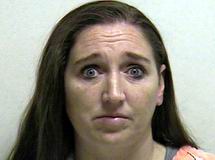 Megan Huntsman
Murderer · USA · 1996
Megan Huntsman was 40 at sentencing. She was a mother of three children who wer…
6 victims
Megan Huntsman
Murderer · USA · 1996
Megan Huntsman was 40 at sentencing. She was a mother of three children who wer…
6 victims
 Angela Johnson
Murderer · USA · 1993
Angela Jane Johnson was convicted in federal court of aiding and abetting the m…
5 victims
Angela Johnson
Murderer · USA · 1993
Angela Jane Johnson was convicted in federal court of aiding and abetting the m…
5 victims
 Michele Kalina
Murderer · USA · 1996
Michele Kalina pleaded guilty to murder for one of five infants she initially w…
5 victims
Michele Kalina
Murderer · USA · 1996
Michele Kalina pleaded guilty to murder for one of five infants she initially w…
5 victims
 Tiffany Hall
Murderer · USA · 2006
Tiffany Hall was 24 when she was charged in September 2006. She later entered a…
5 victims
Tiffany Hall
Murderer · USA · 2006
Tiffany Hall was 24 when she was charged in September 2006. She later entered a…
5 victims
 Banita Jacks
Murderer · USA · 2007
Banita Jacks was a Washington, DC resident convicted of murdering her four daug…
4 victims
Banita Jacks
Murderer · USA · 2007
Banita Jacks was a Washington, DC resident convicted of murdering her four daug…
4 victims
 Holly Grigsby
Murderer · USA · 2011
Holly Grigsby was sentenced to life in prison without parole on July 15, 2014.…
4 victims
Holly Grigsby
Murderer · USA · 2011
Holly Grigsby was sentenced to life in prison without parole on July 15, 2014.…
4 victims
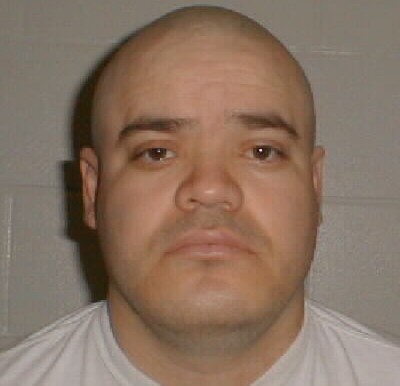 Lorenzo Bahena Sanchez
Murderer · USA · 1999
Lorenzo Bahena Sanchez (convicted in Minnesota for the 1999 killing of 12-year-…
1 victim
Lorenzo Bahena Sanchez
Murderer · USA · 1999
Lorenzo Bahena Sanchez (convicted in Minnesota for the 1999 killing of 12-year-…
1 victim
 Horacio Reyes-Camarena
Murderer · USA · 1995
Sentenced to death on January 21, 1997 Horacio Alberto Reyes-Camarena was 47 wh…
1 victim
Horacio Reyes-Camarena
Murderer · USA · 1995
Sentenced to death on January 21, 1997 Horacio Alberto Reyes-Camarena was 47 wh…
1 victim
 John Hogan
Mass murderer · USA · 2002
John P. Hogan was a retired Santa Clara County sheriff's deputy and a private i…
4 victims
John Hogan
Mass murderer · USA · 2002
John P. Hogan was a retired Santa Clara County sheriff's deputy and a private i…
4 victims
 Itzcoatl Ocampo
Serial killer · USA · 2011
Itzcoatl Ocampo was a former Marine accused in Orange County of brutally murder…
6 victims
Itzcoatl Ocampo
Serial killer · USA · 2011
Itzcoatl Ocampo was a former Marine accused in Orange County of brutally murder…
6 victims
 Brenda Andrew
Murderer · USA · 2001
Brenda Evers Andrew was a white female who appeared as 5 ft. 3 in. tall and 110…
1 victim
Brenda Andrew
Murderer · USA · 2001
Brenda Evers Andrew was a white female who appeared as 5 ft. 3 in. tall and 110…
1 victim
 Margaret Ann Allen
Murderer · USA · 2005
Margaret Ann Allen was born 1/23/66 and was referred to as 45 years old and as…
1 victim
Margaret Ann Allen
Murderer · USA · 2005
Margaret Ann Allen was born 1/23/66 and was referred to as 45 years old and as…
1 victim
- Gender
- female
- Country
- USA
- Location
- Warren, Trumbull County, Ohio, USA
- Date of birth
- May 22, 1944
- Age at first offence
- 57
- Characteristics
- murder for hire, convicted rapist, domestic violence, drugs, history of mental illness, kidnapping, rape, rapist, attempted rape, torture
- Victim profile
- Her former husband, Robert Fingerhut
- Method of murder
- Shooting
- Date(s) of murder
- December 11, 2001
- Years active
- 2001
- Date of arrest
- 2 days after
- Status
-
Sentenced to death
Sentenced to death on June 21, 2003
Case details
Donna Roberts was convicted as an accomplice to murder and was sentenced to death. She was a White woman who was 58 at the time of the crime. Her ex-husband, Robert Fingerhut, was a White male and was murdered near Warren (Trumbull County). The murder occurred on 12-11-2001. Roberts was sentenced on 6-21-2003.
Roberts was born May 22, 1944. She was described as an American convicted of being an accomplice to murder, and as the only woman on death row in the state of Ohio.
Background
Roberts was born and raised in Youngstown, Ohio and attended Austintown-Fitch High School. In 1966, she married her first husband William Raymond and moved to Miami, Florida. She had one child, Michael Raymond, born in 1969. She and William Raymond divorced in 1971.
Roberts remarried to her second husband Burton Gelfand in 1972 and later divorced him in 1980. Roberts converted to Judaism while living in Miami, Florida and worked as a plastic surgeon assistant for over 20 years in North Miami Beach, Florida.
Roberts met her late husband Robert Fingerhut in 1980. They married and bought a home in Miami near Miami Gardens and Ives Estates in 1983. They later sold their home and moved to Richmond, Virginia for one year. In 1993, the couple moved back to Roberts’ hometown of Youngstown, Ohio.
Donna purchased their new home in Niles in 1994 on Fonderlac Ave. During this time, Roberts and Fingerhut managed the Avis car rental franchise at the Youngstown-Warren Regional Airport for several years. They later managed both the Youngstown and Warren Greyhound bus stations and turned them into successful locations. For a short period of time, Roberts also ran a small restaurant located within the Youngstown Bus Terminal called “Just the Ticket”.
In addition to the relationship between Roberts and Fingerhut, Roberts met Nathaniel Jackson and began an affair with him at some point during her relationship with Fingerhut. The liaison was interrupted in 2001 when Jackson was incarcerated in the Lorain Correctional Institution and then resumed after his release.
Roberts described her divorce from Fingerhut as being for financial and business reasons, stating that Fingerhut wanted to shelter and protect assets in case his business was sued or collapsed. She also stated that she did not consider herself divorced because she and Fingerhut were a devout, loving couple.
Roberts placed a late-night 911 call on December 12, 2001 to report Fingerhut’s death. The call was described as being at 12:01 a.m., December 12, 2001.
At the resentencing process later described, Roberts attended the funeral of her mother Pauline, who died of cancer the previous week. One hour later, after kissing her mother’s obituary, Roberts heard a judge tell her she must die.
The offence
Fingerhut was murdered at the home he shared with Roberts. At the crime scene, police found Fingerhut’s body on the kitchen floor near the door to the garage.
A Trumbull County forensic pathologist, Dr. Humphrey Germaniuk, observed Fingerhut’s body at the crime scene and later performed an autopsy. Fingerhut had sustained lacerations and abrasions to his left hand and head and multiple gunshot wounds to his head, chest, and back. Dr. Germaniuk concluded that the gunshot to Fingerhut’s head was the cause of death.
During the crime-scene search, police found a fully loaded .38-caliber revolver near Fingerhut’s body. A firearms expert with the Bureau of Criminal Identification and Investigation (“BCI”) concluded that the bullets recovered from the home and Fingerhut’s body were fired from the same weapon, either a .38-caliber special or a .357 Magnum, but that none of the bullets had been fired from the revolver found near Fingerhut’s body.
Police found evidence that Fingerhut had been attacked in the garage, beaten, and then shot at close range in the back, chest and head just inside the house.
Roberts was convicted in 2003 of recruiting Nate Jackson while he was still in prison to kill her ex-husband Robert Fingerhut, who did on December 11, 2001, in the house Roberts and Fingerhut continued to share after their private divorce.
In the appeal proceedings described, the police performed an illegal search of her car parked inside the garage because the search warrant was only for the home.
Investigation
At the time of initial investigation, Roberts’s emotional state fluctuated. Police observed that at times she was calm and quiet, and at other times she was crying or screaming, “Oh, my Robert, my Robert.” Detectives noticed that when police investigators talked extensively, they no longer heard Roberts shouting. When a detective checked on Roberts in her bedroom because she had been quiet, she began shouting again upon seeing him. One officer at the scene remarked that he “didn’t notice any tears coming from [Roberts’s] eyes” when she appeared to be crying.
Roberts told police initially that she had left work at the Greyhound bus terminal in Warren at 5:30 that evening, dined alone at a Red Lobster restaurant, and then went home. She said Fingerhut called her and said he would be late coming home and suggested she go shopping. She stated that she left her home at 9:00 p.m., went to several stores, and returned home shortly before midnight. She said she found Fingerhut lying on the floor bleeding from the face and that his car was not at the house.
Police arranged for Roberts’s brother to pick her up while they secured the scene and collected evidence. Before Roberts left the house, Detective Sergeant Paul Monroe told Roberts that the house was a crime scene and that police needed to search the house and everything in it, including the garage and cars. Roberts allegedly replied, “Do whatever you have to do to catch the bastard.”
At 3:38 a.m. that morning, police were still at the house. The phone rang, Detective Sergeant Monroe answered it, paused, and then the caller hung up. Detective Monroe traced the call to Roberts’s cell phone.
Around 10:00 a.m. that morning, Detective Monroe visited Roberts at her brother’s home. Roberts gave police written consent to continue searching the residence.
During the hours immediately following Roberts’s 911 call, police observed that she was crying or screaming “Oh, my Robert, my Robert.” During one period, her shouting stopped when investigators talked extensively.
Police learned additional facts about the couple’s planning and communications. Police and a BCI agent located and retrieved evidence including Jackson’s fingerprints from the room at the Days Inn in which Jackson had stayed. Police also recovered a garbage bag in a dumpster at the motel that had come from Jackson’s room. That bag contained a bottle of peroxide, used bandages, and gauze with blood consistent with Jackson’s DNA profile.
Police learned that Fingerhut had taken out two life insurance policies on his life naming Roberts as sole beneficiary. The aggregate benefit amounted to $550,000.
On December 12, police found Fingerhut’s abandoned vehicle in Youngstown approximately three blocks from Wirt Street. A forensic specialist found blood on the driver’s side visor and on other areas inside the automobile. Subsequent scientific analysis determined that blood on the visor contained a mixture consistent with both Jackson’s and Fingerhut’s DNA profiles. Blood recovered from the trunk release inside the car contained a DNA mixture with a major profile consistent with Jackson’s DNA and a minor profile consistent with Fingerhut’s DNA. The provided frequency for Jackson’s DNA on the trunk release was one in 45 quintillion, 170 quadrillion in the Caucasian population, and one in 29 quadrillion, 860 trillion in the African-American population. The record notes that Jackson is African-American.
Cell-phone records indicated that phone calls were made on December 11 between 9:45 p.m. and 11:44 p.m. from the cell phone that Roberts said Jackson had borrowed from her and a cell phone located in Roberts’s vehicle.
During the crime-scene search, police found letters and cards. During their initial search of the home, police discovered more than 140 letters and cards written by Jackson to Roberts, most of which were addressed to Roberts at a post office box in Warren. During the crime-scene search, police found 143 letters Jackson had written to Roberts in a dresser drawer in Roberts’s bedroom. Another 145 letters Roberts had written to Jackson were found in a shopping bag in the trunk of Roberts’s car parked in the garage.
Roberts admitted she had been dating Jackson for two years, that he had called her from prison and exchanged letters with her, and she claimed she last saw him on December 9 when she picked him up at Lorain Correctional Institution and left him in Youngstown at a house on Wirt Street. She added that she last spoke to Jackson over the telephone rather than in person on the morning of December 11. When Detective Monroe asked about her cell phone, Roberts searched her purse and said it was left at home. Monroe told Roberts a call from her cell phone had been placed to the crime scene at 3:38 that morning. Roberts replied, “Nate must have had the phone. He’s always borrowing it.”
Police also found a brown paper bag with Jackson’s name on it in the trunk of Roberts’s car. The bag contained clothing and approximately 140 handwritten letters dated between October and December 2001 sent by Roberts to Jackson.
In addition, prison authorities recorded telephone calls. Prison authorities at Lorain Correctional Institute routinely recorded telephone conversations of prisoners and maintained recordings for at least six months. Eighteen phone calls between Roberts and Jackson were recorded electronically, and those recordings reflected the plot to murder.
In the days leading up to the murder, the record described several specific encounters and actions: Frank Reynolds, an employee of the Greyhound bus terminal in Youngstown, saw Roberts and Jackson kissing and talking near the terminal before Fingerhut arrived for work. Reynolds also overheard Roberts asking Fingerhut for $3,000, and Fingerhut refused. Reynolds said Roberts was nervous and shaking and gave Fingerhut “the dirtiest look.”
Greyhound bus driver Jim McCoy saw Fingerhut working at the Youngstown terminal at approximately 4:30 p.m. on December 11, 2001. McCoy drove his bus to Warren and saw Roberts and Jackson at the Warren terminal. The record quotes Jackson as telling McCoy: “[W]e’re trying to get out of here.”
A server at the Red Lobster restaurant in Niles waited on a couple later identified as Roberts and Jackson. The two paid for dinner at 6:43 p.m. and left the restaurant.
Around 9:30 p.m., a neighbor observed Roberts driving her car very slowly on Old State Route 82 near their homes, even though no one else was on the road at the time.
Later that night, Roberts went to the Days Inn in Boardman to reserve a room for the following week. She was alone and paced around the lobby. The room receipt indicated she paid for the room at 11:33 p.m.
Roberts reserved and paid for a Jacuzzi suite in Jackson’s name at the Wagon Wheel Motel in Boardman on December 6, 2001. Jackson and Roberts spent the night in that room three days later.
Arrest
Roberts was arrested at her home on December 21, 2001 for the murder of Robert Fingerhut. On that same day, police raided a home on Wirt Street in Youngstown, and Jackson surrendered. At that time, Jackson had a bandage wrapped around his left index finger.
A search of the Wirt Street home uncovered additional evidence including a pair of black leather gloves. The index finger of the left glove appeared to have been torn off, and there was a red substance on the glove near the tear.
Trial
Roberts and Jackson were both charged with aggravated murder and tried separately. The record states that Jackson and Roberts were both convicted of aggravated murder and sentenced to death for planning and carrying out the ambush slaying of Fingerhut at the home he shared with Roberts.
The grand jury indicted Roberts on December 28, 2001 on two counts of aggravated murder related to Fingerhut’s death under R.C. 2903.01(A) and (B). Both murder counts carried two death-penalty specifications: murder during an aggravated burglary and murder during an aggravated robbery under R.C. 2929.04(A)(7). The grand jury also indicted Roberts on separate counts of aggravated burglary and aggravated robbery, each carrying a firearm specification.
At trial, the defense presented no witnesses. The state presented numerous witnesses establishing the facts set forth elsewhere in the record. The jury found Roberts guilty of aggravated murder and the other offenses as charged.
After the jury entered a guilty verdict including death penalty specifications, Roberts waived the presentation of evidence in mitigation of a death sentence except her own unsworn statement. The jury recommended the death penalty and the trial court imposed a sentence of death.
During her initial trial, the record includes a quoted statement to the jury: “The death penalty. You have no other choice.”
At the mitigation hearing, Roberts waived the presentation of evidence except for a lengthy unsworn statement.
Roberts’s attorneys sought a change of venue for her trial, arguing that publicity from the Jackson trial suggesting her involvement in the crime would prejudice Warren-area jurors. The trial judge denied the change of venue.
Roberts raised multiple allegations of legal and procedural error during her trial, including claims that the judge should have granted a change of venue because of pretrial publicity and that letters uncovered during a warrantless search of Roberts’s car on the night of the shooting should have been excluded from evidence because they went beyond her permission for a search of the house. The Supreme Court rejected Roberts’s attacks on her conviction.
Sentencing
Roberts was sentenced to death by the trial court after the jury returned a death penalty recommendation.
During the resentencing described later, it was said the trial judge handed handwritten notes to prosecutors so they could draft the sentencing entry. After allowing Roberts to speak for herself, Judge John Stuard re-did the sentencing process.
At the re-sentencing hearing, public defender David Doughen stated: “The worst of the worst are the ones who receive the death penalty.” He also stated: “It is our strong belief that because of Donnas mental instability, for lack of a better term, that this isn't happening in this case.”
Roberts told First News that a letter from her husband indicated that her mental state suffered after she was involved in a car crash.
The record includes a comment attributed to Judge Stuard: he said he had “no opinion on whether that would have made a difference or not, but it is something that you will have an opportunity to work with.”
Assistant Trumbull County Prosecutor Chris Becker responded to the defense, stating: “I respectfully disagree with him (Doughen). She is the worst of the worst. She provided the means and the manner for Nate Jackson to kill her live in husband.”
Appeals
On August 2, 2006, the Supreme Court of Ohio affirmed Roberts’s aggravated murder conviction but vacated her death sentence and remanded for resentencing.
The Supreme Court ruled that its confidence in the trial court’s sentencing opinion was undermined because the trial judge directly involved the prosecutor in preparing the court’s sentencing opinion and did so on an ex parte basis. The record describes that the delegation did not comply with R.C. 2929.03(F) and did not comport with the firm belief that the consideration and imposition of death are the most solemn of all duties imposed on a judge. It described the concern that the “scales of justice may not be weighted even slightly by one with an interest in the ultimate outcome.”
Justice Maureen O’Connor authored the opinion. The record includes verbatim statements attributed to Justice O’Connor:
“Our prior decisions have stressed the crucial role of the trial court's sentencing opinion in evaluating all of the evidence, including mitigation evidence, and in carefully weighing the specified aggravating circumstances against the mitigating evidence in determining the appropriateness of the death penalty,” wrote Justice O'Connor. “In this case, our confidence in the trial court's sentencing opinion is undermined by the fact that the trial judge directly involved the prosecutor in preparing the the sentencing opinion and did so on an ex parte basis. … The trial court's delegation of any degree of responsibility in this sentencing opinion does not comply with R.C. 2929.03(F). Nor does it comport with our firm belief that the consideration and imposition of death are the most solemn of all the duties that are imposed on a judge. … The scales of justice may not be weighted even slightly by one with an interest in the ultimate outcome,” she wrote.
The opinion also included verbatim statements attributed to Justice O’Connor:
“(t)he trial court's consultation with the prosecutor, particularly when undertaken without the knowledge or participation of defense counsel, can neither be ignored nor found to be harmless error. … It is so severe a violation (of the statutory deliberative process) that independent reweighing cannot serve as an adequate remedy. We find that we must vacate the sentence because of the critical constitutional interests and notions of justice that are implicated by the prosecutor's participation in drafting the sentencing opinion."
The record includes the case caption: “STATE of OHIO, APPELLEE, v. ROBERTS, APPELLANT. [Cite as State v. Roberts, 110 Ohio St.3d 71, 2006-Ohio-3665.]”
It also includes a description of the court’s holdings: Criminal law — Aggravated murder — Convictions affirmed — Court’s ex parte communication with prosecutor invalidates sentencing opinion — Death penalty vacated and resentencing ordered. (No. 2003-1441 — Submitted January 24, 2006 — Decided August 2, 2006.) APPEAL from the Court of Common Pleas for Trumbull County, No. 01-CR-793.
The record also notes that Justices Moyer, Resnick, Pfeifer, Lundberg Stratton, O’Connor, O’Donnell and Lanzinger, JJ., concur.
In addition, a referenced entry states: “Judgment affirmed in part and vacated in part, and cause remanded.” It states “Moyer, C.J., Resnick, Pfeifer, Lundberg Stratton, O'Connor, O'Donnell and Lanzinger, JJ., concur. (Aug. 2, 2006)”
The record notes that Roberts and Nathaniel Jackson were both convicted of aggravated murder and sentenced to death. Jackson’s conviction and death sentence were affirmed by the Supreme Court on Jan. 4, 2006 in Case No. 2003-0137.
Outcome
Roberts’s aggravated murder conviction was affirmed. Her death sentence was vacated and the case was remanded for resentencing.
At resentencing, Roberts’s attorneys sought mitigation and raised mental instability and post traumatic stress considerations. The record then states that Roberts was heading back to the prison in Maryville.
The case description states that Roberts was sentenced to death on June 21, 2003 and later returned to death row after the resentencing process described.
Other details
Roberts’s mother was Pauline, who died of cancer the previous week in the period described around the resentencing.
The record contains multiple verbatim excerpts from letters and recorded phone calls between Jackson and Roberts.
Verbatim letters excerpts
A letter written by Jackson to Roberts in early October 2001 included: “[W]hy don’t you leave Robert an lets carry on with a world of our own? Or let me do what I was gonna do to him, because you know that – that was our little thing so you better not go an try to get know one else to do it, because I told you its getting done when I come home * * *.”
Less than a week later Jackson wrote: “Donna I got it already planned out on how we are gonna take care of the Robert situation? An baby its the best plan ever! Because Donna its now time that we really be together so that we can really see the true side of our love because I’m tired of not being able to be with you * * *.”
Jackson wrote: “Donna I don’t care what you say but Robert has to go! An I’m not gonna let you stop me this time. An Donna you know that I’ve always wanted to live my life with you an only you but everytime that I wanted to take care of the situation by myself you wouldn’t never let me. * * * Because you wouldn’t let me do what I wanted to do to make you happy an that was get rid of him! So Donna can I do this so that we can go on an live happy? An then maybe we can sell the house an move on to somewhere else in our own world. An I’m not gonna be happy until that happens!”
Roberts responded with a letter in mid-October 2001 stating: “You know you can always count on me — you always could. It’ll just be a little tougher now because he gives me $100 a week for everything and then makes me write checks to keep track of it all. And I haven’t been ALLOWED to use any of my 52 charge cards – emergency only. I am not used to living like this. I am used to having plenty of cash for whatever I want & buying everything I want. Maybe those days will return again soon. Do whatever you want to him ASAP. Amen.”
Jackson replied: “An then after that you don’t ever have to worry about making know more excuses to him, because he will no longer be with us after 12-10-01 an then it’ll be me an you totally an completely * * *.”
Within that same passage Jackson drew a tombstone with the inscription, “Rest In Piss,” before continuing: “Hey Donna just think come 12-11- 01 you’ll be waking up to me or maybe we’ll give it a couple of days to let things look cool an then after the funeral baby when I come home I’m never leaving an we’re only doing it like that just to make it look good * * *. Alls I need is for my baby not to worry an leave everything else up to me.”
Jackson wrote: “Yes I’m taking care of that the next night, because I told you I’m tired of living like this when I don’t have to. An after that will you get me a 2002 Cadillac Deville?”
In that same letter Jackson wrote: “An even if I gotta come to the house and shoot Robert in his fucking head you’re gonna be with me.”
An October letter from Jackson included: “Well I see now you know that I’m about my business when I get out as far as our little situation? An get me a size large leather gloves an see if you can find me a ski mask hat okay? An I need them handcuffs you have an its mandatory, so get them for me, because the way that I’m gonna do it is gonna be right okay?”
About two weeks before the murder Roberts wrote: “I also went to 4 stores and finally found your ski mask & boxers & a pair of beautiful fleeced lined black leather gloves.”
Verbatim phone call excerpts
The record includes a recorded conversation between Jackson and Roberts on October 25, 2001:
“[JACKSON]: I’ll be home to you. December 9th all the worries will be over baby.
“[JACKSON]: The next day out, I’m goin to – I already got it in my mind, my mind made up. I’m goin to go ahead and do that the next day, okay. All right.
“[ROBERTS]: Oh, I just wrote to you that I didn’t think that you really meant it.
“[JACKSON]: What. My mind is made up. My mind made – I wrote it in my letters, you know what I’m saying, but you know, I don’t like to talk too much like that but when I come home, you know what I mean, it’s goin to be in full detail. Okay. I’m goin to let you know how I’m goin to do it and everything. I’m goin to do it for sure the next day.”
In another recorded conversation on November 8, 2001, the record included that Jackson told Roberts he wanted Fingerhut to see Roberts performing oral sex on Jackson before Fingerhut “goes away.”
A recorded conversation included the following exchange:
“[JACKSON]: You know what I’m saying, the next day after. You know what I told you I wanted to do right?
“[ROBERTS]: I’m afraid Nate.
“[JACKSON]: What you, man.
“[ROBERTS]: I can’t afford to lose you. * * * I can not lose you. Like I will kill myself.
“[JACKSON]: Just forget about it man, * * * when a person, man, know what he’s doing, man, * * * that’s like jinxing, man. * * *
“[ROBERTS]: But what was the story with the trunk and handcuffs, that’s too involved.
“[JACKSON]: Just, just, just leave it alone, alright.
“[ROBERTS]: It’s too much involved. Your gonna leave hair, your gonna leave prints, your gonna,
“[JACKSON]: Leave it alone, man. Leave it alone, alright. * * * Come on man. This ain’t Perry Mason man.
“[ROBERTS]: I don’t want to know anything about it ever.”
On November 24, 2001, the recorded conversation included:
“[JACKSON]: Man, we gonna * * * really talk when I come home, ok.
“[ROBERTS]: OK.
“[JACKSON]: Especially about our, that situation, man. You know.
“[ROBERTS]: Yeah.
“[JACKSON]: I mean, it just, you know, you get too nervous at times, that’s all the deal is.
“[ROBERTS]: Yeah I know, it part of my nature.
“[JACKSON]: And then you said DNA, the only way they can do a DNA is if they got the other, the person’s, you know what I’m saying. If they got the person and thehair cause they can’t just take no hair and say this is such and such hair. * * * [T]he laws that we got in the State of Ohio and the laws from everywhere else, * * * I mean they way different. * * *
“[ROBERTS]: Really.
“[JACKSON]: Hell yeah. We’ll, we’ll talk about it when I come home Donna. Ok, I don’t want to talk about it over the phone.”
On December 8, 2001, the day before Jackson was released, the recorded conversation included:
“[JACKSON]: Just consider it a done deal. Only thing I’m gonna need is one thing.
“[ROBERTS]: What?
“[JACKSON]: I just need to be in that house when he come home.
“[ROBERTS]: Oh no.
“[JACKSON]: Baby it ain’t gonna happen in the house. It ain’t gonna happen in the house man, I promise you.
“[JACKSON]: I just need to be in there man. It ain’t gonna happen in the house man. I mean I ain’t gonna jeopardize that man.
“[ROBERTS]: Well, let’s not talk about it now.
“[JACKSON]: Ok. We’ll talk, we’ll, I’ll just wait until tomorrow.”
Quotes attributed to counsel and prosecutors
Public defender David Doughen stated: “The worst of the worst are the ones who receive the death penalty.” and “It is our strong belief that because of Donnas mental instability, for lack of a better term, that this isn't happening in this case.”
Assistant Trumbull County Prosecutor Chris Becker stated: “I respectfully disagree with him (Doughen). She is the worst of the worst.
Judge Stuard was quoted as saying: “no opinion on whether that would have made a difference or not, but it is something that you will have an opportunity to work with.”
References in the record
The record contains these named legal references: “State v. Jackson, 107 Ohio St.3d 300, 2006-Ohio-1, 839 N.E.2d 362.” It also contains: “State v. Roberts, 110 Ohio St.3d 71, 2006-Ohio-3665.” and “Trumbull C.P. No. 01-CR-793.” and “(No. 2003-1441 — Submitted January 24, 2006 — Decided August 2, 2006.)”

Spotted an error, or have more information about this case?