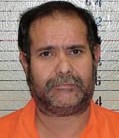
Horacio Reyes-Camarena
Murderer Brian Kevin Rosenfeld
Murderer · USA · 1985
Brian Kevin Rosenfeld Brian Kevin Rosenfeld was sentenced to three concurrent l…
23 victims
Brian Kevin Rosenfeld
Murderer · USA · 1985
Brian Kevin Rosenfeld Brian Kevin Rosenfeld was sentenced to three concurrent l…
23 victims
 Russell Ellwood
Murderer · USA · 1991
Russell Ellwood was a former taxi driver. Authorities suspected him of killing…
20 victims
Russell Ellwood
Murderer · USA · 1991
Russell Ellwood was a former taxi driver. Authorities suspected him of killing…
20 victims
 Robert Martines Perez
Murderer · USA · 1994
Name: Robert Martines Perez · Other name used in proceedings: Robert Martinez P…
15 victims
Robert Martines Perez
Murderer · USA · 1994
Name: Robert Martines Perez · Other name used in proceedings: Robert Martinez P…
15 victims
 Billy Frank Vickers
Murderer · USA · 1993
Billy Frank Vickers Vickers was executed by lethal injection in Texas on Januar…
14 victims
Billy Frank Vickers
Murderer · USA · 1993
Billy Frank Vickers Vickers was executed by lethal injection in Texas on Januar…
14 victims
 Ashleigh & Holly Robinson
Murderers · United Kingdom · 2010
Antoni Robinson was a 61-year-old retired antiques dealer and French polisher.…
1 victim
Ashleigh & Holly Robinson
Murderers · United Kingdom · 2010
Antoni Robinson was a 61-year-old retired antiques dealer and French polisher.…
1 victim
 Jeong Sang-jin
Mass murderer · South Korea · 2008
Jeong Sang-jin Jeong Sang-jin was sentenced to death on May 12, 2009. The Nonhy…
6 victims
Jeong Sang-jin
Mass murderer · South Korea · 2008
Jeong Sang-jin Jeong Sang-jin was sentenced to death on May 12, 2009. The Nonhy…
6 victims
 Graham Stafford
Murderer? · Australia · 1991
Graham Stuart Stafford was convicted in 1992 of the murder of twelve-year-old L…
1 victim
Graham Stafford
Murderer? · Australia · 1991
Graham Stuart Stafford was convicted in 1992 of the murder of twelve-year-old L…
1 victim
 Troy Anthony Davis
Murderer · USA · 1989
Name: Troy Anthony Davis · Gender: Male · Race: Black · Eye color: Brown · Hair…
1 victim
Troy Anthony Davis
Murderer · USA · 1989
Name: Troy Anthony Davis · Gender: Male · Race: Black · Eye color: Brown · Hair…
1 victim
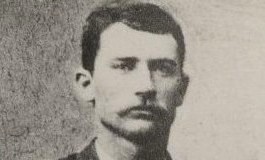 Henry Newton Brown
Murderer · USA · 1870
Henry Newton Brown — 19th century gunman; orphan; raised by relatives in Rolla,…
6 victims
Henry Newton Brown
Murderer · USA · 1870
Henry Newton Brown — 19th century gunman; orphan; raised by relatives in Rolla,…
6 victims
 Robert Holguin
Homicide · USA · 2005
Robert Holguin was a 14-year-old boy convicted of murdering 87-year-old war vet…
1 victim
Robert Holguin
Homicide · USA · 2005
Robert Holguin was a 14-year-old boy convicted of murdering 87-year-old war vet…
1 victim
- Gender
- male
- Country
- USA
- Location
- Douglas County, Oregon, USA
- Date of birth
- June 30, 1955
- Age at first offence
- 40
- Characteristics
- robbery, abuse, rape
- Victim profile
- Maria Zetina, 18
- Method of murder
- Stabbing with knife
- Date(s) of murder
- September 17, 1995
- Years active
- 1995
- Date of arrest
- —
- Status
-
Sentenced to death
Sentenced to death on January 21, 1997
STATUS
Sentenced to death on January 21, 1997
Background
Horacio Alberto Reyes-Camarena was 47 when he was described as a death-row inmate at Two Rivers Correctional Facility in Eastern Oregon. He sat through four-hour dialysis treatments three times a week at the prison. Without dialysis, he would die because his kidneys were failing. He said he wanted to sever his ties to the dialysis machine. He also said he wanted to be the first Oregon inmate to receive a taxpayer-financed organ transplant.
Reyes-Camarena said he was legally entitled to the same medical treatment that was provided in the “free world.” He said that prisoners should have an equal-opportunity right to transplants and that “They can’t discriminate against me because I’m a prisoner.”
Carol Hutson did not know anything about Reyes-Camarena but had failing kidneys. When her disability assistance was scheduled to be lost as of April 1, she faced eviction from her room at a Salem assisted-living facility. She was also slated to lose aid that paid for her medications, including twice-daily shots of insulin, pills for a heart condition and anti-depressants. She said:
“It’s horrifying,” she said. “I kind of feel like a throwaway animal right now.”
After another notice, Hutson said she would keep her benefits “at least through June 30.” She said:
“I guess I’m safe for the time being,” Hutson said.
Hutson remained nervous because a two-year budget starting July 1 had not been settled. She said:
“I don’t know if there’s going to be another huge cut,” Hutson said. “I just have to wait and see. I guess we all do.”
Reyes-Camarena said he believed transplant costs would prove cheaper than dialysis in the long run.
A dialysis room sign read: “Remain seated and quiet.” It also stated: “Failure to do so will result in disciplinary action.”
Reyes-Camarena described dialysis as:
“It’s like when you change the oil in your car,” Reyes-Camarena said. “You’re good for another run.”
Reyes-Camarena said:
“It’s four hours to do nothing but look at the ceiling,” he said.
He said he was “too drunk” and added:
“I don’t even know if I did it.”
On his attitude toward death, he said:
“When the Lord says it’s your time, it doesn’t matter what you do,” he said. “Everybody’s got his time.”
Reyes-Camarena was born in Mexico on June 30, 1955, and entered the United States in 1969. He was 13 when he entered the United States.
He worked as a restaurant dishwasher in San Antonio, Texas. He later worked in farm fields in California and Oregon. He moved into the Willamette Valley to pick fruit, progressed from picker to field boss, and was employed as a foreman at a farm where the victim worked.
The offence
During summer 1995, Reyes-Camarena was employed as a farm foreman in Woodburn. He met Angelica Zetina, 32, and her sister, Maria Zetina, 18.
On Sept. 17, 1995, Reyes-Camarena agreed to drive the sisters to Washington to help them find work. After reaching the Oregon Coast, he drove south instead of north on Highway 101. Stopping the car near Sea Lion Caves outside Florence, Reyes-Camarena attacked Angelica Zetina. He stabbed her 17 times, then pushed her down an embankment. She survived, and a hunter later found her walking along the highway.
Maria Zetina’s stabbed body was found near Reedsport.
In the appellate court’s description of the case, after Reyes-Camarena, the two women, and a male companion left the farm, Reyes-Camarena robbed and repeatedly stabbed the women and left them beside rural roads in Douglas County. The victim died as a result.
Investigation
After his arrest, police officers advised Reyes-Camarena of his Miranda rights in both English and Spanish, and he signed waivers in both languages. The trial court admitted evidence of some statements he made to police.
Reyes-Camarena argued that the police violated the Vienna Convention on Consular Relations by not informing the Mexican Consulate of his custody and by not informing him of his rights under the VCCR.
The appellate court noted that Article 36 of the VCCR required designated authorities to (1) inform foreign consulates when police arrest or detain a citizen, (2) allow communication between consulates and the arrested or detained citizens, (3) allow consulates to assist their citizens, and (4) advise arrested or detained foreign citizens of their rights under the VCCR.
Arrest
Reyes-Camarena was arrested and later interviewed by police after he was advised of his Miranda rights in both English and Spanish.
Trial
A Douglas County jury found Reyes-Camarena guilty of aggravated murder in October 1996.
The trial court sentenced Reyes-Camarena to death in January 1997 after a penalty phase proceeding in which the jury answered affirmatively the four death-penalty questions set out in ORS 163.150(1)(b).
At trial, the trial court rejected instructions requested by Reyes-Camarena concerning mercy and sympathy, future dangerousness, and a presumption that the defendant would not commit criminal acts of violence in the future.
Jury instruction requests (verbatim)
Reyes-Camarena requested an instruction on mercy and sympathy in this form:
"A decision to grant HORACIO REYES CAMARENA mercy does not violate the law. The law does not forbid you from being influenced by pity for HORCIO [ sic ] REYES CAMARENA and you may be governed by mere sentiment and sympathy for HORCIO [ sic ] REYES CAMARENA in arriving at a proper penalty in this case. "You need not find the existence of any mitigating fact or circumstance in order to return a sentence of less than death. You may consider any aspect of defendant's life in your determination on the fourth question and any aspect of defendant's life that may be relevant in your determination of the first three questions. Defendant need not prove the existence of a mitigating circumstance beyond a reasonable doubt. If you reasonably believe that a mitigating circumstance exists, you may consider it as established."
Reyes-Camarena requested a jury instruction defining “criminal acts of violence” as:
"'Criminal acts of violence' refers to a relatively narrow range of acts characterized by the application or overt threat of force which have the potential for inflicting bodily injury on another person."
The instruction the trial court gave described “criminal acts of violence” as:
"The second question asked by the law is, is there a probability, meaning is it more likely than not, that the Defendant would commit criminal acts of violence that would constitute a continuing threat to society. 'Criminal acts of violence' refers to acts characterized by the application of force which has the potential for inflicting bodily injury on another person or the overt threat of such force."
Reyes-Camarena requested a presumption instruction as follows:
"The law presumes that the defendant will not commit criminal acts of violence in the future. That presumption stays with the defendant unless and until the probability of his commission of acts of criminal violence is proven beyond a reasonable doubt. The burden is upon the State to prove the probability of the defendant committing criminal acts of violence in the future."
Claims raised on appeal
Reyes-Camarena asked the Oregon Supreme Court to reverse his conviction or, alternatively, vacate the sentence and remand for further proceedings.
He raised multiple assignments of error, including:
- A Vienna Convention on Consular Relations claim, arguing that police should have suppressed his statements to police because authorities violated the VCCR.
- A discovery claim involving denial of his request for information about other capital murder trials in Oregon where an expert testified for the prosecution about future dangerousness.
- A claim that the trial court erred in not giving the requested sympathy instruction.
- A claim that the trial court erred in not giving the requested future dangerousness definition.
- A claim that the trial court erred in not giving the requested presumption instruction.
- A final claim challenging the constitutionality of Oregon’s statutory death penalty scheme in several respects.
Sentencing
The trial court sentenced Reyes-Camarena to death in January 1997 after the jury answered affirmatively the four death-penalty questions set out in ORS 163.150(1)(b).
In the appellate decision, the court stated: “The judgment of conviction and the sentence of death are affirmed.”
Appeals
Filing and court details (verbatim)
Reyes-Camarena’s case reached the Oregon Supreme Court for automatic and direct review. The materials included:
FILED: JULY 28, 2000 IN THE SUPREME COURT OF THE STATE OF OREGON STATE OF OREGON, Respondent, v. HORACIO ALBERTO REYES-CAMARENA, Appellant. (CC 95CR2419FE; SC S44042) En Banc On automatic and direct review of the judgment of conviction and sentence of death entered by the Douglas County Circuit Court. Thomas Kolberg, Judge. Argued and submitted May 16, 2000. David E. Groom, Public Defender, Salem, argued the cause for appellant. With him on the brief was Stephen J. Williams, Deputy Public Defender. Robert B. Rocklin, Assistant Attorney General, Salem, argued the cause for respondent. With him on the briefs were Hardy Myers, Attorney General, and Michael D. Reynolds, Solicitor General. DURHAM, J.
The appellate court concluded:
“The judgment of conviction and the sentence of death are affirmed.”
Vienna Convention on Consular Relations issue (verbatim points)
Reyes-Camarena argued that the VCCR violation meant statements to police should have been suppressed. The appellate court discussed preservation and plain error. The state argued the claim was not preserved and that it was not subject to plain error.
The appellate court concluded:
- “Any claim of error with regard to defendant's statements to police was not preserved.”
- “Any error attributable to violation of the VCCR is not plain error.”
- “We decline to consider defendant's first assignment of error.”
Discovery issue
Before trial, Reyes-Camarena moved to require discovery. In paragraph 24 of his written motion, he sought discovery of:
"the name and case number of every capital murder trial in Oregon in which the expert has testified for the prosecution about the future dangerousness issue."
The appellate court held that the claim of error was not preserved and “decline[d] to consider it.”
Instruction issues
The appellate court addressed each requested instruction and determined the trial court did not err in refusing the requested mercy and sympathy instruction, future dangerousness instruction, and presumption instruction.
Outcome
The Oregon Supreme Court affirmed both Reyes-Camarena’s conviction and his sentence of death.
Other details
Escape from jail
Two days after his murder conviction and before the punishment phase of his trial, Reyes-Camarena and a second inmate escaped from a holding cell at the Douglas County Jail in Roseburg.
The appellate narrative described that the pair escaped at night by unbolting a metal screen and breaking an inch-thick pane of glass. As they climbed down a makeshift rope made of knotted blankets and clothing, Reyes-Camarena fell four stories and landed on his buttocks. He could not walk; his companion dragged and carried him to a nearby church. They hid in the church basement for nearly three weeks before recapture.
During the time before his recapture, Reyes-Camarena stayed injured in a closet hidden behind Christmas decorations. After spinal surgery, Reyes-Camarena returned to finish his trial.
Reyes-Camarena declined to talk about the jail break during a recent interview and said:
“I was too drunk,” he said. “I don’t even know if I did it.”
Dialysis and costs
At Two Rivers Correctional Institution in Eastern Oregon, Reyes-Camarena received dialysis for four hours three times a week to remove toxins from his blood. The dialysis was described as taking place in a small, nondescript room.
He was hooked up to a dialysis machine and sat through the treatments in a wheelchair. Besides Reyes-Camarena, seven other inmates were undergoing dialysis at Two Rivers. Each prisoner rested in a comfortable blue chair while hooked up to a machine for four hours.
Corrections Department figures stated each dialysis session cost $775.80 for treatment and medication, resulting in dialysis costs of $121,025 a year.
Prison officials would not discuss Reyes-Camarena’s medical condition or care, citing confidentiality requirements.
Reyes-Camarena criticized his care. He said the room temperature rose when machines ran and that two large fans did not provide sufficient air conditioning. He also complained that nurses did not give him ice and that there was no television in the dialysis unit.
Reported prison dialysis logistics
Penitentiary employees said Reyes-Camarena initially received dialysis in the Intensive Management Unit, described as an ultra-secure wing where disruptive inmates normally were confined to their cells for 23 hours a day. His treatment was handled by a nurse who ventured inside the unit. When that arrangement ended, Reyes-Camarena was transported to a Salem dialysis center three times a week. Each time he left the penitentiary, he was shackled and escorted by three corrections officers.
A year before the description, Reyes-Camarena and several other inmates who had received dialysis in Salem were moved to Two Rivers. The prison that housed Two Rivers was described as opening in 2000. Prison officials said centralizing dialysis care at Two Rivers pruned transportation and security costs from taking inmates to community dialysis centers. It cost nearly $1 million a year to provide dialysis for eight inmates behind prison walls, and agency figures showed prison-based dialysis saved nearly $390,000 a year compared with outside treatment.
Transplant discussion
Reyes-Camarena wanted a kidney transplant and said it would be “much better for me, and them, too,” referring to a desire for a kidney transplant.
The materials stated transplant surgery would cost $80,000 to $120,000 and would require $500 to $1,200 a month in lifelong drugs to keep the recipient from rejecting the new organ.
Studies were described as finding that the death rate for dialysis patients was about 23 percent a year and that a successful transplant reduced that risk to about 3 percent a year.
The number of transplants was described as limited by a national scarcity of available organs. The materials stated that as of this month, 56,895 Americans, including 192 Oregonians, were waiting for kidney transplants according to the United Network for Organ Sharing. It also stated that 86,157 Americans were waiting for organ transplants overall, mostly kidneys, livers, pancreases and lungs, and that officials estimated about 700 would die that year while waiting.
Ethics and medical confidentiality
Dr. Susan Tolle, director of the Center for Ethics in Health Care at Oregon Health & Science University in Portland, was quoted on the transplant issue. She said:
“There are a lot of complex issues here,” said Dr. Susan Tolle, director of the Center for Ethics in Health Care at Oregon Health & Science University in Portland. “But the biggest issue is, should he be considered at all? Is he eligible at all? Or is this not part of the basic package of health care?”
Tolle’s stance changed due to budget cuts. The materials described that cuts to the Oregon Health Plan were prompting some hospitals to remove poorer uninsured patients from waiting lists for organ transplants or to keep them off the lists. The materials quoted Tolle:
“So we’re now holding on those patients,” Tolle said. “If we’re holding on those patients, I’m not in a position to say prisoners should get something more.”
An Oregon Health & Science University spokeswoman, Christine Pashley, was quoted about treating all patients the same. She said:
“The best way to describe it is that we treat all patients who are here the same, whether they are somebody famous or somebody with no money,”
Pashley was also quoted about referral and evaluation:
“Then we would evaluate him to see if he met the criteria and need for a kidney transplant.”
Corrections Department spokeswoman Perrin Damon was quoted about bone-marrow transplants:
“Bone-marrow transplants are not the same as organ transplants because you don’t use up a scarce resource when you’re transplanting bone marrow,”
Damon was also quoted as saying no inmate requests for organ transplants were pending:
“No inmate requests for organ transplants are pending, Damon said.”
Previous prison transplants
Although the prison system had not allowed an organ transplant, two inmates had received bone marrow transplants in the past two years. Both surgeries were performed at OHSU.
One inmate died after receiving new bone marrow. The other was recuperating at the Oregon State Penitentiary.
Price tags for those transplants were stated as $108,000 and $178,000 according to Corrections Department figures.
California comparison
The materials described a California case involving a prison inmate serving 14 years for robbery who received a heart transplant. The inmate received the heart at Stanford University Medical Center on Jan. 3, 2002, after an ethics committee approved him and put him on the waiting list. The cost of the prisoner’s transplant was stated as nearly $1 million with follow-up care. The materials stated that less than a year after getting his new heart, the 32-year-old inmate died at the same medical center where he received the transplant.
Appellate case summary statements (verbatim)
In the appellate court’s description, it stated:
“Defendant was employed as a foreman at a farm where the victim worked. Defendant agreed to drive the victim and her sister to a farm in Washington to find work. After defendant, the two women, and a male companion left the farm, defendant robbed and repeatedly stabbed the women, and left them beside rural roads in Douglas County. The victim died as a result.”
It also stated:
“In October 1996, a jury found defendant guilty of aggravated felony murder, first-degree robbery, and two counts of aggravated murder. In January 1997, after a penalty phase proceeding in which the jury answered affirmatively the four death-penalty questions set out in ORS 163.150(1)(b), the trial court sentenced defendant to death.”


Spotted an error, or have more information about this case?