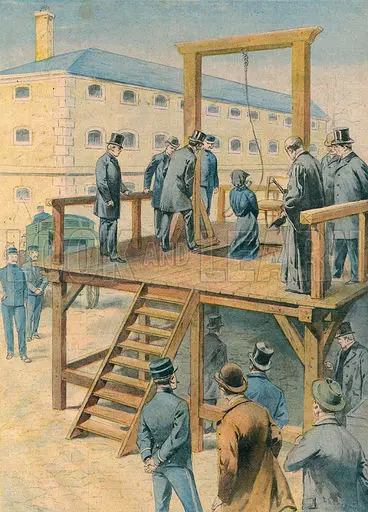
Mary Mabel Rogers
Murderer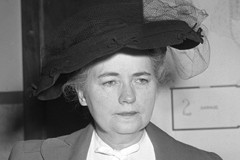 Louise Peete
Murderer · USA · 1912
Louise Peete (born Lofie Louise Preslar; September 20, 1880; Bienville, Louisia…
3 victims
Louise Peete
Murderer · USA · 1912
Louise Peete (born Lofie Louise Preslar; September 20, 1880; Bienville, Louisia…
3 victims
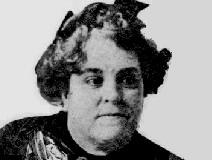 Cordelia Botkin
Murderer · USA · 1898
Cordelia Botkin was a stocky woman of 44 who left her own husband and started a…
2 victims
Cordelia Botkin
Murderer · USA · 1898
Cordelia Botkin was a stocky woman of 44 who left her own husband and started a…
2 victims
 Alice Mitchell
Murderer · USA · 1892
Alice Mitchell was tried for murder and entered a plea of “present insanity,” m…
1 victim
Alice Mitchell
Murderer · USA · 1892
Alice Mitchell was tried for murder and entered a plea of “present insanity,” m…
1 victim
 Lulu Prince Kennedy
Murderer · USA · 1901
Lulu Prince Kennedy was 23 years old and lived in Kansas City, Missouri. She li…
1 victim
Lulu Prince Kennedy
Murderer · USA · 1901
Lulu Prince Kennedy was 23 years old and lived in Kansas City, Missouri. She li…
1 victim
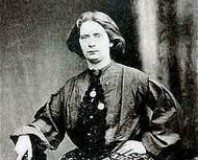 Maria Barbella
Murderer · USA · 1895
Maria Barbella was a seamstress in Manhattan's Little Italy. She lived with her…
1 victim
Maria Barbella
Murderer · USA · 1895
Maria Barbella was a seamstress in Manhattan's Little Italy. She lived with her…
1 victim
 Janet Redmond-Mercereau
Murderer · USA · 2007
Janet Redmond-Mercereau was convicted of second-degree murder for killing her h…
1 victim
Janet Redmond-Mercereau
Murderer · USA · 2007
Janet Redmond-Mercereau was convicted of second-degree murder for killing her h…
1 victim
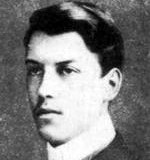 Horace Rayner
Murderer · United Kingdom · 1907
Horace Raynor was sentenced to death for the killing of William Whiteley. After…
1 victim
Horace Rayner
Murderer · United Kingdom · 1907
Horace Raynor was sentenced to death for the killing of William Whiteley. After…
1 victim
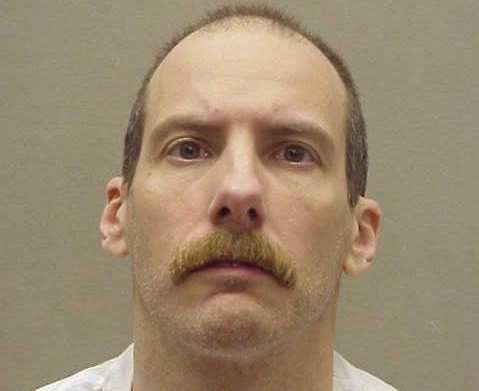 Eric Napoletano
Serial killer · USA · 1984
Eric Napoletano was described as a “sexually sadistic serial killer,” according…
3 victims
Eric Napoletano
Serial killer · USA · 1984
Eric Napoletano was described as a “sexually sadistic serial killer,” according…
3 victims
 Khoua Her
Mass murderer · USA · 1998
Khoua Her pleaded guilty and received a sentence of 50 years in prison with no…
6 victims
Khoua Her
Mass murderer · USA · 1998
Khoua Her pleaded guilty and received a sentence of 50 years in prison with no…
6 victims
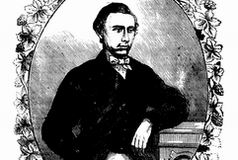 Frederick Baker
Murderer · United Kingdom · 1867
Frederick Baker was a solicitor’s clerk in Alton, Hampshire, England. On Saturd…
1 victim
Frederick Baker
Murderer · United Kingdom · 1867
Frederick Baker was a solicitor’s clerk in Alton, Hampshire, England. On Saturd…
1 victim
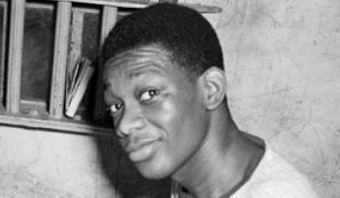 Willie Francis
Homicide · USA · 1944
Willie Francis (c. 1930 – May 9, 1947) was an African American sentenced to dea…
1 victim
Willie Francis
Homicide · USA · 1944
Willie Francis (c. 1930 – May 9, 1947) was an African American sentenced to dea…
1 victim
- Gender
- female
- Country
- USA
- Location
- Bennington County, Vermont, USA
- Date of birth
- 1883
- Age at first offence
- 19
- Characteristics
- parricide, to collect insurance money
- Victim profile
- Her husband, Marcus Rogers
- Method of murder
- Chloroform asphyxiation
- Date(s) of murder
- August 12, 1902
- Years active
- 1902
- Date of arrest
- —
- Status
-
Executed
Executed by hanging on December 8, 1905
Case overview
Mary Mabel Rogers (1883 – December 8, 1905) was the last woman legally executed by Vermont. She was hanged for the 1902 murder of her husband, Marcus Rogers.
Background
Mary married Marcus Rogers when she was 17. She was noted for being immature and restless, and often stayed away from home when she was upset with him. Rogers gave birth to a daughter in 1901. When the child was six months old, Rogers ran into a neighbor’s home crying that she had dropped the baby, who later died of a fractured skull. Her husband’s family believed she had intentionally killed the child.
These suspicions were heightened after Marcus Rogers became violently ill after drinking tea prepared for him by his wife. Mary Rogers moved out of the house shortly after this incident, but Marcus hoped they could reconcile.
The crime proceeded with Marcus working as a laborer in Hoosick Falls, New York, while Mary lived in Bennington, Vermont. Although Marcus pleaded with his wife to join him in Hoosick Falls, she refused. Mary Rogers struck up relationships with Morris Knapp and two brothers living in the same residence house as Knapp, Leon and Levi Perham.
The offence
Rogers first approached Levi Perham with an offer of $500 if he would kill her husband. Levi initially agreed to help her, but he was intoxicated at the time and later backed out. He did not tell the police because he felt it was just idle talk.
Rogers then proposed murdering her husband to Leon Perham while they lay in bed in early August 1902. Leon agreed to help her kill her husband. Rogers made clear that her reason was to leave her free to marry Knapp.
Mary Rogers arranged to meet her husband in a Bennington picnic grove on the evening of August 12, 1902. Leon Perham was with Mary when Marcus arrived, and Marcus apparently did not question Leon’s presence. Mary pretended to be happy to have seen her husband and spoke with him of reconciliation during the picnic.
At some point during the picnic, Mary offered to show Marcus a rope trick she had learned from a friend. Mary tied Perham’s hands several times, and each time Perham easily broke free of the restraint, with Mary pretending to be disappointed when he did so. Mary then challenged her husband to try the trick. She tied his wrists a few times, and he also easily broke free.
Mary then “convinced” Perham to try the trick on Marcus. When Perham bound Marcus’ wrists behind his back, Rogers could not break free. Mary took a vial of chloroform from her purse and forced her husband to breathe it in for about twenty minutes until he stopped struggling. Mary went through Marcus’ pockets and removed his life insurance payment book. Mary and Perham rolled the body into the nearby river, and Marcus Rogers drowned.
Mary tacked Marcus’ hat to a tree with a suicide note.
The note read: “Blame no one as I have at last put an end to my miseberl life as my wife nows I have every threatened it, every nows I have not enything or no body to live for no one can blame me and so blame no one as my last request. Marcus Rogers P. s. May hope you will be happy”
Investigation
The investigation begun after the body was discovered; Perham made a full confession.
Arrest and charges
At trial in 1904, Perham was the state’s key witness against Rogers.
At the time of arraignment, Mary, Leon, and Stella Bates were arraigned on first-degree murder charges and pleaded not guilty.
Trial
Rogers was defended by lawyers Frank Archibald and Daniel A. Guiltinan, and the trial was portrayed as a formality. Leon Perham was the chief witness against her.
Due to Perham’s testimony and his youth, Perham avoided a death sentence.
The evidence at trial included the circumstances around the murder and Perham’s confession. Rogers was found guilty of first degree murder.
The portrayal at trial included claims that she was a shameless harlot and an unwomanly monster. She was sentenced to death by hanging.
Sentencing
After her trial in 1904, Rogers was sentenced to death by hanging.
Commutation efforts
Following Rogers’s conviction, there was a concerted effort to have her death sentence commuted. State Representative Frank C. Archibald of Manchester, who was also one of Rogers’ attorneys, introduced a bill in the Vermont House of Representatives that would have commuted Rogers’ sentence to life imprisonment. The bill was referred to the judiciary committee on October 12, 1904. On December 6, the committee reported in favor of its passage.
On December 7, a vote on the bill in the House of Representatives was defeated by a vote of 139 to 91.
On December 9, Representative Archibald proposed a joint resolution of the Vermont House and Senate to investigate Rogers’ physical and mental condition at the time of the commission of the crime and at the present time, and to prepare a report as to her condition for the governor. The resolution stated that if it appeared that Rogers either at the time she committed the crime or at present was mentally or physically unsound, a reprieve should be requested and her execution delayed until after the 1906 Vermont Legislative Session. The House adopted this resolution but the Senate did not.
Appeals
On May 30, 1905, Governor Charles J. Bell granted a reprieve to Rogers after the Vermont Supreme Court denied her appeal by a 5–2 vote; the reprieve was intended to allow the appeal to be heard by the United States Supreme Court.
The U.S. Supreme Court heard the case on November 6 and held on November 27 that the Court could not find that Rogers had sustained any violation of her Federal Constitutional rights by the proceedings of the executive or judicial departments of the State of Vermont.
Prison behavior investigation
In 1904, the Vermont Commission to Investigate State Institutions began investigating charges of misbehavior at the Vermont State Prison, where Rogers was being held. A large portion of the commission’s transcripts focused on allegations of inappropriate sexual relations between prison officers and Rogers.
During the investigation of the Windsor Prison in 1905, it was disclosed that Vernon Rogers, a convicted rapist acting as a prison “trusty,” had enjoyed access to Mary’s cell during the previous March. The disclosure stated that Vernon Rogers had procured a key to the front locks of Mary’s cell and that Mary had sexual intercourse several times with Vernon Rogers during ten days of access.
Execution
After the U.S. Supreme Court decision, Governor Bell signed Rogers’s execution warrant and the execution was scheduled for December 8, 1905. Rogers inquired on December 7 whether the gallows were being erected.
During the ten days between the signing of the warrant and her execution, Rogers ate and slept well, but she declined breakfast on the morning of her execution. Governor Bell granted leave to hear an appeal from Rogers’s counsel at 8 a.m. on her scheduled execution day; however, he found no reason to commute her death sentence. With no new evidence, he declined to stay the execution, and Rogers was hanged at the Vermont State Prison later that day.
Mary’s inquiries and religious matters included her statement in the aftermath of her sentencing: “You can take your priest and go to hell. I have no use for him.”
She welcomed both Father Cornelius C. Delaney and Windsor Prison chaplain W.H. Hayes to her death row cell. She spent the last two weeks of her life in the constant company of prison official Merton Loukes and his wife, who were there to keep a “suicide watch” on their prisoner. She crocheted aprons.
On the morning of her execution, she awoke at 5 a.m. and dressed herself without aid. She then labored over a last note to prison Supt. Lovell, which read: “Dear Mr. Lovell,— As I am not much in speaking, I pen you a few words as an expression of my extreme gratefulness for your extreme friendness [sic] bestowed upon me since in your care. Mr. Lovell, I may not always have done as well as I might have done, perhaps, but my only means of atonement now for what is past is to tell you that I am sorry and heartily sorry. I know that you have a very kind heart and I am bound to think that I may obtain from you forgiveness. You know that Jesus tells us, "If thy brother trespass against thee and turn again to thee saying I repent, forgive him. Be ye tender-hearted and forgiving, even as God for Christ's sake has forgiven you in his name."”
On her last day, she skipped both breakfast and lunch.
There were at least 40 spectators at her death, and descriptions of her execution differed. One attending deputy was quoted as saying: “I had to turn away my head. May I never be commanded to take part in another such undertaking.”
Other legal proceedings and quotations
In the commutation debate, Rev. D. L. Hilliard said: “Gentleman, you dare not vote to commute this woman's sentence! You dare not do it! I swear to you, gentlemen, before my God, if she was my own sister, I would vote to hang her!”
A U.S. Supreme Court case is listed as: Mary Mabel Rogers, Appt., v. Henry H. Peck and Wilson S. Lovell. No. 368. Argued: November 6, 1905. Decided: November 27, 1905. Opinion, Day.
A stated dispute in the U.S. Supreme Court proceedings included assignments of error, quoted as: ‘First. Because the petitioner was and is deprived of her liberty by the state, and subjected to the punishment of solitary confinement without any statute authorizing such punishment, and without any sentence of any court directing such punishment, and therefore without due process of law. ‘Second. Because the supreme court of Vermont, having taken jurisdiction of the petition for a new trial, and having failed to comply with the requirements of law in respect of ordering a stay of execution and fixing the time for the execution of the petitioner, has failed to fix a day for the execution, and the Governor of Vermont has no right or authority to fix such a day, and the petitioner is being held to be executed in accordance with a precept not authorized by law, and which is not in and of itself due process of law. ‘Third. Because the state of Vermont, having failed to maintain an appellate court in the County of Bennington, as required by its Constitution, has deprived the relator of the opportunity to be heard by a court of competent jurisdiction, and thus deprived her of due process of law. ‘Fourth. Because the Governor of Vermont, having issued his order requiring execution of the petitioner on December 8, while proceedings were pending in the courts of the United States for her relief on habeas corpus, said order of the Governor is to be deemed null and void, and the petitioner should be released from custody thereunder.’
On petitions and public advocacy, a letter from Mrs. Stephen Buhrer, wife of a former Cleveland mayor, concluded: “It would be a shame and a disgrace in this enlightened day to execute a woman who for her actions was irresponsible at all times.”
A letter quoted Brattleboro attorney James Hooker writing: “If ever a person deserved hanging, this wretch did, and I thank God the law has been vindicated.”
A Bennington Banner journalist’s quoted statement included: “The impression she gave the reporter was that she is a stupid, ignorant woman, whose stupidity has been mistaken for nerve.”
People
- Mary Mabel Rogers — convicted defendant; husband Marcus Rogers’ wife
- Marcus Rogers — victim; Mary’s husband
- Leon Perham — participant; key witness at Rogers’s trial
- Levi Perham — participant; backed out of the plan; described as intoxicated at the time and later backed out
- Morris Knapp — associate of Mary; referenced in motive context
- Stella Bates — associated person; with Mary; referenced in arraignment
- Frank C. Archibald — State Representative; introduced commutation bill; one of Rogers’s attorneys
- Governor Charles J. Bell — granted reprieve and later signed execution warrant
- Dr. Leroy D. MacWayne — medical professional referenced in affidavits
- Windsor Prison Supt. Wilson S. Lovell — witness in affidavits and recipient of Rogers’s last note
- U.S. Supreme Court Justice William R. Day — handed down the decision denying Rogers’s last hope
- Tracy L. Jeffords — counsel for appellant in U.S. Supreme Court proceedings
- T. W. Moloney — counsel for appellant in U.S. Supreme Court proceedings
- F. M. Butler — counsel for appellant in U.S. Supreme Court proceedings
- Charles A. McCarthy — counsel for Rogers in her scheduled hearing before Governor Bell
- E.B. Flinn — counsel for Rogers in her scheduled hearing before Governor Bell
- Sheriffs and deputies including Sheriff Henry H. Peck and deputies Romaine Spafford and Angus McAuley — referenced in the execution narrative
- Deputy Sheriff Romaine Spafford — placed the traditional black cowl over Mary’s head and delivered procedural words
- Deputy Sheriff Angus McAuley — pressed the foot on the wooden trigger
- Deputy H.A. Bond and P.C. Tinkham — referenced in an account of how the rope was handled
- Father Cornelius C. Delaney — offered final prayer and attended Mary’s death row cell
- Windsor Prison chaplain W.H. Hayes — attended Mary’s death row cell
- Merton Loukes and his wife — kept a “suicide watch” while Mary was in death row cell
- Vernon Rogers — convicted rapist acting as a prison “trusty”
- Mrs. William J. Blickensderfer — campaigning petitioner
- Mrs. Stephen Buhrer — wrote quoted letter about execution
- John Stark Bellamy — writer mentioned in connection with discussion of case
- James Hooker — attorney whose letter was quoted
- Brattleboro attorneys/Harvard Law students including Carroll M. Perkins and John B. Roberts — mentioned in connection with praise
Timeline
- October 12, 1904 — The commutation bill was referred to the judiciary committee.
- December 6, 1904 — The judiciary committee reported in favor of its passage.
- December 7, 1904 — The House vote on the bill failed by 139 to 91.
- December 9, 1904 — Archibald proposed a joint resolution regarding Rogers’s physical and mental condition.
- May 19, 1905 — The Vermont Supreme Court heard Rogers’s appeal based on affidavits.
- May 30, 1905 — The Vermont Supreme Court denied the appeal by a vote of 5–2; Governor Bell granted a reprieve.
- November 6, 1905 — The U.S. Supreme Court heard the case.
- November 27, 1905 — The U.S. Supreme Court held it could not find violation of federal constitutional rights.
- December 7, 1905 — Rogers inquired whether the gallows were being erected.
- December 8, 1905 — Rogers was hanged at the Vermont State Prison.
Outcome
Rogers was executed by hanging on December 8, 1905, after the U.S. Supreme Court decision on November 27, 1905 and the Governor’s execution warrant signed after that decision.

Spotted an error, or have more information about this case?