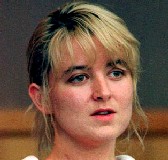
Darlie Routier
Murderer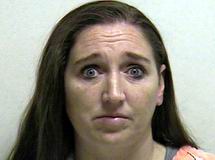 Megan Huntsman
Murderer · USA · 1996
Megan Huntsman was 40 at sentencing. She was a mother of three children who wer…
6 victims
Megan Huntsman
Murderer · USA · 1996
Megan Huntsman was 40 at sentencing. She was a mother of three children who wer…
6 victims
 Angela Johnson
Murderer · USA · 1993
Angela Jane Johnson was convicted in federal court of aiding and abetting the m…
5 victims
Angela Johnson
Murderer · USA · 1993
Angela Jane Johnson was convicted in federal court of aiding and abetting the m…
5 victims
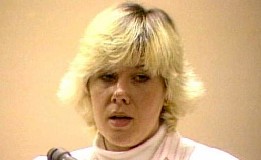 Catherine May Wood
Murderer · USA · 1987
Catherine May Wood was an American caregiver who worked at the Alpine Manor Nur…
5 victims
Catherine May Wood
Murderer · USA · 1987
Catherine May Wood was an American caregiver who worked at the Alpine Manor Nur…
5 victims
 Michele Kalina
Murderer · USA · 1996
Michele Kalina pleaded guilty to murder for one of five infants she initially w…
5 victims
Michele Kalina
Murderer · USA · 1996
Michele Kalina pleaded guilty to murder for one of five infants she initially w…
5 victims
 Tiffany Hall
Murderer · USA · 2006
Tiffany Hall was 24 when she was charged in September 2006. She later entered a…
5 victims
Tiffany Hall
Murderer · USA · 2006
Tiffany Hall was 24 when she was charged in September 2006. She later entered a…
5 victims
 Amy Bishop
Murderer · USA · 1986
Amy Bishop — biology professor and perpetrator · James Anderson — Bishop’s husb…
4 victims
Amy Bishop
Murderer · USA · 1986
Amy Bishop — biology professor and perpetrator · James Anderson — Bishop’s husb…
4 victims
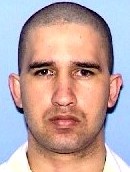 Edgardo Rafael Cubas
Murderer · USA · 2002
Edgardo Rafael Cubas (also spelled Edgardo Rafael Cuba and Edgardo Rafael Cubas…
4 victims
Edgardo Rafael Cubas
Murderer · USA · 2002
Edgardo Rafael Cubas (also spelled Edgardo Rafael Cuba and Edgardo Rafael Cubas…
4 victims
 Paul Ferguson
Murderer · USA · 1968
Paul Ferguson was sentenced to life imprisonment in 1969 and was paroled less t…
1 victim
Paul Ferguson
Murderer · USA · 1968
Paul Ferguson was sentenced to life imprisonment in 1969 and was paroled less t…
1 victim
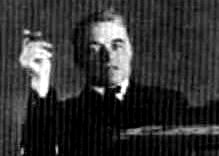 Andrew Kehoe
Mass murderer · USA · 1927
Andrew P. Kehoe committed suicide the same day by killing himself in the explos…
44 victims
Andrew Kehoe
Mass murderer · USA · 1927
Andrew P. Kehoe committed suicide the same day by killing himself in the explos…
44 victims
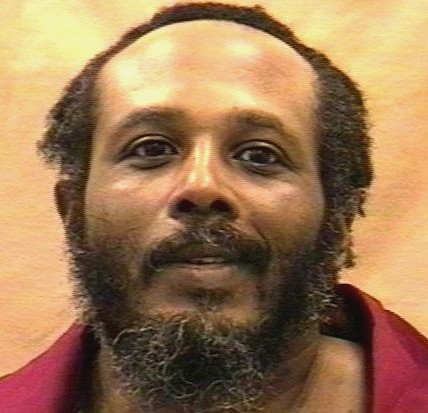 Guy Tobias LeGrande
Murderer · USA · 1983
Guy Tobias LeGrande was sentenced to death in Stanley County Superior Court for…
1 victim
Guy Tobias LeGrande
Murderer · USA · 1983
Guy Tobias LeGrande was sentenced to death in Stanley County Superior Court for…
1 victim
 Pamela Lynn Perillo
Murderer · USA · 1980
Name: Pamela Lynn Perillo Sentenced to death on September 2, 1980; resentenced…
2 victims
Pamela Lynn Perillo
Murderer · USA · 1980
Name: Pamela Lynn Perillo Sentenced to death on September 2, 1980; resentenced…
2 victims
 Jieming Liu
Murderer · USA · 2012
Jieming Liu was a 79-year-old man from Shrewsbury. His wife, Yuee Zhou, was 73…
1 victim
Jieming Liu
Murderer · USA · 2012
Jieming Liu was a 79-year-old man from Shrewsbury. His wife, Yuee Zhou, was 73…
1 victim
- Gender
- female
- Country
- USA
- Location
- Rowlett, Texas , USA
- Date of birth
- January 4, 1970
- Age at first offence
- 26
- Characteristics
- parricide
- Victim profile
- Two of her three children, Damon, 5, and Devon, 6
- Method of murder
- Stabbing with knife
- Date(s) of murder
- June 6, 1996
- Years active
- 1996
- Date of arrest
- June 18, 1996
- Status
-
Sentenced to death
Sentenced to death on February 4, 1997
Case details
Name: Darlie Routier
Born: January 4, 1970
Country/State: American woman from Rowlett, Texas
Spouse: Darin Routier
Children mentioned by name: Damon Christian Routier, Devon Routier, infant Drake
Status and sentence
Darlie Lynn Routier was sentenced to death by lethal injection.
Charges and conviction
Routier was convicted of the capital murder of a child under six years of age, involving Damon Christian Routier.
Pursuant to the jury’s answers to the special issues set forth in Texas Code of Criminal Procedure article 37.071, sections 2(b) and 2(e), the trial judge sentenced appellant to death under Tex. Code Crim. Proc. art. 37.071, § 2(g).
Victims
Routier’s sons were identified as:
- Damon Christian Routier, a child under six years of age
- Devon Routier
The State charged and the Court’s opinion addressed the capital murder of Damon, while the narrative also states that Devon was stabbed to death.
The offence
On June 6, 1996, two children, Damon and Devon, were stabbed to death in the family’s home. The narrative states that Routier was accused of killing both children but was only prosecuted for the murder of Damon, the younger of the two murdered boys.
Investigation
Police responded to an emergency call placed from 5801 Eagle Drive in Rowlett, Texas at 2:31 a.m. The caller reported that someone broke into the house and stabbed her and her children.
Police noted inconsistencies between Routier’s report and the crime scene evidence, including details about a knife she referenced during the 911 call and statements about what was touched and when.
Crime scene observations included:
- Broken glass and a vacuum cleaner were described as associated with where Routier’s bloody footprints were found.
- A butcher knife was described as resting on the kitchen island countertop.
- The narrative includes that the sink was reportedly spotless while blood-smudged areas were around and above it, and that investigators used Luminol to detect blood.
- A slit screen in the garage area was described as not showing signs of forced entry, with a frame described as removable, and ground below a window described as undisturbed.
- Bloody footprints were described as leading from the room where the children were slain through a utility room to the garage.
- The narrative describes no visible blood trail beyond the house and no apparent traces beyond the interior.
- A lampshade was described as askew, and an expensive flower arrangement was described as unbroken and placed as if not disturbed.
- The narrative describes a woman’s purse and pieces of jewelry placed in order and untouched.
The narrative also includes expert testimony and findings about wounds:
- Dr. Alejandro Santos and Dr. Patrick Dillawn referred to Routier’s wounds as superficial, while her neck wound was described as coming within two millimeters of her carotid artery.
- Blood spatter expert Tom Bevel testified about cast-off blood on Routier’s nightshirt indicating how the knife was raised.
- Dr. Vincent DiMaio opined that her throat slash had come within two millimeters of the carotid artery and diagnosed bruises on her arms as mass trauma from a blunt instrument.
- The narrative includes that Rowlett police consulted the FBI’s Center for Analysis of Violent Crime in Quantico, Virginia, and includes findings attributed to FBI special agent Al Brantley.
- Al Brantley’s conclusions in the narrative included that the wounds between sons and mother were vastly different and that the attack on the children indicated extreme anger and personal focus.
Arrest and custody
Routier remained incarcerated at the Lew Starrett Justice Center awaiting indictment.
The narrative states that she was charged with capital murder four days after the June 6, 1996 killings.
The narrative further states that she was arrested for the murder of her two children on January 18 (year not explicitly repeated in the narrative portion, but the ensuing trial timeline identifies the indictment and trial period as leading to January 1997 proceedings).
Trial
Venue and pretrial
The narrative states that Darlie’s trial was moved out of Dallas County to Kerrville in Bexar County.
A gag warrant barred both the defense and prosecution from discussing the case with the media.
Indictment
The narrative states that a Dallas County grand jury officially indicted Routier on June 28 on two counts of capital murder.
The trial occurred with proceedings beginning on January 6, 1997 as described in the narrative.
Jury selection
Jury selection began October 16, 1996 in Kerrville and concluded on November 14 when it was announced that seven women and five men would be the final deciders.
Plea
Routier pleaded Not Guilty.
Prosecution opening and defence opening
The narrative includes verbatim opening statements: Chief Prosecutor Greg Davis’ opening remarks included:
"The evidence will show you, ladies and gentlemen, that Darlie Routier is a self-centered, materialistic woman cold enough to murder two precious children..."
Defense Attorney Mulder stated:
"And the State wants you to believe she became a psychotic killer in the blink of an eye?"
"Well, folks, that's just absurd!"
Evidence and witness testimony (trial narrative)
The narrative includes testimony and descriptions including:
- Dr. Joanie McLaine from the medical examiner’s office
- Coroner Janice Townsend-Parchman
- Officer David Waddell
- Paramedic Jack Kolbye
- Paramedic Larry Byford
- Officer David Maynes
- Fingerprint expert Charles Hamilton
- Investigator James Cron
- Trace-evidence expert Charles Linch
- Blood expert Tom Bevel
- FBI special agent Al Brantley
The narrative includes verbatim conclusion attributed to Al Brantley:
"Someone who knew those children very well murdered them."
The narrative also includes defence witness testimony and expert evidence:
- Reverend David Rogers
- Friend Cara Byford
- Next-door neighbor Karen Neal
- Husband Darin Routier
- Forensic psychologist Dr. Lisa Clayton
- Statements attributed to the forensic psychologist about blackout and distorted-memory symptoms
Routier’s testimony (trial narrative)
The narrative includes that Routier testified, including explanations about Silly String used at Devon’s graveside birthday and that differences in her story related to an inability to remember things clearly.
Jury verdict
After hours of deliberation, on February 1, 1997 the jury found Darlie Lynn Routier guilty of the murder of her son Damon Christian.
Sentencing
Three days later, the court sentenced Routier to death.
The status provided states: Sentenced to death on February 4, 1997.
Appeals
Direct appeal (Court of Criminal Appeals of Texas)
Routier appealed to the Court of Criminal Appeals of Texas as Routier v. State.
The Court of Criminal Appeals decision cited:
- Tex. Penal Code § 19.03(a)(8)
- Tex. Code Crim. Proc. art. 37.071, § 2(g)
- Tex. Code Crim. Proc. art. 37.071, § 2(h)
The Court stated: “We shall affirm.”
The opinion is dated May 21, 2003.
The Court’s disposition included overruled points of error and concluded that it would affirm the conviction and sentence.
Key elements described in the appeal included disputes about the reporter’s record preparation and certification, and issues about the record’s accuracy and lost or destroyed portions.
The Court overruled:
- First point of error (conflict of interest in attorney's representation)
- Second point of error (dismissal of sworn juror)
- Third point of error (reporter's record accuracy and reliability)
- Fourth and fifth points of error (failure to hold hearing on objections to Simmons record)
- Sixth and seventh points of error (exclusion of testimony)
- Eleventh, twelfth, and thirteenth points of error (jury provided an inaccurate transcription of a portion of Darin Routier’s testimony while Routier was not present)
- Fourteenth point of error (failure to rule on bill of exception)
- Eighth, ninth, and tenth points of error (dismissal of sworn juror)
The opinion concluded that it would affirm the trial court’s judgment and sentence.
Other events and details included in the narrative
Emergency call and response (June 6, 1996, as described)
The narrative includes the following quoted statements:
- The caller said: "Somebody broke in to our house...They just stabbed me and my children..."
- The caller continued: "My little boys are dying! Oh my God, my babies are dying !"
- The caller said: "My babies are dying! My babies are dying!"
- Routier described during later narrative accounts: "We could have gotten the prints, maybe." and references to touching and picking up a knife.
- The narrative includes statements attributed to Darin Routier and police officers, and descriptions of medical response and observations at the scene.
Injury descriptions and medical response (as described in narrative)
The narrative describes medical examinations and injuries:
- Damon was described as barely alive during initial response and later died before reaching Baylor Medical Center.
- Devon was described as dead when observed.
Gravesite birthday party (as described in narrative)
The narrative states that after the murders a birthday party was held at the children’s grave to celebrate Devon’s seventh birthday posthumously, and includes quotations:
- Darlie Routier said: "I'm sorry."
- Darlie Routier asked: "Who could have done this to my children?"
- Darlie Routier told Joe Munoz: "If you knew (my sons), you'd know that they are up there in heaven having the biggest birthday party we could ever imagine. And though our hearts are breaking, they wouldn't want us to be unhappy. But they'll be a part of us always."
- Darlie Routier said: "The only thing that keeps me going is the hope that they will find that person. I have faith in God. I believe He will direct the police to that man."
- Darlie Routier was described as spraying Silly String and crying: "I love you, Devon and Damon!"
Pretrial and custody-related details (as described in narrative)
The narrative includes:
- Darlie’s demand for a polygraph test, and that she withdrew and then reconsidered the request based on conditions described in the narrative.
- The narrative states that she was given Miranda Rights and wrote an official statement.
Family and personal-history details (as described in narrative)
The narrative includes:
- Darlie Routier’s birthplace and upbringing details including Altoona, Pennsylvania.
- Her parents’ divorce and her mother’s remarriage to Dennis Stahl.
- Family moves to Lubbock, Texas.
- Darlie’s relationship history with Darin Routier and their marriage, and details about children’s births (Devon born June 14, 1989 and Damon born February 19, 1991, and infant Drake described as six months old at the scene).
Divorce (as described in narrative)
The narrative states that in June 2011 Darin Routier filed for divorce, stated the decision to divorce was mutual and "very difficult," and said he still believes his wife is innocent.
Timeline
- June 6, 1996 — Two of Routier’s sons, Damon and Devon, were stabbed to death in the family’s home; the narrative also describes emergency response beginning at 2:31 a.m.
- June 28, 1996 — A Dallas County grand jury indicted Routier on two counts of capital murder.
- October 16, 1996 — Jury selection began in Kerrville.
- November 14, 1996 — The court announced jury selection completion with seven women and five men as the final deciders.
- January 6, 1997 — Trial proceedings are described as beginning in the narrative.
- January 18 (year as described in narrative context) — Routier was arrested for the murder of her two children.
- January 1997 (trial month) — The trial occurred as described in the narrative.
- February 1 (1997) — The jury found Routier guilty of the murder of Damon Christian Routier.
- February 4, 1997 — Routier was sentenced to death.
- May 21, 2003 — The Court of Criminal Appeals of Texas issued its decision in Routier v. State, affirming the conviction and sentence.
Outcome
Routier remained convicted and sentenced to death, with the direct appeal affirmed by the Court of Criminal Appeals of Texas.
Aftermath
The narrative includes that Routier remained incarcerated on death row, and it states that appeals were remanded for improved DNA testing.

Spotted an error, or have more information about this case?