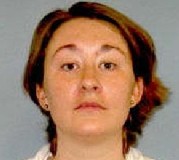
Christie Scott
Murderer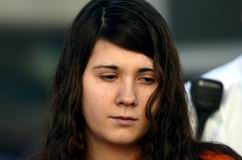 Miranda Barbour
Murderer · USA · 2013
Miranda Barbour, 19, defendant. · Elytte Barbour, 22, defendant and husband of…
100 victims
Miranda Barbour
Murderer · USA · 2013
Miranda Barbour, 19, defendant. · Elytte Barbour, 22, defendant and husband of…
100 victims
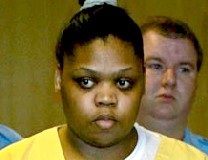 Tiffany Hall
Murderer · USA · 2006
Tiffany Hall was 24 when she was charged in September 2006. She later entered a…
5 victims
Tiffany Hall
Murderer · USA · 2006
Tiffany Hall was 24 when she was charged in September 2006. She later entered a…
5 victims
 Banita Jacks
Murderer · USA · 2007
Banita Jacks was a Washington, DC resident convicted of murdering her four daug…
4 victims
Banita Jacks
Murderer · USA · 2007
Banita Jacks was a Washington, DC resident convicted of murdering her four daug…
4 victims
 Holly Grigsby
Murderer · USA · 2011
Holly Grigsby was sentenced to life in prison without parole on July 15, 2014.…
4 victims
Holly Grigsby
Murderer · USA · 2011
Holly Grigsby was sentenced to life in prison without parole on July 15, 2014.…
4 victims
 Jessica Tata
Murderer · USA · 2011
Jessica Tata was a Houston home day care owner who fled to Nigeria after a fire…
4 victims
Jessica Tata
Murderer · USA · 2011
Jessica Tata was a Houston home day care owner who fled to Nigeria after a fire…
4 victims
 Amanda Bennett
Murderer · USA · 2011
Amanda Bennett was an Indiana woman who shot her three children and set the fam…
3 victims
Amanda Bennett
Murderer · USA · 2011
Amanda Bennett was an Indiana woman who shot her three children and set the fam…
3 victims
 John Walker Turnbull
Murderer · United Kingdom · 1999
John Walker Turnbull (May 18, 1958 – September 27, 1999) was a Lance Corporal i…
2 victims
John Walker Turnbull
Murderer · United Kingdom · 1999
John Walker Turnbull (May 18, 1958 – September 27, 1999) was a Lance Corporal i…
2 victims
 Bertrand Cantat
Homicide · Lit h uania · 2003
Bertrand Lucien Bruno Cantat (born 5 March 1964) was a French singer and songwr…
1 victim
Bertrand Cantat
Homicide · Lit h uania · 2003
Bertrand Lucien Bruno Cantat (born 5 March 1964) was a French singer and songwr…
1 victim
 Anna Mansdotter
Murderer · Sweden · 1889
Anna Månsdotter was executed by beheading with an axe in Kristianstad on August…
1 victim
Anna Mansdotter
Murderer · Sweden · 1889
Anna Månsdotter was executed by beheading with an axe in Kristianstad on August…
1 victim
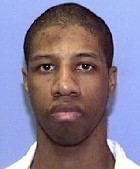 Irving Davis
Murderer · USA · 2001
Name: Irving Davis · Also known as: Irving Alvin Davis · TDCJ Number: 999423 ·…
1 victim
Irving Davis
Murderer · USA · 2001
Name: Irving Davis · Also known as: Irving Alvin Davis · TDCJ Number: 999423 ·…
1 victim
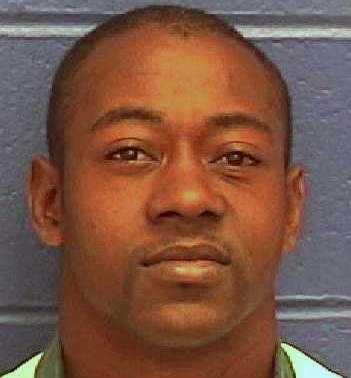 Timothy Tyrone Foster
Murderer · USA · 1986
Timothy Tyrone Foster was 29 when he was sentenced to death in Floyd County in…
1 victim
Timothy Tyrone Foster
Murderer · USA · 1986
Timothy Tyrone Foster was 29 when he was sentenced to death in Floyd County in…
1 victim
- Gender
- female
- Country
- USA
- Location
- Russellville, Franklin County, Alabama, USA
- Date of birth
- 1978
- Age at first offence
- 30
- Characteristics
- parricide, arson, to collect insurance money
- Victim profile
- Mason Scott, 6 (her autistic son)
- Method of murder
- Smoke inhalation and thermal burns
- Date(s) of murder
- August 16, 2008
- Years active
- 2008
- Date of arrest
- October 26, 2008
- Status
-
Sentenced to death
Sentenced to death on August 5, 2009
Parties and identifiers
- Defendant: Christie Michelle Scott (also referred to as Christie Michelle Bray Scott and Christie Bray Scott)
- Victim: Mason Scott
- Victim age: 6
- Other relevant person: Noah Riley Scott (Christie Scott's younger son)
- Other family member: Jeremy Scott (Christie Scott’s husband)
- Christie Scott’s father: Donald Bray
- Christie Scott’s mother: Kathy Bray
- Christie Scott’s neighbor: Jennifer Davidson
- Christie Scott’s neighbor’s boyfriend: Brian Copeland
- Christie Scott’s defense attorney: Robert Tuten
- Prosecutor / District Attorney: Joey Rushing
- Circuit Judge: Terry Dempsey
- Alabama Court of Criminal Appeals opinion: Christie Michelle Scott v. State, CR–08–1747 (October 05, 2012)
- Prison housing: Julia Tutwiler Prison for Women in Wetumpka (death row while appeals were pending)
Timeline
- June 24, 2009 — A state medical examiner testified that Mason Scott was alive at least briefly as he was being burned in the fire.
- June 9, 2009 — Jury selection began in the capital murder trial of Christie Michelle Scott.
- July 8, 2009 — A jury convicted Christie Michelle Scott of capital murder in the death of her 6-year-old son.
- August 5, 2009 — Circuit Judge Terry Dempsey overruled the jury’s life-without-parole recommendation and sentenced Scott to death.
- October 5, 2012 — The Alabama Court of Criminal Appeals affirmed Scott’s capital-murder convictions and her sentence of death.
- October 06, 2012 — An Associated Press report described the appeals court’s upholding of the death sentence.
- October 26 (year not stated) — A warrant was issued for Scott’s arrest after her indictment by a grand jury.
- April 2007 — Mason was brought to psychiatrist Dr. Rebecca Dailey for evaluation.
- February 6, 2008 — Dr. Duane Carter diagnosed Mason with bronchitis.
- August 15, 2008 — Scott applied for a third life-insurance policy on Mason.
- August 16, 2008 — The house fire occurred early in the morning; Mason died in the fire.
- August 26, 2008 — Deputy James Edwards interviewed Scott at the Russellville Fire Department; Edwards later read Scott’s statement to the jury.
- August 18, 2008 — Outlet number 3 was cut out and photographed (testimony referenced Aug. 18 in chain of custody discussion).
- September 2008 — Scott was originally charged with Mason’s murder after a grand jury returned information.
- May 22, 2009 — Outlet number 3 was mailed to a defense expert.
- January 12, 2006 — A fire occurred at Scott’s Steel Frame Road residence and was ruled an accident.
- January 14, 2006 — A second fire occurred at the Steel Frame Road residence and was ruled incendiary.
Background
Christie Michelle Scott was indicted for three counts of capital murder in connection with a fire at her house that resulted in the death of her 6-year-old son Mason. Scott was housed at Julia Tutwiler Prison for Women in Wetumpka on death row awaiting her appeals process.
Mason’s bedroom and Noah’s bedroom were part of the Scott house layout discussed at trial. At the time of the fire, Scott and her four-year-old son Noah were sleeping in Scott’s bedroom, and Mason was in the boys’ bedroom. Scott’s husband, Jeremy Scott, was out of town.
Dr. Rebecca Dailey testified that Mason was brought to her for evaluation in April 2007, and she diagnosed Mason with Attention Deficit Hyperactivity Disorder (“ADHD”), Oppositional Defiant Disorder (“ODD”), and Pervasive Developmental Disorder (“PDD”). She prescribed Abilify, Risperdal, and Vyvense for his conditions and testified she last saw Mason 12 days before his death.
Dr. Duane Carter testified that on February 6, 2008, he diagnosed Mason with bronchitis and prescribed Omniced (antibiotic), Decadron (steroid), and a codeine-based cough syrup whose generic name is promethazine, and that he prescribed promethazine again on April 16, 2008. Carter testified that the cough syrup would make a child sleepy.
A toxicologist, Dr. Jack R. Kalin, testified that amphetamines, codeine, and promethazine were identified in Mason’s system and that Mason’s amphetamine level was 450, described as consistent with what the witness said one would expect to see in a DUI case. Kalin testified that Risperdal or Abilify was not found, and that Mason’s carbon-monoxide level was greater than 90%.
The State’s experts testified that they ruled out lightning, spontaneous combustion, rechargeable batteries, and faulty electrical wiring as the cause of the fire, and Michael Haynes of the State Fire Marshal’s Office testified that there was no indication that any hydrocarbon accelerant had been used.
The offence
In early morning hours of August 16, 2008, a fire was set in the Scott house and Mason died as a result of the fire. Fire originated in Mason’s and Noah’s bedroom, according to testimony from Cpt. Steve Thornton and other witnesses.
Scott was indicted for three counts of capital murder:
- Count I: Murder for pecuniary gain or other valuable consideration, i.e., proceeds of a life-insurance policy, violating § 13A–5–40(a)(7), Ala. Code 1975.
- Count II: Murder during the course of an arson in the first degree, violating § 13A–5–40(a)(9), Ala. Code 1975.
- Count III: Murder of a child under the age of 14, violating § 13A–5–40(a)(15), Ala. Code 1975.
The jury found Scott guilty on all three counts and recommended a sentence of life imprisonment without the possibility of parole by a vote of 7 to 5. The circuit court imposed a death sentence in a separate sentencing hearing.
Investigation
Police and firefighters responded shortly after emergency calls placed by Scott’s neighbor Jennifer Davidson. Sgt. Brian Shackelford testified that he arrived minutes after the emergency call and kicked open the back door, entering only four or five feet because of heat and smoke. Firefighters testified that after extinguishing the fire they searched the house several times before they identified Mason’s badly charred body.
Emergency 911 records showed the first call was made at 2:33:17 on the morning of August 16, 2008, and the second call was made at 2:35:48—two and one half minutes later.
During testimony, Davidson testified that while Scott was in the ambulance, Scott said: “Don't call Jeremy. Don't call Jeremy. He'll blame me or he'll try to hurt his self.” (R. 998.) Davidson also testified that she heard Scott ask what fire marshal was at the scene, and that Scott said: “I don't like one of the fire marshals because he had worked her other house fire.” Davidson further testified that Scott was fully dressed and that at one point in the ambulance Scott patted her pant pocket and pulled out a cell phone and said: “I had my cell phone the whole time. I could have called 911.” (R. 997–98.)
Sgt. Shackelford testified about statements made by Donald Bray, Scott’s father, when he arrived at the scene. William Crenshaw testified that when Bray arrived he said: “What the hell have you done with my grandbabies?” (R. 1291.) Shackelford testified Bray said: “Oh, my God. What have you done to my babies?” (R. 1260.) Jerry Yarborough testified Bray said to Scott: “Where's my babies? Oh, no, not my babies. What have you done?” (R. 1126.) When Yarborough tried to calm Scott, Yarborough testified Scott said: “You don't understand. I killed his [Jeremy's] baby.” (R. 1128.) Yarborough also testified Scott said she didn’t know how someone could be so unlucky as to have two fires in three years and said: “I hope it ain't that one [the fire marshal] from Colbert County. I don't want him here.” (R. 1128.)
Captain Steve Thornton testified that firefighters sifted through fire debris for 8 to 10 hours but were unable to locate a missing outlet behind Mason’s bed; numerous photographs of this outlet had been made. A deputy fire marshal, Dolan Gassett, testified that he found a disabled smoke detector in the hallway outside the boys’s bedroom. A former firearms and toolsmark expert, Morris Brown, testified that in his opinion the smoke detector had been forcibly removed or pulled from the wall before the fire started and was lying on the floor, undamaged by the fire. Brown testified: “[S]ome force acted upon the wires enough to cause the tearing of this housing and caused the collateral abrasion of the wire.” (R. 2399–40.) Evidence indicated that other wall-mounted items at the same height sustained heat damage or melted.
Evidence introduced included Scott’s account of events from an interview with James Edwards of the Alabama State Fire Marshal’s Office on August 26. Edwards testified Scott gave the following account:
“I went back to watch TV. I was watching Fear on HBO. I went back to check on them at 10:00 p.m. Mason was asleep and Noah Riley was not. I turned on the satellite and told him that he needed to go to sleep. I went back to watch my movie. The movie went off around 11:00 p.m. I went in the room to check on the boys. The TV was off and Noah Riley was still awake. I told him to come get in the bed with me.
“We went to my room and went to bed. As I went to sleep, the house was fine. The Jack and Jill bathroom light was on and the night-light played and—plugged into the wall. In my room I had turned the light on over the toilet for Noah Riley. We went to sleep.
“The next thing I remember is something hitting my face. As I started to wake up, I could smell the smoke and feel the heat on my face. I rolled off the bed and covered Noah Riley and told him to be still. I crawled over to the door. I looked out in the hallway, which was covered in smoke. I could see flickering that I thought at the time was coming from the laundry room.
“I went back into our room, pushed the door to. I crawled back over to the bed and pulled Noah Riley off in the floor. He began to cry at this point. I took a deep breath, stood up, and opened the window. I punched the screen out. I picked up Noah Riley, kissed him, told him I loved him, and dropped him out of the window.
“At this time I could hear crackling and popping. I began to try to get out of the window, got halfway out and fell. When I got on the ground, I took, Noah Riley by the hand and started around the house. He told me that I was hurting him. So I picked him up and carried him through the front yard with me.
“Where there was—there was fire coming out of the window in the boys' room and going over the top of the roof. It was orange. I ran to Jennifer's house, banged on the door. When she came to the door, I handed Noah Riley to her, told her to dial 911 that the house was on fire.
“I yelled to her that Mason was still in the house as I headed back to the house. I ran over to the garage doors. I put in the code and the doors would not open. I tried several times to get in with the code. Then I ran around to the front of the house. The flames had started running across the peak of the roof.
“I was headed to the front door when Brian [Copeland] grabbed me and held me down. Later I remembered the light in my bathroom was off when I woke up.” (R. 1762–64.)
The State also introduced evidence concerning Scott’s internet search history around August 15 and August 16, 2008, including a user accessing boaterexam.com at 1:04 a.m. on August 16, 2008.
Arrest
On October 26 (year not stated), Franklin County Judge Terry Dempsey issued a warrant for Scott’s arrest after her indictment by a grand jury. Scott later turned herself in, according to the narrative, and authorities held a news conference and photo op.
Trial
The trial began in June 2009 and testimony lasted for approximately four weeks, described as the longest trial in Franklin County’s history.
Jury selection: Potential jurors began questionnaires during June 9, 2009, and jury selection resumed Wednesday. Franklin County Circuit Court Judge Terry Dempsey asked prospective jurors if they had biases that would prevent impartial verdicts based on media reports, and those unable to do so were dismissed. Dempsey also warned jurors not to read, watch, or listen to news about the trial.
During voir dire, Scott renewed a motion for change of venue after reading juror questionnaires; the circuit court denied the motion and indicated it would see what happened during voir dire.
During trial testimony, Dr. Emily Ward testified that Mason died from smoke inhalation and thermal burns. Ward testified about soot found in Mason’s throat and lungs indicating Mason was alive as the fire began, and about high carbon monoxide levels. Ward testified “We don't think he was alive the whole time the burning was going on,” and “But we don't know at what point the death occurred.” The record also included testimony described as showing Mason had high carbon monoxide levels.
Testimony and evidence were presented on both sides concerning whether the fire was electrical or incendiary and about the cause of the fire. Defense witnesses included electrical engineer Dr. Raphael A. Franco, Jr., who testified the fire was not electrical in origin, and State experts presented an opinion that the fire was incendiary. A fire-protection consultant James Munger testified and explained incendiary meaning intentionally set by someone. Munger testified:
“[Prosecutor]: [D]id you form an opinion as to whether all accidental nonintentional causes of the fire had been eliminated?
“[Munger]: Yes, sir. I mean, obviously, one of them was the electrical. I was aware of Dr. Franco's work. But I was also, even though they had been there before I was, I was still able to look at where all of the electrical receptacles were located, and you can very clearly tell from the burn or lack of burn damage around all of those receptacle locations that the fire did not originate from any of those.” (R. 2651.)
“It was his opinion that the fire was incendiary, which he explained, is a fire ‘intentionally set by someone. ․’” (R. 2654.)
Phillip Freeman testified that the fire originated around Noah’s bed and testified about the condition of plugs and damage and that it was not electrical in origin.
Robert Tuten, defense attorney, maintained Scott’s innocence and argued the fire was electrical in nature with no fault of Scott.
Life-insurance evidence: The State presented evidence Scott took out life-insurance policies on Mason and Noah. Alfa Insurance witness Robert Robinson testified there were two life-insurance policies on Mason: one issued May 6, 2008 for $50,000 and a second issued June 14, 2008 for $25,000, and that the Scotts were beneficiaries. Robinson testified Alfa issued a check for $25,000 after Mason’s death but declined to pay the remaining amount because Scott omitted information about Mason’s health and medications on the application for the $50,000 policy. Woodmen of the World claims director Lee Janacek testified Scott obtained a third life-insurance policy on Mason on August 16, 2008 for $100,000 and failed to indicate health problems or medication. Farmer’s Insurance claims supervisor David Swindall testified that after the August 2008 fire his company settled with the Scotts and paid $188,000 for the dwelling, $60,000 for its contents, and $5,500 for living expenses.
Prior fire evidence: The State introduced evidence of other fires at the Scotts’ previous residence on Steel Frame Road in 2006: a January 12, 2006 fire ruled an accident that started when a pizza box was left on top of a hot burner, and a January 14, 2006 fire that destroyed the house and was testified as intentionally set. Dwight Walden testified the second fire was intentionally set. Evidence was presented that Scott was the last person to leave the house before each fire and that smoke alarms were disconnected.
Evidence of Mason discipline: Witnesses Carolyn Scott (owner of Hello Gorgeous), Keyla McKinney, Ashley Pharr, Anna Kay Greenhill, and Christie Franks testified about Scott yelling at and disciplining Mason, including seeing spankings and hearing Scott yell.
Post-fire conduct evidence: Witnesses testified Scott showed no emotion and behaved inconsistently with a grieving parent after the fire, including testimony from hair stylists at Hello Gorgeous and Wal–Mart hair salon visits.
The jury returned guilty verdicts for all three alternative counts of capital murder and recommended life imprisonment without parole by 7-5.
Sentencing
At sentencing on August 5, 2009, Circuit Judge Terry Dempsey overruled the jury’s recommendation and imposed the death sentence. The court stated: “Justice must be served and the only way justice can be served in this case is by death.”
In the sentencing phase, Scott presented testimony from more than 20 family members, friends, and clergy members. The jury recommended life imprisonment without the possibility of parole by 7-5, but the circuit court declined to follow that recommendation.
The circuit court found two aggravating circumstances:
- Scott murdered her son Mason for pecuniary gain.
- The murder was especially heinous, atrocious, or cruel compared to other capital murders.
The court found one statutory mitigating circumstance:
- Scott had no significant history of prior criminal activity.
The court also found nonstatutory mitigating circumstances, including:
- Scott was loved.
- Scott’s death would have an impact on her surviving son.
- Scott had helped people throughout her life.
- The jury had recommended a sentence of life imprisonment without the possibility of parole.
Appeals
The appeal was automatic in a death penalty case. In October 2012, the Alabama Court of Criminal Appeals affirmed Scott’s capital-murder convictions and her sentence of death.
The appellate court addressed multiple claims, including denial of a change of venue and rulings on juror removal, including juror K.B., L.H., A.K., C.M., and S.S. The court held refusal to remove juror K.B. for cause based on her relationship to a critical state witness was error under established authority but determined it was harmless due to the handling of peremptory strikes and the lack of evidence that the jury ultimately impaneled was biased or partial.
The appellate court also reviewed and rejected arguments concerning Batson v. Kentucky claims, alleged ex parte communications with jurors, the propriety of death-qualifying the jury, admission of hearsay statements (including those involving Scott’s father Donald Bray), admission of other-fire evidence under Rule 404(b), admission of testimony about Scott’s treatment of Mason, admission concerning Scott’s post-fire demeanor, suppression claims and lost evidence (electrical outlets), chain of custody claims for outlet number 3, Brady disclosure claims regarding outlet number 3, expert qualifications for fire-science testimony, and prosecutorial argument issues.
The appellate court also reviewed penalty-phase jury instruction challenges, including:
- Denial of an instruction that the death penalty is never a required punishment.
- Mills/McKoy-type unanimity considerations for mitigating circumstances.
- Ring and judicial override arguments.
- Alleged mischaracterization of the jury verdict as a recommendation.
- Alleged double-counting of pecuniary gain.
In its sentencing review, the appellate court discussed the circuit court’s decision to override the jury’s life-without-parole recommendation and addressed arguments that the circuit court improperly relied on family wishes and considered information unavailable to the jury.
The court concluded that it found no reversible error and affirmed the death sentence.
Outcome
The Alabama Court of Criminal Appeals affirmed Scott’s capital-murder convictions and her sentence of death. The decision was dated October 05, 2012 and concluded:
- “For the forgoing reasons, we affirm Scott's capital-murder convictions and her sentence of death.”
- “AFFIRMED.”
Aftermath
Scott was awaiting her case to go through the appeals process while housed on death row. The record described that after the Court of Criminal Appeals decision, the case would be reviewed by the Alabama Supreme Court, with potential subsequent federal appeals depending on outcomes of those review steps.
Spotted an error, or have more information about this case?