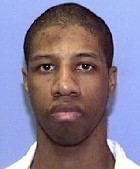
Irving Davis
Murderer Russell Ellwood
Murderer · USA · 1991
Russell Ellwood was a former taxi driver. Authorities suspected him of killing…
20 victims
Russell Ellwood
Murderer · USA · 1991
Russell Ellwood was a former taxi driver. Authorities suspected him of killing…
20 victims
 Robert Martines Perez
Murderer · USA · 1994
Name: Robert Martines Perez · Other name used in proceedings: Robert Martinez P…
15 victims
Robert Martines Perez
Murderer · USA · 1994
Name: Robert Martines Perez · Other name used in proceedings: Robert Martinez P…
15 victims
 Billy Frank Vickers
Murderer · USA · 1993
Billy Frank Vickers Vickers was executed by lethal injection in Texas on Januar…
14 victims
Billy Frank Vickers
Murderer · USA · 1993
Billy Frank Vickers Vickers was executed by lethal injection in Texas on Januar…
14 victims
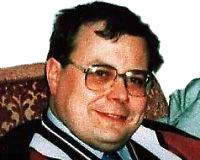 Roger Severs
Murderer · United Kingdom · 1993
Roger Severs was sentenced to two life sentences in prison on December 6, 1994.…
2 victims
Roger Severs
Murderer · United Kingdom · 1993
Roger Severs was sentenced to two life sentences in prison on December 6, 1994.…
2 victims
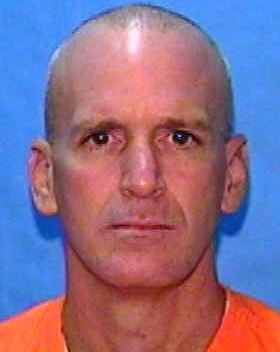 Bryan Frederick Jennings
Murderer · USA · 1979
Bryan Frederick Jennings was born on 12/09/58 and was tried in the Eighteenth J…
1 victim
Bryan Frederick Jennings
Murderer · USA · 1979
Bryan Frederick Jennings was born on 12/09/58 and was tried in the Eighteenth J…
1 victim
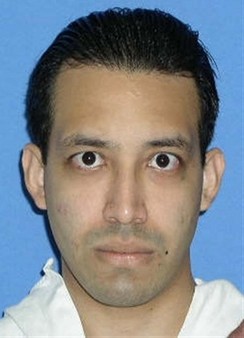 Vincent Gutierrez
Murderer · USA · 1997
Vincent Gutierrez — defendant · Jose Cobo — victim, U.S. Air Force Captain · Ra…
1 victim
Vincent Gutierrez
Murderer · USA · 1997
Vincent Gutierrez — defendant · Jose Cobo — victim, U.S. Air Force Captain · Ra…
1 victim
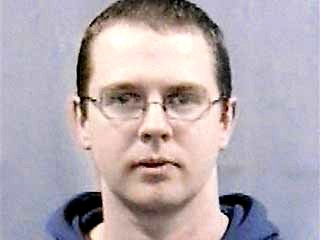 Charles Carl Roberts
Mass murderer · USA · 2006
Charles Carl Roberts IV was an American milk truck driver who was involved in t…
5 victims
Charles Carl Roberts
Mass murderer · USA · 2006
Charles Carl Roberts IV was an American milk truck driver who was involved in t…
5 victims
- Gender
- male
- Country
- USA
- Location
- El Paso County, Texas, USA
- Date of birth
- September 17, 1982
- Age at first offence
- 19
- Characteristics
- rape, drug addict
- Victim profile
- Melissa Medina, 16
- Method of murder
- Strangulation
- Date(s) of murder
- June 4, 2001
- Years active
- 2001
- Date of arrest
- —
- Status
-
Sentenced to death
Sentenced to death on July 18, 2002; conviction of guilt was affirmed, but the judgment of death was reversed and the case was remanded for a new punishment hearing
Case information
- Name: Irving Davis
- Also known as: Irving Alvin Davis
- TDCJ Number: 999423
- Date of birth: 09/17/1982
- Age at receipt: 19
- Date received: 07/18/2002
- Education level: 07/18/2002 19 11
- County: El Paso
- Date of offense: 06/04/2001
- Age at the offense: 18
- Race: Davis, Irving Alvin 999423 09/17/1982
- Gender: male
- Hair color: black
- Height: 5 ft 11 in
- Weight: 168
- Eye color: brown
- Prior occupation: laborer
- Native county/state: Craven North Carolina
- Native county/state: Craven North Carolina laborer
- Prior prison record: N/A
Background
On the night of June 3, 2001, Medina, the appellant, and some friends gathered at the house of Amy Romero and her brother, Ben Romero. Amy testified she knew Medina well, but had known the appellant for only two months. During the evening, the appellant told Amy that Medina "had a nice butt." Amy asked the appellant to "leave [Medina] alone," but he refused her request. The group talked and drank alcohol until approximately 12:20 a.m. The group then left the Romeros' house to walk Medina home.
Half-way there, Medina told the group she would walk the rest of the way home by herself. She often used a short-cut across an elementary-school campus. The appellant decided to walk her the rest of the way home. When the appellant returned to the Romero house around 2:00 a.m., Ben noticed scratches on the appellant's neck.
The offence
On the morning of June 4, 2001, Alejandro Betancourt, who worked in the maintenance department of the Anthony Independent School District, and a co-worker discovered Medina's body on the school grounds. Her face was black and swollen, and her fingertips had been cut off.
Davis followed a 16 year old Hispanic female from a party. Davis drug her into an elementary school yard where he choked her with an unknown ligature and hit her in the head with an unknown object and killed the victim. Davis also sexually assaulted the victim.
Sexual assault evidence
Dr. Corrine Stern, the medical examiner, performed an autopsy on Medina's body. With respect to sexual assault, Stern testified that Medina had many injuries to her vaginal area, which appeared to be caused around the time of her death, including "mucosal abrasions." In her opinion those injuries were consistent with penile penetration, and she believed that Medina had been sexually assaulted close to or at the time of her death.
Stern also testified that Medina suffered blunt-force trauma to her head, which resulted in a subarachnoid hemorrhage in her brain. She also found that Medina was strangled and had numerous abrasions on her torso, including a particularly severe blow to the chest that ruptured her pulmonary artery and filled her pericardial sac with blood.
From the evidence of Medina's injuries and the medical examiner's testimony about them, the jury could have reasonably inferred she was sexually assaulted.
Confession details
When first questioned by the police, the appellant stated that while he was walking Medina home, a gray car pulled up, she got in it, and the car drove off. He claimed he received the scratches on his neck during a fight with his brother days earlier.
However, after speaking with his mother, the appellant admitted to police that he strangled Medina. He claimed that while on the school grounds, he and Medina began to have consensual sex, but she asked him to stop because she liked someone else. The appellant told police that Medina said she would "cry rape" if he told anyone they had intercourse. He claimed that he then "lost it" and strangled her. He also said he cut off Medina's fingertips because she had scratched him and his DNA was under her fingernails.
Investigation
Alejandro Betancourt and a co-worker discovered Medina's body on the school grounds. The appellant was questioned by police on his initial account of what occurred, then spoke with his mother before admitting he strangled Medina.
Trial
Court and parties
In the Court of Criminal Appeals of Texas:
- No. AP-74,393
- Irving Alvin Davis, Appellant v. The State of Texas
The appeal was On Direct Appeal from El Paso County. Womack, J., delivered the opinion, in which Price, Johnson, Holcomb, and Cochran, JJ., joined. Keller, P.J., filed a dissenting opinion, in which Keasler and Hervey, JJ., joined. Meyers, J., dissented.
Charges and conviction
The appellant was convicted of the June 23, 2002, murder of Melissa Medina in the course of committing or attempting to commit aggravated sexual assault.
Jury verdict and sentence
Pursuant to the jury's answers to the special issues, the trial judge sentenced the appellant to death. The judgment of conviction and sentence of death was subject to automatic review.
The appellant raised eleven points of error. The court shall affirm the judgment of guilt, but reverse and remand the case to the trial court on the issue of punishment.
Sufficiency of the evidence of guilt
The appellant contended that the evidence was legally insufficient to show he did so while committing or attempting to commit aggravated sexual assault.
The court described the elements of aggravated sexual assault as:
- intentionally or knowingly causing the penetration of the female sexual organ of another person by any means, without that person's consent; and
- causing serious bodily injury or attempting to cause the death of the victim, or using or exhibiting a deadly weapon in the course of the same criminal episode.
The court concluded the jury could have found beyond a reasonable doubt that the appellant murdered Medina during the course of committing or attempting to commit aggravated sexual assault. Point of error five was overruled.
Jury selection and Batson
In point of error eleven, the appellant claimed the trial court erred in:
- denying challenges for cause of Jerry Castillo and Yzela Sigala, and
- overruling objections to the State's use of peremptory challenges on prospective jurors under Batson v. Kentucky.
The trial court allowed peremptory challenges as in non-capital cases, with challenges made all at once after voir dire of the entire panel was complete. The court held the appellant was not harmed because:
- the appellant did not use a peremptory strike on either Castillo or Sigala, and he had available strikes with which to do so; and
- although the appellant requested additional peremptory challenges after challenges for cause were denied and those requests were denied, he did not request additional strikes after he exercised his peremptory challenges.
For Batson challenges on Walter Lee Murrell and Ericka Renae Bracey, the State articulated race-neutral explanations:
- Murrell was "wishy-washy" regarding his beliefs about the death penalty and stated he would hold the State to a higher burden of proof.
- Bracey was aloof and hesitant in her answers, giving prosecutors the impression she could not follow the law; she knew someone who went to prison for "dropping a baby" and minimized that person's conduct; and she showed no emotion when describing her service as a witness in a rape case.
The court found no abuse of discretion in overruling the Batson challenges because the appellant made no attempt to rebut the State's race-neutral explanations and failed to carry his burden of showing purposeful racial discrimination. Point of error eleven was overruled.
Motion to suppress confession (Miranda)
In point of error one, the appellant argued the trial court erred in denying his motion to suppress his confession, claiming police officers should have terminated his interview when he told them he wanted to go home.
Detective Ron Nanos testified that he and Detective Mark Graham arrived at the appellant's house in the early morning hours of June 5, 2001, notified him he was working on a case, and that the appellant agreed to accompany them to the police station. Nanos read the appellant Miranda rights before leaving; the appellant signed an acknowledgment of those rights. The appellant was not handcuffed on the way to the station and again was advised of his Miranda rights upon arrival.
Nanos took the appellant outside to smoke a cigarette while waiting for the other detectives to arrive.
Detective Albert Licon testified that at the station the appellant was not handcuffed. Licon showed the appellant the Miranda rights form and asked if he understood his rights; the appellant responded that he did and agreed to waive them and speak with Licon. Licon described the discussion about the appellant's whereabouts the night before and his interaction with Medina, including that the appellant said he walked Medina through the neighborhood but did not walk her all the way home because she got into a gray car. Licon asked about the scratches on the appellant's neck; the appellant said he received the scratches in a fight with his brother.
Licon stopped the interview to take a break, and the appellant asked for a cigarette. Licon showed him outside to the smoking area, where he left him unattended. Licon testified the appellant was free to leave.
Detective Sonia Vega accompanied Licon when the interview resumed. Licon testified the appellant's demeanor visibly changed when Vega questioned him; he seemed "shaken up" and "a little scared" of Vega.
Vega testified that when she began asking the appellant about the scratches on his neck, he became very nervous and asked to go home for an hour to see his mother because he was concerned about her health. Vega testified that the appellant said that if he could leave for an hour, he would return and tell the truth about what he had done.
At that point, Licon asked the appellant: "Well, what are you saying at this point? Do you want to terminate the interview? Is it that you want it to cease, to stop?"
The appellant answered: "No," that he just wanted to get this over with.
Licon called the appellant's mother on the telephone and allowed the appellant to speak with her. After the appellant finished speaking with his mother, he agreed to continue the interview and confessed to killing Medina. Nanos again advised him of his Miranda rights once again. The appellant indicated he understood his rights, waived them, and agreed to give a written statement.
The trial court made findings that the appellant was not coerced, threatened, or promised anything for his statement, and found he was coherent and understood what was happening while giving his statements. The trial court concluded the appellant was not in custody at the time he made the oral and written statements, that he had been advised of his rights, and had intelligently and voluntarily waived them.
The appellate court concluded the appellant was not in custody at the time the statements were made and that police had no obligation under Miranda to terminate questioning. The appellate court also concluded the appellant had not unambiguously invoked his right to silence, because his expression of concern about his mother did not show he desired to terminate the interview and when expressly asked whether he wanted to terminate the interview, he replied that he did not.
Point of error one was overruled.
Jury charge on confession
In point of error two, the appellant alleged error in refusing a requested jury instruction that the jury would not consider his confession if it was obtained illegally after finding agents did not honor Miranda rights.
The appellant requested a lengthy instruction beginning: "You're instructed that under our law, confession of a defendant may involve a defendant [who] was in jail or other place of confinement, or in the custody of an officer, shall be admissible in evidence if it appears that the same was freely and voluntarily made without compulsion or persuasion, provided, however, that it be made in writing, signed by the accused, and show that the accused is warned prior to making such statement or confession by the person to whom the same is made."
The requested instruction continued that:
- he had the right to remain silent and not make any statement at all, and any statement could be used against him at trial;
- he had the right to have a lawyer present prior to and during questioning, and if unable to employ a lawyer, the right to have a lawyer appointed;
- and five, he had the right to terminate the interview or questioning at any time.
The requested instruction concluded: "Therefore, furthermore, the State must prove beyond a reasonable doubt that agents of the State honored the rights mentioned above. Therefore, if you believe the agents of the State did not honor defendant's request to terminate the interview, if any, you will not consider the confession for any purpose."
The appellate court held the issue was not raised by the evidence regarding unambiguous invocation of the right to terminate or the right to counsel. The court noted testimony from the appellant's uncle that the appellant asked "Do I need a lawyer?" and held that question did not amount to an unambiguous request for counsel.
Point of error two was overruled.
Post-arrest silence
In point of error eight, the appellant contended the trial court erred by allowing testimony regarding his post-arrest silence in violation of the Fifth Amendment. Dr. Kenneth Berumen, an emergency-room physician, testified he performed a medical evaluation of the appellant on June 4, 2001. When the prosecutor inquired about the appellant's demeanor during the evaluation, the appellant objected that the question was "so insolubly ambiguous, [it] shouldn't even be received before the jury." The trial court overruled the objection.
Berumen then testified that the appellant was extremely quiet, would not maintain eye contact, and would not answer questions about how he received his injuries.
The appellant objected again, arguing the question violated Miranda rights and Articles 38.22 and 38.23 because he was in custody during the medical evaluation. The trial court reserved ruling and later sustained the objection after predicate questioning by the State. The appellant did not ask for an instruction to disregard and did not request a mistrial.
The appellate court held the objection had not preserved the Doyle complaint asserted on appeal and, even if the second set of objections had been sufficient, the appellant failed to preserve error by not requesting an instruction to disregard and not requesting a mistrial. Point of error eight was overruled.
Sentencing
Punishment-phase findings
In point of error nine, the appellant claimed the evidence was legally insufficient to support the jury's finding during the punishment phase that he would pose a future danger to society. The appellate court held that:
- facts of the crime alone may be enough to support an affirmative finding on future dangerousness;
- taking into account the nature of the offenses, including cutting off the victim's fingertips, and the State's expert testimony, a rational jury could conclude he would be a continuing threat to society.
Point of error nine was overruled.
Exclusion of lay testimony on future dangerousness
In point of error ten, the appellant argued the trial court abused its discretion in excluding testimony from his lay witnesses about whether he would be a future danger.
At the punishment phase, when each witness was asked whether he or she thought the appellant would pose a future danger, the State objected that only expert witnesses were allowed to give that opinion. The trial court sustained the objections. The appellant made a bill of exception that included testimony from each witness that, in his or her opinion, the appellant would not pose a future danger. The State conceded error.
The appellate court held that the improper exclusion of the opinions of nine lay witnesses that actually knew the appellant constituted error with a degree of harm that was intolerable in a death-penalty case. The court reversed the judgment of death and remanded the case to the trial court for a punishment hearing at which the appellant could present the evidence held admissible.
Because the court reversed on point of error ten, it stated it did not need to reach remaining points of error three, four, six, and seven. The court specified those remaining issues as:
- admission at the punishment phase of a videotape recording of the crime scene;
- mention at the punishment phase of photographs found in the appellant's bedroom;
- argument at the punishment phase;
- and the phrasing of a ruling during argument at the punishment phase.
The judgment of guilt was affirmed. The judgment of death was reversed, and the case was remanded to the district court for a new trial on punishment.
Delivered June 13, 2007. Do Not Publish.
Appeals
The appellant's conviction of guilt was affirmed. The judgment of death was reversed, and the case was remanded to the trial court for a punishment hearing due to error in excluding lay witnesses' opinions on future dangerousness.
Dissenting opinion (Keller, P.J.)
Keller, P.J., filed a dissenting opinion joined by Keasler and Hervey, JJ. The dissent agreed the trial court should have permitted the testimony but would have held the errors were harmless. The dissent also discussed sufficiency regarding future dangerousness and harm analysis under the relevant standard.
The dissent listed lay witnesses allowed to testify about opinions supporting non-violent character and stated that most gave answers when asked whether the capital murder conviction changed their opinion of him. The dissent referred to testimony including:
- Carolyn Brookshire, who testified she had known the appellant for four to five years and that he was friends with her son, Corey, and related that the appellant was very polite and not aggressive;
- Corey Brookshire, who testified he had been family friend for five years and described appellant as kind-hearted and friendly, never violent toward him, and a gentleman towards women;
- Margaret Sanderson, who testified the appellant was a neighbor and friend of the family, helpful and respectful, and that the only time she had seen appellant violent was during a fight with his brother described as normal sibling rivalry;
- Gail Pylant, assistant principal where appellant attended high school, testified appellant was respectful and did not exhibit violent tendencies;
- Michael Sanderson, Jr., who testified about friendship and described appellant as timid, respectful of his elders, and non-violent;
- Clare Zawistowski, the choral director at the high school, testified appellant was respectful, got along with his peers, never saw him become violent, and treated women no differently than men;
- Amanda Sanderson, who testified she had known appellant for ten years and he was like a brother to her; she described appellant as protective and very "gentleman-like," and she never saw him act aggressively or violently;
- Carol Davis, appellant's mother, who testified appellant was never violent and was very special to her;
- Bryan Stinson, who testified appellant was his best friend and he had never seen appellant act violently;
- Star Stinson, who testified appellant was friends with her sons and she had known him for seven or eight years, and she related appellant was helpful and had never been violent or aggressive in her presence.
The dissent stated that defense counsel asked eight of these witnesses whether appellant's capital murder conviction changed their opinion of him, that six gave an unqualified "no" answer and two gave a qualified answer, and concluded the trial court's limitation did not deprive the defendant of the substance of his defense.
Outcome
- The appellate court affirmed the judgment of guilt.
- The appellate court reversed the judgment of death.
- The case was remanded to the district court for a new trial on punishment (a new punishment hearing).
- The judgment of death was reversed on point of error ten (exclusion of lay witnesses' opinions on future danger).
Spotted an error, or have more information about this case?